






Anyone who’s been gaming for a while would easily associate Resident Evil with survival horror. The franchise has been at the forefront of the genre, joining other offerings from talented developers to give us hair-raising moments and encounters with grotesque monstrosities we’d like to forget, but can’t.
And then there was Resident Evil 5. It’s hard to believe that the title turns seventeen this year, but the memories feel as fresh as ever. It wasn’t memorable just because it brought new enemies and a really good story to the table, but because it was intense.
A daring diversion into action-horror territory meant that you and your fellow companion were scrambling for cover, quickly reloading your weapons before unleashing their firepower on a swarm of Majini, or a boss. Things could, and often did, go badly wrong, leaving you hoping for a last-second revival in the midst of a battle that had chaos written all over it.
It was neither subtle nor adherent to the slow-burn formula that the franchise was known for up until that point. The only survival resource you had at your disposal was teamwork. This one was a banger, though. The action-heavy nature of its gameplay loop wasn’t a weakness as it was relentless, readable, and built around co-op tension in a way that made its setpieces and boss battles hit harder as a result.
At its core, Resident Evil 5 picked up the pace that we were used to in previous entries, bringing in a gameplay loop that was all about fighting, repositioning, managing your resources, and surviving subsequent escalations. That was supported by a campaign that kept you moving forward at a breakneck pace, with every step feeling hard-won thanks to the combat pressure you faced along the way.
With only nine slots for your inventory, managing your resources became an important part of the experience, often making you take difficult calls about which weapon or item to keep, the uncertainty of what was to come making you worry about the consequences of your decisions. And of course, if you were playing it with a friend, the game was quick to show you just how much you’d come to lean on each other.
That was a formula that quickly became addictive, helped along by punchy weapons, solid feedback from each shot, and satisfying enemy reactions to your bullets. The game had you constantly thinking about controlling the space around you and in front of you, and calculating the amount of damage you could unleash between reloads. You had to be calculating and tactical to survive, choosing between damage and spacing as you fended off your enemies.
That emphasis on tactical gameplay extended to the inventory system, forcing you to choose between healing, ammo, and grenades. You never knew what you would need for your next intense battle, and we often found that the items we left behind might have been very useful in the inevitable predicaments that followed.
All of that was helped along by a campaign that introduced a lot of variety into the mix. Different arenas and enemy combinations were a huge part of that, making the game feel unpredictable as a result. And given that your approach and the tools you had on hand were also not set in stone, Resident Evil 5 quickly became an experience that had controlled chaos underlining it all, and the set piece interruptions punctuated by boss encounters ensured that the shift to action-horror never risked becoming monotonous at any point in the game.
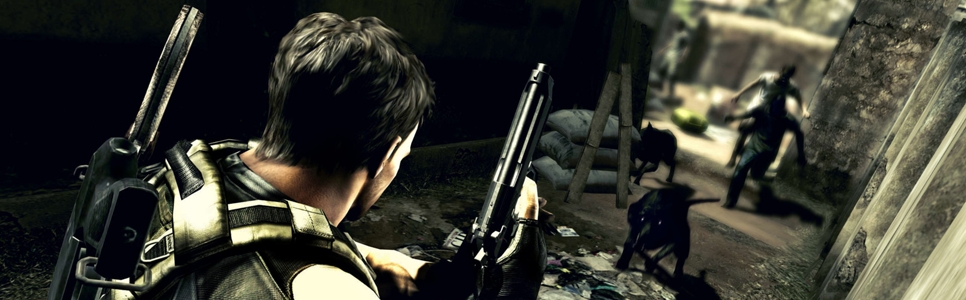
The enemy designs are a great showcase of how the game’s chaotic underpinnings become the star of the show. Take the chainsaw-wielding Majini for example. It was hard to bring down, and the arena’s narrow streets weren’t exactly doing Chris and Sheva any favors in their efforts to get out of the way of its deadly blades. You were forced to choose between fight or flight, and the presence of other zombies only served to complicate things even further.
It’s a battle that had you trying to use the environment to your advantage, thinking carefully about whether to use an explosive barrel to stop the enemy’s advance, or perhaps manage some crowd control to gain some much-needed breathing room. Of course, Wesker and Gionne were equally memorable, forcing you to target weak points and consider phase changes.
It’s a brand of action that’s interactive. You weren’t just causing explosions for the sake of spectacle. You survived them, relying not just on your own skills but those of your partner, working together to bring down the most terrifying enemies with precision and timing, just as two highly trained operatives would do against overwhelming odds.
Of course, a solid gameplay loop and creative enemy designs are only one part of why Resident Evil 5 has us grinning to ourselves when we think about it. The main story is another. It was built around the gameplay loop in a way that really brought the whole thing together, lending context to why Chris and Sheva found themselves standing alone against a horde of enemies that stood between them and their objectives.
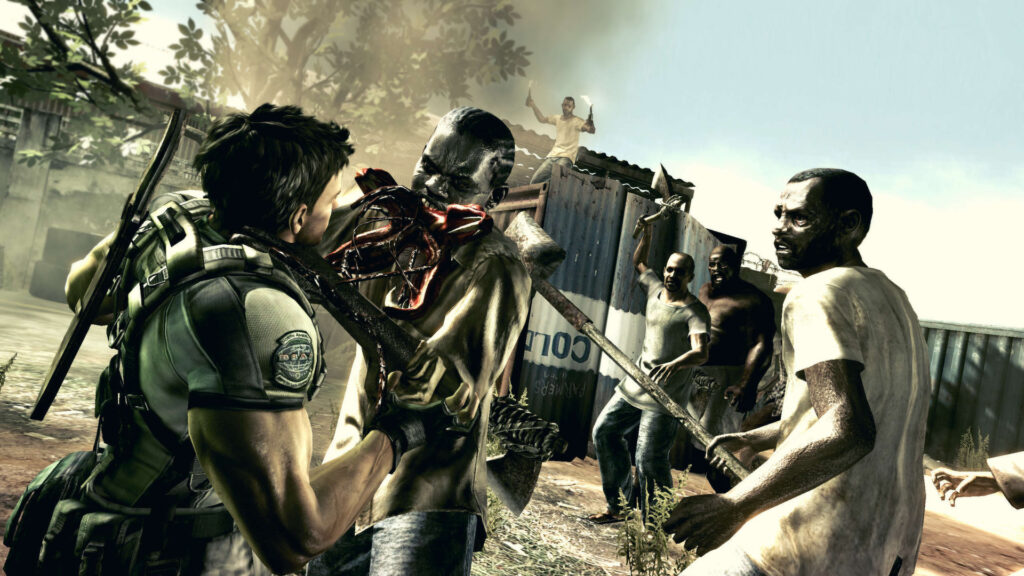
Bringing Chris back into the fray as a member of the BSAA was a smart touch, allowing the game to retain a member of the cast that had put the franchise on the map. His competence was never in doubt, even in his earlier appearances, and with this one set years after we first met the man, he now came with experience and a more seasoned approach to the battlefield that worked very well to sell the new mechanics that the game was bringing to the table.
Sheva was quite the sidekick and a solid justification for the cooperative gameplay loop while providing a bit of balance between the old and the new. She also worked well as a partner in the field to Chris, calling out enemy positions and being a smart contributor in combat.
Of course, the duo working together was a major selling point for the game’s co-op trappings. And while the AI was serviceable enough for the few players who chose to fly solo, it was when you brought a buddy along that RE5’s magic was truly on display.
The game’s opening hour wastes no time in setting things up, its missions quickly painting the region as a pressure cooker just ready to blow. RE5 makes it obvious from the get go that it wasn’t setting up the usual slow burn that the franchise was known for. It was going for something else entirely.
But that doesn’t mean that the story didn’t retain enough of Resident Evil’s DNA. Investigating the presence of bio-organic weapons was still very much a part of Chris’s adventure. But the manner in which those investigations quickly turned into a fight for survival continue to be a highlight of the experience.
Another great part of the story was how the mystery surrounding Jill was handled. Chris notices clues to her presence in the region quite early on, and the hooded figure that gets in his way on more than one occasion was a great bit of foreshadowing. You just knew it had to be her but the revelation was no less impactful as a result.
In fact, it helped sustain the tension that the gameplay set up quite well. Wanting to discover more about Jill’s current whereabouts after her resolution to bring down Umbrella in her previous appearances immediately made things personal for Chris and the player. Once again, it was a clever way to reintroduce a popular member of the cast in a way that made sense, having the character blend in with new additions in an organic manner.
Of course, Wesker and his nefarious schemes deserve a special mention. He’s kind of the glue that holds it all together, and the set pieces involving him are a giant showcase of why RE5‘s revised approach to the franchise’s formula worked so well. The stakes and the spectacle of it all demonstrate how the game committed to the blockbuster structure early on, and landed it with aplomb.
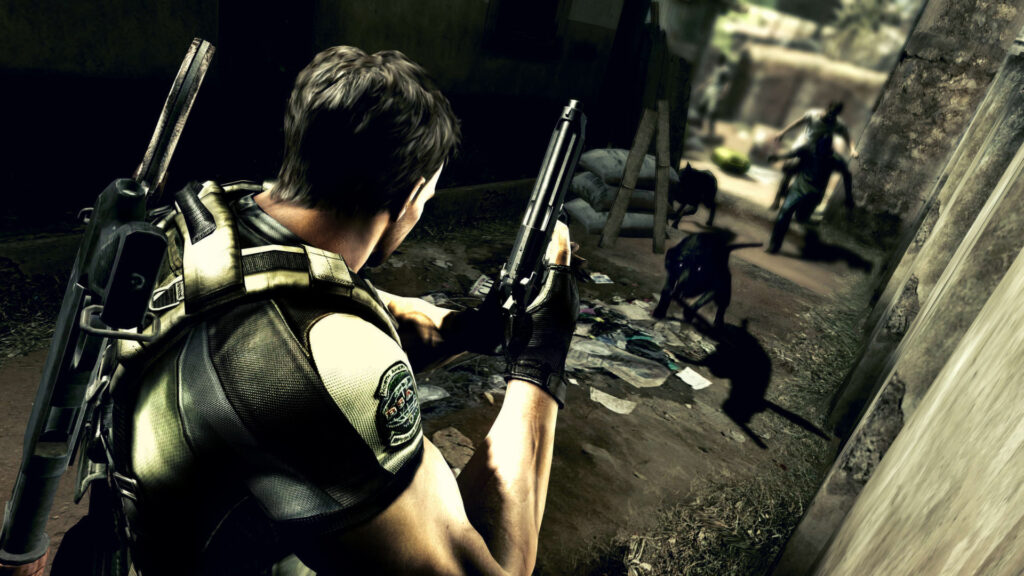
The story expansions sustained the momentum of the main campaign, bringing the same compact structure and extending the game’s best qualities while also bringing a bit of classical Resident Evil to the mix. They balanced their ambitions well and made the experience feel like a heady mix of the old and new.
Of course, the new action-focused experience wasn’t going to be for everyone. Fans of the franchise’s more methodical approach were bound to have problems with the new format and that’s fair. But for those who gave RE5 a chance, they experienced a title that was so confident in its identity and execution that any lingering longing for a more slower-paced title were quickly left behind with the remains of the BSAA Alpha Team.
Resident Evil 5 wasn’t great simply because it moved from survival horror to action. It clicked because it made that action into a structured quest for survival. It was bold, sharp, and confident in the kind of experience it intended to present.
It was a game that we are always happy to revisit, not just because of the fresh take it brought to the franchise’s formula, but for the memories it let us create with our buddies along the way.
Note: The views expressed in this article are those of the author and do not necessarily represent the views of, and should not be attributed to, GamingBolt as an organization.