





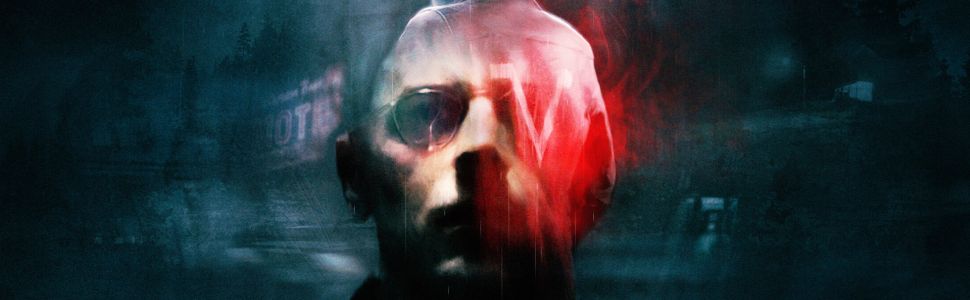
Following a character’s descent into madness is one of gaming’s favorite pastimes. From classics like Silent Hill to modern innovators like Bloodborne or Alan Wake, no matter the genre, gaming ironically can’t get enough of someone completely losing it and being unable to differentiate reality from the voices in their head, or more commonly the demons with predictable attack patterns in their way.
Silver Pines, the debut game from Scandinavian studio Wych Elm, doesn’t shy away from acknowledging its place in the lineage of these games. It’s a survival horror game first and foremost and wears its influences boldly on its sleeves, but it elevates itself by taking piecemeal elements from other genres, like the puzzle structure of old school adventure games. While its story doesn’t quite hit the third gear that has come to be common in the genre and there are a couple of clashing gameplay mechanics, Silver Pines is a must-play concoction of spookiness, cleverness, and unquestioned insanity.
"Following a character’s descent into madness is one of gaming’s favorite pastimes."
In Silver Pines, you play as Red Walker, a private investigator with a past as mysterious as his name suggests. Red wakes up in the eponymous town, whose name and atmosphere could easily pass for a new Twin Peaks spin-off, with the knowledge only that his job is to find and kill Eddie Velvet. That’s a tall task, especially considering that Red doesn’t know what Eddie Velvet looks like and the only communication into and out of the town is through payphones with the suspicious man who gave you the job in the first place.
The goal to locate Eddie Velvet is your main driver throughout Silver Pines as you explore the town, but getting around quickly proves more difficult than it first seems. In classic survival horror game fashion, Silver Pines’ level design consists of endless interconnected buildings, streets, and alleyways, many of which are separated by doors that require keys or codes to open.
Those keys are scattered around the world, as are the clues to determining the right codes, so you’re forced to and often rewarded for prioritizing scouring every nook and cranny to ensure you haven’t missed anything that may be vital to moving forward. Some of these can become full-on puzzles, too, with some requiring you to explore around the world and put together clues from handwritten notes or background art in the right order to figure out the right codes.
One early standout puzzle takes place in an apartment building and requires you to open a 4-digit lock with room numbers instead of digits, and you have to find clues around the building to figure out which room goes in which spot. While the steps needed to complete these puzzles aren’t always the most intuitive, I usually found myself feeling more clever than relieved when I completed them.
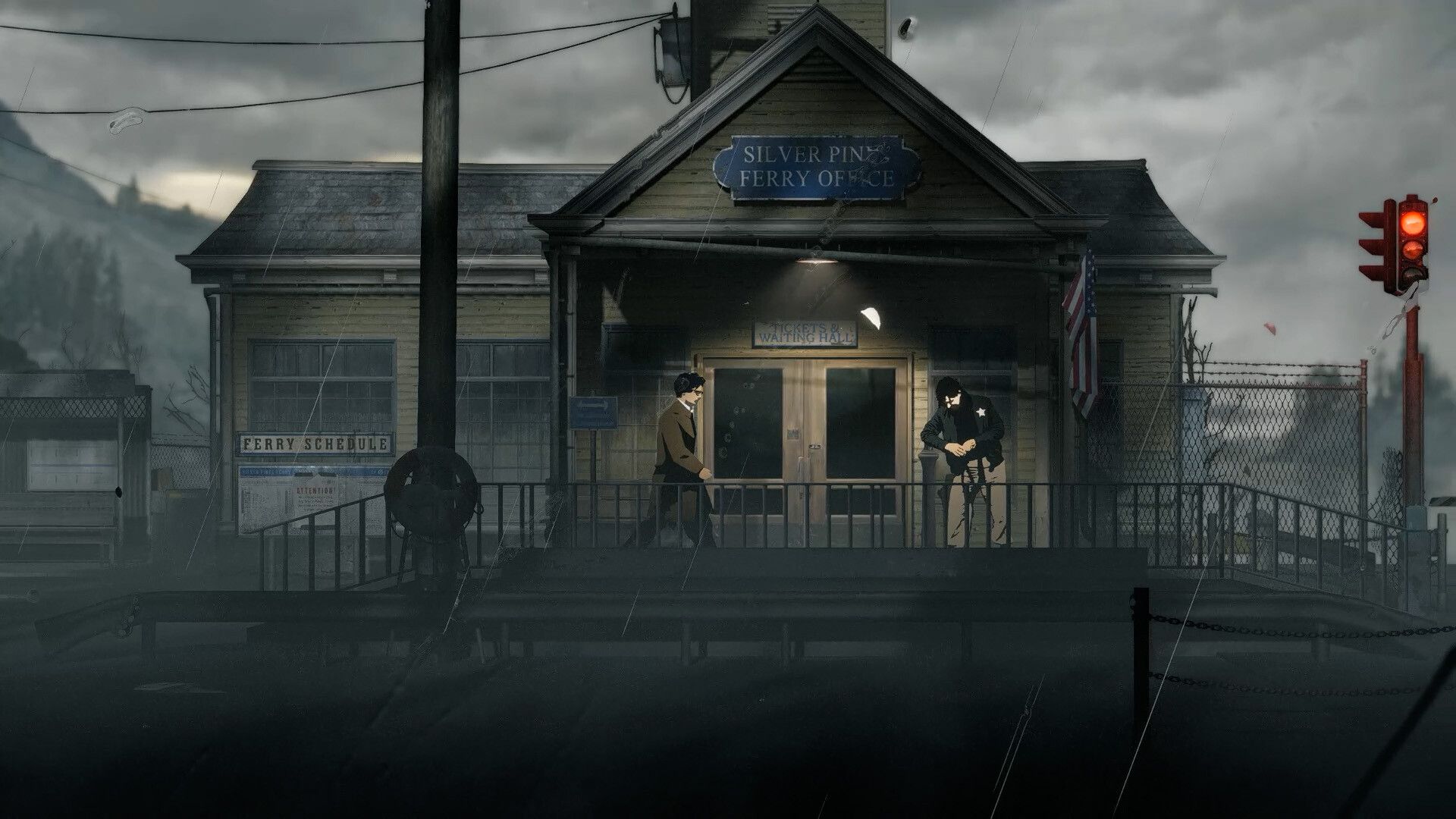
"Silver Pines’ level design consists of endless interconnected buildings, streets, and alleyways, many of which are separated by doors that require keys or codes to open"
The game is broken into three main acts as you track Eddie Velvet that cover the three key areas of the town, and once you gain access to each area, you are free to explore, which is where the exploration aspects come into play. In addition to locked doors, there are tons of passageways blocked in some other way, like a wall that’s about ready to crumble or a body of water that you don’t have enough stamina to cross, but over time you gain new abilities and items that let you unlock these new areas, some of which progress the story while others contain ammo or collectibles. This allows the game to be incredibly economical with space, with most screens having some kind of unique passageway that requires you to return to places you’ve already been, but it also creates some tension in the game’s progression.
Despite opening itself up to exploration as soon as you reach any new area, the actual objectives are relatively linear, particularly because most of the aforementioned abilities and items that allow you to open up new pathways are obtained as part of story quests. Without much in the way of guidance or signposting aside from the occasional marker on the map, this means that it’s easy to waste time exploring areas you have no business being in yet and whose puzzles have solutions you can’t even access yet.
On top of that, it’s not always clear where there are real dead ends and where there are hidden passages, which almost incentivizes you to treat every room like it has a hidden passage in it. While this can contribute to the feeling of a descent into madness, it can also get pretty repetitive. At the end of the day, though, exploration around the town of Silver Pines is rewarding because of how varied and impactful it is, despite sometimes leaning too far into the opaque.
Complicating your exploration is the presence of hostile enemies that want you dead. Most enemies are these zombie-like black and grey humanoid blobs that swing slowly at you, though as the game progresses there are others introduced that move a bit more quickly or that fly. With that said, while there is some variety in enemy design as the game moves along, there aren’t many truly standout foes that you encounter.
Combat consists of a handful of guns, most likely a pistol or a shotgun, and most enemies are dealt with in a pretty direct way by dodging from their main attack and shooting them while they’re cooling down. I never felt overly challenged over my 15-or-so hour playthrough, but I did definitely run into a few roadblocks where I’d have to retry a section a handful of times.
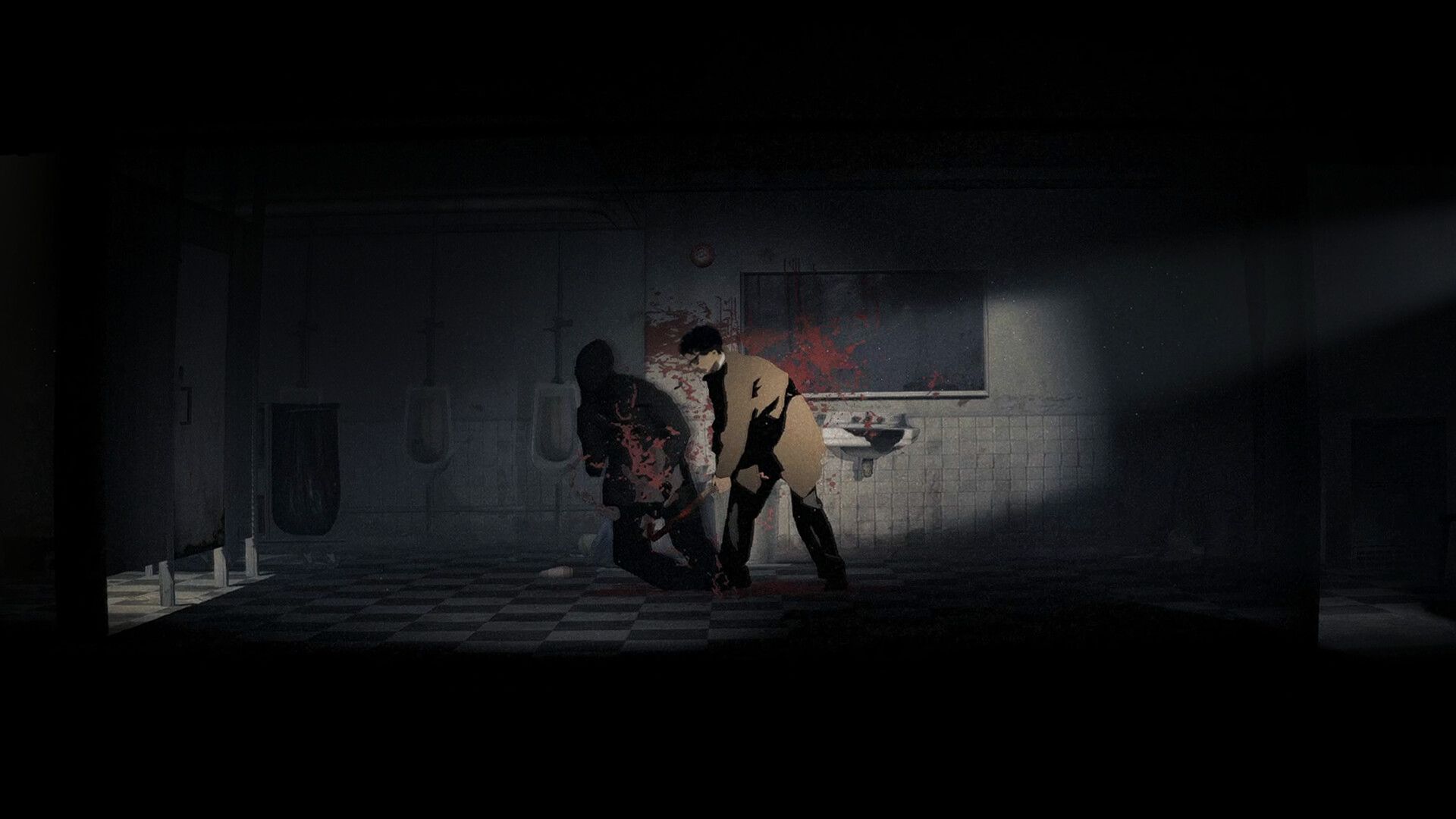
"Complicating your exploration is the presence of hostile enemies that want you dead."
Your bigger enemy, and the one that will cause most of your deaths, will be your resources, which include severely limited ammo and healing items. Silver Pines rips the inventory management mechanic from Resident Evil, so you only have so many slots for weapons, consumables, and other items.
Especially on higher difficulties, ammo is at a premium, so you want to do anything you can to conserve it and either avoid combat or attack with durable melee weapons, and you frequently find craftable resources around the environment that will require you to make decisions about what to keep and what to drop. The biggest wrinkle is the fact that you need certain items to unlock certain doors or passages around the world, which means that there’s no reason to ever drop those items and a good chunk of your inventory is basically immediately reserved, but nevertheless, the resource management system creates a very effective tension and props up what is otherwise a relatively uninspiring combat system.
What rounds out the entire experience, though, is the unique art and animation style that complements the story being told. It’s primarily a 2D pixel-art open world, largely filled with dreary greys and browns, but each character’s animations are rotoscoped, filmed originally by a real person and scanned into the game.
This gives every animation an eerie uncanny valley feeling, and combined with a number of stellar vocal performances, highlighted by that of Red himself, there is a very strong sense of atmosphere throughout Silver Pines. I do wish that the final act took the story to the next level, as the last third of the game feels a bit like it’s coasting to the finish line rather than ramping to a truly special conclusion. It definitely follows on the themes of the descent into madness as Red chases down Eddie Velvet, but there’s never that transcendent moment from a story perspective.
For a game that takes so much clear inspiration from so many places, Silver Pines remarkably stands out on its own. It takes a relatively standard atmospheric horror setup and layers on top of it both a unique concoction of gameplay elements and genres and a remarkable presentation, and the way that all elements play off of each other elevate the atmosphere of the entire package.
This game was reviewed on the PlayStation 5.
Satisfying puzzles, rewarding exploration, remarkable animation style, intriguing narrative
Exploration opens up too quickly, clues can err on the side of overly obtuse, uninspired combat