





It’s 2024. I’m watching Concord, a live-service game, announce it’s shutting down. It’s 2025. I’m watching Anthem, a live-service game, announce it’s shutting down. It’s 2026, and once again, I’m seeing a live-service announce that it’s shutting down. Unfortunately, what everyone guessed would happen has finally come to pass – Wildlight Entertainment’s Highguard is ending service on March 12th, a mere 45 days after it first launched.
The reasons for this will probably shock you, but here goes: Despite over two million players across all its platforms, and its team putting in the “hard work,” Wildlight has “not been able to build a sustainable player base to support the game long term.” As a result, Highguard is shutting down. Servers are still available, and a new update should be live by the time you see this, which adds another new Warden, skill trees, a fresh weapon and account level progression.
“We hope you’ll jump in with us one more time to show your support and get those final great matches in while we still can,” said Wildlight, who thanked players for “playing, for supporting us, and for being part of Highguard‘s story.”
On the one hand, I feel bad for the developers – the artists, programmers, animators, and so on – who invested years of their lives in this project, and that includes those who were laid off shortly after launch. It’s never a good feeling when something you’ve sacrificed so much for – quality time with your loved ones, hobbies, health, and so on – ends up fizzling out.
But when I see Wildlight talk about “Highguard’s story,” I can’t help but look at the other, more cynical hand, and just ask: Who didn’t see this coming?
Forget that major companies, from EA to Riot Games, have seen their live-service titles flop. Forget that smaller studios and projects – from Knockout City to Supervive – ended up defunct. Let’s even conveniently ignore that Sony, one of the two biggest console manufacturers in the world, nearing almost 100 million PS5 consoles sold, promised a dozen live-service titles before April 2026, and in just three years – half of its console generation, for crying out loud – cancelled or shut down eight of them. Okay? Leave all that aside.
Who possibly saw Highguard at The Game Awards with its haphazard mix of ideas, and thought, “Yep, that’s going to be the next big live-service hit”? Because if you’re one of them, I have fire insurance to sell you on a house in Antarctica. I would be shocked if anyone saw it and thought it even had a chance of surviving the first year.
And it’s not simply a matter of being last at the show, upsetting those who expected to see Half-Life 3, Grand Theft Auto 6, and whatnot. From the moment Highguard was revealed, the immediate impression was how generic and uninspired it looked, despite Wildlight Entertainment’s leadership touting weeks later how it was unlike anything in the competitive shooter space.
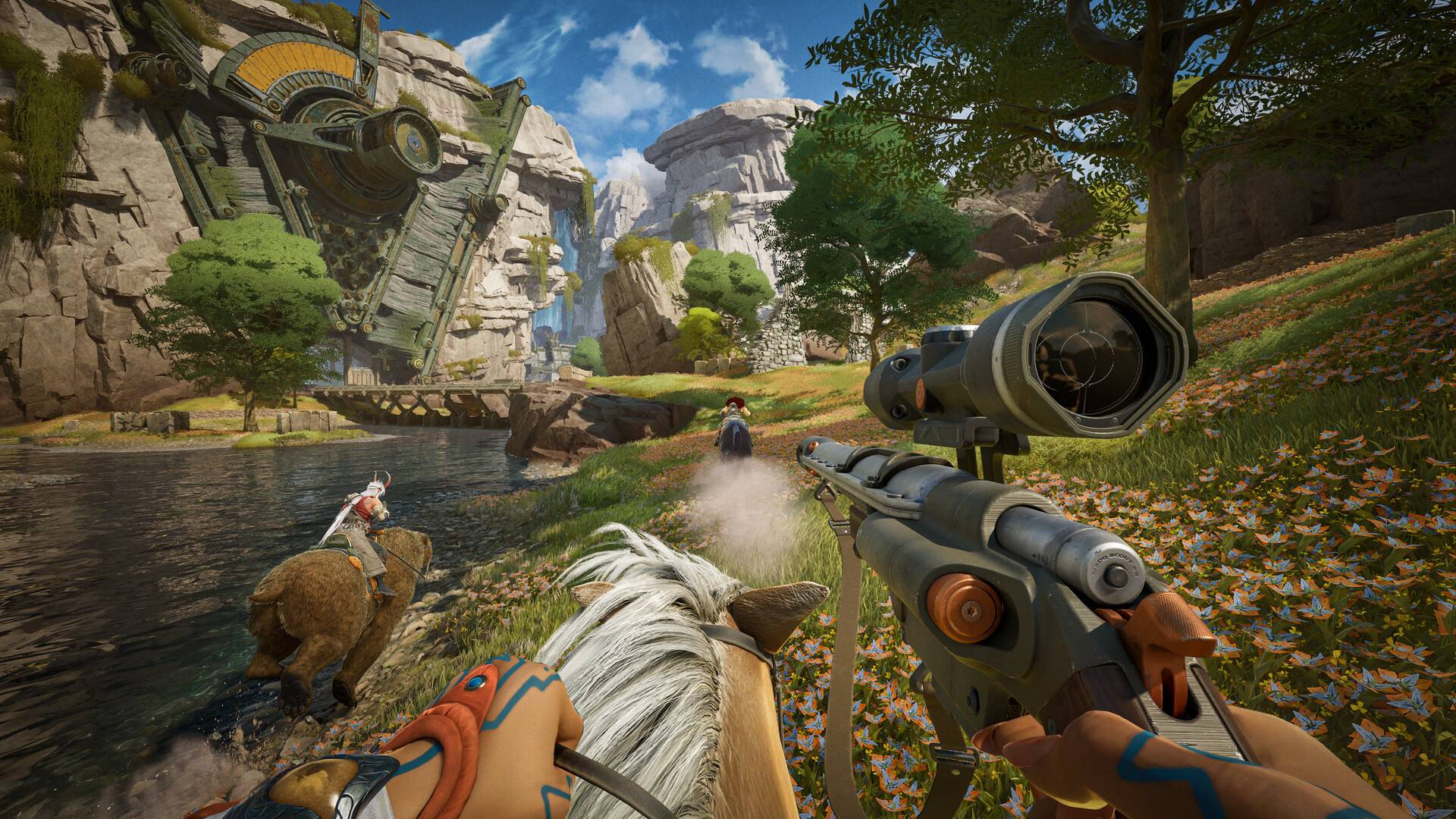
It wisely went under the radar after this disastrous showing, though host Geoff Keighley hyping it whenever he could certainly didn’t help. When it was finally launch time, I thought that maybe the controversy would translate directly into curiosity. After all, it was a free-to-play competitive shooter with some pretty nice-looking environments. Maybe the first trailer didn’t properly showcase the gameplay loop, and there was plenty of nuance. Hence, the peak of almost 98,000 concurrent players on Steam.
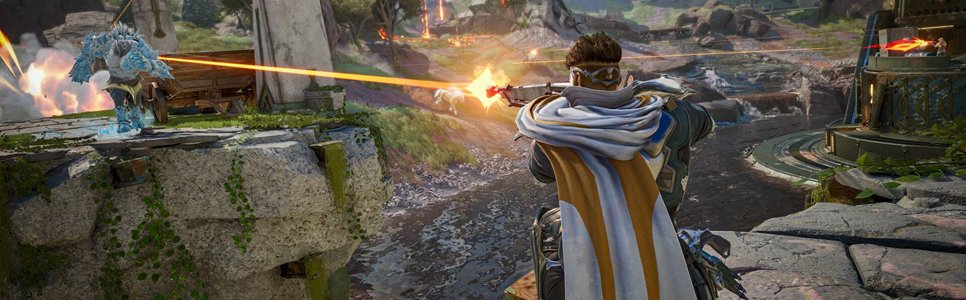
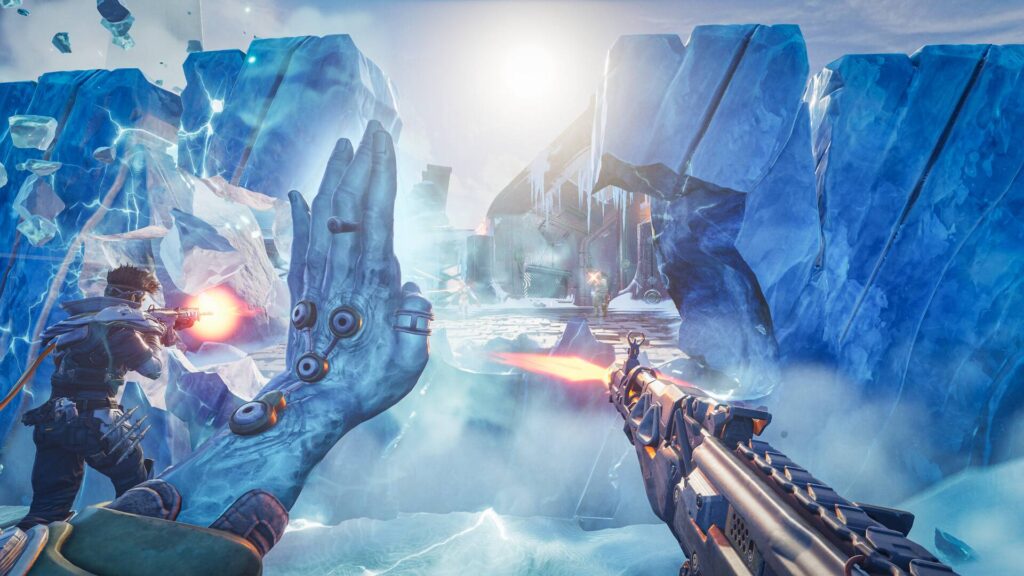
However, at that point, it was all on Highguard’s gameplay to actually impress, and it sorely failed to do so. The base defense set-up phase, mounts, mining materials, looting chests (and maybe occasionally securing a supply drop), fighting over the Shieldbreaker, raiding the enemy team’s base, planting bombs on its generators (because the big match-winning stone wasn’t worth the risk) and then retreating – aside from the sheer tedium involved, that constituted one single round. And I’m not even getting into each character’s unique abilities, which failed to make up for their lack of personality, or the weapon archetypes, or the loot rarities. Like a chimera formed from Rainbow Six Siege, Fortnite, Overwatch, World of Warcraft, and Valorant, it felt bloated and confused, yet strangely barren.
Because beyond this needlessly complicated, drawn-out gameplay loop – which admittedly had some decent shooting and movement – Highguard just felt empty. You would think such massive maps would have PvE or unique points of interest. Something, anything to stand out. Instead, they were just that – large, lifeless sets that were seemingly left over from a brainstorming session.
Now, you could look at the “Overwhelmingly Negative” rating on Steam, and claim with some accuracy that it was the result of review-bombing from those with barely any playtime (as one developer did). However, 45 days later, it’s currently at a 46 percent “Mixed” rating. Recent reviews are also mixed, although at 62 percent.
All of this is irrelevant, however, because regardless of its rating, there weren’t enough players looking to log in, grit through all the issues and find the fun. In one day, Highguard dropped from 97,249 peak concurrent players to 39,832. Another day later, almost 20,000. In one week, 13,119. And now? It can barely crawl above 1,000.
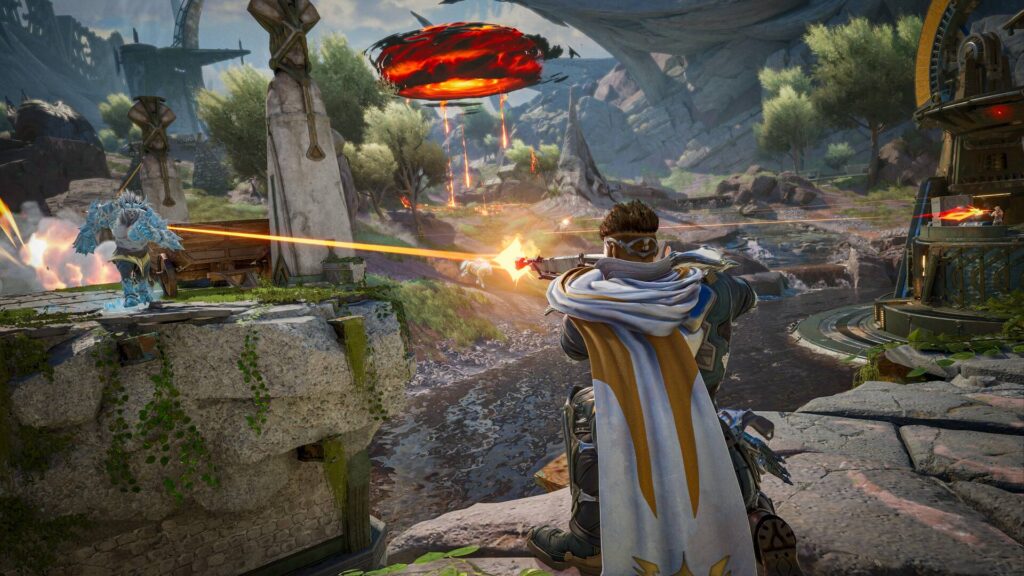
Keep in mind that Wildlight has been releasing regular updates and trying everything. It introduced a new limited-time mode, bumping up the player count from 3v3 to 5v5 – when received well enough, it became permanent. It released a new Warden, a Wolf mount, new bases, new maps – heck, it even rebalanced the entire gameplay loop. The previous update added a mode that removed mining entirely to get players into the action faster. Alas, it was all for nought. Forget the lack of a hook – at the end of the day, Highguard didn’t have a soul.
After two weeks, Wildlight laid off the majority of its employees, retaining a “core group” to work on updates. In a little over three weeks, the official website went down, but this was due to undergoing some changes and simplification. Rumors also circulated at the same time that Highguard was not in fact self-financed but had actually received financial backing from TiMi Studio Group, which Tencent owns.
And as harsh as everything I’ve said may sound, current and former employees speaking to Bloomberg’s Jason Schreier had their own grievances. First off, despite positive internal tests, the gameplay’s complexity was noted as an issue. Matches also ended up much worse without voice chat, and management reportedly refused public testing, instead aiming for a shadow drop like its previous big game.
Why? Apparently, because of “hubris,” according to former employees. If suddenly releasing a free-to-play multiplayer title while inviting streamers to preview and then stream it at launch worked in 2019, why shouldn’t it work in 2026? Even if plans changed to a trailer at The Game Awards, the alleged thought process is no less delusional.
As for those layoffs, they reportedly occurred because Tencent had pulled funding. Highguard didn’t meet its metrics, and thus, those who believed they had some “financial runway” were let go.
At the end of it all, what fresh lessons can you really derive from Highguard’s failure? It goes back to my original question: Who didn’t see this coming? We live in an age where the incumbent kings of the live-service model remain uncontested; where long-running franchises like Destiny lurch along (and where Marathon, despite the hype, is facing extensive scrutiny); and where even a developer like Valve with free-to-play hits like Dota 2 is conducting extensive, invite-only testing for Deadlock. And even if that game has more personality and fun gameplay than all the live-service failures of the past decade combined, it has an uphill battle to garner players’ attention.
But even with all that in mind, as long as there’s money on the dash, titles like Highguard will be greenlit. After all, time is a flat circle, and there’s no escape.
Note: The views expressed in this article are those of the author and do not necessarily represent the views of, and should not be attributed to, GamingBolt as an organization.