





Thick as Thieves has been out for a month at this point, and as short as the game may have been, it still left us quite curious about what plans OtherSide might have for it going forward. Studio co-founder Warren Spector and game director Jeff Hickman were kind enough to answer many of our questions, that range from player reception, to how Thick as Thieves was even conceptualized to begin with.
Now that Thick as Thieves is launching, what are you most curious to see players respond to once they finally get their hands on it?
Spector: I think everyone on the team — certainly on the leadership side — has a different answer to this question. For me the thing I’m looking for is how players respond to stealthing together. Even back in the Deus Ex days I wondered how the choice/consequence, player empowerment and player story idea would work in the context of players playing together — like a D&D part. Thick as Thieves will reveal that.
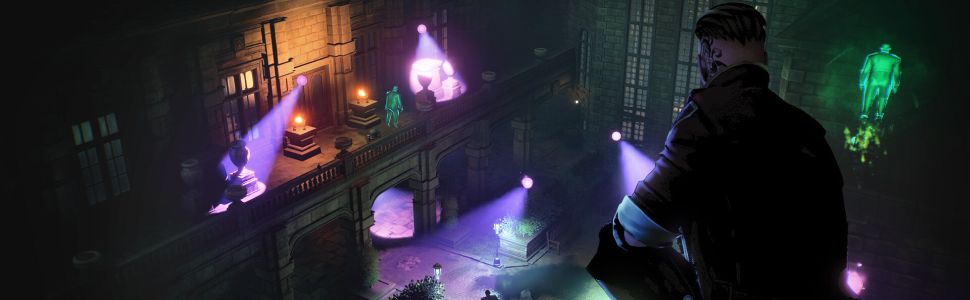
Hickman: There’s a lot – co-op will definitely be fun for people; the Haunstable is going to make an impression. I guess what I’m most curious about is how people will use the tools – zipwire and disguise are very different, and one of the things I’m always surprised by when I watch the team playing or when I play co-op is how other people do things I never would have thought to try. I’m really curious to see what streamers do with it and how expressive the game can be.
With names like Warren Spector and Paul Neurath attached to the project, a lot of players will naturally expect some Thief and Deus Ex DNA. How directly did those games influence Thick as Thieves?
Spector: Certainly, the basic concept Paul and I came up with was inspired both by the things we loved about the games we’d worked on and the genre in which we’ve spent most of our careers. I mean, all of those games are built on a foundation of players creating their own, unique narratives through play. (Don’t get me started talking about that in any detail or we’ll be here all day!) That’s the heart of Underworld, System Shock, Thief, Deus Ex and even Disney Epic Mickey. (Don’t get me started talking about the Immersive Sim Lite that is the Epic Mickey game either!) So that’s the heart of those games you mentioned and it was critical for Thick as Thieves to explore that game space as well. Though one hopes in new and different ways that move the Imm Sim genre forward.
"I don’t think we consciously tried to move away from imm sim formulas so much as multiplayer is a different context."
How much of the game’s foundation came from classic immersive sims, and where did you consciously try to move away from those older formulas?
Hickman: I don’t think we consciously tried to move away from imm sim formulas so much as multiplayer is a different context. You can’t do physics simulation over the net in realtime, so how do you make a world that’s as interactive as one where you can? Approaches that make sense when the player is the only mover in the universe make sense in single player, but in co-op or competitive multiplayer, you just can’t architect things the same way.
I think the one place where we did consciously move away from some of the “orthodoxy” around immersive sims is that we didn’t try to make the UI completely diegetic. It’s important for players to have a clear sense of how visible they are and how much noise they’re making – whether a guard is just on patrol or is actively investigating. While we respect the other choice, for us, being explicit about these mechanics rather than embedding them in the world makes the experience much more legible for a wider range of players. And at the end of the day, I want to reach as many people as we can, because I love this kind of gameplay.
Thick as Thieves is built around short, replayable heists rather than one long traditional stealth campaign. What made that structure the right fit for this game?
Spector: I’ve been promoting the idea of short, session-based games for a while now — certainly since Paul and I started OtherSide. The main reason is largely selfish. I don’t have the time or the inclination to spend hours and hours sitting in front of a PC or console playing. I have a life. I extrapolated from that to the assumption that I’m not alone. More and more adults play games now than ever before which means more and more people with less and less time. Session-based play is the obvious answer to that, not just for Thick as Thieves, but in my mind a lot of games.
The game has a four-hour campaign, but replayability is clearly a major focus. How are you encouraging players to revisit heists after finishing the main content?
Hickman: The backbone of the game is the 16-contract experience, which takes you from your first mission for the Thieves Guild and your acquisition of the Vistara Diamond to the cliffhanger ending. Over the course of those 16 contracts, you’ll visit the Constables Guildhall and Elway Manor about 7-10 times. So, it was important to have things that changed every time you came back – different mission types, different security configurations – some paths will be blocked on a given runthrough, so you can’t just fall into your favorite path through the level.
If the patterns start to get too familiar, stepping up to Thief difficulty provides a whole different set of variations in the security configurations, and I challenge anyone to make it through the entire campaign on Master Thief in just four hours. It takes me about six, and that’s playing on Thief.
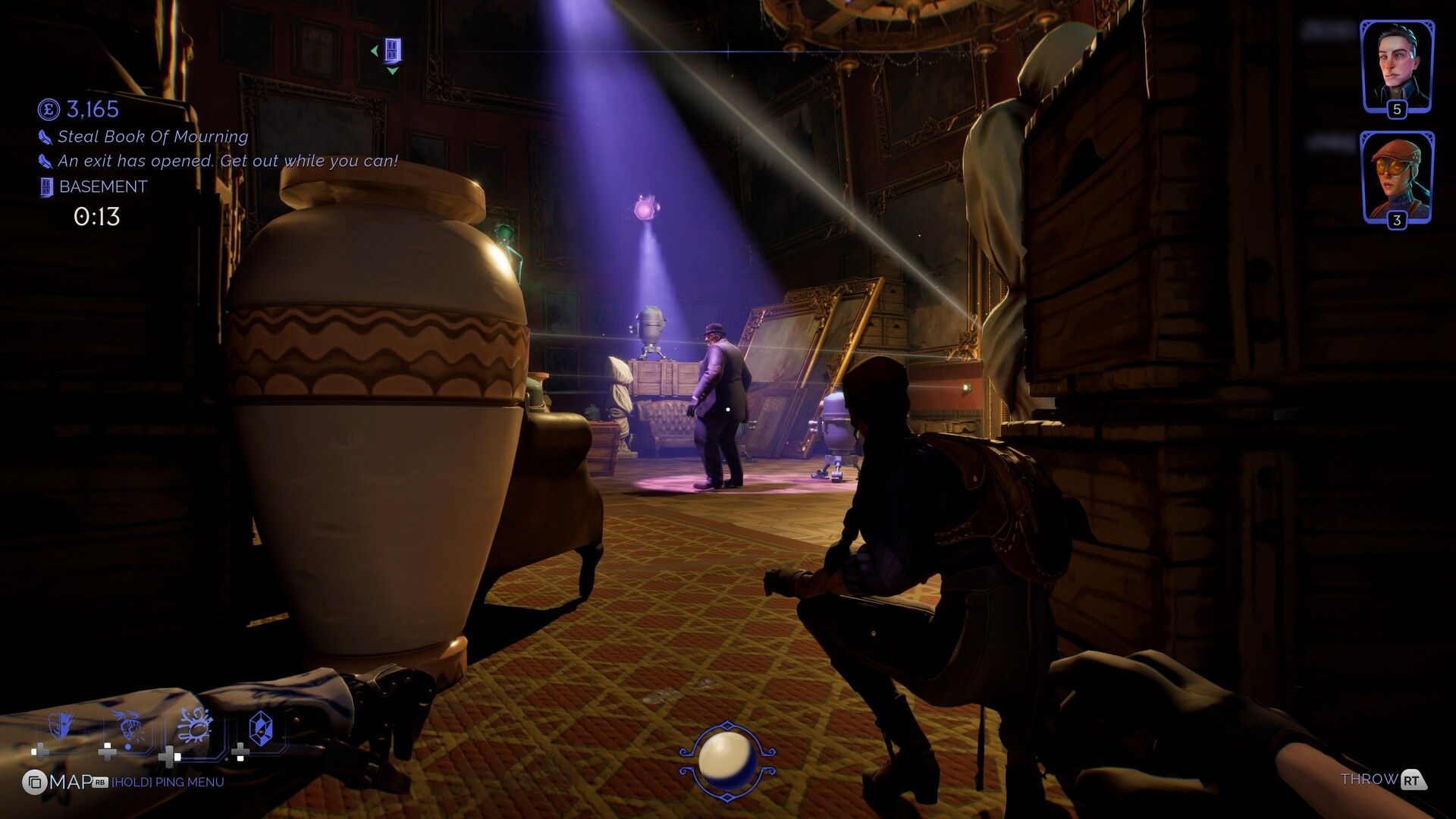
"The backbone of the game is the 16-contract experience, which takes you from your first mission for the Thieves Guild and your acquisition of the Vistara Diamond to the cliffhanger ending."
Stealth games live and die by player tools. What kinds of gadgets, abilities, and gear can players expect to experiment with?
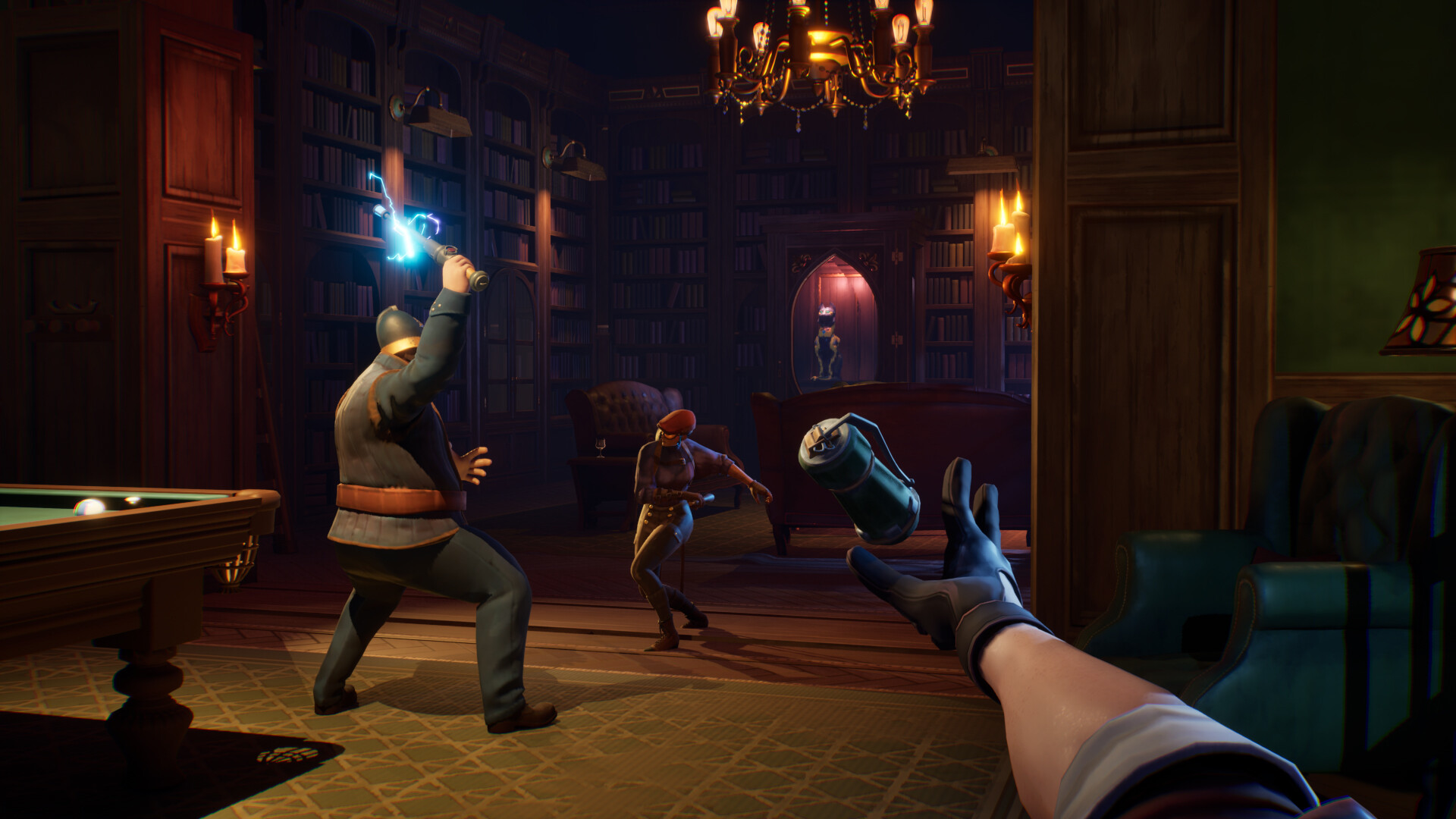
Hickman: Everything starts with the signature tool – for the Spider, it’s the Zipwire. She can get vertical quickly, or slip past obstacles, but it’s noisy and draSpector attention, even when you’re cranking it for your next move. For the Chameleon, it’s the Disguise – being able to look like a guard, or even a Haunstable, changes how you relate to the space. Each of them have their own dynamic, and players will likely settle on a favorite.
But, in addition, we have a whole suite of things for players to work with. Smoke bombs are pretty straightforward and block line of sight; the pickpocket fairy does what it says on the tin, but it also can flip switches from a distance. The insult fairy will draw the attention of any guards in the area, which can be helpful when trying to get away. Slithersap has a variety of effects – from coating searchlights to making the ground slippier, to disabling guards.
The game can be played solo or in two-player co-op. What were the biggest challenges in making sure both styles feel equally satisfying?
Hickman: We started with solo – if you’re playing with someone else, and they drop out, the game still has to be good, right? So, that’s the cornerstone – if it’s not fun for me to go in by myself and try to achieve my goals, then it’s not good enough yet. From there, we take co-op to be the cherry on top. We don’t adjust the difficulty, so it’s up to you. If you want to play with someone else, it should be easier – in reality it depends on their skill levels. A newbie companion in Master Thief is just as likely to cause trouble as to help.
Each difficulty has its own configuration of security, so I really encourage players to try out the different difficulty levels – it can make a lot of difference to how enjoyable you find the game.
How does co-op change the rhythm of stealth? Does it make heists more tactical, more chaotic, or a mix of both?
Hickman: Generally, more chaotic. When you’re the only person moving through the space, you’re completely in control of what’s happening. As soon as you’re playing with someone else, you don’t know what they’re going to do. We often play with open voice comms, so we can coordinate – you go to the tower vault, I’ll hit the kitchen, sort of thing – but things always go off plan. The game is at its best, really, when you’re improvising. It’s easy to see a throughline and plan a path, but adapting when suddenly the Haunstable comes through the wall? That’s where it gets good.
The game previously shifted away from a PvPvE focus toward solo and co-op. Looking back, how did that change strengthen the final game?
Spector: There are a variety of ways solo and coop strengthened the game and, as I said earlier, everyone’s likely to have their own answer. For me it strengthened the game simply because players told us it did. When we were working on PVP we observed a couple of things. First, players either ignored each other so they could collect loot and not get knocked out OR they stalked each other so they could knock other players out and collect loot. One was an avoidance interaction and the other was a direct interaction. They didn’t play nicely together. It wasn’t very satisfying and didn’t deliver on the “stealth action” gameplay goal Paul and I set out to achieve. Second, we saw players cooperating naturally within the very limited ways the game allowed. Listening to players just made sense and the game is clearly better for it. Frankly, the opportunity to listen to players is a big part of the reason we released the current, “sneak peek” version of the game. We want to hear from players and, if I know players, we’re DEFINITELY going to hear plenty!
Hickman: Putting the focus on PvE really helped us to raise the bar on the quality of the overall experience. PvPvE without the PvE part is really just PvP. Getting the focus on the solo experience, the guards, the security devices, the maps, the objectives – it lays a stronger foundation for competitive play.
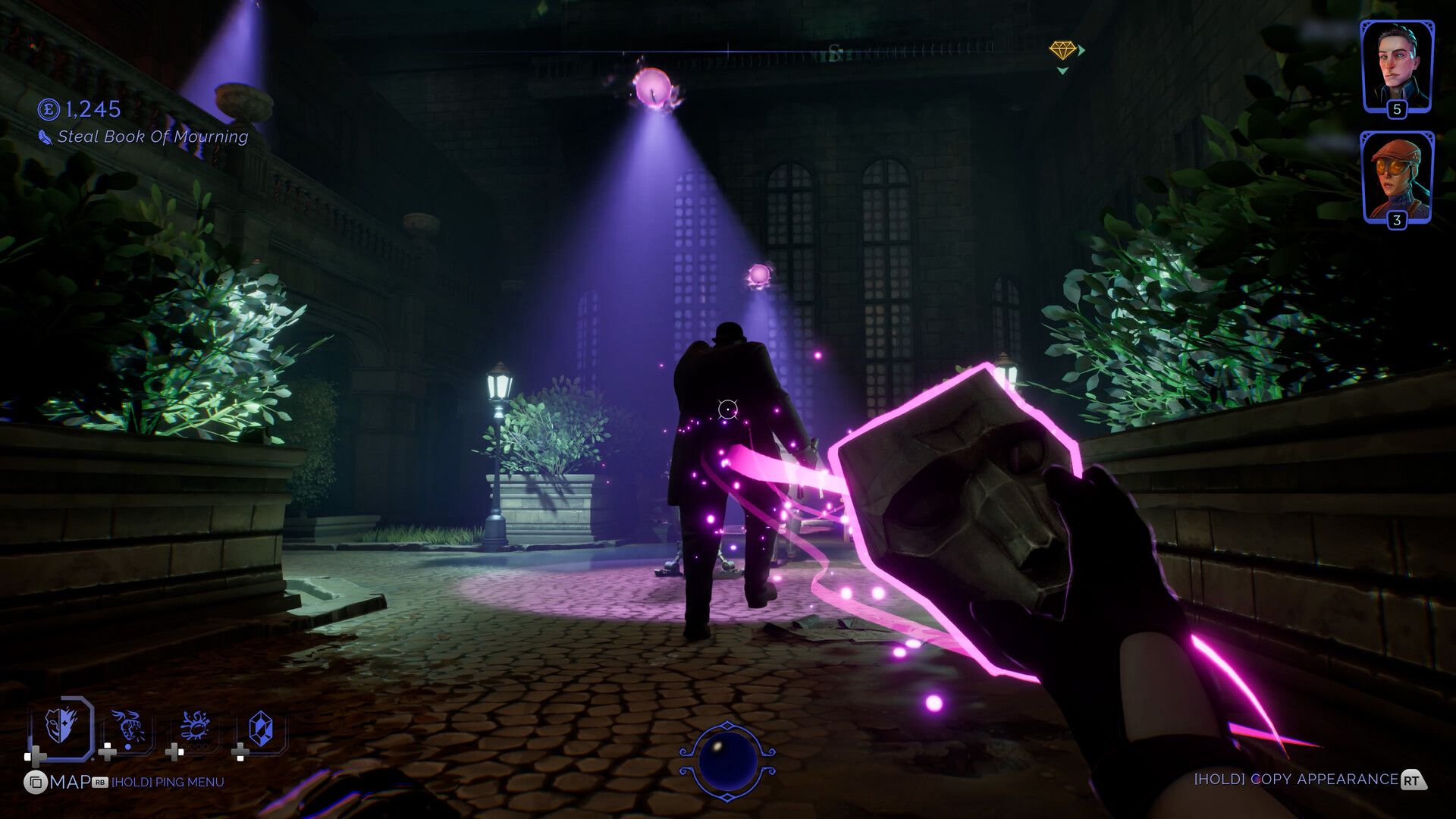
"Putting the focus on PvE really helped us to raise the bar on the quality of the overall experience."
Contracts seem central to the structure of Thick as Thieves. Are there plans to expand contracts post-launch with new objectives, maps, modifiers, or mission types?
Hickman: We’ve been thinking about this game as an “introductory chapter” – there’s a tutorial, 15 contracts, and then the credits. Will there be more? Sure, we’d love to make more contracts, more maps, more mission types – we have ideas for all of these that we left on the cutting-room floor and will be happy to go back and revisit if the players love the game. We’ve got all kinds of ideas of other places to go in Kilcairn, other artifacts to chase – it’s an endless well of possibilities.
Since post-launch content will depend on player feedback, what kind of response or player behaviour would push you toward expanding the game in certain directions?
Hickman: I mean, it’s really simple – we care about revieSpector, and we care about sales. The game is only $5 / €5 / £5 – vote with your wallet. It’s less than most burgers cost these days. If you like it, leave a review – we pay attention to every single review we get on Steam. Every one matters to us. And tell a friend – this is a great value for your gaming dollar, and it’s even more fun together.
The FAQ says Thick as Thieves is not a live-service game, even though more content is planned. How do you define the game’s post-launch approach?
Hickman: We’ll take a look at how big the audience is in the next few weeks and see what makes sense. If the community is 200K people, that’s one size of plan; if it’s 2M, that’s a completely different plan. We’ve got a couple of issues that we’ve already identified that we’re going to support with a patch – some settings, some localization – but beyond that, we’re going to wait and see how many people buy the game and what they say about it.