







Soulslike are hardly in short supply, so standing out from the crowd takes more than punishing combat and checkpoint systems. Valor Mortis is one-such Soulslike which looks to do things differently, combining brutal action with first-person perspectives, plus supernatural abilities, and surprisingly nimble parkour mechanics. Throw in a historical setting corrupted into something considerably darker than war, and there’s plenty here which should elevate Valor Mortis above the competition. Before you decide to give it a go, here’s fifteen things you need to know.
It’s a First-Person Soulslike Set in a Plague-Ridden Napoleonic Europe
Awakening from the dead as William, a soldier of Napoleon’s Grande Armée, Valor Mortis plunges you into an alt-reality of 19th century Europe, where the continent has been twisted beyond recognition by a ravenous plague. Its high-concept dark-fantasy is surely distinct, yet mixing with first-person Soulslike design leaves Valor Mortis risking one-too-many gimmicks. However, there’s an engaging mystery here. Your dredges through cursed battlefields with Napoleon’s voice rattling through your skull shows potential for one of the most compellingly unique takes on the Soulslike formula yet.
Expect Familiar Soulslike Mechanics
If you’ve played a Soulslike before, the basic rhythm should feel familiar. Stamina management is crucial during combat, as is timing parries to break an opponent’s posture, leaving them vulnerable to a violent execution. Lanterns act as bonfire stand-ins, where resting replenishes healing vials whilst enemies respawn. Also, as is typical of the genre, you’ll get one shot to retrieve dropped resources after death, embodying the challenging risk-reward you expect.
Melee is Combat’s Main Focus
Although you’ll carry firearms such as pistols and muskets, Valor Mortis is fundamentally a melee-focused action game. Guns are useful tools, and together with cold steel and supernatural powers – the latter we’ll discuss shortly – a continuous flow emerges. Maintaining momentum during fights is key, but as ammunition is scarce it seems that your firepower isn’t designed to replace your swordplay. You’ll need to make every shot count, sure, but if it wasn’t clear by now Valor Mortis is anything but a conventional first-person shooter.
Aggressive Melee is Rewarded
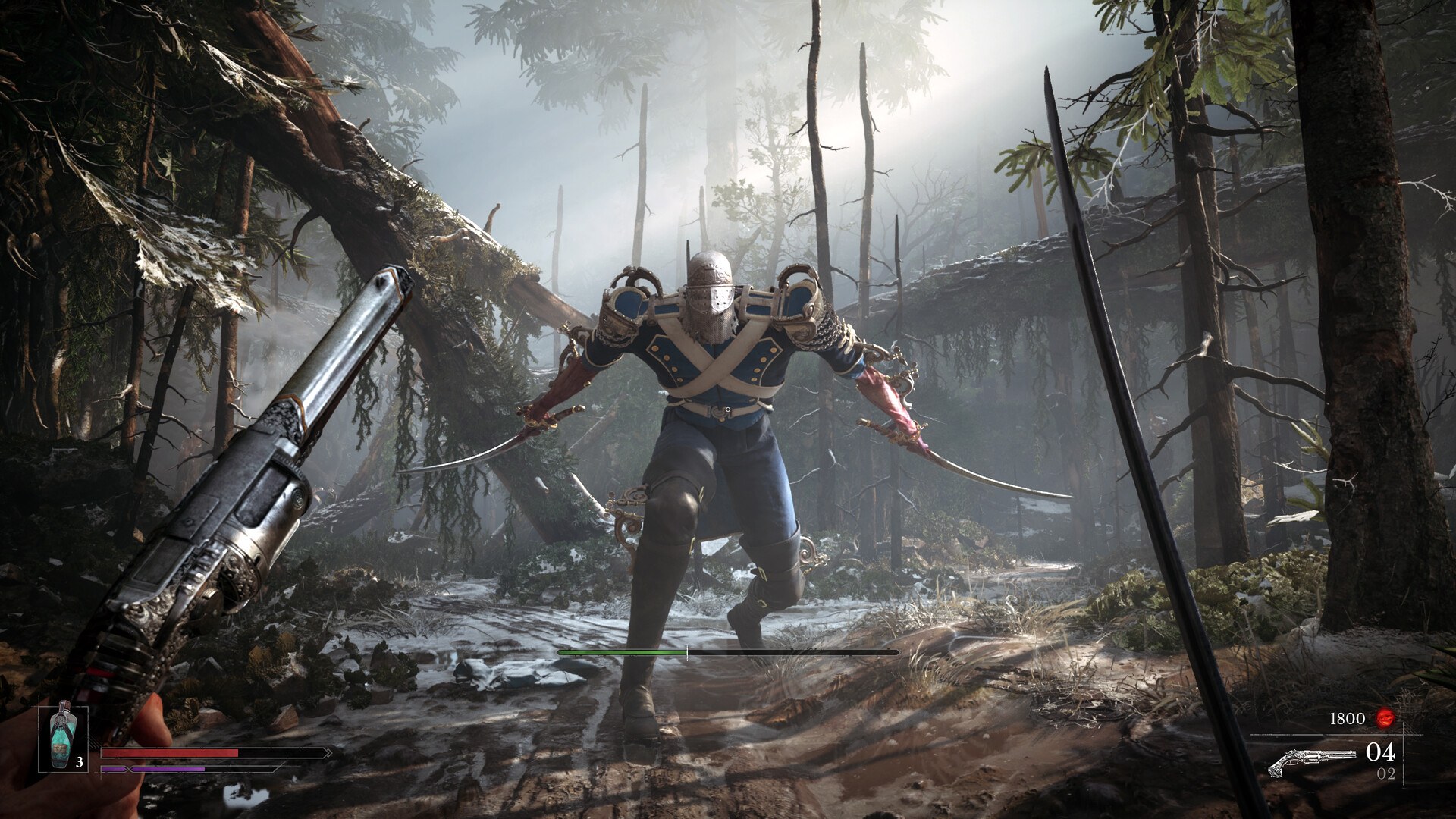
Valor Mortis’ combat system encourages you to stay on the offensive. Immediate counterattacks, for instance, replenish spent health, giving you a reason to keep pushing an advantage instead of backing off when taking damage. With each blade possessing its own weight and purpose, your positioning will change. A health-restoring counterattack, then, offers you a chance to get to grips with each sword’s unique handling, encouraging you to remain aggressive even if the weapon is unfamiliar.
Perfect Parries and Dodges Are Essential
Defence is just as important as offence, with the already discussed perfect parries presenting opportunities for brutal takedowns. Dodging, too, is another manoeuvre you’ll use liberally, with it proving especially useful when you’re observing enemy attack patterns. Overall, timing your responses correctly is key to surviving encounters, especially as more powerful enemies start chaining attacks together. Combat – both offence and defence – is tuned around reading an opponent and reacting at just the right moment. And, with weighty sound design and visual distortion, there’s enough feedback to inform you how timely your moves are.
Nephtoglobin Adds a Supernatural Edge
William’s resurrection comes with more than a second chance at life. At some point after he’s risen he’s imbued with Nephtoglobin, a supernatural power that can be used for ranged attacks and crowd control, giving you another tool to approach combat. Notably, in gameplay footage we see flames bursting out of William’s palms, providing a useful contrast to combat’s melee-focused core. When taken together, each element of William’s arsenal brings the possibility of chain attacks with fluidity and awestriking power.
Parkour is Part of Traversal
One More Level has indeed swapped Ghostrunner’s cyberpunk streamlining for grim Napoleonic battlegrounds, but some of the DNA from the studio’s earlier title has made its way over. Yes, in Valor Mortis you won’t just be walking to your next encounter but drawing from a suite of parkour-style moves: leaping, sliding, wall-running, and vaulting are all a part of the game’s traversal mechanics, providing a more engaging way to move through the environment.
Nephtoglobin Can Help With Traversal Too
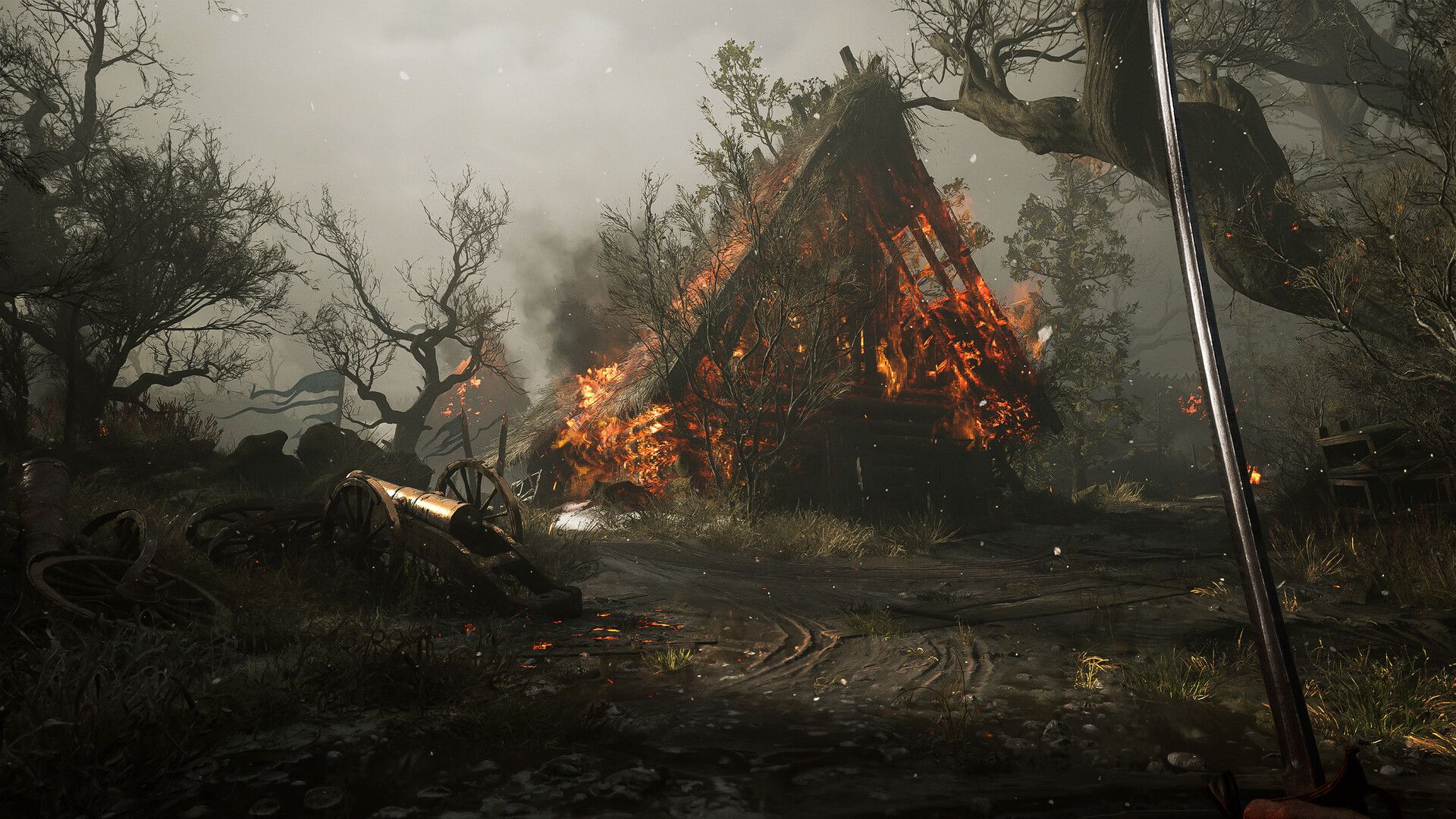
William’s supernatural power isn’t limited to combat either. Nephtoglobin can also assist with parkour traversal, allowing you to conjure temporary platforms and grapple points. Notably, in gameplay footage we see a cosmic blue string shoot out of William’s hand ala Spiderman, enabling him to swing over uncrossable terrain. Movement, then, should feel flexible throughout, with some areas likely needing you to combine your physical mobility with supernatural traversal to reach.
Exploration is Non-Linear
The world in Valor Mortis isn’t designed to be a straight line from one fight to the next. No, in true Soulsike fashion, exploration is non-linear, with Metroidvania-style gating meaning certain areas will only become accessible once you’ve gained new abilities or levelled up. Revisiting previously explored locations should therefore prove worthwhile, rather than being simply a case of retracing your steps.
There Are Separate Skill Trees For Character Progression and Weapons
Valor Mortis doesn’t feature standard RPG armour or gear upgrades. Instead, progression is handled through distinct skill trees for William and his weapons. By interacting with the lanterns, you can upgrade William’s core stats, with nodes covering stamina regeneration, parrying efficiency, health, and more. Elsewhere, each weapon has its own levelling tree, providing scope for honing your build around your favourite blade or firearm.
The Amber System Lets You Personalise Your Build
The Amber System is a passive ability mechanic that gives you further ways to tailor your character. Reaching certain milestones on your skill trees unlocks accessory slots which can be equipped with Ambers, bringing game-changing modifications that usually come with trade-offs such as vials which switch to refilling magic instead of health, or the ability to slow down time at the cost of stamina. You’ll need to think about what you’d like to gain and what you’re prepared to give up to get the best out of the system, but it’s a neat way to add build variety without every upgrade being a straightforward improvement.
There’s a Variety of Enemies
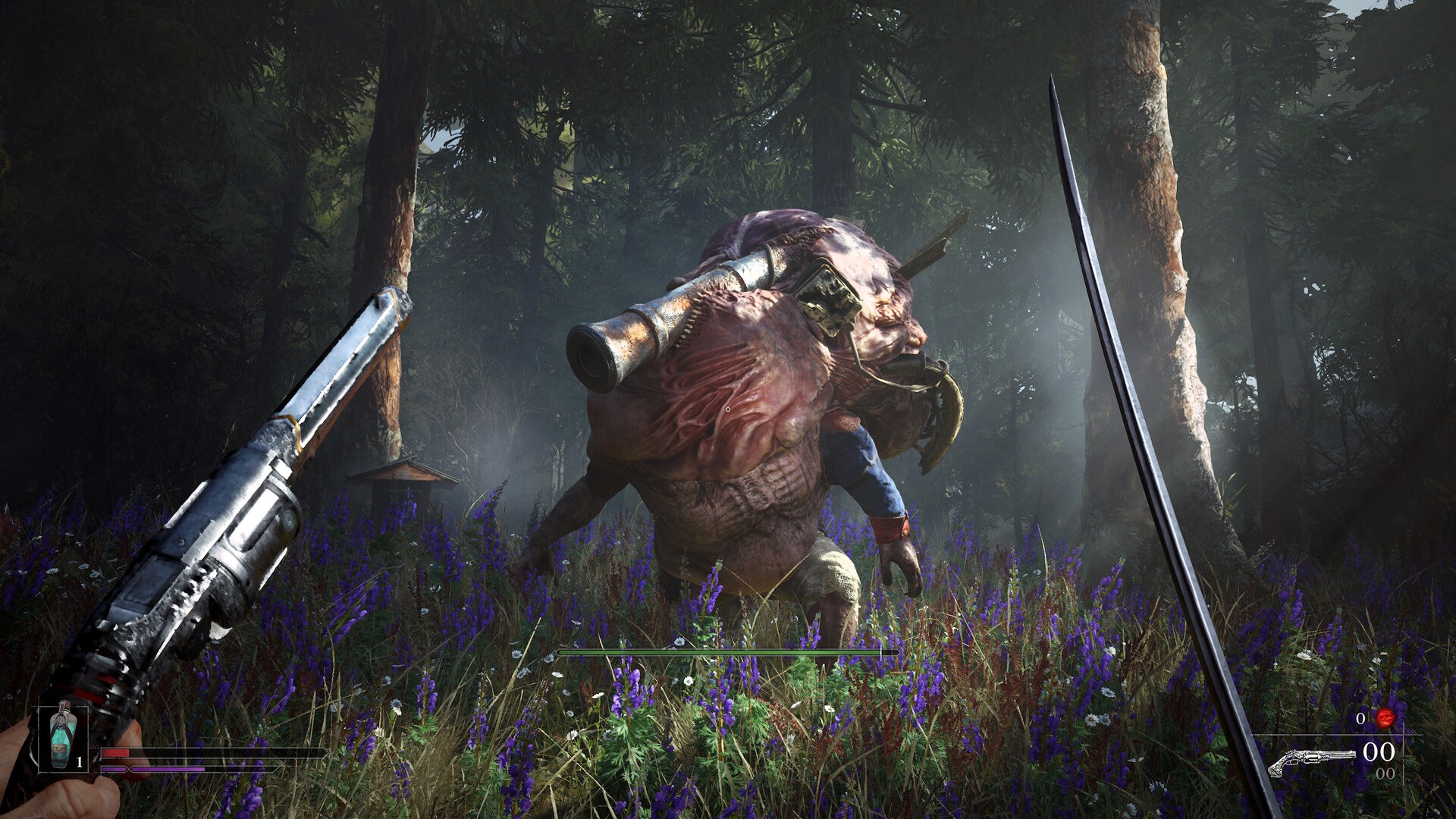
If there’s one concern highlighted in pre-release preview coverage it’s that enemies have shown little variety. Sure, countless soldiers each wear uniquely contorted bodies, but the core design remains unchanged. However, alongside the corrupted military types, in Valor Mortis you’ll face off against mutated creatures, hidden snipers, and more. Despite such refined combat mechanics, sufficient enemy variety will be crucial to keep encounters interesting.
Mini-Bosses Feature Throughout
Mini-bosses will feature throughout the game, with weak-point targeting and unblockable ‘red light’ attacks among the mechanics to watch out for. From what we’ve seen, these encounters look designed to scrutinise your capacity to read enemy behaviour rather than simply being tests of your evasion or ability to take higher damage. They should be a useful step up between the game’s regular enemies and its larger bosses.
Boss Battles Are Multi-Phase
Valor Mortis also features a range of multi-phase boss battles. General Lothaire, the Eagle Bearer features in the game’s playable demo, and his fight moves from brutal slashing attacks and minion summoning to devastating arena interactions. Boss fights which evolve as they progress are one of the major appeals of Soulslikes, where learning how a battle changes is often as satisfying as learning how it begins.
Release Date, Platforms, and PC Requirements
Valor Mortis is set to release on October 13th, with PS5, Xbox Series X|S, and PC via Steam the confirmed platforms. To play the game on your PC, you’ll need at a minimum an AMD Ryzen 7 3700X or Intel Core i7-11700 CPU, an AMD Radeon RX 6700 or Nvidia GeForce RTX 2070 Super GPU, and 16GB RAM. Recommended hardware, as per the game’s Steam page, details an AMD Ryzen 7 7700 or Intel Core i7-13700 CPU, an AMD Radeon RX 7900 GRE or Nvidia GeForce RTX 4070 GPU, and 16GB RAM. Storage space required is 50GB alongside DirectX version 12 and an SSD.