




Boomer shooters are already a gloriously uncomplicated experience. Breakneck speed, pixelated viscera, and an arsenal of awestriking armaments characterise the slate of modern first-person shooters which look to the past for inspiration. Throw in an Ultramarine, as per the first Boltgun, and you had one of the most memorable boomers in recent years. For the sequel, developer Auroch Digital is taking the foundation of its predecessor but ramping up the bloodshed with a second playable character, a gauntlet of new enemies, an expansive campaign, and a glut of newly devastating firepower. The mechanics demands more blood, and Warhammer 40,000: Boltgun 2 is set to deliver. Here’s fifteen things you need to know.
Two Playable Characters Offer Different Ways to Play
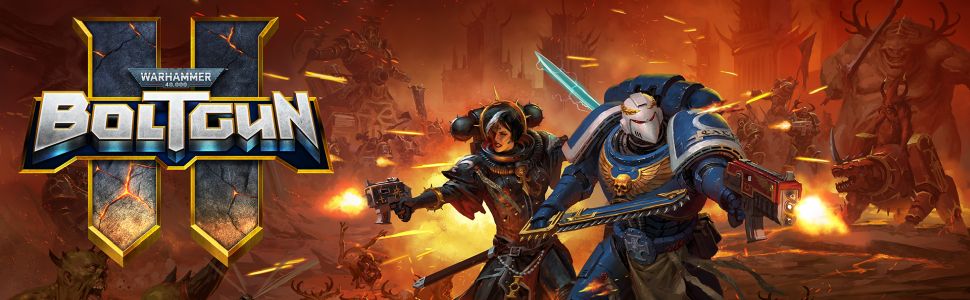
Arguably Boltgun 2’s biggest addition is the introduction of a second playable character. Alongside Ultramarine Sternguard Veteran Malum Caedo, who returns from the first game, is Sister of Battle Nyra Veyrath, with the pair occupying distinctly different combat identities. You’ll choose which character to play at the beginning of the campaign – Caedo the familiar battle-hardened powerhouse; Veyrath an agile, flamboyant alternative. With divergent approaches, Boltgun 2 isn’t offering the same experience twice with a different character.
You Choose Your Own Path Through the Campaign
Instead of following a set path through the game, Boltgun 2 lets you choose the sequence of missions. Each branch of the campaign contains unique levels, meaning you’ll encounter content that isn’t available on every playthrough. More than thirty levels have been confirmed, giving Boltgun 2 more reasons to be replayed beyond experiencing the playstyles of both characters.
Each Character Has Their Own Arsenal
Each character’s distinct combat identity, of course, extends to their own arsenal. The original Boltgun was built around the satisfaction that comes through acquiring increasingly powerful weapons. So, for the sequel, giving each protagonist their own weapon selection should expand the joy of growing stronger compared to the first game. Both character campaigns are still built on the same fundamental run-and-gun philosophy, but the tools each has available will ensure drastically different approaches to combat.
Character-Specific Abilities Change How You Traverse
And, the differences between Malum and Nyra extend beyond combat too. Their individual abilities also affect how they move through Boltgun 2’s environments. Compared to the first game, the sequel gives traversal a more active role in level design, with your character’s capabilities influencing how you navigate spaces, reach different areas, and approach encounters. Nyra arguably has the more expressive moveset of the two protagonists, but the point is to underscore the sequel’s broader philosophy: you aren’t just here to shoot more enemies, but through a broad range of abilities the way you interact with the world has fundamentally changed.
Grenades Are a Bigger Focus
Grenades were always useful in the original Boltgun, but Auroch Digital has placed a bigger focus on how they function in the sequel. The development team intends for these explosives to become a more meaningful part of your combat toolkit. For a game where you’re consistently moving, oftentimes against overwhelming hordes of enemies, you’ll likely be incorporating grenades into your regular combat rhythm more frequently. And, of course, each character brings their own explosives – check out our Boltgun 2 demo coverage for who’s throwing what.
Strength and Toughness Has Changed
The original Boltgun made sure you matched your weapon’s Strength to an Enemy’s toughness to maximise damage, but this mechanic has received a change for the sequel. While not a complete overhaul – indeed, the developers note that elements of the original system still run beneath the surface – the now-broader system makes every weapon more viable. The only question mark, really, is why enemy health indicators have been removed. Even with weapon usage expanding from its arguably rigid earlier system, the numbers still displayed useful information on how effective your weapon of choice was.
A New Weapon Wheel Makes Switching Guns Easier
This might sound like a minor quality of life addition, but the ability now to switch between weapons on the fly should maintain the frantic momentum of combat which the game works hard to establish. Plus, considering how varied the sequel’s arsenal is, having a more efficient way to access those weapons would prove useful either way.
New Weapons Expand the Arsenal
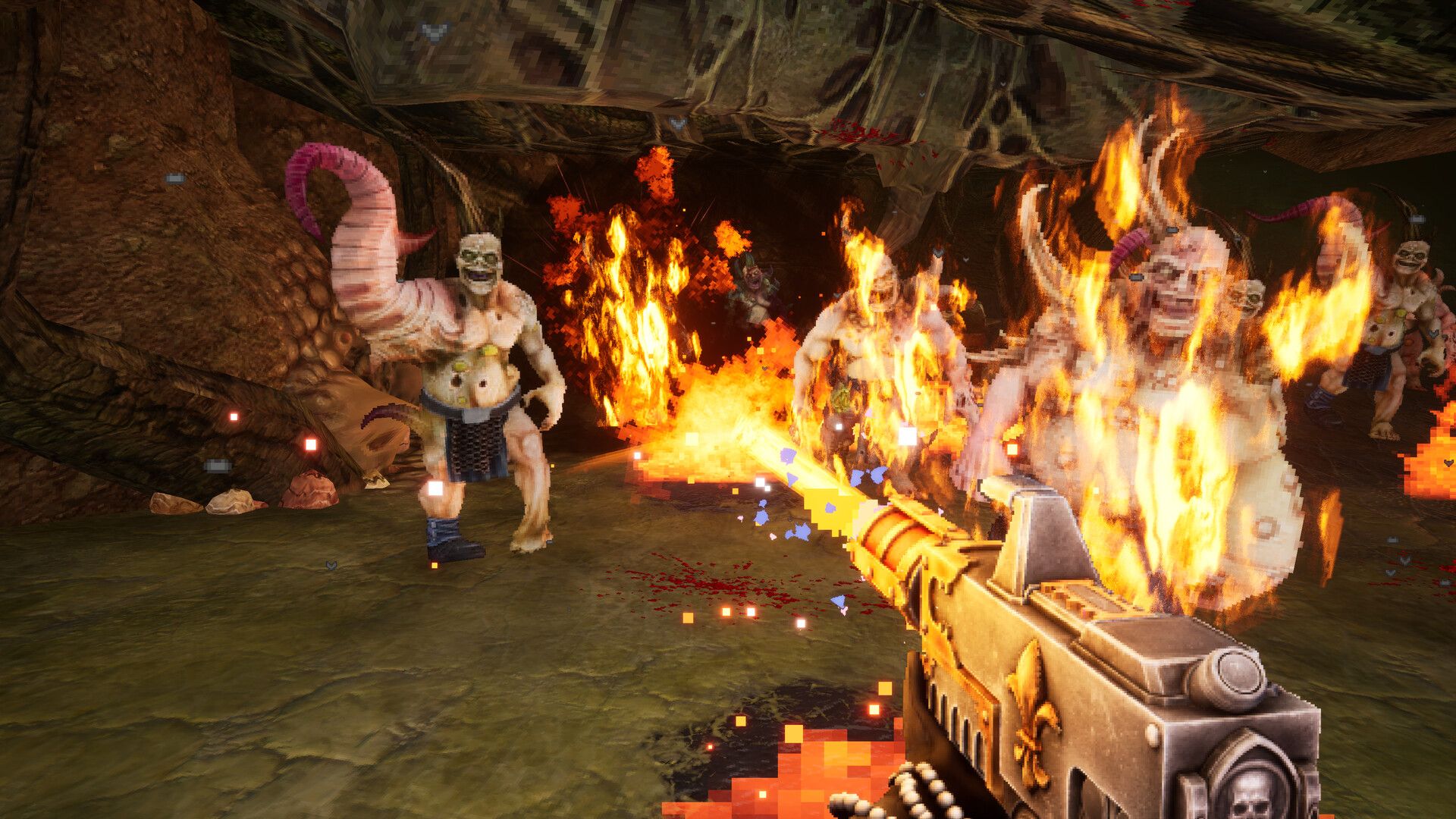
We’ve been alluding to it throughout this feature, but yes, Boltgun 2 introduces new ways to violently resolve every encounter. Nyra, for instance, brings the Condemnor Stakethrower, a specialised crossbow that fires devastating bolts, while Ultramarine Malum acquires the Red-Mist Shotgun, a heavier variant of the standard shotgun which can tear through soon-to-be carcasses at will.
New Enemies Bring More Combat Threat
Boltgun 2’s enemy roster brings a meaty upgrade over the first game. All in all, we’re looking at more than three dozen new enemy types. Among them are Bloodcrushers – an unrelenting combination of Bloodletter daemons riding armoured Juggernauts – representing the game’s first mounted opponent, where two assailants can become separate threats during combat. Bloodcrushers are just one example of an expanded enemy roster that isn’t content with simply giving you more targets, but to create new problems that demand different approaches to overcome.
The Enemy Roster Develops Alongside Your Arsenal
Even though the Strength and Toughness system has been all-but removed for Boltgun 2, the relationship between your weapons and the enemies you face still has significance. See, in this sequel, as your arsenal grows, the opposition develops too. For example, new assailants are introduced as your available toolkit expands, fostering a sense of progression where you continually adapt to the increasing threat level.
Levels Are More Interactive Than Before
Boltgun 2’s levels are built to be more interactive than the first game, with more room to explore while still maintaining the forward momentum you’d expect from a fast-paced FPS. Secrets, hidden rooms, and alternative routes are scattered throughout, encouraging you to sprint off from the expected path. Furthermore, the levels themselves can play a greater role in combat, with opportunities for environmental destruction to drop debris on enemies or expose hazards.
The Death Korps Make The War Feel Bigger
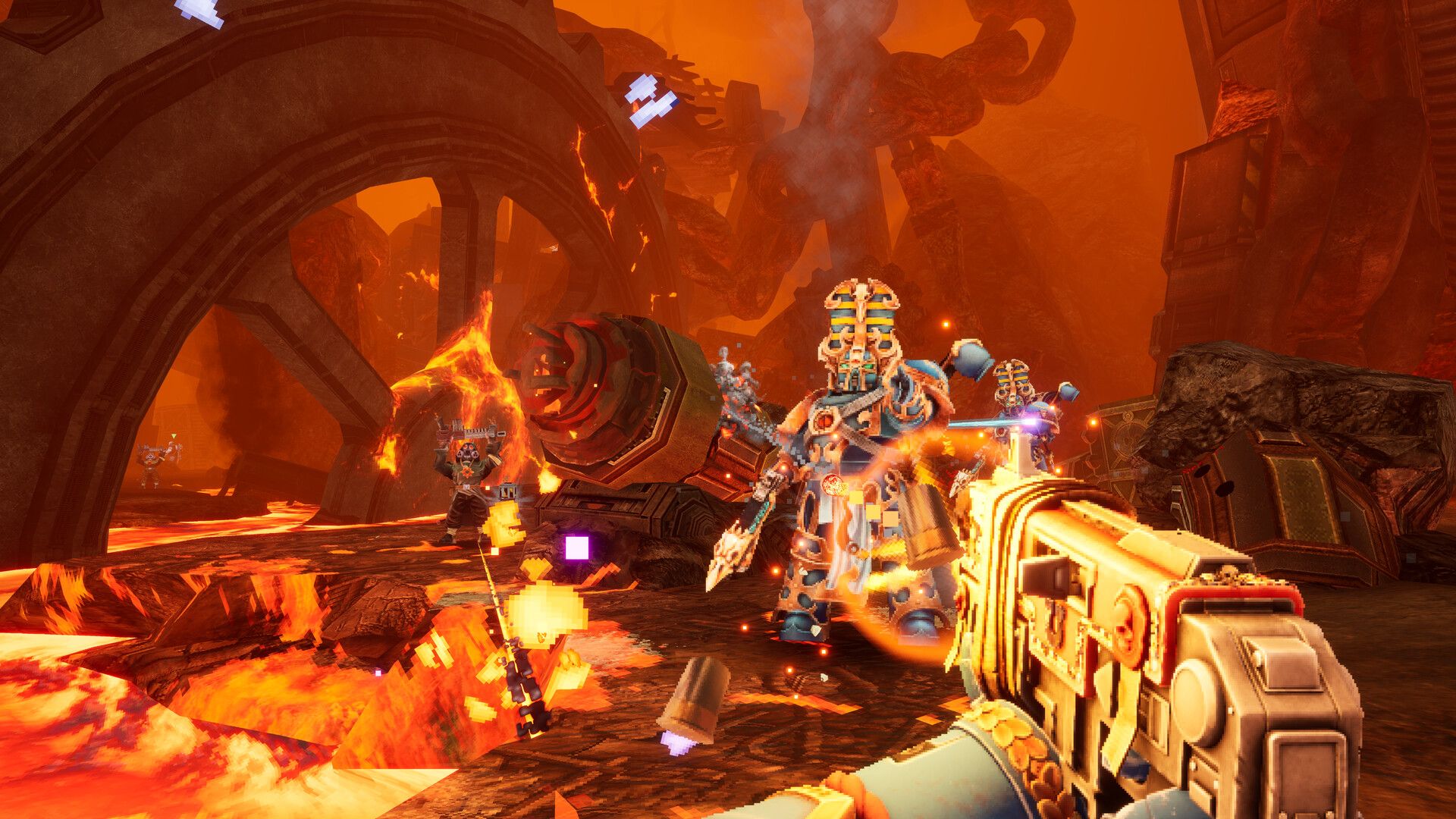
Boltgun 2 features the Death Korps of Krieg as allied units, who’ll fight alongside you during certain passages. Their inclusion, however, hints at something greater than the sum of your actions as either Caedo or Nyra, with their assistance suggesting that these battles are part of a much wider conflict. You’re still the run-and-gun killer at the centre of the experience, but now there’s an entire war happening around you.
Mick Gordon is Contributing to the Soundtrack
While the majority of Boltgun 2’s score is being handled by Auroch Digital’s audio team, a coup for the studio is composer Mick Gordon is lending his particular brand of industrial propulsion to key moments in the sequel.
Release Date and Platforms
Warhammer 40,000: Boltgun 2 is scheduled to release October 14th, with PS5, Xbox Series X|S, and PC via Steam the supported platforms. A Switch 2 version has been announced, with a post-launch release date yet to be confirmed.
PC Requirements
Minimum requirements include an Intel Core i5-8600K / AMD Ryzen 5 2600, a GeForce GTX 980 (4096MB) / Radeon R9 Fury (4096MB) / Arc A580 and 8 GB of RAM. Recommended requirements include Intel Core i7-7700K / AMD Ryzen 5 1500X, a GeForce GTX 1650 (4096 MB) / Radeon RX 570 (4096 MB) and 16GB of RAM. 13 GB of space is required.