






In 2013, the Assassin’s Creed franchise took a bold step with the release of Black Flag, a game that had you filling the shoes of a protagonist who was only half an Assassin for the most part, but was definitely all pirate. Edward Kenway’s romp through the Caribbean continues to be a beloved addition to the franchise, not just because of a great story and combat, but because the game captured the essence of what it would be like to play a pirate.
Well, thirteen years later, Windrose has set out to try and achieve the same feat, and with 10,00,000 copies sold since its Early Access release, it looks like piracy has returned to the mainstream yet again. Yes, we had Sea of Thieves in the intervening years, but that one hasn’t managed to be as interesting as Windrose, even though it’s a fairly solid effort. But sales alone aren’t an indicator of a title’s quality, a fact that’s been proven multiple times over the years.
So, what is it then that gives Windrose the enjoyment of favorable winds in a sea of titles that are vying for players’ attention? What is it about this one that has its players returning to its seas for more of what it has to offer? Well, we believe that Windrose has succeeded thanks to a sublime balance between simplicity and nuanced complexity that’s sustained across the board. Join us as we tell you what we mean.
A Pirate’s Life For You
Let’s start with the premise, which brings in some of that simplicity we mentioned earlier. You’re set upon by Blackbeard, a popular name in the pirate community owing to his fearsome reputation. Windrose’s take on the pirate captures his imposing presence, making him the catalyst for your adventure. You see, he attacks your ship and crew, leaving the bunch of you stranded on an island and left with nothing but your wits and a burning desire to become a pirate that no one dares attack ever again. At least, that’s what we’re aiming to be, but we’re sure that many of you feel the same way.
But getting there isn’t easy, which is the case with any undertaking that’s worth it. Being a pirate isn’t always an adventure where you’re sailing to distant lands and finding treasures everywhere you look. Windrose has been clever to make your journey interesting, making you earn your progress by putting in the work to build up your base, crew, and ship by engaging with its systems.
And with a world that’s procedurally generated and the option to bring up to four of your friends along for the fun with shared progress, the beginnings of why it has been so spellbinding for its players begin to show themselves.
Procedural PvE
Let’s start with the world you get to live out your adventure in. The fact that it’s procedurally generated is a major factor in Windrose’s ability to keep you coming back for more, as it lends a layer of unpredictability to your adventure. You never know what you’re going to find when you set out from your base, and while things can get a little more familiar as you keep playing, the sheer size and variety of content on offer in the three playable biomes in the game’s Early Access build are more than enough to keep even the most diligent of explorers busy for a while.
But before that familiarity sets in, you’re going to have to be able to adapt to situations and think on your feet, just as a real pirate captain would when faced with something they didn’t anticipate when undertaking a voyage into lands unknown. We’d argue that Windrose nails down the feeling of venturing into the unknown, and that it’s only going to amplify it as the game adds more content over the course of its development.
But while the world itself might be unpredictable, we think that having only PvE elements in it makes the experience avoid the risk of running into a foe you can’t beat. From the perspective of an average player, having PvP systems means that there’s always going to be someone who is more skilled than you are, or perhaps grinded enough to craft a build that can wreck even the most skilled players if they’re not well-equipped enough to handle the threat that they present.
With only PvE on board, it means that the game’s RPG trappings remain grounded in a gameplay loop that encourages cooperation over competition, and while that might seem like it goes against the pirate’s code, we’d quote Jack Sparrow and say that the code is just a bunch of guidelines anyway. As it stands, Windrose’s take on piracy is liberating, allowing you to meet anything it throws at you on your own terms, and the fact that you could choose to play it entirely solo is always a good thing.
But of course, a ship is only as good as its crew, and the addition of co-op multiplayer is the next solid touch that makes Windrose an addictive game.
Fleeting Advantages
Every pirate’s dream is to have command of their own fleet, and possibly even an armada that would give even Davy Jones a reason to pause and reconsider picking a fight with them. The option to bring up to four of your buddies along is a great touch, and one of the reasons why we can’t put Windrose down. It works so well with the procedurally-generated world, creating the scope for play sessions that had so much chaos packed into a couple of hours.
Think about it this way. The game’s chock full of formidable threats that might prove too much for you in your early hours when you’re just building up to the legendary pirate you’re eventually going to become. But where one of you might fail on your own, you could always get your friends together and bring four ships to turn the tide (pun intended) in your favor. Get a few synergies going with your buddies, and you’re going to be tearing through enemies with disdain. Of course, with your progress being retained, there’s a lovely continuity to it all. You could always just keep playing even if your buddies have to drop off for whatever reason.
It opens up so many possibilities, and the idea of having a bunch of like-minded friends joining us to terrorize the high seas is a superb touch in a game that wants you to feel like a pirate as you make your way through the adventure. Of course, choosing to go it alone is a viable option, especially if you manage to come to grips with the game’s combat.
Swashbuckling Action
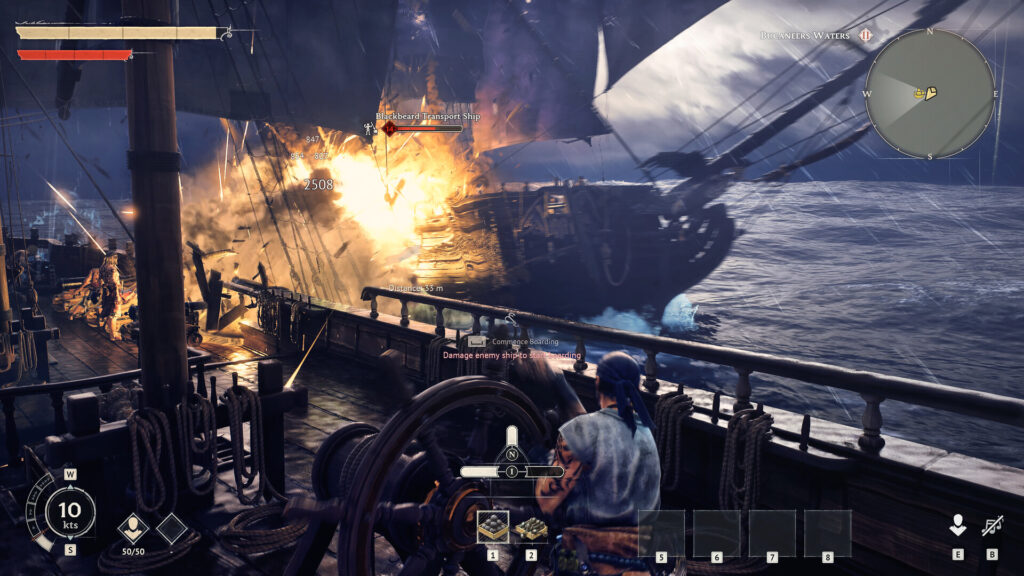
There’s a reason we mentioned Black Flag when we set out to paint a picture of why Windrose has been as captivating as it is. Well, get into a fight with an enemy ship, and you’re immediately going to see what we meant. There aren’t any complex mechanics to wrap your head around, and while that may seem like a reason to walk (or sail) away from Windrose, it actually works in its favor. All you have to do is get on a ship’s broadside and let loose with your cannons.
There are no limits to your ammo, and while positioning yourself can be challenging, it does make the entire thing so damn enjoyable. Of course, ship-to-ship combat is only half of the combat’s allure, and boarding enemy vessels means that you’re going to cross blades with the crew on that ship. Melee combat is once again a simple matter of parrying enemy attacks and getting in some of your own, with your pistols being an alternate method of dealing damage at range.
While some of you might not like the emphasis on parrying, we found it to be a very compelling callback to Edward Kenway’s ruthless fighting style. We must admit that we’re eager to see what’s going to be added to flesh things out a little more on the combat front, but what’s on offer is definitely enough to keep you entertained for a while. That’s especially true when you think about how exploration and combat feed into each other, and the fact that you drop any raw materials but not crafted items when you fall to an enemy means that there are consequences to losing. It’s all quite nuanced and done so well that you find yourself itching to pick yet another fight with an enemy crew.
An Authentic Adventure
With a solid, varied world to explore, combat that’s quite good, and a premise that clicks almost instantaneously, becoming a pirate captain in Windrose is a treat. Of course, looking out for your ship, base, and crew is a part of that job description, and you’re going to be busy looking for resources and actually building up your base when you return to it for some well-deserved downtime.
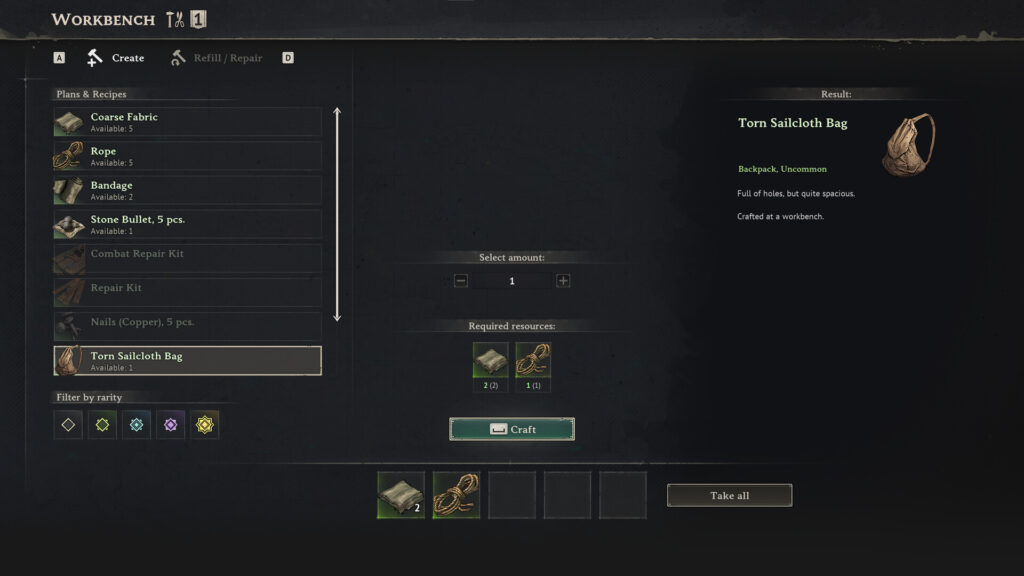
With a plethora of ways to get more resources and a fairly deep crafting system on board, we’re now at the final piece of the puzzle of what makes Windrose as addictive as it is. Building up your base feels personal, and it’s a great way to bring a bit of individual expression into the mix. Each one of us found our bases to be so vastly different from our friends, and it was a great way to kill a few hours between exploring the world and taking on enemy ships and bosses.
Once again, it’s all quite simple and easy to wrap your head around, but nuanced enough to have you thinking about it when you’re away from your systems. And that’s Windrose’s greatest strength. It’s easy to pick up and challenging to master, making it a title that you could sink hours into without feeling fatigued or bored. That’s especially true when you play it with your friends.
But of course, we must end with a word of caution. Although the three playable biomes on offer have more than enough to keep you occupied for a significantly long time, there’s still a long way to go, and a lot more to come before Windrose achieves the infamy that befits a game about pirates. The early access build does need further optimization, as players encountered a couple of crashes and a bit of long load times between different biomes. The fact that the player community is going to be a part of shaping the game’s future does give us hope for a final build that’s going to be quite appealing, though.
But as it stands, Windrose isn’t just about the novelty of putting you in the shoes of a budding pirate, as it has enough meat to stand out as a solid title despite that. All it needs to do is sustain the momentum it has achieved and chart a course into a future where it allows us to become the worst pirates the world has ever heard of. We can’t wait to see that happen, and are going to be sailing its seas until that day arrives.
Note: The views expressed in this article are those of the author and do not necessarily represent the views of, and should not be attributed to, GamingBolt as an organization.