





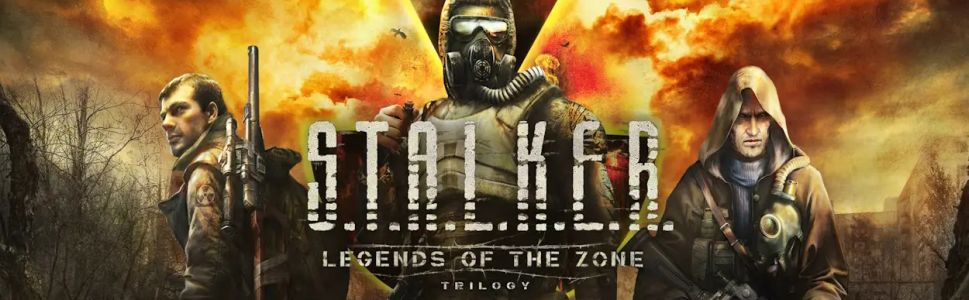
It’s interesting to revisit the original S.T.A.L.K.E.R. trilogy in the wake of S.T.A.L.K.E.R. 2: Heart of Chornobyl. The long-awaited sequel finally launched after years of anticipation, and yet, like the very Stalkers populating the Exclusion Zone, I find myself returning to where it all began.
GSC Game World released S.T.A.L.K.E.R.: Shadow of Chornobyl, Clear Sky and Call of Pripyat in a single compilation last year with Legends of the Zone Trilogy and showcased just how well the classics held up. Of course, two features were conspicuously absent at the time, namely mod support and enhancements for Xbox Series X/S and PS5.
Thus, we have S.T.A.L.K.E.R.: Legends of the Zone Trilogy – Enhanced, offering those who own the previous-gen (or PC) versions to avail of a free current-gen upgrade. And there’s quite a bit on offer – four graphical modes, lighting improvements, 4K cinematics, and improved character and weapon models, to name a few. Couple this with how well the gameplay and world design hold up – yes, even stuck in the past as it is – and this remains a fundamentally worthwhile trilogy of classics to embrace.
"Few other titles can capture the atmosphere of S.T.A.L.K.E.R. There’s this sense of “Every man for himself,” leading to a characteristic ruthlessness – though sometimes that can come in handy, especially when dealing with duplicitous foes."
Whether you played S.T.A.L.K.E.R. 2 or not, the fundamentals remain. You venture through different regions of the Chornobyl Exclusion Zone but the real-world influences go beyond desolation and murderous radiation. Mutants roam the Zone, from twisted, bloodthirsty dogs to other relentless terrors. Anomalies manifest at different points, though their application varies depending on the game. Then you have the factions and eager Stalkers looking for fortune, some attempting to get by while others are straight-up hostile.
In terms of the premiere S.T.A.L.K.E.R. experience, Call of Pripyat is probably the best. It takes the groundwork laid by Shadow of Chornobyl and all the improvements from Clear Sky, like calibrating gear, Artifacts near Anomalies, and Emissions, a dangerous phenomenon that can outright kill if you don’t take shelter. But each title is worth experiencing in its own right, from your journey as the Marked One to find and kill Strelok to the decidedly slower pacing and faction wars that define Clear Sky.
Regardless of your feelings on each title (I still can’t fully embrace Clear Sky and its slower pace), they all showcase the strength of the series’ sandbox and non-linear structure. Though you have objectives, like finding the crashed helicopters in Call of Pripyat, how you go about them is completely up to you, but this isn’t a stroll through a post-nuclear wonderland.
Scavenging for weapons, ammunition, food, first-aid kits, bandages, and anti-radiation drugs will increase your chances of survival, even as you delve into more dangerous locations within the Zone. While resources are easily obtainable, knowing how to deal with Anomalies, heavy doses of radiation or something as simple as broken gear can make all the difference.
Wayward Stalkers or faction members may have different missions for you to fulfil, which can offer significant rewards (and maybe lead to things like stashes). While the approach to factions varies in each game – Clear Sky being the most intricate, as your decisions can directly impact your objectives – even something as simple as holstering weapons is important. Unless you’re keen on characters behaving in a hostile fashion towards you.
Granted, some may find the open world of the trilogy to feel antiquated, especially compared to more contemporary titles, but it’s still an exceptional achievement all these years later. Besides, few other titles can capture the atmosphere of S.T.A.L.K.E.R. There’s this sense of “Every man for himself,” leading to a characteristic ruthlessness – though sometimes that can come in handy, especially when dealing with duplicitous foes.
"Of course, the big question is regarding the visuals, and thankfully, the Enhanced version offers some noticeable improvements. Screen space reflections on water surfaces look good, especially in Quality Mode. The global illumination lends a natural warmth/coldness to the environment, depending on the day."
But that feeling of loneliness is reinforced throughout. Things are fleeting. Nothing is permanent. Today’s allies could be wiped out, leaving you with nothing. Yet, that impermanence has its own beauty and makes things feel significant.
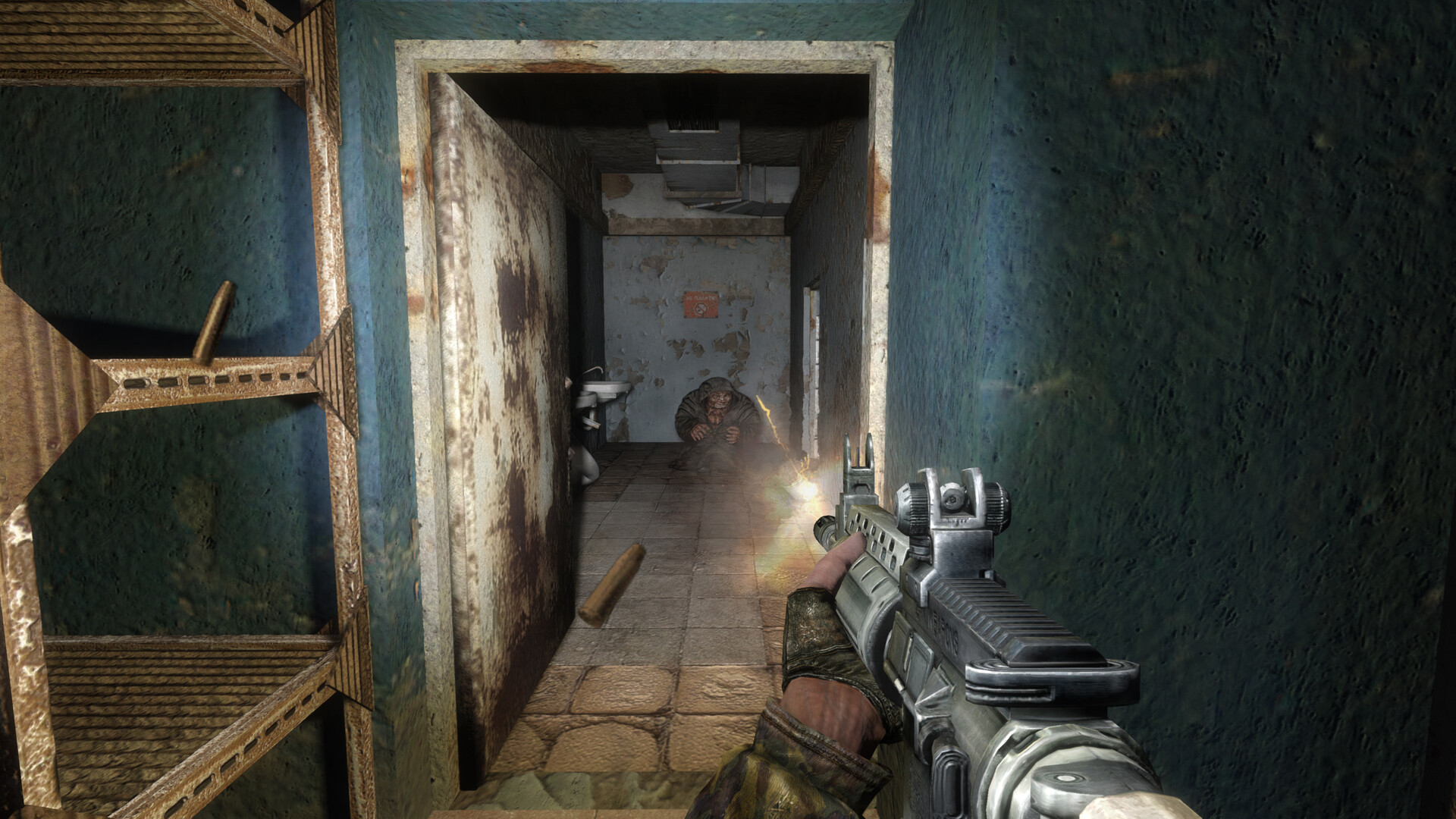
Gunplay is another key aspect of S.T.A.L.K.E.R., especially since it’s more grounded than your average twitch shooter. Managing weapon sway and recoil, sometimes by crouching, can improve your shooting as much as choosing the right weapon for the situation.
There’s a distinct oomph for each firearm – the feedback and stopping power of the shotguns is unmistakable, but unleashing a flurry of semi-automatic shots can also feel powerful. So it’s somewhat disappointing that some console settings, like aim assist, still feel iffy after all this. At least you can turn it off and adjust other options to fine tune your aim.
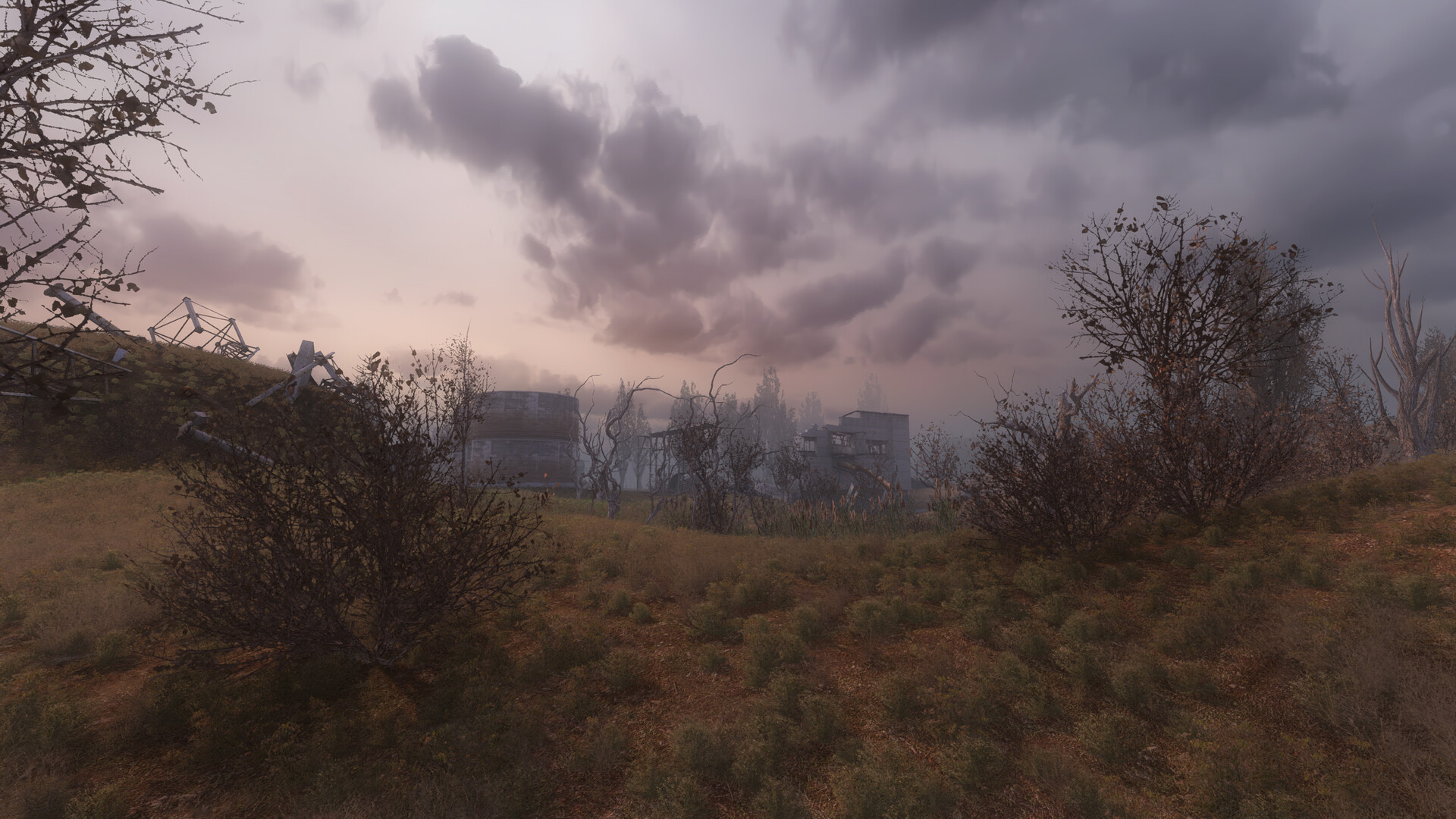
Of course, the big question is regarding the visuals, and thankfully, the Enhanced version offers some noticeable improvements. Screen space reflections on water surfaces look good, especially in Quality Mode. The global illumination lends a natural warmth/coldness to the environment, depending on the day.
Next to the PS4 version, infiltrating the first bandit camp to save Nimble in Shadow of Chornobyl looked much better with the naturalistic lighting and shadows on PS5. And while the skyboxes in the previous-gen version looked decent, they can be downright stunning on current-gen consoles. It’s enough to make you stop and admire the clouds while sprinting across an open field or the thunderbolts streaking through the sky during a downpour.
Oddly enough, some slight artifacting would occasionally occur in Call of Pripyat, and I don’t know why. I also didn’t find the biggest differences in weapon models, but the pop-in was far reduced (at least on Performance Mode). I wasn’t a fan of Quality Mode due to its 30 FPS, but the native 4K and fidelity are worth admiring.
"If you’re keen on a shooter where the world and its atmosphere feel as alive as its characters, then S.T.A.L.K.E.R.: Legends of the Zone Trilogy comes recommended."
Balanced Mode, with its upscaled 4K/40 FPS, is a decent alternative to Performance, but in the end, I opted for the latter’s consistent 60 FPS above all. For those who want the smoothest frame rate – and have a supporting VRR monitor – Ultra Performance is worth trying with its upscaled 2K/120 FPS. It’s all down to personal preference, but GSC Game World has put in the work to ensure each mode feels solid.
Besides the various quirks – including some less than stellar allied AI – and bugs of each title, the least impressive part of Legends of the Zone Trilogy is its mod support, at least on consoles. Utilizing Mod.io, it’s pretty limited, and the current selection has little to offer beyond new models, textures, animations, and whatnot. Time will tell how this evolves, but it seems unlikely that console players will be able to experience the likes of Anomaly anytime soon.
Despite this, S.T.A.L.K.E.R.: Legends of the Zone Trilogy – Enhanced is a worthy trilogy and a pretty worthwhile upgrade over its original release. The different graphical modes offer extensive freedom for tailoring your visual experience, while the lighting improvements add more character to the landscape and proceedings. While refinements to the aiming options and mods are definitely needed, and some mild technical bugs must be addressed, all three titles warrant a playthrough, if only to delve into the wonderfully desolate world of S.T.A.L.K.E.R.
Its brand of sandbox gameplay mixed with first-person shooting and survival may not be for everyone, and all three titles have their share of bugs and polish issues. But if you’re keen on a shooter where the world and its atmosphere feel as alive as its characters, then S.T.A.L.K.E.R.: Legends of the Zone Trilogy comes recommended. Who knows? It could make great practice for whenever S.T.A.L.K.E.R. 2: Heart of Chornobyl makes the jump to PS5.
This game was reviewed on the PlayStation 5.
Still an incredible showcase of world-building, atmosphere, and sandbox design in the first-person shooter space. Emergent gameplay still holds up after all these years. New graphics options feel robust; sumptuous improvements to the skyboxes and lighting are incredible to behold. Simply outstanding value.
Mod support is a little restrictive on consoles and the selection isn't very extensive. A few graphical artifacts in Call of Pripyat. Aim assist could still use some fine-tuning. Clear Sky remains the weakest of the the trio, even if it's still essential.