





Outward 2 is going to be a PvE experience that throws players into a harsh fantasy world where they must fend for themselves. While originally planned for an Early Access release this month, Nine Dots Studios has decided to take more time to work on the project and is looking at a 2027 launch window instead. In the meantime, creative director and studio CEO Guillaume Boucher-Vidal was kind enough to answer our questions about Outward 2.
Outward 2 was recently delayed from its planned July 2026 Early Access launch to 2027, with the team saying beta feedback made it clear the game needed more time. What were the biggest areas of feedback that convinced you the delay was necessary, and what should players expect to feel has changed the most when they next play it?
Stability is the big outlier. Optimization and debugging takes a lot of time and Outward 2 is a very big game. Expectations for Early Access games are that it’s okay to have some bugs, but the experience should be pleasant. Crashes and disconnections while playing in multiplayer were frequent, and we’ve noticed some specific hardware and OS configurations that slowed the game’s performance to a crawl. So if you mix bad stability along with many small things that need work, such as economic or combat balance feeling off, you end up with frustrations and apprehensions in too many areas at once and instead of a sense of curiosity. We decided to extend the game’s development not to add more things, but to offer a tighter package that announces more clearly where we want to go from there.
You’ve said the goal is for there to be a “stark jump” between the beta and the Early Access launch. Does that primarily mean better stability and polish, or are you also using the extra time to rethink balance, onboarding, combat feel, quest structure, and world readability?
The biggest jump should be in making an experience that feels solid rather than holding together with duct tape. So debugging is important, but also the impact of balance changes can’t be understated. The balance in the playtests were not final, but clearly it’s been a sticking point for many players. Balance is something that is very easy to iterate on during Early Access, and it’s one of those things that is a lot easier to tweak just right when you have a dialog with your players. But we’ll need to be closer to the final intent to keep our players engaged. Something as trivial as how much stamina you recover from drinking water can impact a player’s experience.
As for onboarding or quest structure, while we do intend to improve the tutorial, it will remain a separate mode and we don’t intend to hold the player’s hand once they start their adventure. It’s part of the vision of Outward to feel overwhelmed at first. But we need to make sure we give enough tools to the player to overcome those initial challenges.That’s the fine line we need to hit in the balance.
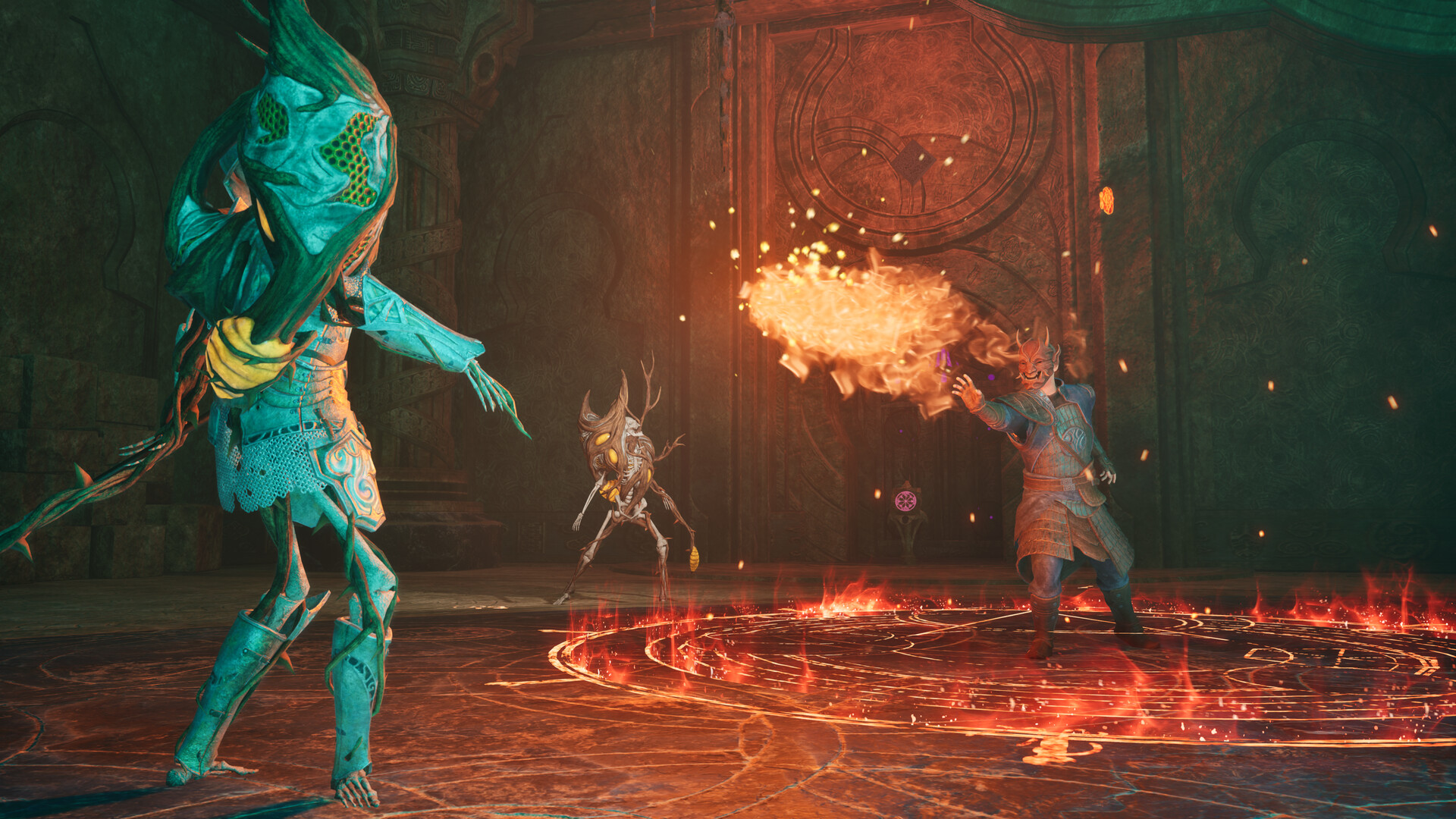
"The biggest jump should be in making an experience that feels solid rather than holding together with duct tape."
The first Outward built its identity around immersion through friction – preparation, navigation, survival, danger, and consequences. With Outward 2, where did you draw the line between preserving that friction and making the game feel more responsive and approachable?
Essentially, we never thought about it in terms of if there was too much friction or not enough. Instead, we focused on whether or not that friction was going with or against the sense of immersion. How stiff combat was in Outward 1 was due to technical/budget constraints, not intentional friction. However, making the combat feel very deliberate was important. If we can make combat deliberate without making the player frustrated that their avatar is unable to do something they could do themselves, it’s a gain worth pursuing.
As for making the game more approachable, part of it is having a compelling carrot. In Outward, many players felt that the story was an afterthought unless they played through all factions and realized how complex of a tapestry of events and motivations the story actually was. So having more compelling characters, story beats, a better rhythm and, eventually, fully voiced dialogs should give some motivation to keep pushing initially. So if the experience is less clunky, more visually appealing, with a more involved story and a world that feels more fleshed out, I think that we’re giving a better reason to stick through the friction than we did in Outward 1.
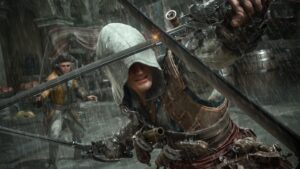
Outward 2’s combat is noticeably more fluid, with dodge steps, rolls, cancels, dual-wielding, smoother blocks, and more flexible weapon combinations. Since players now have more control in combat, how have enemies, stamina costs, encounter placement, and punishment been rebalanced to keep the game difficult without feeling unfair?
The speed and flexibility we gave to the player had to be matched with higher aggression from the enemies, and we also gave them more ways to attack from a distance. We also still need to work on what are the proper stamina costs for actions now that they are faster, since it means there are more opportunities to land multiple hits, or more attacks to dodge in a shorter amount of time.
We want to be very careful with the number of enemies we have to face at a time. So our levers of balance are more based on behaviors and statistics.
At the end of the day though, the lesson is that real combat is not fair. You should give yourself an extra edge if you want to survive a 2 versus one encounter, or to fight against a monster that is multiple times your size. I think the worst thing we can do is to pretend that it’s fair while it’s not. If, from the outset, you understand that the world is unfair towards you, then you start approaching combat differently. That’s when it pays to be clever and prepared.
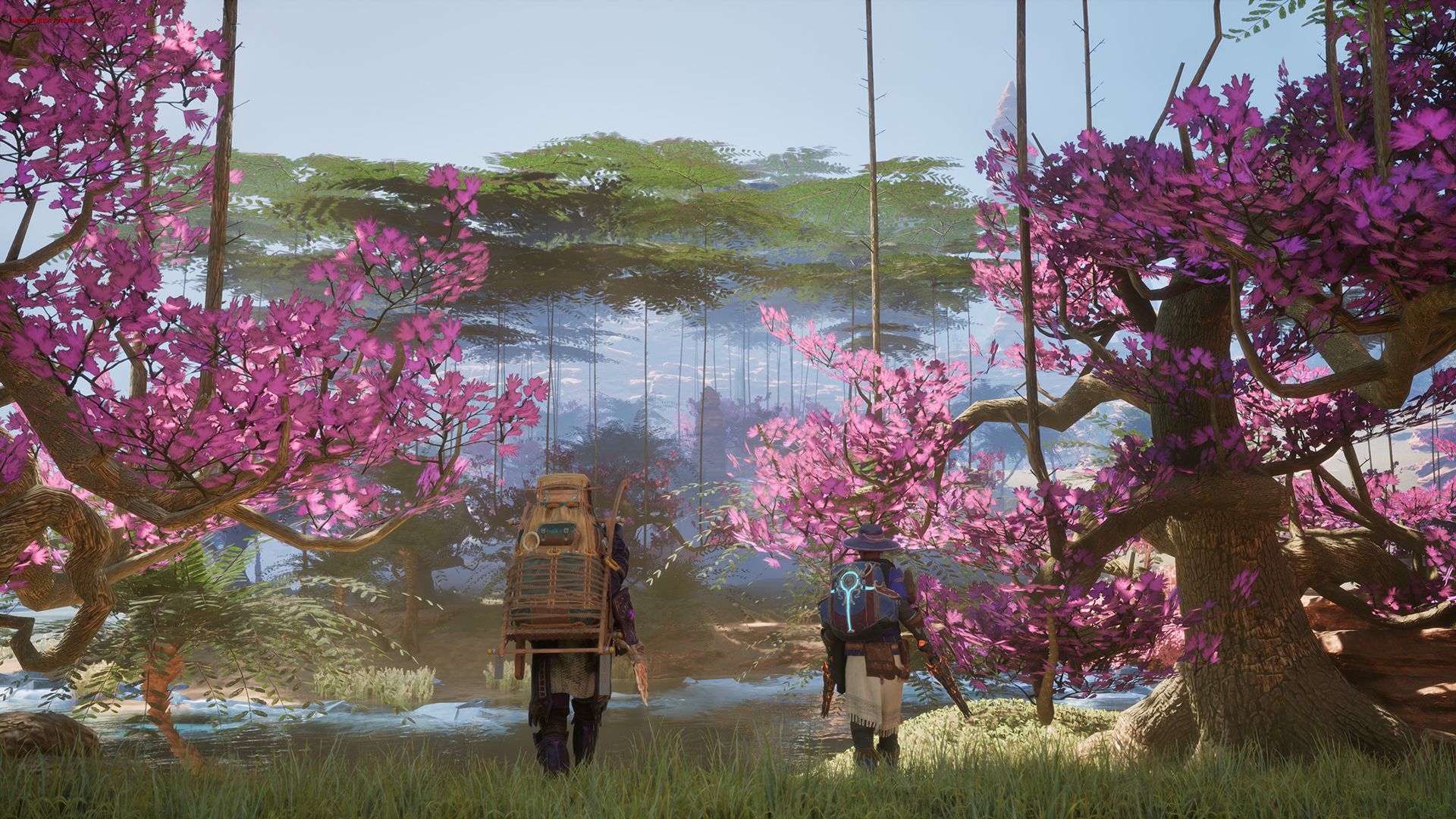
"At the end of the day though, the lesson is that real combat is not fair."
The Exercise system sounds like a major shift away from traditional XP and levels, tying growth to finite micro-achievements across combat, crafting, and survival. How does this system change the way players naturally build their character, and how much room is there for non-combat-focused progression?
I foresee two different approaches. Either the player will choose the upgrades that naturally offer themselves to them as they play with whichever playstyle came organically to them, or they’ll make a plan of where they want to take their characters and influence how they play to speed up their ascension. Both approaches are fine and viable. While some requirements are tied to non-combat gameplay, the rewards are always at least in some fashion relevant to combat aptitudes. The reason for this is that the other things we can do rely more on know-how than on statistical advantages.
I think the biggest impact is that your character will grow more slowly but also more gradually. In Outward 1, once the ball started rolling, finishing your character’s build could go very fast. Now, instead of a final growth spur, your journey will reward you gradually, which in my opinion better simulates the experience of learning and growing.
Early Access is planned to launch with three of four regions and only part of each faction questline, while the full game is targeting four regions and three major questlines. How are you structuring Early Access so that it feels like a meaningful adventure rather than an incomplete slice of the final game?
There’s custom content such as level design and story, then there’s systemic content such as character builds and mechanical exploration. At first, we will lean more into the sandbox experience to keep our players busy, but it’s our intent to prioritize the rest of the story and regions within the first big updates to come, so that they quickly get a sense that almost all of it is there. That’s when we can start surprising them with extra layers of depth!
Narrative delivery seems to be one of the big areas you want to validate during Early Access, especially before committing to full voice acting. What did you learn from the first game’s more emergent storytelling, and how much more authored, character-driven, or faction-driven will Outward 2’s story be?
The story in Outward was mostly about witnessing a series of events enacted from enormous factions, as just one among many to serve the organizations and without ever being at the center of the attention. This time around, in order to feel more the stakes of the story and get a deeper connection with the characters, we came up with smaller factions, also implying that your role is more central for that smaller group. The stakes are just as high as in Outward 1, but there is more space to intimately know who is involved. I rarely feel like the characters are really important in open world games, so this approach is our attempt to break the pattern.
Outward 2 is adding a more alive world through seasonal changes, region-specific hazards, patrols, dynamic encounters, and stronger navigation demands. How are you making the world denser and more readable without compromising the series’ refusal to rely on GPS-style guidance and hand-holding?
Honestly my only answer to this is a simple one: aside from maps, add more signs on the roads to help figure out the way
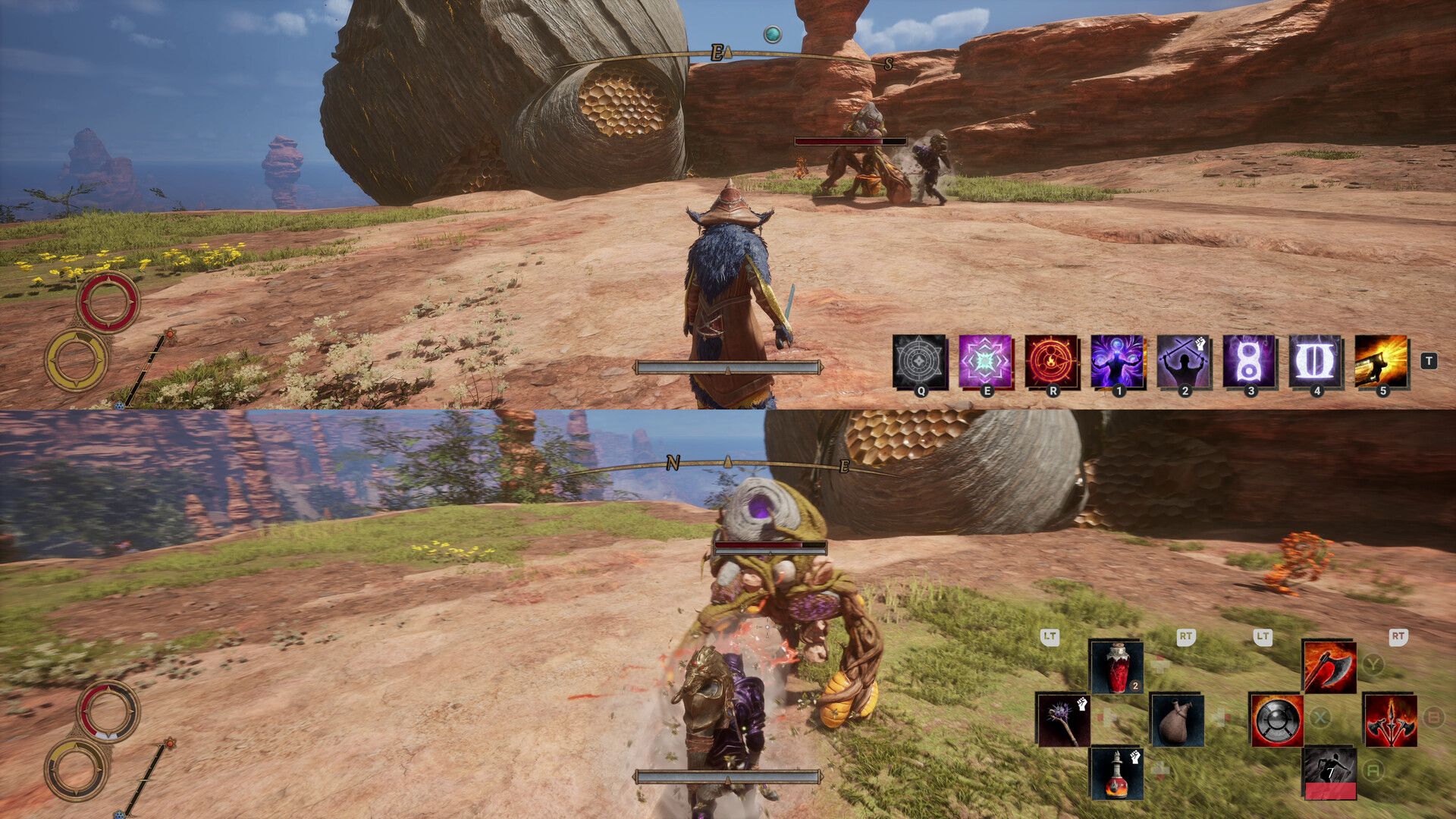
"I think the most frustrating elements are when you feel like there’s nothing you could have done to reach a different outcome."
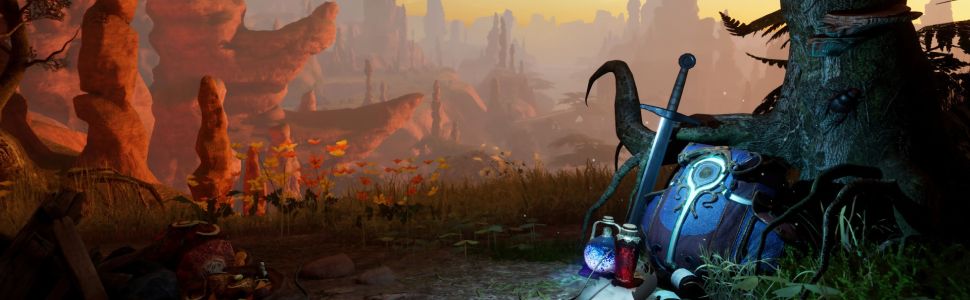
Preparation seems even more central this time, with traps, poisons, potions, sigils, specialized gear, backpacks, mules, camping equipment, food, weather protection, and wound management all playing into survival. How do you make these systems feel like meaningful strategy rather than busywork?
In most survival games, you fill up your needs to get rid of handicaps. In Outward, that’s the first step but then eventually you do it instead because it strengthens your playstyle. So your choice of tent, backpack, food all might change based on the fact you want to play a mage, for instance. So you go from doing it because you need to, to doing it because you want to.
Of course you probably don’t want a sprained ankle and a concussion, but that’s different. For wounds or illnesses, we went with something that was more mechanically complex than just a lowered stat that can easily be healed whenever. That way, we make the player shift their mindset and acknowledge the consequence of their state, rather than just power through it.
Defeat scenarios, wounds, time skips, stolen gear, quest timers, and Hardcore mode’s permanent-save risk all sound like they could create amazing stories, but also real frustration. After the beta, how are you tuning those consequences so setbacks remain memorable and fair rather than demoralizing?
I think the most frustrating elements are when you feel like there’s nothing you could have done to reach a different outcome. For that, we need to ensure that we distribute enough tools (such as traps, potions and ammo) and enough knowledge about those tools (such as hints through dialogs, crafting recipes, early opportunities).
During the beta, I feel that we could have done a better job with that early distribution, in order to get them started. Our approach is to subtly nudge, but never to push them outright towards the answers. Some people might not catch on and that’s a risk we’re quite willing to take.