





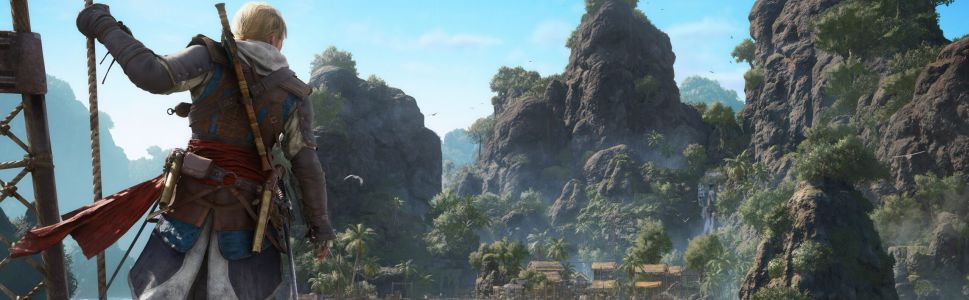
Assassin’s Creed Black Flag Resynced sold 2 million copies on day one. There is no doubt this is one of the year’s biggest games, and perhaps one of the major success stories in the coming months. It’s clear that millions of players are addicted to it. But why exactly? This is because Resynced is better than the original in almost every conceivable way.
Many of us had a favorite game while growing up. It may have been during the Super NES era, when 16-bit indeed delivered the best graphics. It may have been the PlayStation One, where it felt like nothing could surpass that polygon count. So it goes, on and on, but the sentiment remains the same: “I wish I could play this again.” It’s a loaded statement, of course, because you don’t just want to replay it – which would still be fine – but to experience playing it for the first time.
Cue the remakes and boy, has the games industry been more than happy to acquiesce. Ever since the smash success of 2019’s Resident Evil 2, more and more studios have sought remakes. Reliable hits, proven to be successful – far less risky than a new IP. A blueprint for a story, setting, and gameplay to build on with the chance to amend or improve different aspects. A graphics overhaul to immerse players all the more. Remakes are big business but also a source of controversy, however mild, especially as major changes are introduced or sections removed.
At the end of the day, many understand that a remake isn’t necessarily meant to replace a classic but exists alongside it, offering a contemporary version for a new generation to enjoy. It’s a rarity to find one that surpasses the original in almost every way. And yet, Assassin’s Creed Black Flag Resynced may have actually achieved just that.
It’s a bold claim, sure, especially given that its developer has seen better days (and decades). Besides, it occupies a rather intriguing spot, where the original still holds up to this day, but is old enough that you wouldn’t really mind a remake. Sure, it could have been left alone, but few protagonists in this franchise are as beloved as Edward Kenway, and his journey embracing the ways of the Assassin and the new age of piracy gripping the world is one that’s remained with millions of fans. It’s one you’d want to experience again for the first time, knowing what’s coming but still feeling all those emotions again (along with some new ones).
At the outset, it would seem a fresh coat of visual paint would be enough, but it’s clear that the Singapore studio – infamous for Skull and Bones – sought more. Instead of simply improving the character models and environmental textures while adding ray-traced reflections and ambient lighting, it went even further. Parkour is bolstered by smoother animations, which in turn complement its overall fluidity. The various ports and towns that you visit don’t just look more detailed – they feel alive. Daytime in a place like Havana is bustling with NPCs, each with their own distinct routines before retiring to their homes in the night.
Dynamic weather can also significantly change an environment, thinning out people who would otherwise be out and affecting visibility (which in turn aids in sneaking around). The fact that weather plays an even more vital role when sailing, as hurricanes prove even more dangerous. There are even lightning strikes that you’ll need to carefully navigate around, avoiding their explosive fury.
But perhaps most important of all are the characters. Maybe it’s the new cinematography or the animations, because it doesn’t just feel like you’re looking at improved models of Edward or Blackbeard or Mary Read or Anne Bonny. These feel like the characters, complete with all the unhinged swagger and lingering darkness that defines them. It’s a reunion of sorts for long-time fans, and somehow, these friends from almost 13 years ago feel more real than ever. A terrifying proposition for some, especially given their fate, but yet another aspect that deserves praise, especially when Resynced provides new missions that bring certain figures some much-needed closure.
While all this is well and good, it means nothing without compelling gameplay. For its part, the development team took a rather interesting approach, not exactly rewriting the Assassin’s Creed formula, but wholesale changing aspects as it saw fit. Tailing missions no longer desynchronize if your cover is blown, and instead change on the fly, which not only feels more realistic but creates new gameplay opportunities not seen in the original…and an opportunity to flex the new combat system.
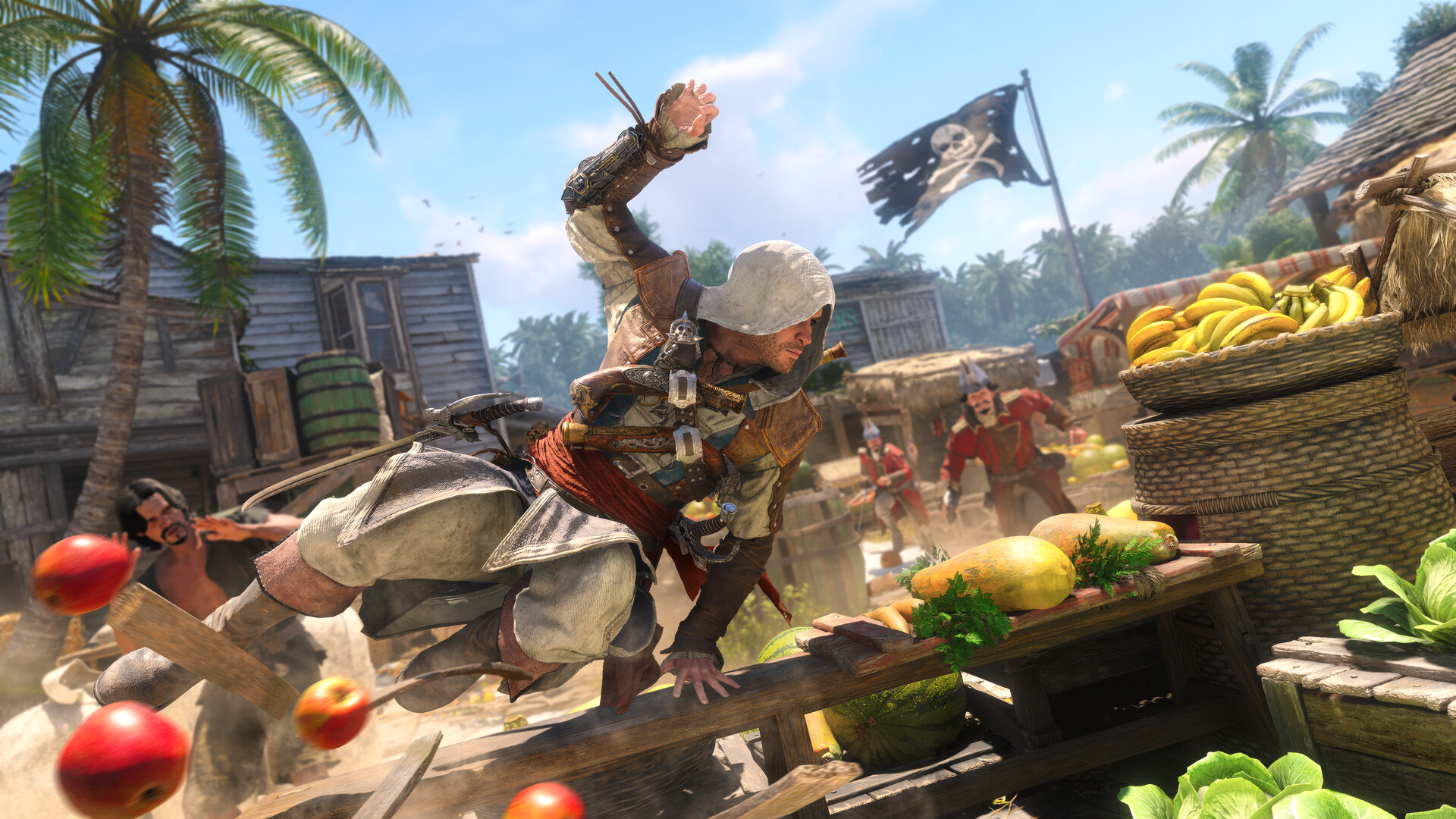
Yes, it’s a shame that you can’t equip the Hidden Blades as dedicated weapons, but thankfully, you’re not confined to the same two dual swords throughout. You may discover Altair’s Swords, which recover some health after takedowns, or the Lightserver’s Blades, whose heavy strike can damage several enemies in an arc and also has greater range. And for those who want some gunblade action, there are even more Pistol Swords than before.
As for the combat itself, it’s fundamentally different from the original, relying more on parrying and takedowns. Which would seem fine in and of itself, but Resynced thankfully takes things further with its environmental interactions. Kicking an enemy into a wall to stagger them, leading to a fatal takedown, is fantastic, as is sending them off a ledge to their death. The Rope Dart’s early availability also opens up a whole new world of counters and combat tactics early on, and the overall transitions between melee and ranged weaponry feel so much more fluid. I can see some bemoaning the flourishes of the old combat system, but in terms of mechanics and responsiveness, Resynced is a worthwhile alternative.
One really could go on in terms of all the improvements and new additions. Templar Armor and the hunts to track down the keys to unlock it return, except the actual missions have some more narrative relevance. Dives are more gorgeous and perilous than ever, but you can now dive anywhere, thus opening up more opportunities for stealth.
Speaking of which, being able to crouch anywhere feels like an underrated game-changer – rudimentary as it is, it just expands on the number of approaches for a mission all the more. Naval combat is a whole other thing, and beyond just relishing the new upgrades for weapons, or recruiting the new officers with uniquely powerful abilities (alongside their own quests), the world itself feels more alive. You’ll actually see opposing factions attack each other, creating a chance to third-party and effectively take them both down.
Revamps and new facilities for the Hideout, improved character contracts, additional lore for specific targets that serve as secrets you can discover, additional traversal mechanics for more seamlessly parkouring through locations – these are just a handful of other new features and changes that Resynced introduces to give it a leg up over the original. Did we mention you can now skip time and more conveniently decide on the time of day?
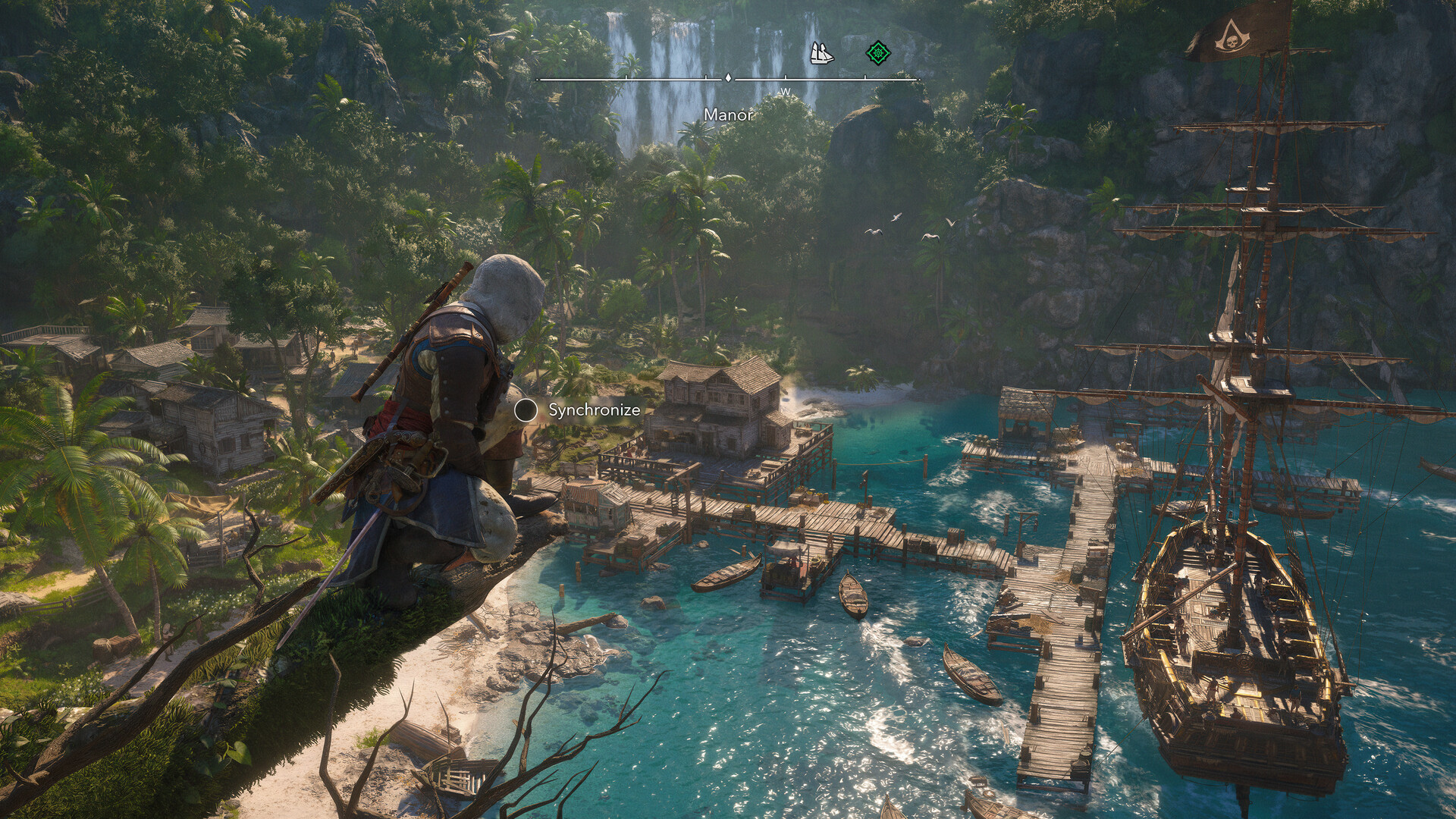
Or how those small islands from the original have been expanded with new rewards? Or even the addition of local events, including additional stories and unexpected twists when infiltrating certain locations? That’s not even getting into the endgame with its dedicated missions or Kenway’s Fleet, a gimmick turned into a proper system accessed in-game.
I can see several places where a fan might prefer the original, especially when it comes to the removal of the modern-day Animus sections (the lack of DLC and multiplayer, while sad, does make sense given the focus on Edward). One may also take issue with how certain narrative elements, optional as they may be, are handled. But in every single way that matters, from its combat and exploration to the world design and presentation, Assassin’s Creed Black Flag Resynced feels like a souped-up version of the original. It’s a love letter in many ways, a tribute to a game that, at one point, represented more than one of the series’ peaks – more of a reminder about freedom, lawlessness and all, and that the developer behind it could still deliver experiences worth a damn.
Maybe pursuing that reminder is ultimately what led to Resynced’s inception. Either way, if you’ve never experienced the original, it’s the best place to start and one of the finer remakes out there.