







The art behind delivering bad news is to lace it with something good. Something positive that people, especially those who like to own the things they buy, can find hope in. So naturally, when PlayStation announced the end of new game disc production from January 2028 onwards, effectively ripping the Band-Aid off in this highly digital age, it offered nothing even remotely hopeful as a make-do. It even crammed in the announcement of the PS3 and PS Vita stores shutting down, and revealed Call of Duty: Modern Warfare 3 (the bad one) for PlayStation Plus in July. A triple whammy like no other.
Fans responded in kind with a continuing firestorm on social media, be it in tweets, YouTube videos, you name it. Well, with its latest financial report available, the top brass at Sony Group Corporation responded, acknowledging the “various opinions” and “strong views” that fans have to offer.
The response? It’s still moving ahead.
In an earnings briefing, chief financial officer Lin Tao said in a translated statement that there were “various reasons” for this, “the biggest being that the digitalization of content overall has been progressing—that’s the big factor. It’s not just PlayStation, but for all kinds of content, digitalization is progressing.” Not that anyone has stopped producing Blu-ray discs for movies, but I digress.
“So when we think about the future, we put in a lot of thought and time, and we cautiously considered this. We came to this conclusion, and we’re going to cautiously move this forward,” Tao continued. “And to this decision, we have received various opinions—people have strong views—and we understand that the community has put forth those views to us.
“Games are loved by many people. It’s a form of entertainment that’s connected to people’s fond memories in many cases. And so we understand those emotions. We want to consider that. And in the future digital ecosystem, how we engage the gamers is something that we would like to continue to explore.”
But wait, it gets even better. Tao also said that this decision didn’t impact Sony’s business in the short term. It also doesn’t expect much long-term impact because, as it notes in every fiscal earnings report for the past several years, the majority of game sales are digital. In fact, it noted 82 percent of its software sales for the quarter ending June 30th were full game digital downloads.
That bit about how this is down by one percent compared to the same period last year, i.e. before PlayStation even announced the future end of physical games? Or how game sales are essentially flat with an increase of only 200,000 across PS5 and PS4? Don’t pay too much attention to those figures, obviously.
And in case you thought otherwise, it gets even better. An analyst asked Tao if this would result in future consoles becoming more like PCs – all-digital with no disc drives. She responded, “Our strength is the curated content; that’s one of our strengths. The game environment being stable, that’s another strength. Compared to the high-end gaming PC, our product is more affordable. We don’t feel that the disc itself is a strong factor for differentiation. Going forward, we can coexist peacefully with PC games.”
On the one hand, I can understand where Tao and Sony Corp as a whole are coming from, because the response is more akin to saying that PlayStation will remain its own entity, and become a glorified PC. You have to wonder if there’s a subtle shot there at Project Helix, Xbox’s next-gen console, which also plays PC games and is rumored to function as a PC with multiple potential SDKs. But the point remains – PlayStation has games that you can’t get anywhere else, particularly its very expensive, triple-A single-player titles that it’s since decided to stop releasing on PC.
Sure, we could blame lackluster sales on the platform, but how coincidental is it that the company announces that and follows up with its physical disc death sentence, thus eliminating a potential alternative storefront for its biggest games, even if it’s years later? Surely it’s not trying to go “PlayStation Store or bust” and then charge whatever prices it feels like while dynamically adjusting discounts and killing off used games altogether, right? Surely.
But really, it’s that one other sentence that got me: “Compared to the high-end gaming PC, our product is more affordable.” That’s certainly true in an objective sense. So why did Sony ship only 100,000 more PS5 consoles in this past quarter than it did in the one before? Why are shipments down by 900,000 compared to the same period last year? Not to say that the PS5 isn’t looking great at 95.3 million consoles, but the PS4 had already sold 100 million by the same period.
Granted, the comparisons may not be the fairest, especially with how many challenges the PS5 has had throughout this generation. But even if PlayStation promises there’s enough RAM before early 2027, meaning enough consoles to meet demands on November 19th, where nothing of note whatsoever is happening in the gaming world, what does that mean for the future? The Bill of Materials for the PlayStation 6 is allegedly approaching $1,000, and Sony generally has no interest in subsidizing hardware prices.
And even if it still ends up cheaper than a PC, the latter benefits not only from more functionality but also from a wider ecosystem. Most everyone uses Steam, but you can still look for discounted keys on other sites or through bundles or – worse come worse – break the emergency glass and use the Epic Games Store. You can even buy games on GOG and obtain offline installers, maybe even burn them to discs for double ownership bragging rights. Would I personally benefit from having a disc containing Hollow Knight: Silksong? No, but I can still have it.
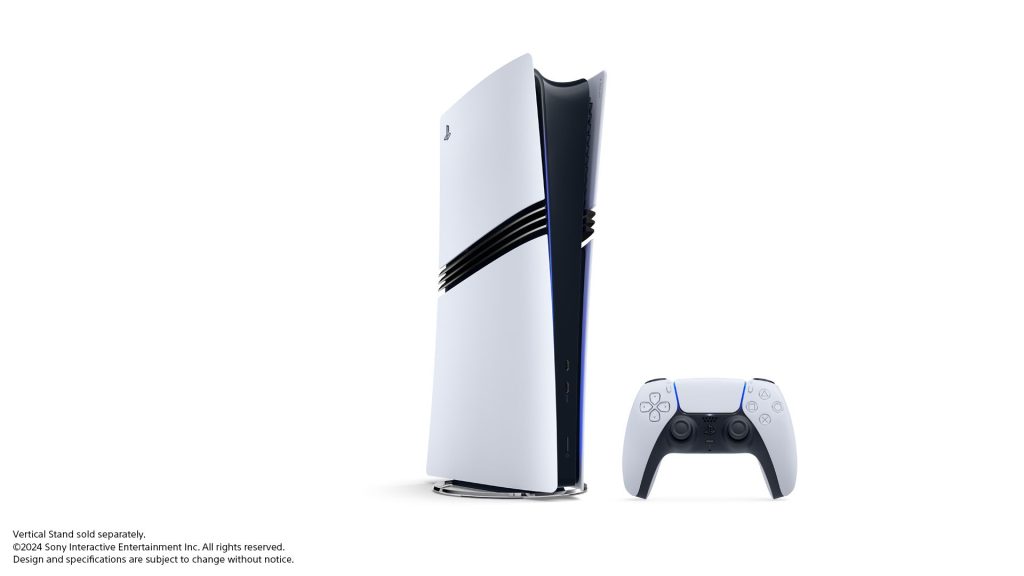
Assuming it goes all-digital, the PS6 won’t benefit from any of that. Even with the strength of its catalogue – with its biggest blockbusters commanding the biggest budgets – there’s only so far this “walled garden” plan can go.
Maybe PlayStation has figured these things out, though. Or maybe it’s the rising costs of triple-A game development, next-gen hardware, RAM and so on that caused it to cut anything to compensate. Maybe it’s the return of arrogant Sony, which believes that the PlayStation brand will carry it to success.
If that means no more new physical games when it’s time for the PS6, so be it. If that means ensuring its consumers don’t have any rights over the games they buy, reducing its properties to little more than “licenses” after proclaiming its love for used games over 13 years ago, so be it. And if that also means, as Alinea Analytics’ Rhys Elliott describes it, turning away “budget-conscious and younger players” who become fans purchasing used games, thus ensuring they embrace free-to-play and mobile games…well, you know how it goes. If you build it, they will come, but PlayStation seems to think they’re already there and will stay, regardless of how much it costs or how neatly it rearranges chairs on the deck of the Titanic.
From a business perspective, it’s not easy for anyone to convince console manufacturers to keep producing physical games at the level that they were before. Because as Tao noted, digitalization has been progressing all this while. But while it’s easy to reduce all of this to profit margins and market demand, that PlayStation didn’t at least consider limiting physical sales or embracing special editions – which it’s already been making a pretty penny off of without providing discs, by the way – is extremely disappointing.
It won’t be the cataclysmic end of the brand anytime soon, and even if it announces the PS6 for over $1000, Sony could still see huge short-term success. But nothing lasts forever, and you only really notice death by a thousand cuts when it’s too late to stop the bleeding.
Note: The views expressed in this article are those of the author and do not necessarily represent the views of, and should not be attributed to, GamingBolt as an organization.