






In a world where Rocksteady’s Arkham Knight and Insomniac’s own Marvel’s Spider-Man franchise exist, it almost feels weird to have a superhero game that isn’t based in an open world. It could make you question Insomniac’s choice to have a more linear experience around Wolverine, a character whose many adventures could have been a ticket to a globetrotting adventure or at least a much larger map.
But this is Insomniac we’re talking about, and it’s a studio that has proven that it knows its superheroes, and does well to bring them to life. We’re of the opinion that the studio has done well to craft a smaller structure that immediately translates into a more intimate, personal adventure with Wolverine that better suits his movement, combat, personality, and a story that does take you around the globe, but on its own terms.
All of those factors, aside from the story, were also facets of the experience that were highlighted across the board in its Spider-Man games, but executed with respect to an open-world version of New York that fit well within a framework entirely different from the one that Logan’s been let loose in. But they’re all examples of the studio applying its best knowledge in creative ways to make its take on Logan feel authentic and familiar all at once. Allow us to explain.
Places To Be, Different Ways To Get There
It’s no secret that Logan’s been around, his story taking him all around the world and putting him in contact with people and places both savory and unsavory. Peter Parker and Miles Morales, on the other hand, take the neighborhood-friendly parts of their job descriptions quite seriously, choosing to operate in New York City with the narrative justifications to back them up. Of course, that meant web-slinging your way across town was a traversal method that could have you ignoring the fast-travel subway system almost entirely.
But Wolverine swaps out the web shooters for those sleek-looking adamantium claws that are great in a fight, but not the best when it comes to getting around from point A to point B as quickly as possible, especially in an open world setting. Controlled, curated environments built to support his style of movement are going to work only in linear structures, with larger maps requiring artificial traversal mechanics or slow movement, both of which don’t work in a format that’s built around an adrenaline-fueled berserker looking to sink his claws into the next threat he can find.
There’s also the question of having Logan free to move between different locations around the world without his adventure being confined to a single place. As we said before, that’s true to the character, but it’s also a way to have Logan working within different environmental parameters across varying locations. That makes a linear, globetrotting structure support an exploratory and gameplay loop that could take Logan to places like Canada, Madripoor, and Tokyo, among others, while keeping things free of an oversized map or too many things to keep track of.
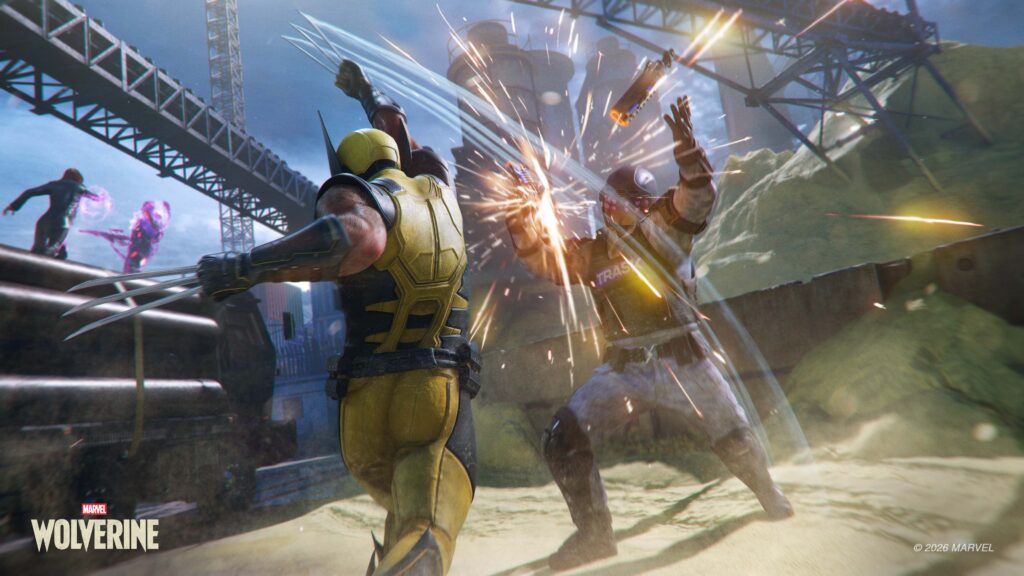
There’s also the added advantage of every location feeling built around the purpose of enabling Wolverine to be the best he is at what he does, even if what he does isn’t very nice. By avoiding repetitive districts and interchangeable activities, Insomniac can now make smaller, focused environments with their own distinct vibes, enemies, architecture, and gameplay possibilities.
That covers level design and how Wolverine doesn’t lend himself well to an open world. But can the same be said for his gameplay based on what we’ve seen of it?
When The Claws Are Out
Aside from better-designed levels, a smaller, linear world is also advantageous in designing spaces meant to facilitate close-quarters combat, which is where Logan’s at his most deadly.
It’s the perfect way to set up the violent, brutal encounters with deadly enemies that he’s earned a reputation for over the years, which heavily depend on good positioning for you to use his moveset effectively. All of that’s in support of linear spaces where the game has more control over what you’re seeing and experiencing while you get to use walls, narrow spaces, the environment, objects, and perhaps enemies themselves to turn their numerical superiority into a meaningless statistic as you unleash the full brunt of your rage on them.
It’s also a great way to have more control over the balance between stealth and all-out brawling, both of which are a crucial part of Logan’s skill-set as a hunter and soldier with decades of hard-earned experience showing him that his invulnerability is among the most important reasons to avoid unnecessary pain for himself and those around him. By baking that into an experience that facilitates a quiet approach when it’s needed, it’s not only authentic, but also puts the player in control of how they would like to respond to whatever the game throws at them.
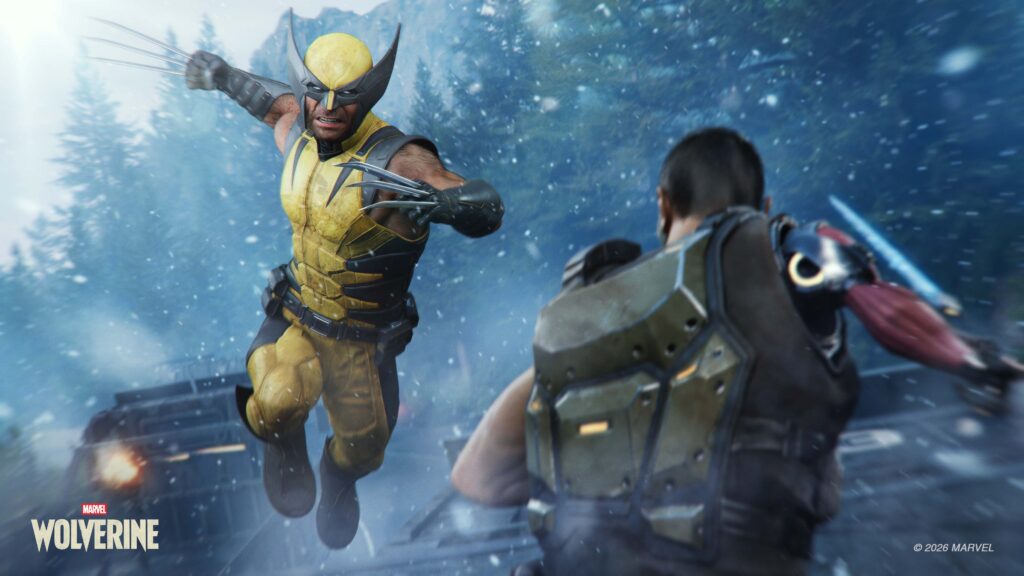
There’s also the question of boss fights, and the obvious spectacle that we’re all expecting comes associated with them. Smaller arenas make the action easier to focus on, allowing us to see Logan take on memorable foes in all his glory, with the campaign able to bring them in at a pace it deems appropriate. Not having to populate a larger world leaves more resources available to make unique encounters, cinematic transitions, and bosses designed to push Logan to his limits.
Another important part of the equation is Logan’s innate Healing Factor, which could become a balancing issue in an open world where Logan’s almost always showing up to his next fight with a full health bar, the scars and damage of his previous encounter already a fading memory swept away in the current of his longevity. His relentless aggression that stems from it could also make open-world enemies unable to withstand his brute strength and feral rage.
Carefully controlled missions can allow the game to have combat encounters that are planned around the healing factor and rage, giving us more of a challenge by controlling enemy pressure, combat escalation, and curated moments of vulnerability woven in to balance out the sheen of the near-immortality that the game’s protagonist has enjoyed over the years.
There’s also what we already know about the game, and there’s a lot in favor of a linear adventure in there for us to talk about.
A More Practical Approach
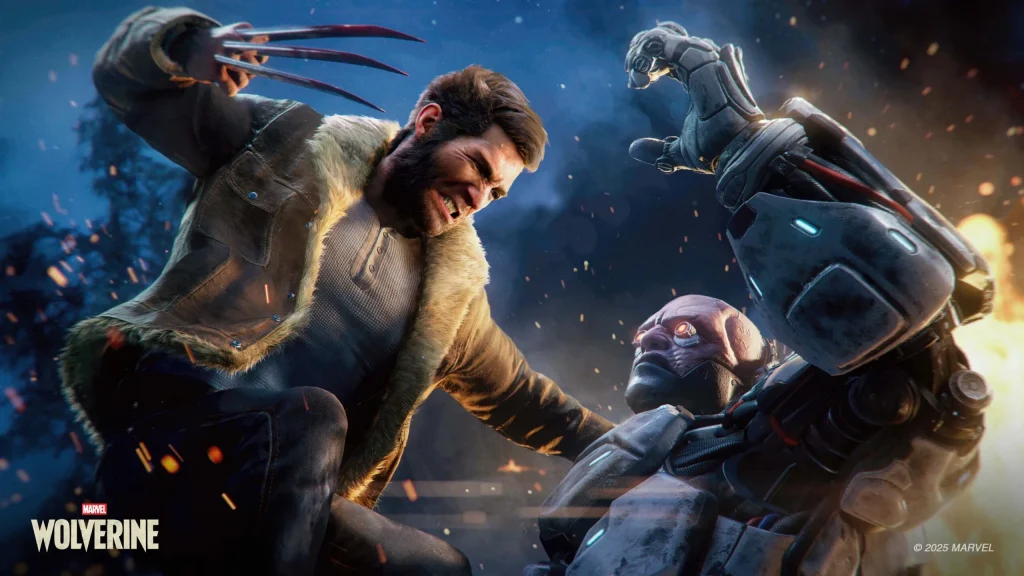
We already know that Logan’s story is personal, his history with Jean and the ragtag team he’s trying to support playing a part while Sabertooth and Mystique’s presence showcase the potential for story beats that could push him to his emotional and physical limits. That’s the kind of story where the pacing needs to be on point, and placing it within the structure of an open world would definitely be counterproductive to that purpose.
Additionally, we’re always welcoming to games that don’t run the risk of repetition, which is something that a game like Wolverine could easily fall prey to. It could have been easy to put Logan at the center of a familiar loop of enemy bases, crimes/attacks, icons, and checklist activities, but by choosing not to do so, Insomniac has deliberately avoided recycling content in a very welcome creative choice.
All of that works to make Marvel’s Wolverine a title that’s already looking quite distinct, and a unique take on the character instead of being Spider-Man with vehicles and running instead of the webs. Reusing that structure would have been a waste of the potential that Logan brings to the table, and we’re glad that this one’s a linear story that keeps him front and center at all times. Of course, that’s not to say that it can’t contain optional areas, paths for exploration, alternate routes, and secrets to track down.
We’re not saying that Wolverine needs to be a corridor game, but it also doesn’t benefit from an enormous seamless map either. But a tightly-paced campaign with the scope for varying combat approaches, hidden areas, and mission-specific encounters is definitely going to be an asset to a title as far as replayability is concerned. It would certainly be a better option than a forty-hour open world where downtime’s a part of its design in our book.
Insomniac deserves praise for choosing a direction for Marvel’s Wolverine that not only plays to its strengths, but to those of the character it’s trying to bring to life. It’s an approach that has worked wonders for Spider-Man, and we believe Logan’s on the right track to become the next addition to a superhero lineup that’s getting more appealing with every new face to join it.
Marvel’s Wolverine isn’t too far away now, and we can’t wait to find out if we’re right about the developers choosing a smaller, more linear design for the adventure. But from what we’ve seen of the game so far, that could be exactly what it needs to make its take on Logan, one that’s worth considering even among all the other great stories that the character has inspired over the years.
Note: The views expressed in this article are those of the author and do not necessarily represent the views of, and should not be attributed to, GamingBolt as an organization.