




EA Sports NHL 27 isn’t content with a minor annual pass over the rink. This year’s version slapshots straight into how teams think, function, defend, and react, with every NHL team receiving an overhauled tactical identity. Throw in smarter goalies, deliberate skating, and dynamically shifting strategies, plus a significantly enhanced broadcast package, and NHL 27 could be the most substantial evolution yet for EA’s long-running ice hockey sim.
Here’s 15 things you need to know before you buy.
Every NHL Arena Has Been Re-Built
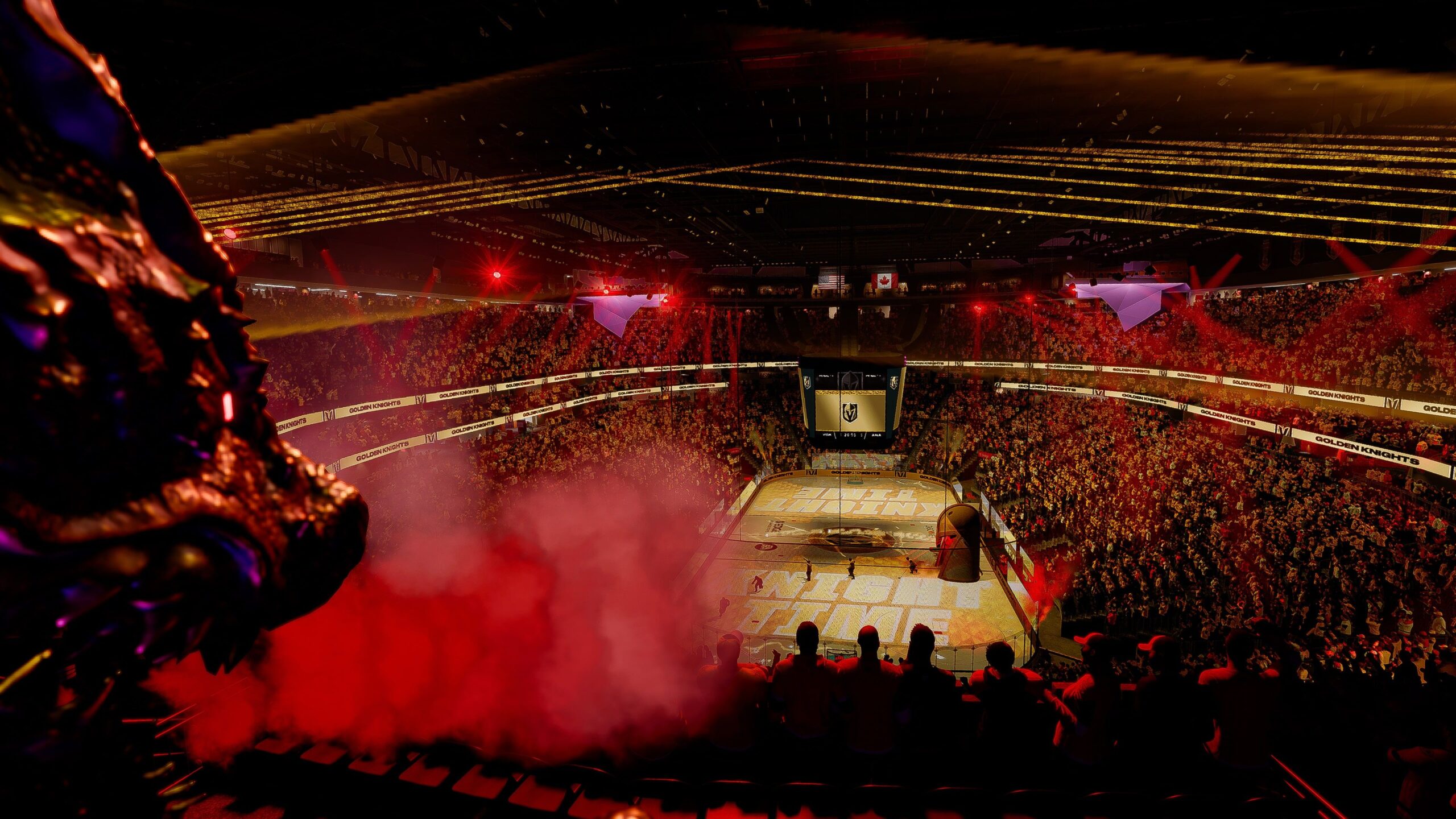
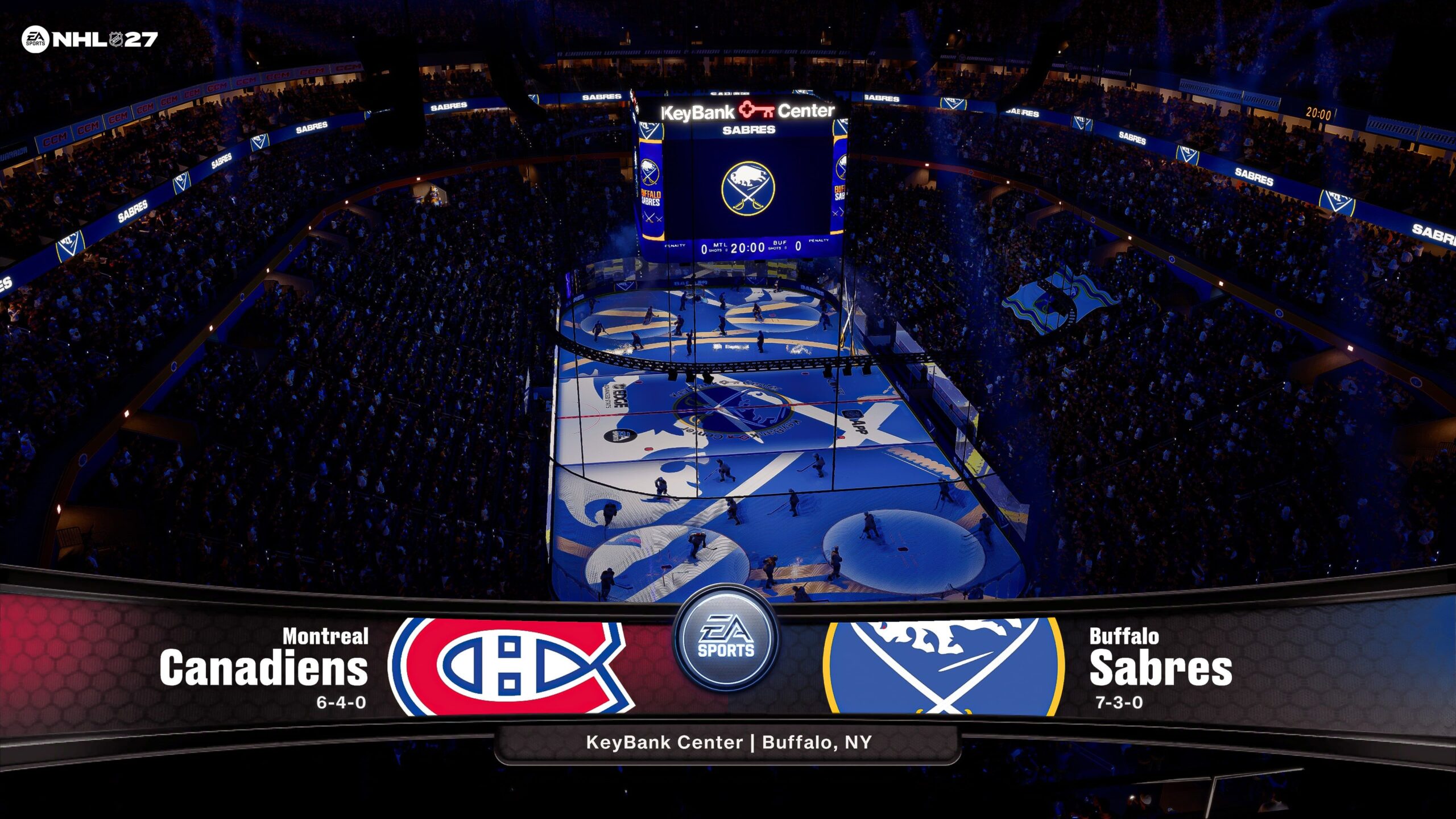
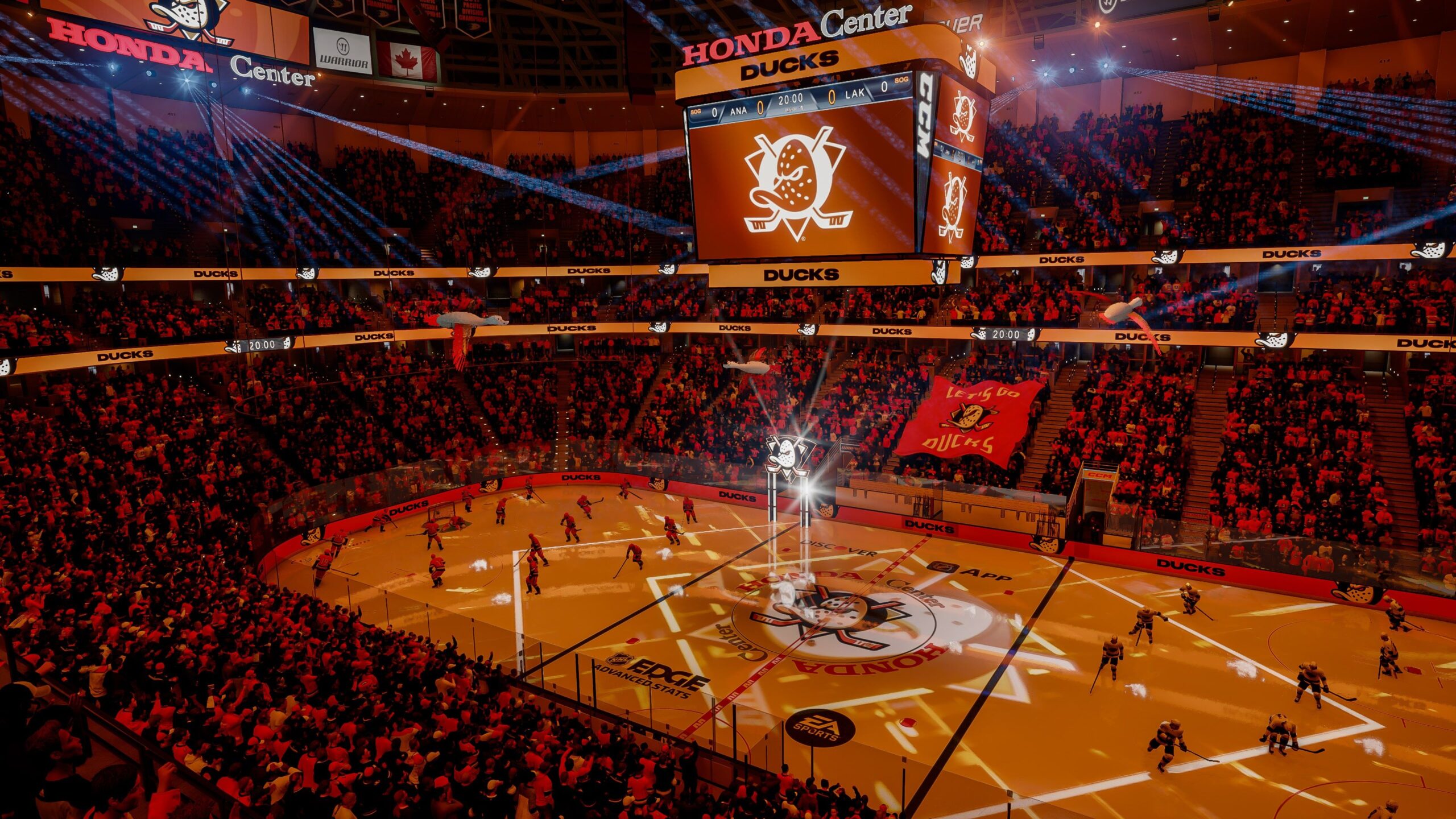
NHL 27 is poised to make every single game feel like you’re actually sitting in the stands of the home arena. Every building, from the rink to the rafters, has been re-built to reflect each individual team’s energy, traditions, and identity, with authentic chants, goal celebrations, lighting, and presentation. EA states specifically that the development theme this year was “Hockey Tourism”, including authentic Jumbotron graphics, crowd goal songs, arena landmarks, and licensed hype songs that kick in during high-pressure moments for all 32 arenas.
Every Team Now Has Its Own Playbook
Every team in NHL 27 now has its own Team-Specific Playbook, with each one built using real-world NHL EDGE positional data. This means that teams should behave differently on a fundamental level, creating distinct tactical on-ice battles depending on how they operate. Some favour high-speed controlled zone carries, while others lean into dump-and-chase strategies. Defensive positioning, forecheck speed, puck support, and the way AI teammates position themselves can vary depending on which team you’re controlling, too. However, if your favourite team’s strategy doesn’t suit your playstyle, you can switch up their playbook in the menu.
All-New Cohesive AI Makes Teams Think Like a Unit
A significant AI change coming to NHL 27 is Cohesive AI, designed to make teams behave less like individual players and more like a well-honed unit. AI teammates and opponents now read, react, and adapt to one another, with dump-and-chase execution, for instance, seeing AI players retrieve the dumped puck as a unit – one player pressures the puck, while supporting skaters throw body checks on retrieval, with remaining teammates covering passing lanes. Defencemen hustle back into the neutral zone with urgency, they’ll ice the puck under pressure, or dump the puck deep to execute a line change. Unlike NHL 26, AI players aren’t following their own X-Factors and tendencies anymore, and the result should be stronger, smarter team-wide plays built on spatial and situational awareness.
AI Behaviour Now Scales Dynamically Depending on Difficulty
And, Cohesive AI isn’t a static system either. AI behaviour in NHL 27 will scale according to your chosen difficulty, with higher settings increasing the aggression, speed, and positional intelligence of your opponents. On Superstar, for example, EA confirms the AI uses faster double-teams and aggressive positioning to suffocate control. Rookie, meanwhile, leaves plenty of space for newcomers to get a handle on the game’s systems.
Goalies Get Smarter as Difficulty Rises
Goaltenders are also receiving the same difficulty-specific scaling as the skaters, with their intelligence and reaction profiles dynamically adjusting depending on the setting you’re playing. Rookie and Pro goalies are designed to give casual players a greater chance to score goals, while upgraded All-Star and Superstar netminders will anticipate developing plays more effectively and react faster. This means that familiar scoring exploits like cross-crease passes and slow shots should prove less reliable at higher difficulties. On Superstar, EA says you’ll need to properly construct scoring opportunities rather than leaning heavily on your elite shooters.
Goalie Fatigue is a Bigger Factor This Year
NHL 27 is placing more emphasis on goalie fatigue, with gameplay tuning ensuring you’ll need to pay attention to a goalie’s energy. A fresh, rested netminder will be extremely difficult to beat, particularly after getting a clean look at several shots. However, their effectiveness should gradually decline as their energy drains. In essence: tire the opposing netminder out and your chances of beating them will increase, although EA warns that elite goaltenders can still pull off spectacular desperation saves even when gassed out.
Goal Variety Has Been Expanded
NHL 27 is also widening the variety of ways you can find the back of the net. While X-Factor sniping remains potent, EA has adjusted gameplay balance so that overly-relying on howitzers shouldn’t be the only viable strategy. On the lower Rookie and Pro difficulties, your high-tier shooters will still be lethal, but even they won’t bail you out of a bad play on higher difficulty. You’ll need to play creatively, use your team-wide cohesion, and work the offensive zone to create meaningful openings.
Strategies Change During Games
In real ice hockey, teams won’t follow a rigid strategy from the opening face-off to the final buzzer. No, they’ll alter their approach depending on the score, remaining time, and momentum of a game. NHL 27 replicates these shifting mindsets via the all-new Contextual Strategy Shifts, meaning you’ll need to keep adapting to the on-ice action. Some examples: a team chasing a late deficit might shorten their bench, they might throw more pucks at the net, and crash the crease more readily. Meanwhile, a team protecting a lead might retreat into a more defensively solid structure, while AI coaches will call timeouts to restore stamina ahead of a late-game push.
Defending Now Emphasises Manual Precision
Defending in NHL 27 is being rebuilt with a focus on precision, authenticity, and reward when you turn possession over cleanly. Poke checks, for instance, are receiving improved stick-on-stick collision detection, making it feel more responsive when you align your defensive stick correctly against an opponent’s. Stick lifts benefit from enhanced stick-on-stick collision detection too, leading to cleaner attempts and fewer accidental penalties. Elsewhere, defensive AI is now more effective at reading passing lanes.
Skating and Movement Is More Deliberate
Skating in NHL 27 is designed to feel more fluid, deliberate, and physical. In particular, repeatedly pivoting now comes with a larger speed penalty, while continually relying on this manoeuvre will make you more vulnerable to poke checks and body checks. The movement itself should remain useful if used sparingly, with EA looking to ensure it cannot be spammed for an easy exploit. In other words: purposeful staking will be rewarded, while repeating the same movement will leave you exposed.
Hits Have More Varied Outcomes
Hits ordinarily result in spectacular crashes and knockdowns, but NHL 27 makes ice hockey’s physical side more subtle and varied by introducing instances of players stumbling, losing their balance, or being pushed down without necessarily being flattened. These more varied outcomes take the size and speed of players into account, meaning the physicality of individual collisions will better reflect what’s actually happening on the ice.
The Orchestrator Completely Reimagines Presentation
Back to presentation, a huge part of NHL 27’s updated broadcast package is what EA dubs The Orchestrator, or dynamic ‘virtual arena director’ designed to read what’s happening on the ice and adjust the presentation to match. Monitoring game state, momentum swings, desperation, score context, and crowd sentiment, The Orchestrator then directs arena reactions and broadcast elements. This includes syncing beats to arena lighting, showing bench reactions, slow-motion replays, and even mascot antics. Furthermore, EA promises more varied post-goal sequences, eschewing the same broadcast cuts of earlier NHL titles.
Connor McDavid Is The First 99 Club Member
Connor McDavid has been inaugurated as the first-ever member of the EA Sports NHL 99 Club, receiving the maximum possible overall rating of 99 in NHL 27. Describing 99 OVR, EA says it is the absolute ceiling of its rating system, reserved only for players who demonstrate elite ability across every aspect of the game. In terms of gameplay, McDavid’s rating translates to on-ice dominance, with explosive speed, elite vision, and exceptional puck control enabling him to create opportunities and weave through traffic at an unmatched level.
Connected Franchise Lets You Build Your Own League
Connected Franchise is a brand-new mode to create and manage your own league with your mates. Ranging from a three-team league, expanded all the way to 32 teams, Connected Franchise gives you options to customise structure, schedules, playoff formats, gameplay settings, salary cap rules, and more. Once your league is established, each member is responsible for shaping their team through trades, roster management, and lineups. It’s basically your own highly-tailorable hockey experience, with the rules determined by its participants.
Commissioner Tool Suite Controls League Organisation
EA thinks managing a multiplayer league shouldn’t be as difficult as winning the Stanley Cup, so they’ve built a dedicated Commissioner Tool Suite into the Connected Franchise. The nominated commissioner can manage users, advance league stages, handle trades, and adjust a wealth of other settings, ensuring whoever runs the league can do so smoothly and with control. Things, then, shouldn’t unravel a few rounds into the season, but there is an open Feedback Portal where you can tell EA what you think the mode needs to enhance it further.