






It can get tricky to evaluate a game’s graphics and performance when its predecessor was already quite a looker, making those comparisons difficult. That’s not true of Control and Control Resonant, though, as our time with it has us marveling at what a visual upgrade it is.
We’ve been blown away by the lighting, character models, animations, and all of the new world rendering that’s on offer in Dylan’s romp through Manhattan’s altered reality. It holds up really well across the board, and we put it through its paces on the PS5, PS5 Pro, and PC. Each version met its stated performance targets reliably, allowing the game’s impressive presentation to shine without major performance problems.
Let’s begin with how it measures up against Control before we head on over to each system that we ran it on.
Lighting
The original Control made excellent use of lighting to establish the Oldest House’s distinct visual identity. The glow of lights contrasted well with the darkness of the shadows to make every environment within the FBC headquarters feel very atmospheric and moody, working very well with whatever bizarre presence the game was throwing at you to draw your attention.
It was excellent yet unobtrusive, and a great way to set the tone of scenes that needed it. Well, Resonant carries that torch quite well when you’re indoors, using similar techniques but with a lot more polish thanks to a better implementation of ray tracing this time around. Rooms seem more naturally illuminated now, with lamps casting a gentle and convincing glow across nearby surfaces, while the shadows now look deeper and darker as a result.
Direct lighting, shadows, reflections, and volumetric effects work together convincingly, giving each scene greater depth and atmosphere. That only improves once you guide Dylan to Manhattan’s streets, the chaos and desolation of the Hiss taking over as an evident part of your surroundings.
Reflections appear across car windows and puddles, while light glints convincingly off metal and wet surfaces. Of course, the PS5 Pro and PC handle things a lot better than the PS5, with indoor environments looking especially better on the beefier systems thanks to better and more accurate reflections.
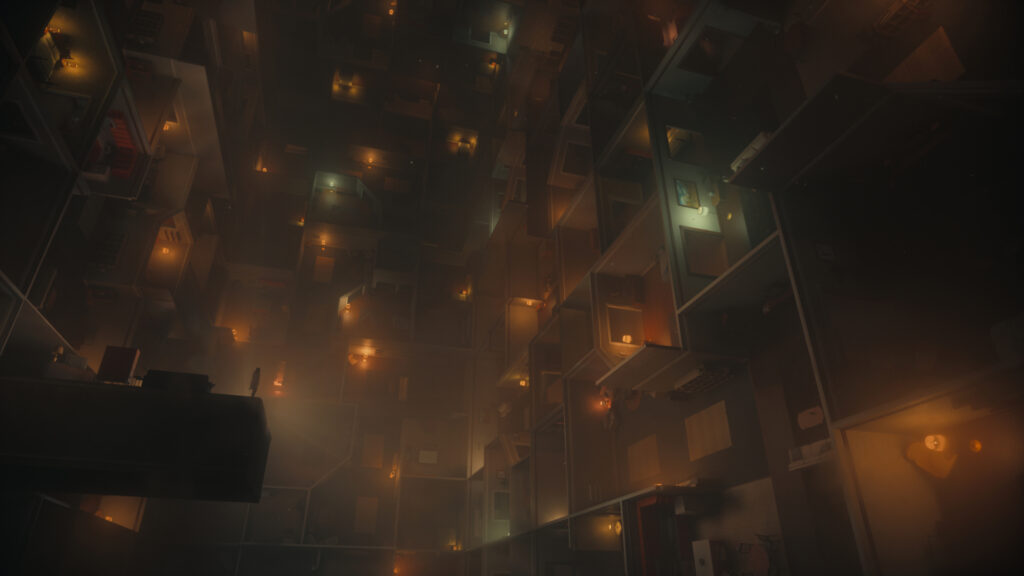
Overall, the lighting immediately sets up Resonant as an upgrade over its predecessor, and manages that without compromising on the surreal and often spectacular style that the first game established.
Character Models
The improvement is also evident in the character models, in both close-ups and dialogue sequences, thanks to better facial detailing, better skin and hair rendering, more detailed clothing materials that remain visually distinct under different lighting conditions, and just more complex models overall.
It’s more of a refinement of the good work already on offer in the previous game, but it’s tangible enough to make you appreciate the improvements.
Animation Improvements
That’s true of the facial animations as well, as well as movement animations that have been refined to support the new combat system.
They’re now faster, with shorter wind-ups and faster transitions between actions to suit the more melee- and traversal-focused gameplay loop that Dylan’s bringing. They’re also more fluid, with attacks, evasive manoeuvres, and traversal actions flowing so smoothly into one another that it makes Dylan feel quite responsive in your hands.
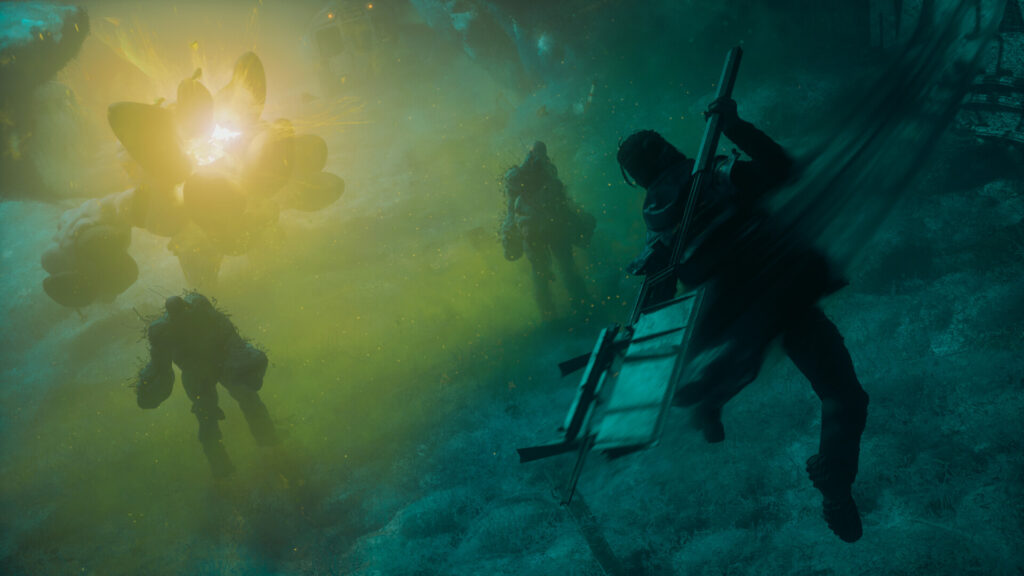
Excellent enemy reactions, environmental destruction, and ability effects strengthen the connection between Resonant’s gameplay and visual presentation. It makes for a very cohesive approach to presenting Dylan’s story while making you feel the new powers he commands.
All of these improvements are a good thing when you consider that the world he’s exploring is much bigger in size and scope than the Oldest House.
Excellent World Rendering
Resonant’s sheer environmental density and the expansive draw distances visible across its larger environments when the game allows it are, simply put, superb. There’s also so much geometric complexity and a lot of detail packed into intense scenes. You’ve probably already seen glimpses of the fight with The Artist, and we can tell you that it’s so captivating when you’re in control, you’re at risk of taking damage simply because you’re enthralled by what’s unfolding in front of you.
Particles float around streets where desolation underlines every step, while they also fly off Dylan’s weapons when they hit enemies or objects. In a game where reality itself is at the mercy of forces that Dylan must then learn to overcome, you can imagine that combat leaves visible damage across concrete, glass, metal, and other environmental surfaces.
It all shines through brilliantly, and the fact that the game maintains a clear image and keeps the action readable even with all this going on is a testament to how well it’s been optimized across platforms. Its rendering tech helps sell a world that feels unstable all around, which in turn feeds a sense of unpredictability as you engage with everything it throws at you in the process.
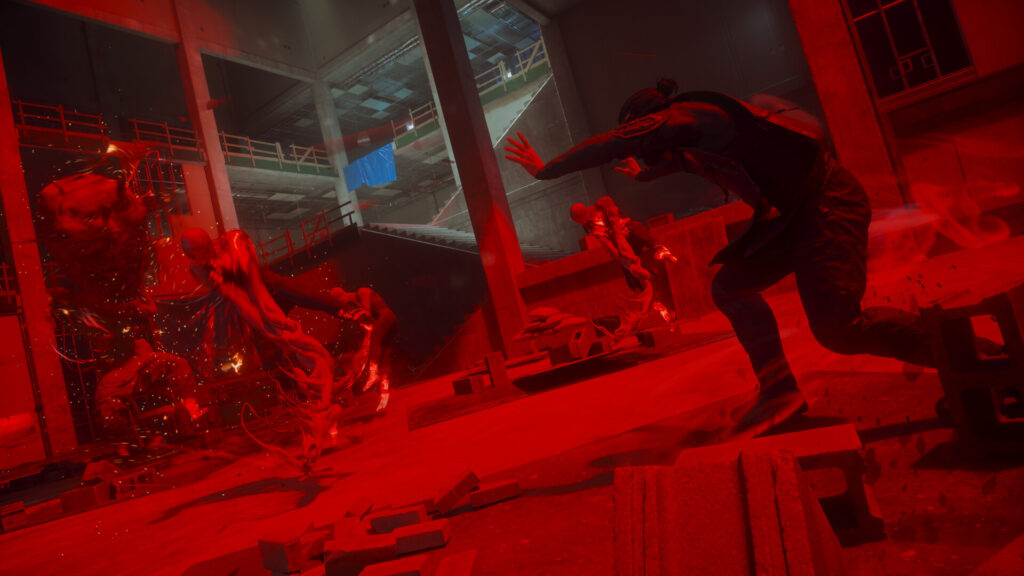
Resonant’s world is densely detailed and visually distinctive, and Dylan’s story benefits from that stronger sense of place. But how well does that world hold up under scrutiny across the platforms we’ve tried it out on?
The PS5 Vs. PS5 Pro
On the base PS5, a Quality Mode targeting 30fps at 2160p is joined by a Performance Mode aiming for 60fps at 1440p. FSR handles image reconstruction quite well, letting both modes hit their performance targets fairly reliably over time.
The PS5 Pro makes use of its additional muscle to offer Quality at ray-traced 2160p and 30fps, while Performance goes for 2160p and 60fps without ray tracing. A Balanced option goes for ray-traced 2160p at 40fps but needs a compatible 120Hz display. PSSR handles the image reconstruction, and once again, each mode held up quite well when it was tested.
Your personal preferences may vary, but the PS5 Pro’s Performance Mode was the one we stuck with thanks to how well it reliably maintains its 2160p output and 60fps target in a title where those frames matter.
The PS5 Pro’s ray-traced modes also produced more consistent lighting and reflections than the base PS5. On the base console, some effects could pop in or change abruptly, whereas the PS5 Pro handled these transitions more naturally.
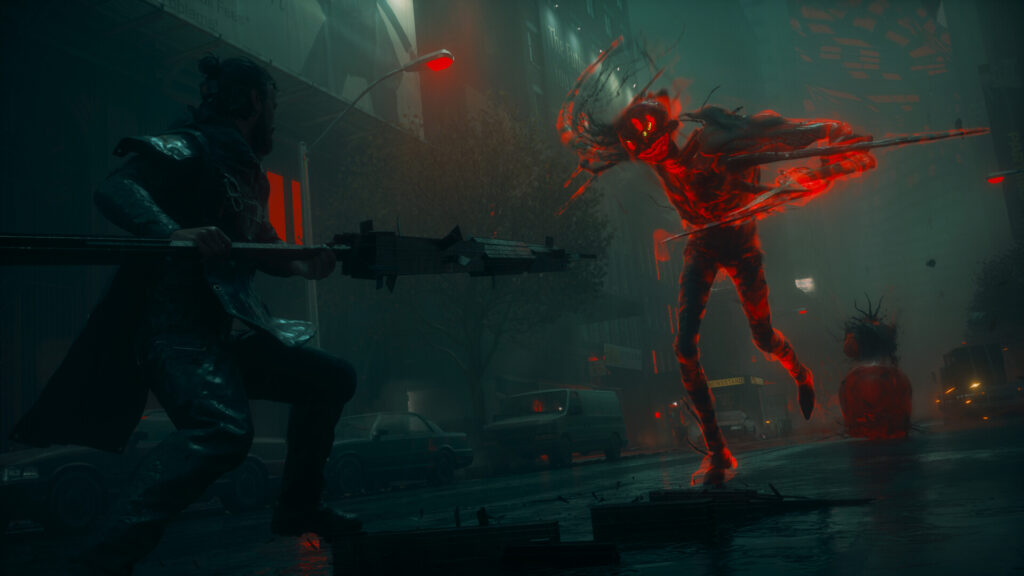
We did see the merit in the Pro’s Balanced Mode as well, and it’s definitely a great middle ground for those of you who can live with the lower frame count. We’d also remind you that PSSR does generate a cleaner and more stable reconstructed image than the PS5’s FSR.
You’re still going to have a blast playing Resonant on the PS5, but the PS5 Pro brings ray tracing, improved image quality, and a superb compromise between Quality and Performance in its Balanced Mode. That makes it the version to beat, and a more flexible one to boot. And then there’s the PC version of the game.
A Beast On PC
We gave Control Resonant the respect it deserves, running it on a test system consisting of a Ryzen 7 9850X3D, an RTX 5080, 64GB of DDR5 RAM, with DLAA selected and DLSS enabled. That let us push a remarkably detailed list of graphical options to their highest possible settings, which we’re going to come back to in just a moment.
Performance reached up to 144fps, with even the lowest recorded figure remaining close to 100fps. That’s obviously a boon in a game with this one’s combat, but even exploring Manhattan can get fast-paced with sudden changes in direction or intense events that unfold almost dynamically as you go along. We didn’t encounter any noticeable shader-compilation stutter or significant frame-time spikes, even during demanding scenes.
That is an impressive result considering that every available setting was pushed to its maximum with DLAA active. Speaking of settings, there were ones for texture quality, shadows, reflections, volumetrics, effects, ray tracing, upscaling, and frame generation, among others- a comprehensive selection that should help players balance image quality and performance across different hardware configurations.
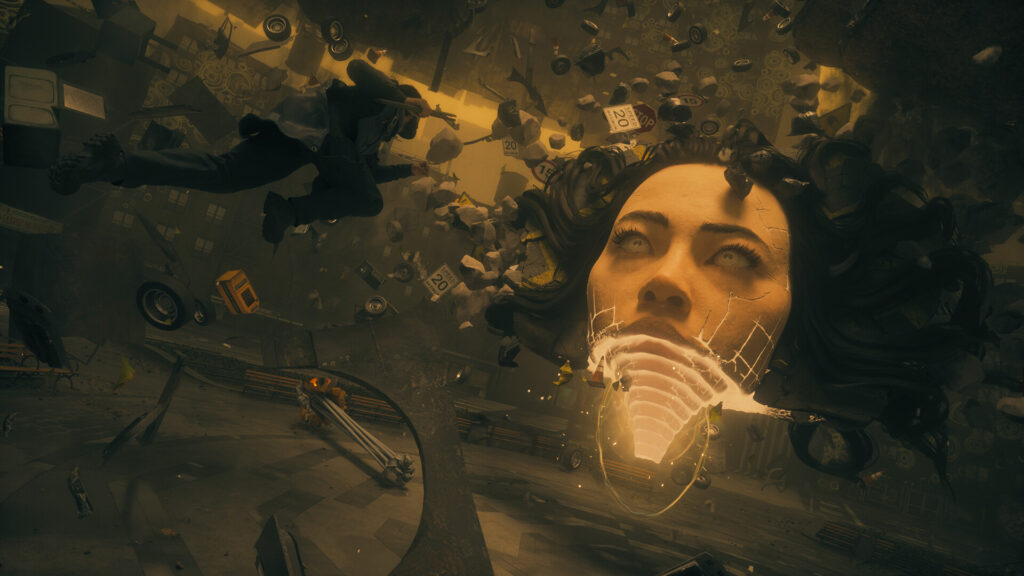
The PS5 Pro’s Quality Mode provides the closest console approximation of the maximum PC presentation, combining a 2160p output with ray tracing. However, the PC’s superior image quality, maximum settings, and 99-144fps performance make it the definitive version. Balanced Mode remains an excellent alternative for players willing to accept some visual compromises in exchange for a smoother 40fps target.
However, the PS5 Pro’s Quality and Balanced Modes do a good job of approximating what that high-end presentation would look like, and present it in a way that doesn’t compromise on the experience that’s on offer.
As it stands, Control Resonant is an excellent technical evolution over the previous game, with tangible advances across the board in lighting, animations, rendering, and the complexity of the environments it puts you in. It also meets its stated performance targets reliably across PS5, PS5 Pro, and PC.
On PS5 Pro, Performance Mode provides the smoothest experience, while Balanced Mode offers the best compromise between ray tracing and responsiveness. However, it’s the PC version with all of its settings at maximum that stands as the definitive version of the game.
But no matter where you play it, it’s an impressive continuation of the franchise’s distinct visual identity, and a genuine technological leap into a new chapter and whatever its future holds for Dylan and Jesse.