





Back when the Game Boy Advance murdered your eyes, I had run through Konami’s Castlevania trilogy multiple times. Circle of the Moon, Harmony of Dissonance, and especially Aria of Sorrow – all three were memorable in their own right. A quintessential introduction to the dark fantasy world of the series, of the Belmonts’ tireless struggle to eliminate Dracula, and more importantly, classics in the Metroidvania genre. Of course, I later played Symphony of the Night, which long preceded them, and it was the true pinnacle of the series – a distinction that holds up even after revisiting it nearly 30 years later.
But as much as Castlevania: Belmont’s Curse looks like a new entry in the series, with visuals evoking a wonderfully macabre sensation, and as much as it stuffs in familiar enemy types, tropes or weapons, it’s a different beast entirely. Developed by Dead Cells and The Rogue Prince of Persia studio Evil Empire with Konami, the pairing feels like a dream come true, especially after the Return to Castlevania DLC.
At its heart, this is an entertaining game, one that combines the developer’s penchant for faster, more aggressive combat and challenging traversal with the property’s old-school trappings of exploration and backtracking. It has several flaws that keep it from reaching the level of its side-scrolling ancestors, but far from a terrible night to have a curse, Belmont or no, this could serve as a solid new beginning for the franchise’s future.
"When thinking of a Castlevania game, or really any title in the Metroidvania genre, two things come to mind: Level design and tempo."
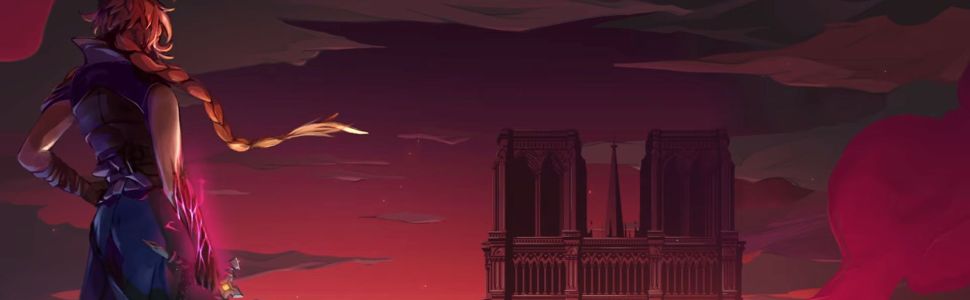
Though set after the events of Castlevania 3: Dracula’s Curse, the narrative threads Belmont’s Curse picks up will be more familiar to those who watched the Netflix series (though there are some ties to older games). After vanquishing Dracula years ago, Trevor Belmont travels to Paris in 1499 as a deadly plague sweeps through the city. Of course, he’s not alone – his daughter, Rose, is along for the journey. While he gathers more information, she explores the streets and learns more about a monster stalking the population. One thing leads to another, and before long, we return to Castlevania itself.
From a narrative perspective, Belmont’s Curse starts pretty solidly. Rose embodies a more tortured role owing to the curse in her right arm, but otherwise comes off as fine. Not overtly bland, but otherwise straight as an arrow when she’s not acting headstrong. Of course, you have the usual rogue’s gallery, whether it’s the out-of-control Fallen or the illicit Carmilla, and the interactions can be intriguing.
Other characters emerge throughout the narrative and, without revealing spoilers, “accompany” Rose in a unique manner, occasionally chiming in. While one or two voices feel about right, things can go a little overboard when it’s four or more. It’s not so much that they’re trying to tell you where to go or what ability to use in the heat of combat, but some of these conversations feel unnecessary and there for the sake of it, especially as they continually remind Rose of her curse. Your mileage may vary, but I would have made them a bit more sporadic.
When thinking of a Castlevania game, or really any title in the Metroidvania genre, two things come to mind: Level design and tempo. Belmont’s Curse, from the outset, has some pretty interesting levels. The Paris streets, decadent and decaying, are distinguished from the underground sewers in their carnage. Meanwhile, the Catacombs feel more claustrophobic, brimming with trips and opportunities to slip up. All this pales in comparison to Dracula’s Castle, where said gimmicks feel more intertwined in the level design. The constellation puzzles in the Library; the gears and crushing blocks of the Clock Tower; even the Main Hall with its portraits that can propel in different directions. Each feels distinct in its own right, even as you grapple, quite literally at times, with the tempo.
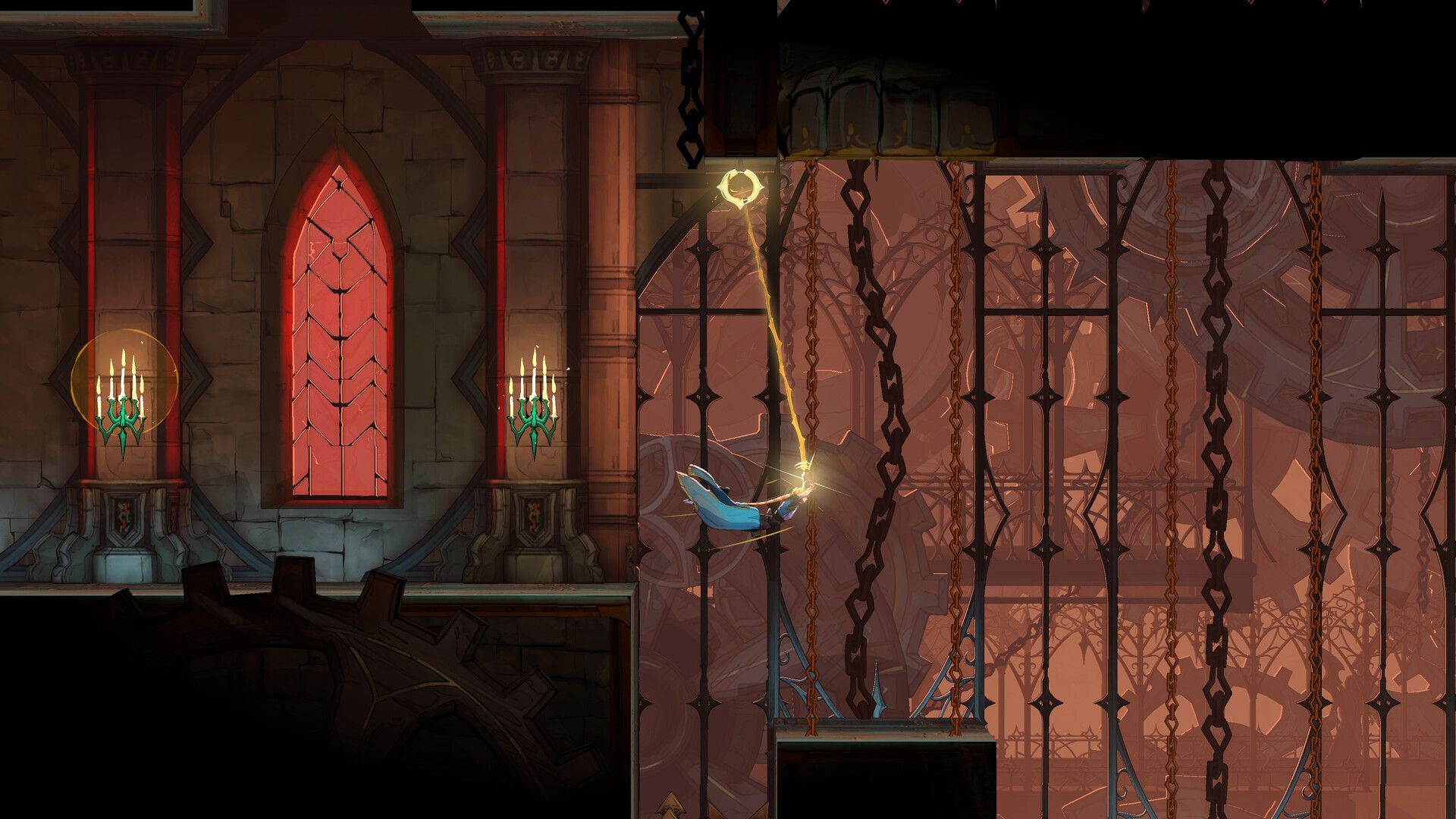
"While this requires a well-timed button press, it also works by holding down the attack button…well, except when it explicitly doesn’t, during which she’ll propel off the target and can follow up with regular attacks."
Because when you pick up that second innate ability that lets you pass through certain blocks and parry attacks – which we’ll get to – Belmont’s Curse pretty much throws you in the deep end. Suddenly, you’re having to wall jump while timing when you can pass through said blocks and when they should remain solid. Occasionally, it feels about right, and you’re in that flow state, but at other points, you need to nail the exact, precise steps the game demands – and it demands its fair share – to progress. No excuses.
It can become frustrating, especially if you’re off by a hair with your execution. This makes backtracking through certain sections feel like a pain. You would think the developer would implement fast travel, and it does…to an extent. Rather than, say, letting you teleport between the save rooms, which aren’t that numerous as is, the fast travel rooms are usually located much farther apart. Because why tediously revisit older areas to see if you can progress with new abilities when you can also tediously revisit them to fast travel somewhere else? I also hope you like leveling up for small boosts to attack and defense but no max HP increase, since you need to collect four Brave Hearts (and Wise Hearts for MP). At least you can acquire temporary potions, even if they’re gone as soon as you hit a save room.
And much of that has to do with Rose’s movement as a whole. From the outset, she can slide – good for getting behind enemies and dodging some attacks – but its consistency can really trip you up at times. You can slide through some enemies but not others, and i-frame some attacks but not others. And the cooldown before you can execute another slide feels long at times, especially given the overall increased speed of combat.
After obtaining the Arcane Whip fairly early, Rose can grapple enemies and execute a whip attack. While this requires a well-timed button press, it also works by holding down the attack button…well, except when it explicitly doesn’t, during which she’ll propel off the target and can follow up with regular attacks. Which isn’t as bad as the dual blades’ whip attack sending you off to Narnia at times – a nightmare when trying to navigate environments with too many traps and other hazards.
The wind-up and direction of grappling can take some getting used to, and even then, there were some awkward interactions where I grappled onto an enemy that felt way out of reach.
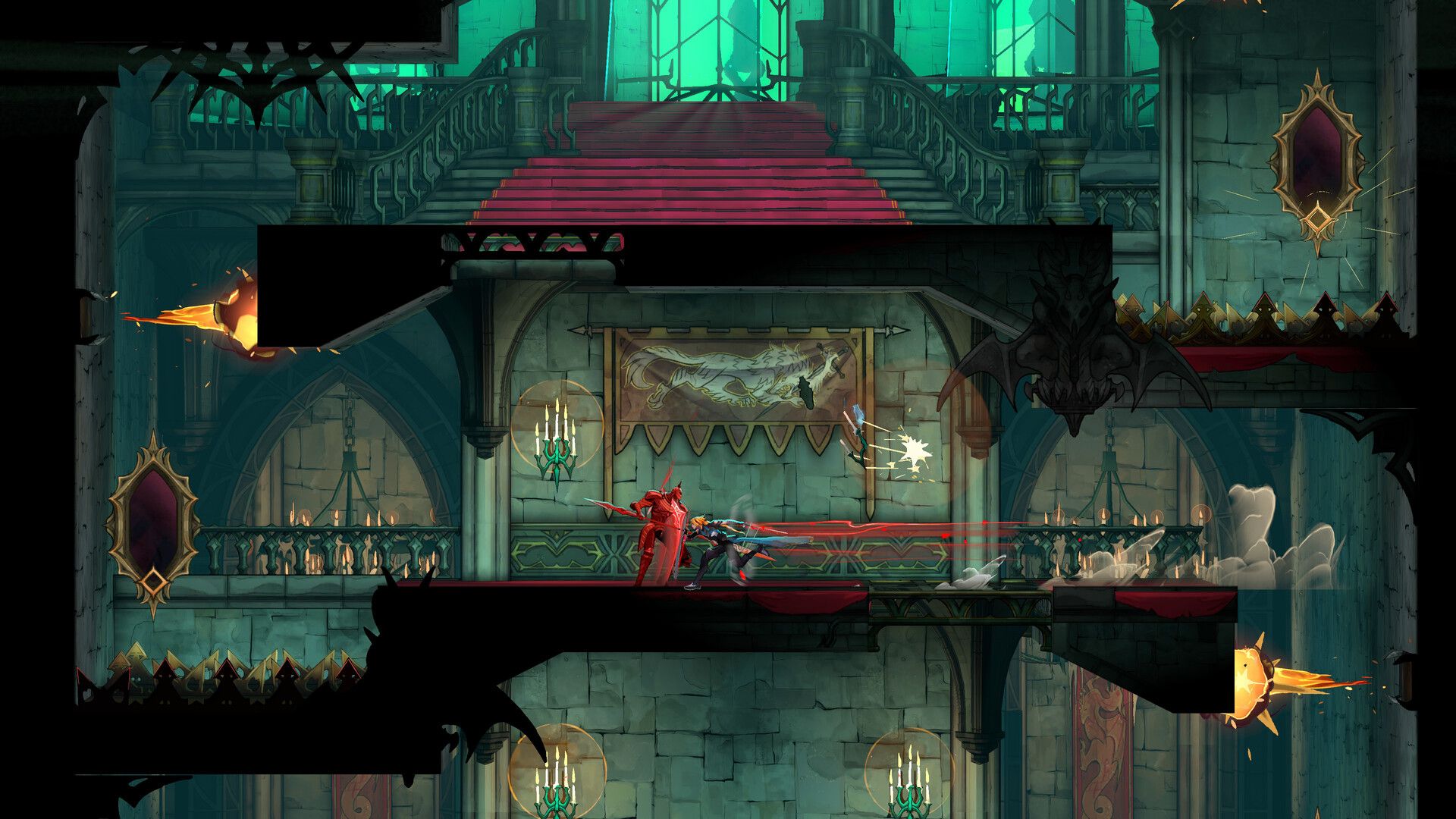
"The boss fights, despite not being as plentiful as I would have liked, all feel unique, testing your mobility, awareness and execution in equal measure without seeming unfair or cheap."
Combat otherwise feels good, even if the choice of weaponry is very limited (but we’ll get to that), but alongside the movement, it’s why I have a hard time drawing a one-to-one comparison with older titles or even Dead Cells because the flow is unlike either. It’s not trying to be methodical like older Castlevania titles, hence the whip attacks and sliding.
However, it’s also not trying to be like Dead Cells, where you’ll leverage the environment – be it wall-running, dropping through floors, and seamlessly rolling – to outmaneuver foes. When fighting bosses or a few enemies, it works well enough. Grappling onto a foe with the spear to stab them and kick off, or parrying combined with sliding for slower attacks feels nice. The boss fights, despite not being as plentiful as I would have liked, all feel unique, testing your mobility, awareness and execution in equal measure without seeming unfair or cheap.
The problem is when entering over-stuffed combat rooms, not just because of the projectile spam but because they have hooks and other gimmicks that interfere with your grappling and whip attacks. The sheer number of projectiles becomes even more obnoxious since you can parry one attack and immediately get hit by another due to the ability’s internal cooldown.
Then there’s the weapon progression. There are only seven weapons, and you’ll earn them fairly quickly. Each one feels distinct and fun to use, even if some aren’t as well-suited for certain situations as others. For example, you might want to swap the two-handed heavy sword for a one-hander or even a cestus, since its whip attack can propel you straight down into some spikes. But once you’ve gathered all seven weapons, you’ll find upgraded versions of them in chests in later areas.
Obviously, you’ll want to use them because they deal more damage, but you’re effectively handicapped if it’s not a preferred weapon type or suited to a certain region. The way they’re doled out is also baffling. One chest involves navigating an infuriating jumping puzzle to unlock a gate…which contains a timed switch. You must hit the switch, then traverse through the jumping puzzle again…just for tier 2 dual blades. When you could have just skipped it and done a more straightforward section for a tier 2 spear, or, heck, wander into a room and find a tier 3 heavy sword lying around.
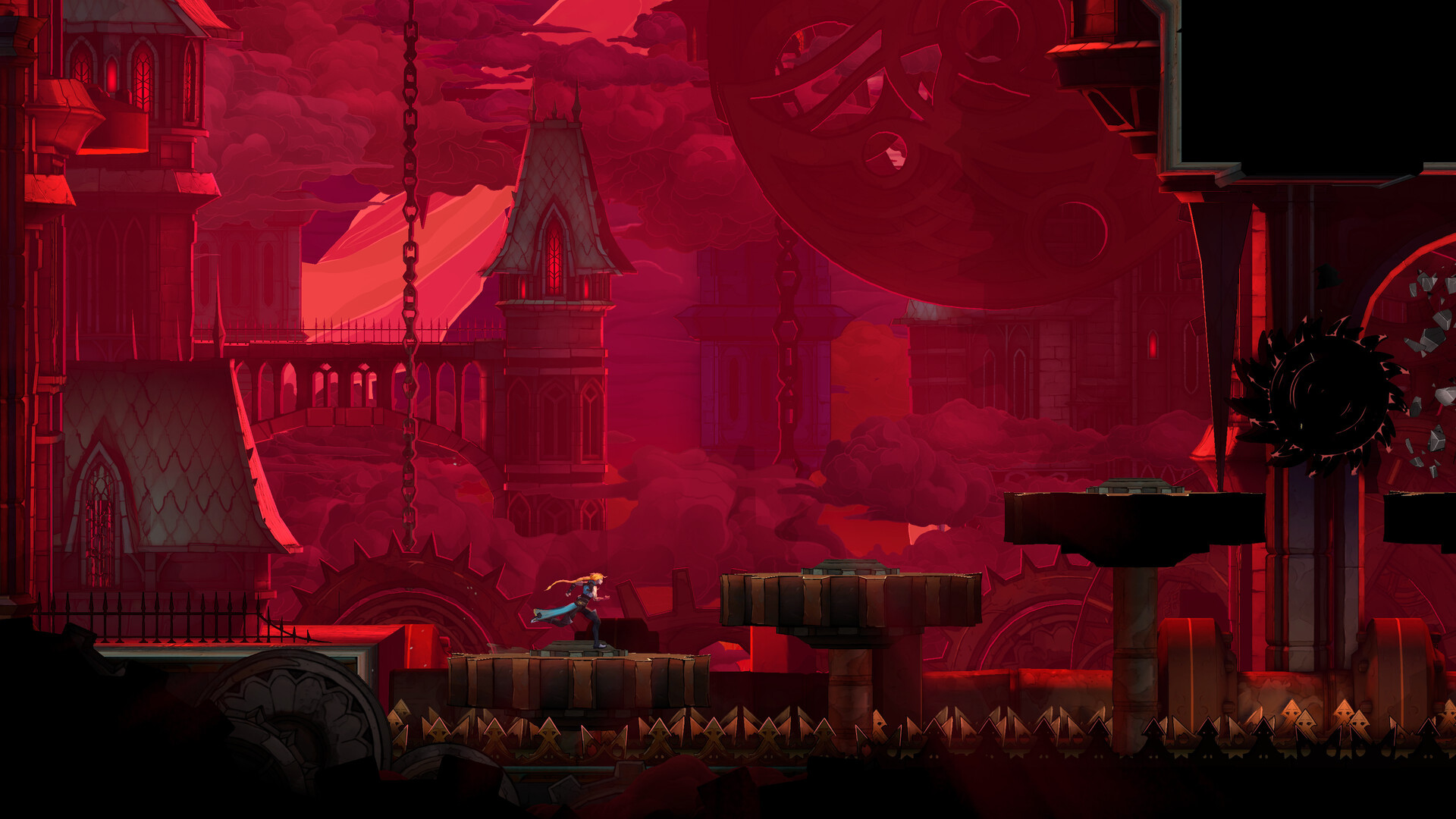
"Even with all these complaints, Belmont’s Curse still makes a strong case for a solid foundation on which future titles can thrive."
Finally, there’s the Arcana, which acts as Rose’s secondary abilities. They’re obtained from defeating bosses, and as you complete different challenges, they can be upgraded. Overall, I like the selection on offer, whether it’s sending out waves of fire in both directions or spikes that inflict bleed (which also serve to drop you suddenly to the ground on activation). However, this can be a problem as well, such as the Arcana’s animation starting to play and even consuming your Mana, but it won’t actually go off when hit by an enemy, putting you at a disadvantage. Which is all the more annoying when using it while having the Artifact that periodically freezes enemies who hit you.
As many complaints as I have about Castlevania: Belmont’s Curse, its various elements can come together fairly well. It’s just that several of them don’t feel consistently great, oscillating between fun and frustrating, seemingly on a whim (not that there’s an excuse for the backtracking). The art direction and music are consistently great, even if some tracks feel more fitting of The Rogue Prince of Persia than Castlevania. There are also some baffling performance drops when scanning through the map. At the very least, whether swinging from pillar to post or engaging a gigantic boss and narrowly avoiding its attacks, the frame rate is fairly solid.
Even with all these complaints, Belmont’s Curse still makes a strong case for a solid foundation on which future titles can thrive. But after years of waiting for a new Castlevania, especially one that returns to the series’ 2D roots, I was hoping for something more than just good, especially given the sheer quality of Metroidvania games nowadays.
This game was reviewed on PS5.
Stunning art direction that consistently looks great. A very good soundtrack, especially the rearrangements of classic themes. Combat feels solid, and especially shines in boss fights. Some well-designed sections with unique hooks.
Weapon progression forces you to stick with a particular type for no other reason than damage. Whip attacks can sometimes feel janky. Punishing precision platforming sections feel overtly egregious and interrupt any sense of tempo while making back-tracking feel egregious. A little too much talking from the side bar.