





Take a break and come back” became one of my favorite phrases while playing Hollow Knight: Silksong last year. It can sound patronising initially because why would you want to stop playing? You’re having fun, right? However, it’s surprisingly effective at getting past a frustrating boss or coming back to a challenge completely refreshed.
What does that have to do with Phantom Blade Zero, S-Game’s hack-and-slash action RPG, which is already one of 2026’s highest-rated games, especially amid so much stiff competition? The same game that’s dominating the global top sellers chart on Steam? Well, for much of my time playing, only one sentiment truly ruled – one thought that dominated everything else.
I don’t want to stop.
Now, there’s “taking a break” to wipe away any frustration and come back recharged, and then there’s needing a break because of physical discomfort. The latter happened more than once while playing Phantom Blade Zero, and yet I pushed on. It’s fine. I’ll take one after this encounter. After this boss fight. After seeing what’s around the next corner. And so on.
It may sound puzzling because even if this isn’t a Souls-like or a game designed to punish you, it isn’t exactly easy. You could dodge a blue flash attack, missing out on valuable stagger, or try to parry a red-flash attack and take damage. It might not even be one mistake, but sooner or later, they compound until you’re in trouble. With 50 bosses and encounters where enemies stop fighting fair, assailing you from afar with explosives and projectiles while their buddies pile on the combos, you’re likely to die sooner rather than later.
But death never felt like failure, at least for me. It wasn’t just learning from my mistakes and memorising a boss’s patterns. If anything, it was another obstacle because I really wanted to keep going.
Why, especially when more punishment awaited? That’s the secret sauce behind Phantom Blade Zero, and what makes it so addictive.
In a game like this with combat so stylish and fluid that feels so satisfying, what is the one thing you want from it? More, obviously. After receiving my first dual blades, I was excited by its distinct moveset, combos and perks. That giant axe that serves as the first Phantom Edge? Fantastic, if impractical in some situations, but it’s ideal for breaking through shields and armored foes while opening new paths, even when unequipped.
Progressing on the main story path, which admittedly feels a little straightforward for the first two regions, grants even more weapons. After just a few hours, I’ve unlocked a two-handed sword with lifesteal, whose Power Surge attack can drain life from enemies while also serving as a grapple of sorts so they can’t escape. I’d also started to get a handle on dealing with black-flash attacks. Suddenly, weapon-switching becomes essential to one’s playstyle since it recharges Sha-Chi and lets you pile on the damage.
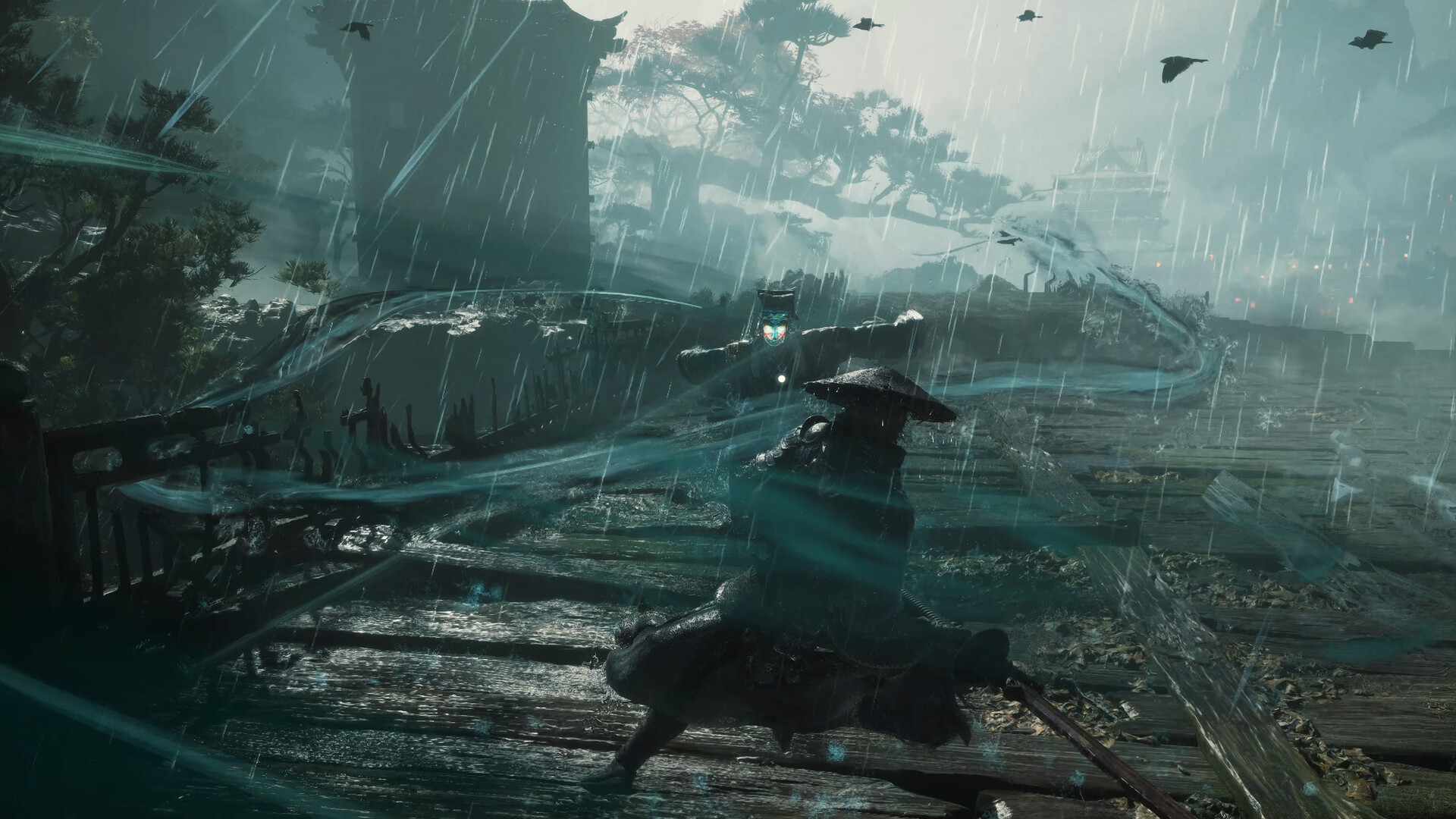
Some Memory Flowers and Sha-Chi Amber, a few new accessory slots, and more upgrade materials later, and Soul pulls off Phantom Edge follow-up attacks, regaining Sha-Chi from parrying and dodging, and leeching health from executions. I’ve gone from relatively straightforward armaments to dual blades that harness wind and lightning, a one-handed sword that fires energy slashes before propelling me into an opponent, hook blades that can parry blue-flash attacks (and black-flash attacks, but you didn’t hear that from me) for special counterattacks. I’m burning fools with a lion dancer mask one second, then smacking them around with a lightning spear while paralysing them the next. And that’s before we even get to Soul Tempering.
Each battle becomes an excuse to test my new build. Yes, some regular encounters can turn into cakewalks, but Phantom Blade Zero mixes it up more often than not. Sometimes, you’ll feel like a top-tier assassin, capable of slaying enemies without a thought. Then you’re like a fugitive on the run, desperately trying to survive and make it to the next checkpoint.
Which further feeds into the exploration. Because when you feel overpowered and ready to really push yourself, a boss appears. Results could vary, honestly. Maybe you’ll understand their patterns, all those sessions against Mo Yuan honing your reflexes to a fine edge. All those medicine upgrades for increased healing are pretty great too. And then before you know it, a combat puppet lays the smackdown like it’s no one’s business. Suddenly, you’re back to being a punching bag, each blow and thunderous strike teaching you how to improve, even if it doesn’t immediately take effect.
Then you succeed, obtain a new weapon or Phantom Edge, and the process begins anew. What will this new armament provide, especially since new weapons tend to prove useful in imminent battles? Where will this new Phantom Edge lead you, especially through older locations with paths closed off by branches to burn or floors to break through? It’s a constant loop that encourages further exploration and combat.
Don’t worry about farming enemies or gathering resources like in your average Souls-like. You’ll encounter enough of both in due time. Either focus on the story and find out what’s really going on in the Village of Lu, Pangzhen and beyond, or veer off the beaten path to learn more about the Wulin. Maybe helping that friendly Shadow Warden makes something special happen, but even if it doesn’t, you get to explore a Sha-Chi Tower for useful resources.

Because it all ties together. It all feels significant, and it’s yet another reason to unleash your skills tempered through various battles.
We’ve seen plenty of gameplay loops throughout history, and one thing remains constant: Great combat keeps you coming back because it feels so good. Phantom Blade Zero understands that intimately and takes it further, ensuring every weapon feels different, even those in the same category, and yet fun to use. It throws in different accessories and medicines to encourage thinking towards particular set-ups (like a pure block build or one that encourages hanging back more often). It constantly escalates the challenge without going too overboard, at least depending on the difficulty you’re playing.
Speaking of which, I haven’t even gotten to Hellwalker, which completely rewrites how you approach boss fights because of changing attack patterns. As a result, S-Game didn’t just create a hack-and-slash title that encourages a single playthrough. It keeps you coming back for more, seeking even greater challenges and learning to operate outside any established muscle memory. Not because you have something to prove or because you’ve exhausted all other content, but because it’s like an end-game activity in this action RPG.
Like Path of Exile, where you need to test your build and play style in something challenging enough. Game director Qiwei Liang pointed to the last ten weapons delivering a fundamentally different experience in New Game Plus, and it finally makes sense (beyond the feature’s traditional purpose, of course).
There’s an upper limit to that, and Phantom Blade Zero’s 66 Days Mode proves as much. You can only cater to this kind of gameplay so far. Besides, it’s also not for everyone. Most want to enter this incredible dark Wuxia world, admire the visuals, conquer the bosses, complete the story and move on, even without really cleaning up all the side content. That’s an equally valid way to play, one that still delivers your money’s worth with dozens of hours of fun.
But when the hooks are in, very few games are this addictive. I can stop anytime I want, though. Surely.
Note: The views expressed in this article are those of the author and do not necessarily represent the views of, and should not be attributed to, GamingBolt as an organization.