







It’s always great to see a wide gamut of gaming experiences from a single studio, released one after the other, with a momentum that can be sustained only if the studio in question is backed up by tools that make such a feat possible. The developer has had quite the run in these last few years, with its games flitting between claustrophobic horror, hunting massive monsters, stylized mythical action, and even a crisp competitive fighting title under its belt. It’s a testimony to the talented minds behind each of them that they’ve all managed to be quite successful outings for the studio.
But aside from the people behind great titles like Monster Hunter Wilds, Resident Evil Requiem, Dragon’s Dogma 2, and so many more, there’s an unsung hero that has worked behind the scenes to ensure that each game has brought the vision behind it to life with both substance and style. And it’s managed to do that across varying design philosophies, achieving differing goals each time without requiring a rebuild of the studio’s pipeline with each one.
How has it managed to do so? That’s what we’re here to explore, as we dive into how it has powered some of modern gaming’s best titles in ways that matter.
The Beating Heart Of Some of the Best Titles
It’s a good idea to define the engine itself at this point, and the best way to do that is to look at it as more than just a graphics filter that produces incredible visuals (although it’s gotten quite good at that over the years). It’s a production ecosystem that brings shared tools, talents, and better iteration of key gameplay elements across different teams.
When you look at it as a toolset that builds assets, materials, lighting, animations, and physics while handling streaming all of those elements in real-time as you play any game it powers, you begin to see its potential, and why it deserves its time in the spotlight. What’s more, it scales those systems according to very different performance targets, with each game that it powers bringing different design pillars to the table.
For instance, Resident Evil Biohazard’s focus on setting a very claustrophobic mood via tight spaces and high-fidelity graphics was quite different from the need to showcase scale and run complex systems in games like Monster Hunter Wilds and Dragon’s Dogma 2. Alternatively, Street Fighter 6 needed a more performance-focused approach thanks to the need for slick, responsive gameplay.
It can be tricky for a single engine to sustain a high level of quality across such vastly different experiences, but that’s just what the RE Engine has done, time and time again. But how has it managed to do so over the many years it’s been around?
A Story As Interesting As The Games It Has Powered

Looking at the different phases of how the RE Engine evolved over the years is an interesting look at how it managed to evolve with each title. From 2017 up to 2019, it was utilized in Biohazard, where it operated in controlled spaces with high material fidelity and worked to create lighting control in the environments we explored as Ethan. It did well, but that was simply the beginning of its evolution into what it is today.
2021’s Resident Evil Village expanded its capabilities to include wider environments and differing camera styles whilst sustaining the level of quality it had brought to Ethan’s previous outing. Simultaneously, it also got woven into 2023’s Street Fighter 6, a title in which animations and tight gameplay would become a standard part of the RE Engine’s toolkit. It was quite the level up, and the engine proved more than capable of handling the extra demands being placed on it.
And then came Dragon’s Dogma 2 (2024) and Monster Hunter Wilds (2025). While it had previously handled open environments, the engine would need to power an entire world this time around, while also handling the added load of complex systems that were constantly interacting with each other to present a more dynamic map for its players. That might have been a challenge, but the RE Engine sailed through with flying colors.
Which brings us to Resident Evil Requiem, where the results of its evolution over the years are there for all to see. It has brought a very extensive lighting system in that one, and some very fine details on its characters and environments to bring an almost ethereal layer of cinematic quality to the whole thing, making Grace and Leon’s adventure feel more real than any of the titles in the franchise’s illustrious history.
But how does it manage to achieve all of this with so much style? We’re glad you asked.
Bringing The Magic To Life
Any tool is only as good as the input you feed into it, and the RE Engine is no different. Its excellence begins with providing real-world references of the materials and environments it’s meant to reproduce, a process that involves capturing textures, programming photogrammetry, and accurately representing imperfections on surfaces. That might seem like a lot of effort, but giving the engine believable inputs helps it create similarly realistic outputs.
The next step is to create assets with a suitably high level of detail. High-poly sculpts, lots of compressing high-resolution meshes into lower polygon models with their geometry still intact, integrating UVs, and baking, which is pre-computing complex details like lighting and shadows in order to reduce the load on streaming in real-time. All of these help the engine make efficient use of available resources while sustaining the best possible level of quality across the board. There are also details like collisions and streaming splits to consider, all of which run in the background while you interact with your game. Great examples of this phase in action are the open worlds in Wilds and DD2, where long drawn distances with a lot of dynamically interacting objects make having an effective strategy toward the level of detail on display paramount. But it’s equally important in experiences like Biohazard, where there are fewer objects, but the closer camera perspective puts more scrutiny on each one.
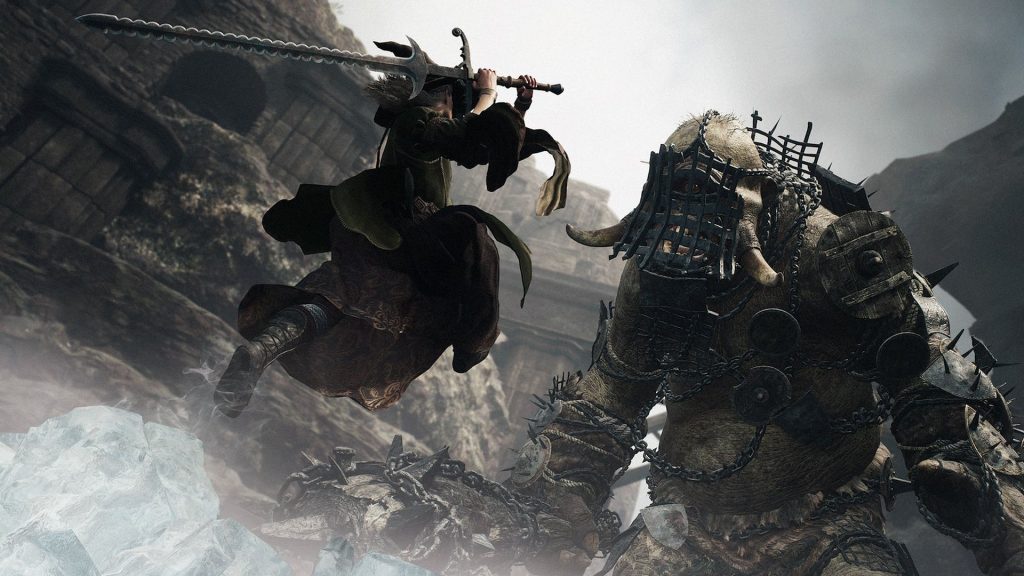
The next step is where realism is born, as Physically Based Rendering (PBR) is done on assets to ensure that they interact with light and present a realistic simulation of how each object would behave in the real world. It’s where objects are programmed to interact with light based on physical traits such as roughness, metallic surfaces, dirt, wetness, decals, and other crucial parameters.
Look at the streets in Requiem, for instance. It’s quite easy to see how a street in normal weather looks and feels different from the same one once it’s had a bit of rain to add a layer of moisture to the environment, with light glancing off wet surfaces to present a more realistic reflection on not just roads, but cars and windows. It’s a sort of emphasis on microdetails and realistic reproductions of real-world scenarios.
Next, the environments make way for animations, with rigging, blending, and motion capture being crucial in presenting readability of player and enemy movements, camera behaviour in intense situations, and hit reactions across the board. This is a crucial step in games like SF6 and Monster Hunter Rise, where smooth framerates, frame clarity, effect discipline, and animation timing readability all play a role in giving players smooth, responsive combat systems that allow a game to feel as immersive and engaging as it can be.
Lighting and rendering are another big step, with direct and indirect light having to work in tandem to give scenes a proper mood while accurate shadows keep it grounded. There are also volumetrics and fog to consider, and they are important factors in crafting the right atmosphere for any given in-game event, while reflections via ray tracing make it all come together. A great example of this would be Village, where there were a ton of different environments, each with complex setups, similar to Requiem, where lighting paths were an important part of the experience.
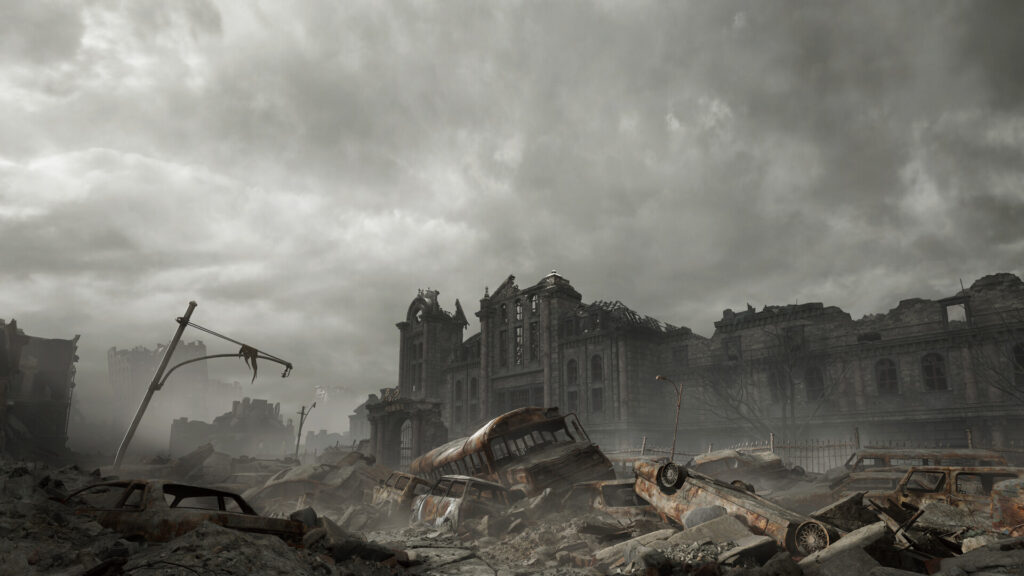
Next, there are details like exposure, tone mapping, Lookup Tables (LUTs), which act as a sort of automated translator that applies color schemes to scenes, bloom, depth of field, and motion blur, which must all be woven in to give games that cinematic feel without taking things too far. Restraint is an important sentiment in this step, as overdoing it ruins all of the engine’s hard work. Village, for instance, handled this very well with varying scenarios exhibiting an excellently consistent cinematic quality.
All of these steps help the RE Engine achieve the results it managed in the titles it has powered. Its ability to optimize and scale according to a game’s needs as opposed to the game being needed to be molded to fit within its framework is a superpower of sorts, allowing it to be a versatile tool that has handled a bunch of varying requirements. It was able to handle different hardware targets in Rise, while also handling the systemic load from Wilds and the CPU-heavy world simulation in DD2.
Versatility Across Genres
This is our favorite part, as we get to see just how the RE Engine has managed to make itself a crucial part of the success its games have enjoyed, and the reason it has managed to be an engine that works across genres.
Resident Evil has been a great showcase of how it can present tight, high-fidelity environments with aplomb, with very realistic close-ups of differing materials, nuanced lighting, and very moody atmospheres that sell the fear and tension that the franchise is known for very well. Once again, looking at even a few minutes of Requiem’s gameplay or cutscenes is enough to prove its chops.
When it comes to massive worlds with a lot going on in them, the engine has once again risen to the occasion. It handles the worlds in Monster Hunter and DD2 with style, balancing a multitude of factors like streaming assets, sustaining LODs and traversal speed, simulating systems, and handling memory pressure across platforms with a fairly consistent experience across the board for all players.

In SF6, where a performance-first approach dictated the entirety of its gameplay loop, the engine maintained stable framerates while allowing for excellent animation and effect clarity, factors that were tantamount to presenting the explosive action that the game needed to stand out.
Heck, it also proved quite good for remasters, with Dead Rising Deluxe and Ghost Trick being fine examples of how it can bring older games to life. But Requiem is probably its magnum opus, with an astounding sharpness to its microdetails that stay intact even in motion-intensive situations, stable lighting responses across surfaces, excellent geometry and hair physics, and clean reflections with accurate shadows that really sell the scenes where they operate.
It can be easy to just say it’s insanely good at powering the best of what the developer offers, but that would be doing it an injustice.
What Does The RE Engine Mean For Modern Gaming?
Aside from what it manages to do in-game, it’s also what it manages to do behind the scenes that makes this one so relevant to a generation of games that are constantly getting more ambitious.
As an engine built from the ground up, its assets, tools, technical know-how, optimizations, and workflows allow for both consistency and compounding benefits to the studio with every successive release. It isn’t an engine that just puts out pretty graphics easily, but is now a benchmark in game production.
As the worlds in our games get bigger and lighting gets more ambitious, engines that scale well become the competitive edge. And the RE Engine is one that’s doing a hell of a good job on that front. We can’t wait to see where it shows up next, but you can bet that we’re going to be diving in with a smile on our faces, secure in the knowledge that this is an engine that’s capable of making great games even better.