





It’s always fun to find unique concepts from older video games you might have played back in the day to make it into modern experiences, with vastly improved mechanics that address issues the original title may have had. It’s also a great way for developers to introduce some quality of life changes, fine-tuning the experience to match modern sensibilities.
The current generation of gaming hardware has also proven that well-made remakes can also do quite well. We thought about a number of games that brought unique premises or features to the table, and remembered one from back in the day that did both. Cold Fear’s unique take on survival horror isn’t for the light-hearted, and might even push away people with queasy stomachs.
But its innovative take on the genre literally makes the game’s stage become its most unpredictable adversary, requiring you to be as dextrous as you can when you’re making your way through the adventure it presents. Why, then, did a game with such a unique premise fall into an obscurity so deep that its innovations have been lost to time?
Take a walk through memory lane with us, and revisit a game that might have been a classic of the horror genre if it had done more to iron out its quirks. The adventure that is Cold Fear awaits.
The Eye of the Storm
The premise of Cold Fear’s story is simple. You’re a member of the US Coast Guard, instructed by the CIA to investigate mysterious occurrences on a Russian fishing boat caught up in the middle of a storm. With your entire team wiped out on arrival by unknown monstrosities, a panicked bunch of Russian mercs running around, and little to no information available to you about what’s happening, you set out to make sense of it all. But there’s a catch.
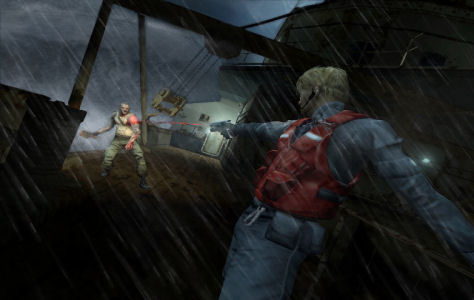
Remember that storm we mentioned? It’s probably more of a threat to your character than the mutated Exos, horrific humanoids corrupted by an experimental virus that makes them zombies. But why would an absolutely normal, natural phenomenon be a threat as opposed to a gloomy, atmospheric setting for a game? Well, in its effort to be as immersive as possible, Cold Fear rocks the boat (pun intended) to make the storm part of the journey.
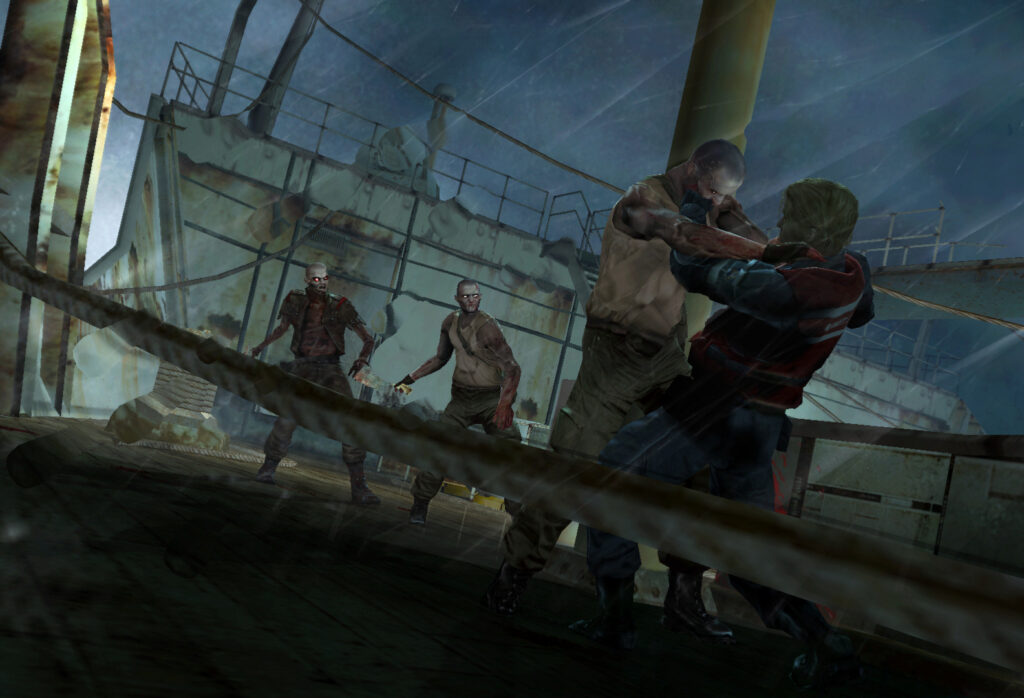
Staying upright is going to be quite a challenge, with the boat clearly at the mercy of the turbulent waters below. Making your way through the game’s levels is going to be quite a trip. Assailed by the Exos and terrified mercenaries while you’re fighting to keep your balance in a title that’s designed to have you fraught with tension every step of the way is a recipe for a jolly good time, is it not?
Your player, character, enemies, and environmental objects are all a part of the storm’s chaos, and it affects the gameplay loop in a myriad of ways. In open areas, you’re going to want to avoid picking fights near railings and the like lest the rocking of the ship throw you overboard. You only have a limited amount of stamina with which you hold on to the side and try to climb back on board, failing which you’re going to be lost to the sea. And if you’re unfortunate enough to be on the deck when a wave hits it, you’re in for a world of hurt.
Being strategic about navigating the ship becomes a crucial part of the adventure, as you’ll need to avoid damaged wires and other such obstacles that could hurt you if you’re not careful. And with the game’s very stage trying to throw you into the hazards it has created, every facet of this adventure can make it seem like the world is designed to kill you. Even the game’s camera bounces around with the storm, adding to your disorientation and further selling the illusion that you’re actually on the ship.
It’s what made successfully navigating the game’s levels feel so satisfying. It was rewarding in a way that was so unique, it’s quite surprising that the concept hasn’t really been attempted again, especially with new technology like haptic feedback and adaptive triggers on controllers, and ray tracing on systems, all of which could work very well to add on to Cold Fear’s unique USP.
But how did developer Darkworks manage to craft such an immersive experience? With a fair bit of innovation thrown in, it turns out.
The Calm Before the Storm
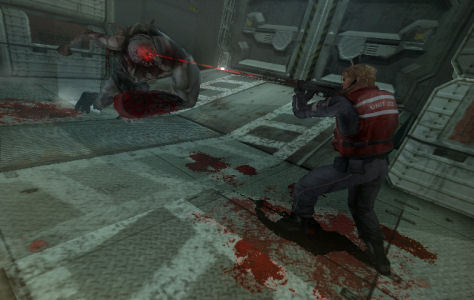
Cold Fear’s rocky levels come from a relatively stable blend of technological wizardry and a team that dared to dream. The Darkwave Physics system was created to give Cold Fear its unique spin on survival horror, bringing a custom game engine designed to mimic a ship in a storm to the table. It was designed to affect the entire game, creating the scope for an insane number of player animations, a reworked camera that required its own inertia system to prevent it from going through walls, and physics that made a great attempt at replicating the motion of objects on an unstable surface.
It was a daring bit of technical innovation that lent Cold Fear its ability to make its very world a threat to both the player and enemies in a title that brought the scope for its systems to work well together. But it was those very systems that ultimately led to Cold Fear’s poor commercial response. Stiff movements on the player’s character made navigating the rocky ship quite jarring, which led to the novelty of it all wearing away and robbing the experience of what made it unique.
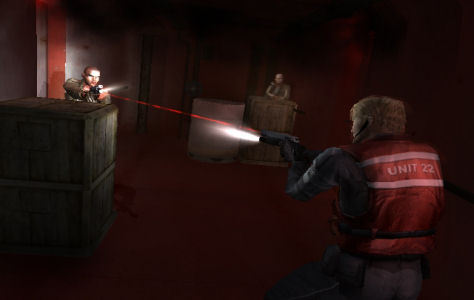
It made combat encounters feel clunky as well, creating the space for frustration instead of scares and thrills in a game that was meant to thrive off the latter. The hybrid camera system did not do very well in cramped spaces, making it an enemy instead of an ally in encounters where having a good view of the action mattered.
The fairly generic story also brought environments in its latter half that were decidedly free of any sort of rocking movements, diminishing the value of the game’s biggest asset. Tom Hansen doesn’t stand out from other great protagonists, but uncovering the events that led to the game’s dangerous situation doesn’t really hit as hard as it could have in the hands of more effective storytellers. It’s a largely predictable experience that kind of clashes with how volatile the minute-to-minute gameplay on offer in Cold Fear.
Dated presentation and poor enemy variety were also strikes on Cold Fear’s record, squandering all of the advantages earned by a unique premise and an intriguing opening. Which is all a pity considering how no other horror games had, or have attempted to craft an experience where you’re actively managing both the environment and the threats you face, all at the same time. It makes even basic actions like walking, aiming, or climbing quite challenging in a way that makes sense both narratively and contextually, making this a very immersive, if flawed title.
Missed Opportunities
It’s a damn shame that Cold Fear failed to capitalize on its very distinctive take on survival horror. However, that does not take away from the fact that it’s an excellent design experiment that was only held back by poor execution and the technological limitations of the era in which it was released.
The idea of having the very environment you explore take such a passive-aggressive approach to life forms within its confines, both player-controlled and otherwise, could be a potent tool for immersion and engagement if the rest of the game it works in behaves as intended. While Cold Fear failed to use its own best strengths to their fullest, that was its biggest hindrance to success.
While its unique motion-induced gameplay loop might have been very welcome if it had been more consistent across the board, its poor implementation back in the day is no reason for a talented studio to revisit the concept, perhaps repurposing it to fit a new title with a premise and gameplay loop better designed to accommodate the unique gameplay loop it brings to the table.
The potential for a remake is also there, allowing for a much better experience with the power of current-gen hardware helping the game deliver on its original vision with aplomb. It’s puzzling why Cold Fear has languished in obscurity despite being as distinct as it is, but the horror genre could benefit from what it brings to the table.
That’s especially true considering how modern titles are already making great use of current-gen tech to bring very immersive, truly horrifying games to our screens. It’s easy to imagine what an innovative concept like this one would look like today, and the kind of thrilling gameplay loop that such a game would bring.
Here’s to hoping that a very creative flourish on the survival horror genre’s formula is not lost to the annals of time, and perhaps comes back even better than the first time in the near future.
Note: The views expressed in this article are those of the author and do not necessarily represent the views of, and should not be attributed to, GamingBolt as an organization.