





In any video game, but especially so in Control Resonant, space is finite. The paranatural occurrences, the calamities, the dimensions that Dylan (and Jesse) roam in certainly seem endless. However, even for Remedy’s “biggest and most ambitious game ever,” the virtual walls that encompass the play space are finite. It’s not a detriment by any means – if anything, the developer’s ability to leverage that space, and tell interesting stories, ultimately makes (and sometimes breaks) the developer’s works for some. The “peak Remedy weirdness”, as it were.
Which is why I need to rave about the Underpass in Control Resonant. In my review, I called it one of my favorite video game environments this year, and upon deeper thought, I wouldn’t be surprised if it tops the list.
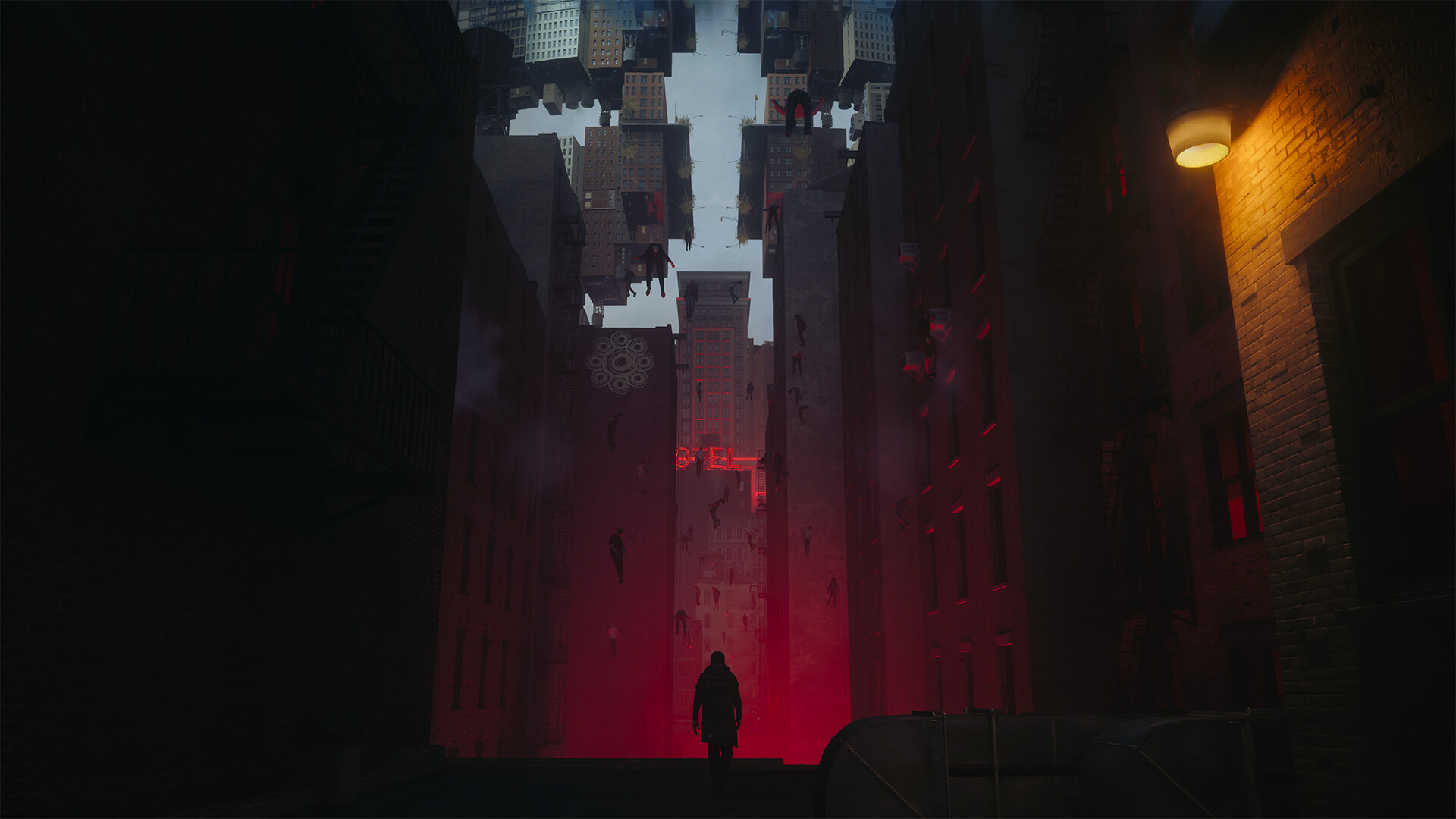
In layman’s terms, an underpass is a road beneath a road, and it makes sense why the Federal Bureau of Control would name it that. It’s essentially running beneath the Sinkhole – a seemingly bottomless well created by the Patterning. Remember Dylan wandering across a massive space with endless replicas of living rooms, bedrooms and more? That’s only one part of the Sinkhole. The Underpass is what formed deeper underground.
Because the term is a common occurrence in metropolitan areas like Manhattan, my first instinct was to remember creative director Mikael Kasurinen’s thoughts on the art direction in Resonant. About presenting everyday environments alongside strange and unnatural things. Besides having to fight all the paranatural threats trying to kill you, it creates a sense of dysphoria – a panic where you know this isn’t the natural order of things.
The Underpass is fitting of that description, but on more than a spatial level, when all is said and done.
The trip to reach it is certainly claustrophobic and oppressive. You’re required to go to the Sinkhole and venture across the numerous patterned floor layouts, eventually discovering a pattern of stairs that leads to more stairs. Those stairs lead further down and split off into another set that leads to another set. Throughout this, light sources help you along, but they don’t dampen the feeling of disorientation or that something is wrong. You then reach one giant staircase in a large hall. Only one way down, and after crossing the threshold, you see it.
This sprawling, almost megastructure-like environment stretches out as far as the eye can see. Various island-like towers abound, but the most notable is the one in the middle, seemingly reaching upwards, attempting to escape. The bottom seems endless, and even dropping down to the nearest available platform is harrowing. But it unearths an important discovery – a neatly arranged series of office chairs and desks.
So what is Dylan doing here? Well, after certain events you should really experience first-hand in the story (no spoilers), the FBC sent a team to investigate the Sinkhole’s further expansion. Led by Agent Schultz, they’re the first ones to really discover the Underpass. It’s as surprising a discovery to them as it is oppressive.
“Feels like we’re venturing into a blank space on the map,” she writes in the many written accounts scattered throughout. “’Here be dragons,’ right?” Little did Schulz know she was using the term correctly. “Hic sunt dracones” – Latin for “dangerous or unexplored territories,” represented on maps as sea dragons.
Of course, nothing rises from the depths to breathe fire on Dylan or swallow him whole. Compared to the hubbub of the streets above, bereft of humanity as they are, the Underpass has an almost eerie quiet. Like this massive library you’re seemingly trespassing in, but which is too grandiose in its random Brutalist arrangements to ignore.
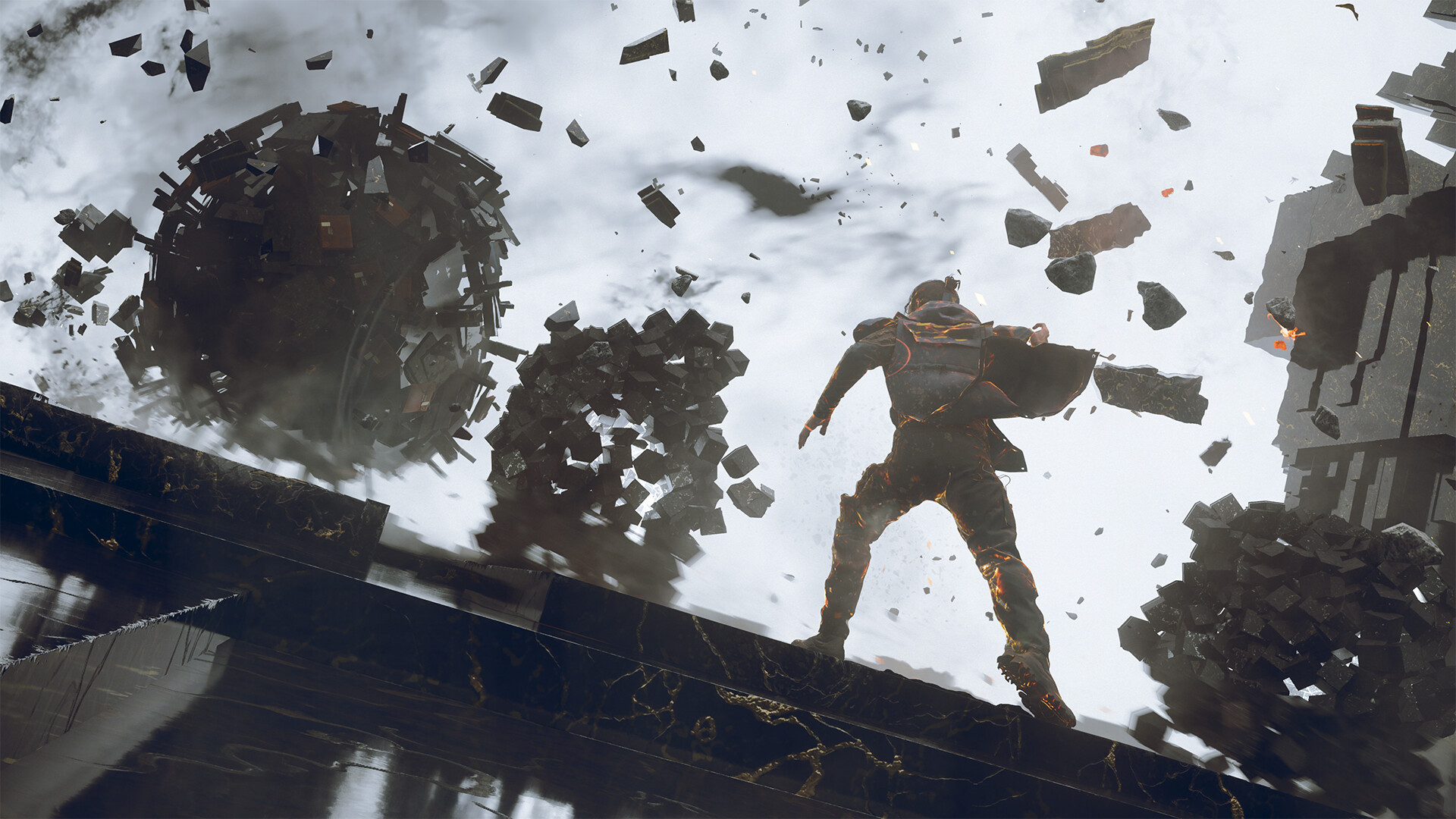
While it may seem impossible to navigate at first, you’ll soon find some climbing rope and glow sticks. In this day and age, where there’s constant debate about hand-holding in video games and how designs should guide the player, this made perfect sense. Besides the fact that a member of Schulz’s team was into spelunking, the glow sticks were for more than those who came after (à la the Climbing Expedition from Clair Obscur). The Underpass’s sheer scale is too much for the researchers, but they had still hoped to eventually leave, and those lights were their only guide. Barely illuminating the darkness, yet still some reassurance.
The Underpass is a gorgeous, ultimately unsettling labyrinth at the end of the day, though it requires Shift to reorient yourself on the walls and ceilings to progress, and Reach to traverse the massive distances. Where the Hiss have appeared for some unknown reason. Where you’ll discover a completely different space that is brilliant on its own (and which I don’t want to spoil). Familiarity would surely breed contempt for Schulz’s team, but nothing could surprise them, right?
Then you start to discover the notes about the team meeting Dylan, and how he comes and goes. How they’re missing equipment. How they’ve spent a long, long time in this place. As it turns out, the Patterning isn’t just morphing the Underpass in front of you, but affecting time itself. It’s creating multiple parallel timelines that run together, intersect, and collide. You’ll encounter three members of the research team at one moment, and their corpses the very next. You’ll spend time talking to Schulz about how she’s determined to find out exactly what’s going on, and in the next, trying to talk another version off a ledge before she surrenders to despair.
The combination of perspective-altering traversal and constantly shifting timelines also means encountering similar-looking research sites with different objectives. You may come across a hole in the ceiling, use Shift to climb onto it, and then jump down…after which the world reorients itself, and it’s all you can do to avoid falling into the abyss and continue forward. It’s an incredible mix of platforming and exploration that leverages the massive scope of the environment, while also relying on the intangible – i.e. a potentially infinite number of timelines – to make the space feel bigger than it is.
And that’s before eventually traversing to the Island of Tubes and investigating its terrors, or saying hi to the Mold again, or venturing to the Deepest Underpass to see things through as they were. You may even find a route into the depths of the Oldest House for a side quest that’s certainly unlike anything else in the game. Plenty of combat helps add variety, and make no mistake – there’s a particularly tricky Resonant somewhere in this zone if you decide to go after it. But for me, the Underpass is unique because it takes a concept – multiple layered timelines with different circumstances and outcomes, however infinitesimal – and uses it masterfully. It’s simple at first but slowly ramps up before going all in.
Perhaps no other point illustrates this better than when Dylan tries to progress and happens upon an obscene number of Hiss…only to be helped by other versions of himself across the timelines, flitting in and out to take down their mortal enemy. It’s messy, chaotic, and yet another beautiful result of this concept. Which leaves me wondering afterwards whether the rest of them made it out, or if they’re still wandering through the corridors of time.
I can’t say whether you’ll appreciate the Underpass as much as I have, but it’s the perfect combination of Remedy weirdness, traversal and mystery, tied together by a compelling story. And even if the core cast, be it Zoe, Emily or even Jesse, are part of the biggest moments, Schulz and her team are probably the few minor characters that deserve to be remembered alongside them. Not because their antics dissolved into some Event Horizon-style debauchery, but because they faced the Patterning head-on and didn’t give up looking for an answer, all in the name of science.
Note: The views expressed in this article are those of the author and do not necessarily represent the views of, and should not be attributed to, GamingBolt as an organization.