





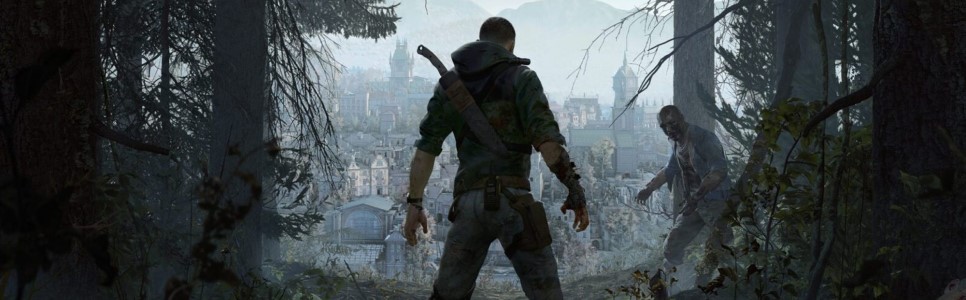
Dying Light: The Beast isn’t shaping up to be one of 2025’s biggest games simply because of its colossal scale. It’s in Techland twisting this scale into something oppressive, their obsession with detail transforming the once-scenic Castor Woods into a dread-inducing killing ground. The Beast’s open world wilderness is choked by noxious atmosphere; every shadow, cabin, and hiking trail imposes a muscle-clenching claustrophobia. From its overgrown grasslands, to decrepit lakesides and an Alpine-inspired town, The Beast’s environments don’t just surround players but swallow them whole.
Open-world survival horror is notoriously difficult to pull off. Yet, through a stomach-churning soundscape of zombie screams and flesh-ripping squelches, alongside blood which congeals in painstaking detail, Techland demonstrates how artistry metamorphosises fresh mountain air into all-consuming suffocation.
At the heart of their artistic vision is Castor Woods, a former-dreamland national park turned waking nightmare. Once upon a time, these fairytale hills attracted tourists in their droves; it was a serene holiday destination where people came to relax and families made memories together. A bustling town rests in its epicenter, with plazas that once housed restaurants, and gift shops now empty, their customers long-gone. Beyond the town nestles farmland, now partially flooded but once a location for fresh produce.
Further still lies a historic villa district, where wealthy residents pruned their ornate gardens. In addition to tourism, Castor Woods was an industrial powerhouse; now, a dense complex of long-abandoned warehouses, silos, and factories pockmark the Alpine skyline, rusting in sunlight like rotten teeth. These traces of human life extend to the surrounding residential districts where factory workers were housed, their lives fulfilled by grocery stores and green space. Now, all that remains are suburban scars etched deep into overgrown shrubland.
If there’s one thing Techland can’t be accused of, it’s skimping on The Beast’s world design. Not only has their art department created a natural, freeing landscape unique to the Dying Light series, but within it is an inescapable repressiveness; darkly atmospheric, and laced with trauma. It presents a a large, open space that somehow debilitates; the aforesaid sense of suffocation despite its scale.
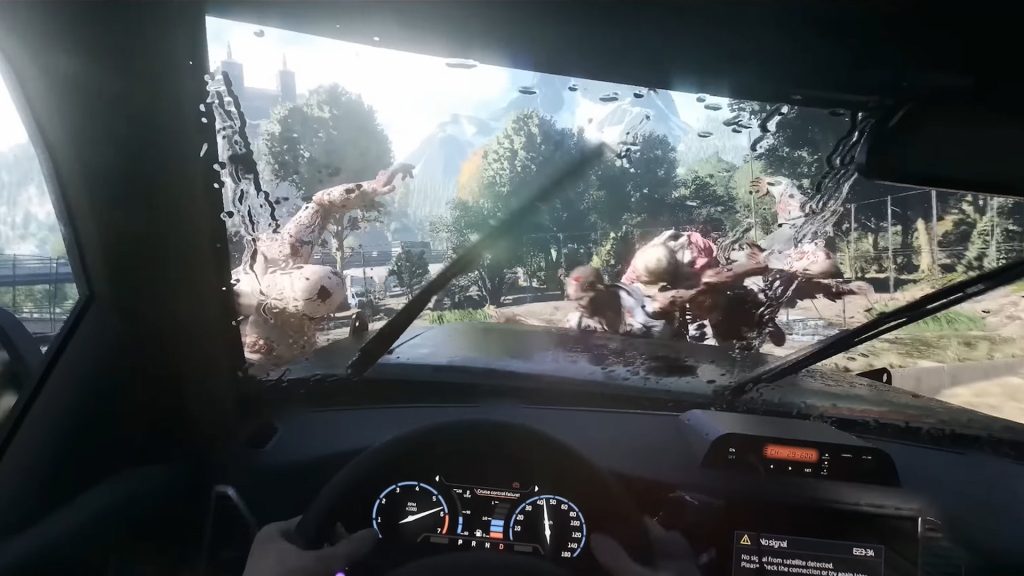
Dust hangs in the stale air of dilapidated apartments and hunting shacks, while sunlight struggles to peek through boarded-up windows. Long-forgotten paraphernalia of the lives once lived remain where they were abandoned, the markers of rapid mass evacuation. Each locale, be it indoors or out, harbours its own story. Clues to how the residents and tourists of Castor Woods spent their days linger in suspension. These are moments frozen in time, like the sombre sight of pens and notepads chalklined by decades-worth of radioactive filth in Pripyat’s schools. Techland has presented a vision in Castor Woods which feels as real as Chornobyl itself. A tangible sadness that’s impossible to fake.
Yet, as splendourful and morose as Castor Woods is, its diversity isn’t merely aesthetic. Its biomes are designed to shape how players move, fight, survive, and endure in the changing terrain. Techland’s art director has spoken about this deliberate specificity: the old town’s sloped roof tiles invite parkour fluidity while rocky outcrops force more technical traversal. Open pastures strip away the safety of cover, trading agility for the dread of exposure, while dense woodland amplifies fear by stifling vision.
Scavenging for resources shifts character depending on the setting, with decrepit townhouses yielding different scraps for survival than the isolated tourist cabins perched up a mountain pass. Even Dying Light’s undead threat – their activity still governed by the time of day – appear receptive to their surroundings, with preview footage hinting that certain types of infected prefer to lurk in particular environments. The result is a world where aesthetic diversity is more than skindeep; it is mechanical. Survival in Castor Woods’ shifting obstacle course demands not only technical prowess, but knowledge and nerve.
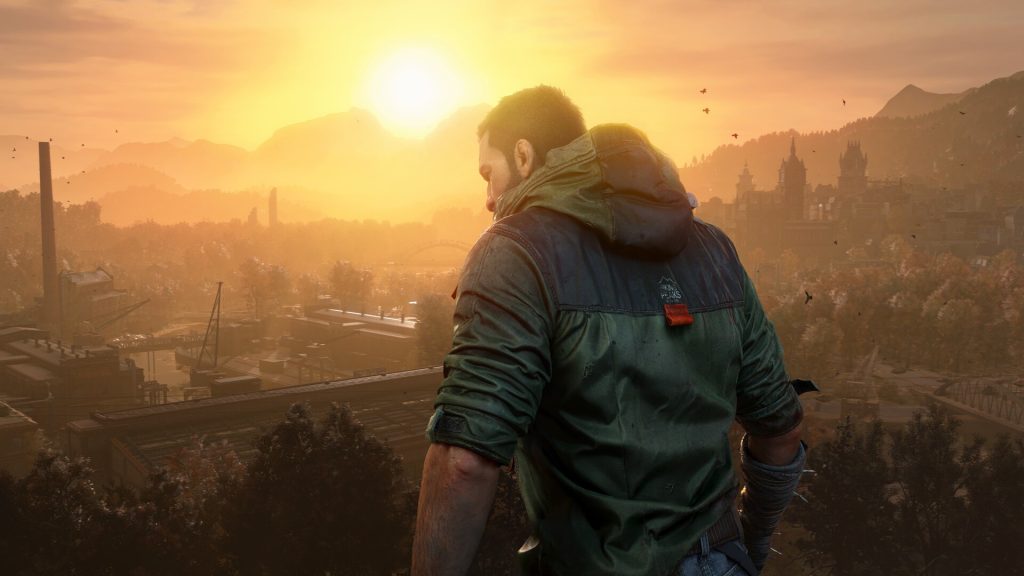
And whilst navigating the terrain effectively dictates survival, it is in its meticulously crafted detail – specifically, every mark, bloodstain, and splatter – that Techland breathes virulent life into Castor Woods, sharpening its terrifying edges further. The most striking example is their commitment to reworking Dying Light’s blood decals for The Beast. To achieve this, gallons of artificial blood were spilled, spat, and splattered before an actor convincingly slipped and slid across the studio. Dragged, too, through the crimson pools, the actor left realistic traces of struggle; the desperation in a last ditch escape, the flailing limbs of a life-or-death fight, or the resignation of an unfortunate soul succumbing to violence.
Even down to tailoring the viscosity of fake blood with dish soap – thus influencing how convincingly it congeals – Techland’s artists demonstrate a dedication to realism that pays dividends in the game. Using photogrammetry techniques, every twisted splash and stretched handprint was captured and implemented into the game engine.
Beyond looking exceptional, these details are a masterclass in diegetic storytelling. As a player’s eyes trace corridor walls streaked with red before following the floor’s stretched footprints leading to pools of gore, The Beast’s blood art reconstructs the final, gruesome moments leading to a victim’s demise. Herein lies evidence of the game’s brutality, a horror felt without witnessing the scene unfold firsthand.
Techland’s obsessive layering of detail inside a believable world encapsulates the game’s ambition within survival horror, staking its claim to be one of 2025’s standout titles in the genre. Dying Light has found its place amongst the pantheon of modern survival horror by blending open-world exploration, freewheeling parkour, and gore-filled combat, eschewing the more linear design of contemporaries Resident Evil, Silent Hill, and The Last of Us. But, in The Beast, Techland ramps up Dying Light’s immersion – a key ingredient to enveloping survival horror – via embellishing the franchise’s signature blend of tension and freedom.
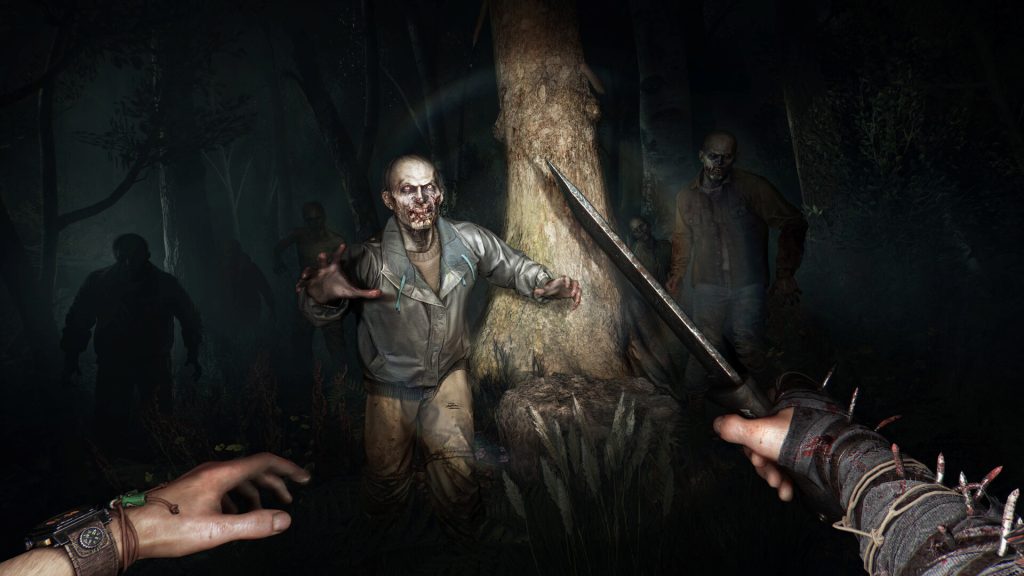
Castor Woods is vast, sprawling, and unyielding, yet, from every glade sodden by bloody soil to motheaten cabins and their rusting door hinges, every element is meticulously placed and deliberately bathed in a heavy gloom.
This is what sets The Beast apart: here, the franchise’s established mechanics stretch their legs in newfound directions, converging with artistry and world design to amplify dread beyond what the series has achieved before. Weaving in revolutionary blood effects and diverse biomes indicates parkour isn’t just about mobility anymore; it’s a lifeline when exposure is fatal. The undead, attuned to time and terrain, mix in unpredictability while environmental storytelling guides the player’s fear. Through emergent moments – frantic ambushes, escapes through dense forest, discovering sites of extreme violence – The Beast provides a personal element to every session. Horrifying and unique, Dying Light: The Beast could redefine open-world survival horror, providing a blueprint for what the genre can achieve beyond 2025.
And, the timing couldn’t be better. Dying Light: The Beast arrives at a time when horror fans are craving tightly crafted experiences that blend scale, ambition, and uniqueness. Despite a few missteps with Dying Light 2: Stay Human and its Bloody Ties DLC, Techland has remained loyal to the series, fostering a passionate fanbase who are primed for an expansion of the franchise’s traditional formula. Anticipation is growing, but The Beast isn’t just riding a wave of hype. No, it’s preparing players to be swallowed whole by artistic immersion, then spat out and dropkicked by sheer momentum. The Beast is set to be an experience unlike any Dying Light game so far.
Note: The views expressed in this article are those of the author and do not necessarily represent the views of, and should not be attributed to, GamingBolt as an organization.