





Coming into NHL 27 as someone who has carved many lines through virtual ice, I assumed I knew what to expect. But, within minutes of digging in, I felt like a stranger to the skates. It wasn’t the louder crowds or excitable commentary, nor was it the redesign of Scotiabank Arena. Even my beloved Maple Leafs felt as beguiling as ever. The culprit, instead, was a seemingly minor change with surprisingly significant consequences.
"Within minutes of digging in, I felt like a stranger to the skates."
Now, for 27, the left-trigger pivot is no-longer the reliable skating manoeuvre my muscle memory remembered. Overusing it left me vulnerable to poke checks. It took a few periods before I acknowledged its speed penalty and started to use it sparingly for subtle re-positioning or to open passing lanes, letting the AI skaters move rather than prematurely forcing the play.
This change gave me a useful introduction to NHL 27’s wider ambitions, with EA Sports skewing this year’s iteration toward making the on-ice action purposeful and reactive. See, more deliberate skating is just the tip of the iceberg – most significant this year is all 32 NHL teams now carrying individual playbooks informed by real-world NHL EDGE data. The Leafs, for instance, balance forechecking with speed through the neutral zone, while Colorado Avalanche prefers carrying the puck over the blue line. Other teams apply pressure by dumping, some lean on cycling to tire out defences, and others demand high-intensity across all zones.
More importantly, however, is that AI players are supposed to understand their team’s favoured strategies, adjusting their positioning, responsiveness, and support as matches evolve – the so-called ‘Cohesive AI’ which EA touts in its marketing.
After several games, it seems plausible that there’s something genuinely compelling here. NHL 27’s playbooks can tangibly affect the shape and rhythm of a game in ways that earlier entries rarely managed. The differences are there, and I can feel them on ice; what I’m less certain of is just how significant those differences really are. Have these playbooks fundamentally changed the way NHL plays, or have they simply given greater definition to systems that have underpinned the series for years?
The easiest way to understand NHL 27’s new playbooks is, for me, to not think of them as a set of tactics and more a demonstration of a team’s personality. Yes, they may specify the optimum formation for setting neutral zone traps or for which side of the rink skaters should stack during breakouts, but they also dictate their aggression, their willingness to take risks, or whether to hold cautiously. Now, each team has identifiable preferences covering things like forechecking, pinching, support, and structure across offensive lines and defensive pairings.
"The easiest way to understand NHL 27’s new playbooks is, for me, to not think of them as a set of tactics and more a demonstration of a team’s personality."
Assessing Colorado’s carry-focused approach, when breaking out of my defensive zone I noticed space opening up on centre ice. Then, moving through the middle of the rink revealed wide players who had found room to carry the puck into the offensive zone. The Edmonton Oilers, meanwhile, prefer dumping to carrying and shooting over cycling, so when I fired the puck around the boards for an AI teammate to chase, a supporting defenseman immediately pinched the blue line to occupy the passing lane before an opposing skater could close. Both the Avalanche and the Oilers, then, bring contrasting approaches to entry, but the tactical effectiveness hinges on their personalities and behaviour too; their patience, urgency, or a combination of both.
And the more I experimented playing with different teams, the more I realised that my own playstyle suited a particular team’s playbook over another. A match with the Montreal Canadians, for example, felt the most natural fit for me and the way I tend to play. They’re a carry-dump-agnostic team favouring low intensity cycling, and versus the LA Kings’ neutral zone control we fought an intense battle of repellent strategies. I played to Montreal’s strengths, cycled the puck, shot from the blue line, and lit the lamp with satisfaction knowing that I’d scored by playing the kind of hockey the team itself seems to encourage.
Of course, a team’s playbook means nothing if the players themselves didn’t follow its instructions. Thankfully, NHL 27’s AI is mostly convincing, with teammates shifting in-line with momentum, supporting breakouts, chasing dumped pucks, and launching desperation moves if caught on the wrong side of an odd-man rush. It creates the impression of a team that is thinking on their skates rather than following pre-prescribed routes.
This was particularly noticeable when I began paying attention to what was happening away from the puck. Driving down the wing of the offensive zone, the Utah Mammoth’s opposing winger would drive to the net, presenting an opportunity for a cross-crease pass and easy tap-in. And the Mammoth, as it happens, were another team that suited me, with them able to mix puck cycling and sniping with aggressive forechecking and recovery.
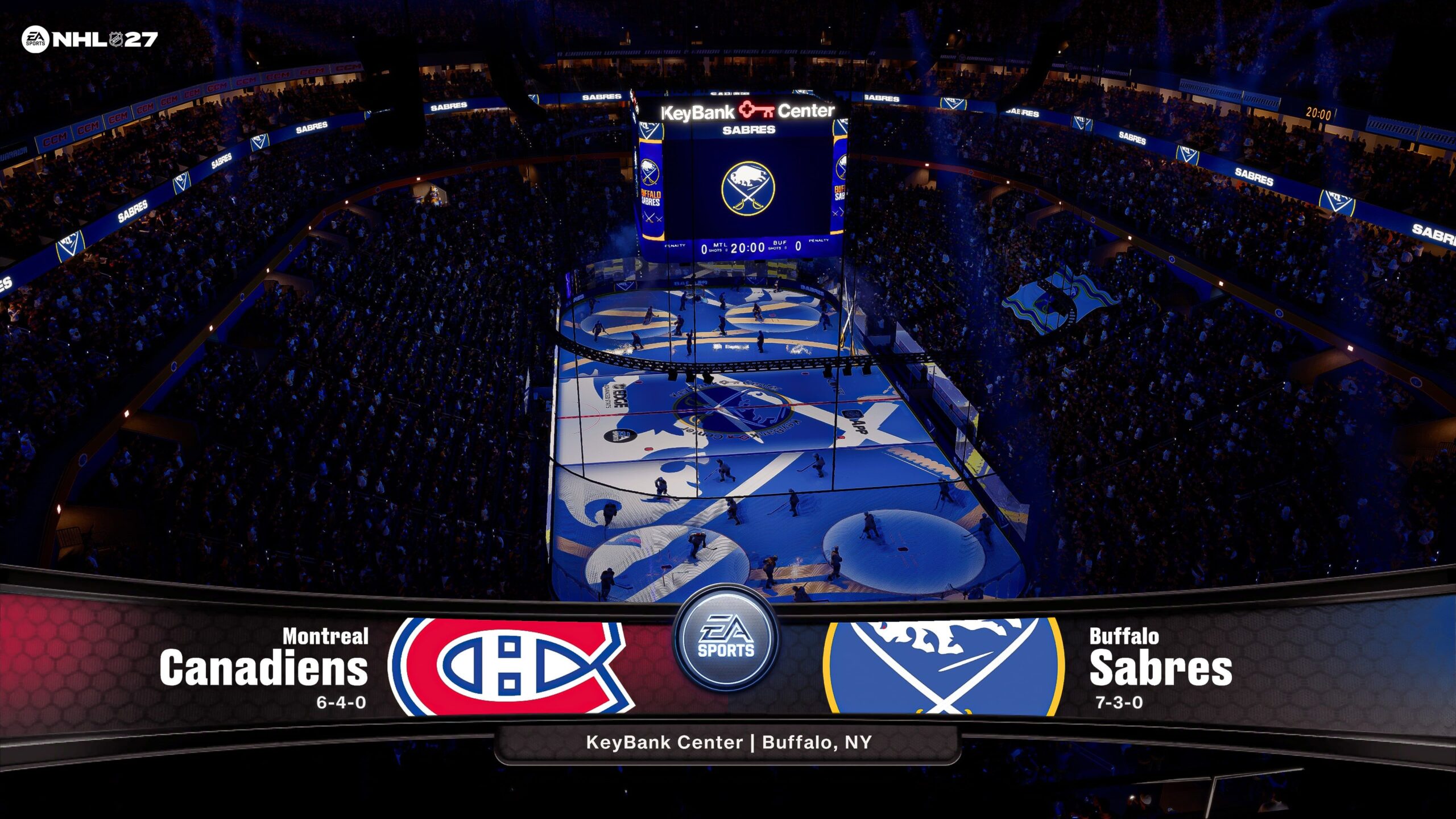
"Of course, a team’s playbook means nothing if the players themselves didn’t follow its instructions."
These observations carry over onto the opposing team and their defensive prowess, too. On higher difficulties especially, passing lanes were slammed shut as swiftly as they opened, meaning I had to commit to the pass immediately. In my Mammoth versus Dallas Stars game, with the Texan team often compacting around the slot, I had to find ways to work the offensive zone to open gaps to shoot. By the final buzzer, though, I’d achieved three wildly divergent goals, plus an empty-netter.
Not every experiment went as smoothly. Taking the New Jersey Devils into a game against the New York Islanders produced one of the most infuriating matches of my playthrough. And, intriguingly, I’m not entirely sure why. I committed to the Devils’ preference of carrying the puck into the zone, peppered Ilya Sorokin with 40 shots, but somehow couldn’t tire the Islanders netminder enough to find a breakthrough, all despite goalie fatigue being a consequential result of consistent pressure in this year’s edition. Their defence repeatedly collapsed around my scoring opportunities too, while the Devils’ supporting players didn’t seem as eager to support the attack as Hurricanes or Lightning players would. I lost, wondering if I was playing against a team whose strengths outmatched the Devils, or if I was failing to exploit the playbook properly.
Either way, it was a sobering reminder that NHL 27 doesn’t necessarily reward imposing your preferred style on every team. Sometimes, the biggest differentiator was me, the fallible human holding the controller.
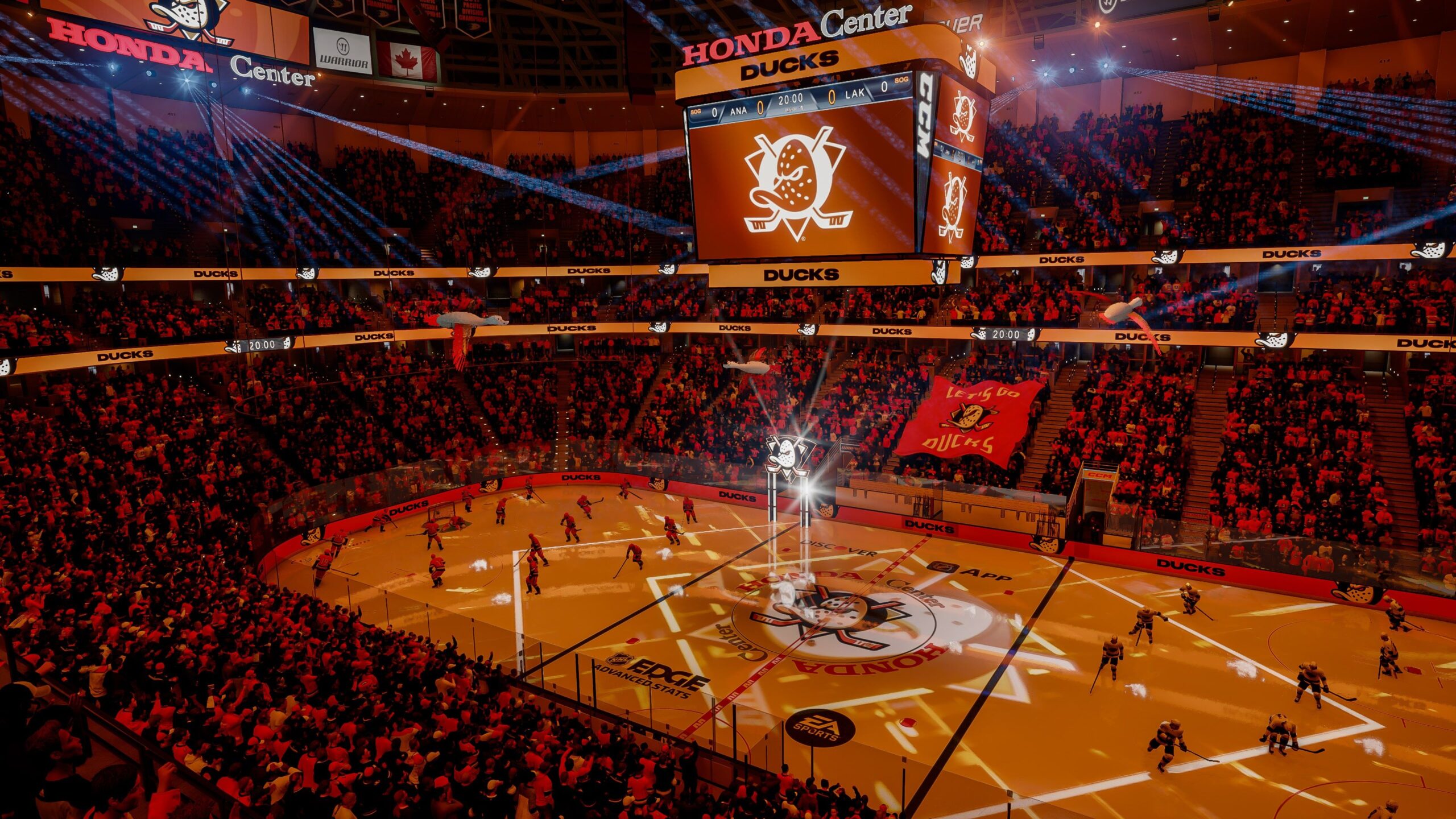
Away from the immediate action, NHL 27 takes a steady step toward livening its presentation quality – a process started a few editions back. All 32 arenas have been rebuilt, complete with authentic goal songs, lighting, jumbotrons, and mascots, and the atmosphere is admittedly electric. The new commentary pairing of John Buccigross and Darren Pang slot neatly into the broadcast, but there’s a nagging feeling that each match’s atmosphere, away from the ice, isn’t necessarily distinct beneath the team-specific colour schemes and music. Some of the crowd character models remain distractingly rough, too. There’s a confidence in NHL 27’s broadcast package which makes it feel like a televised hockey game, but again I’m left wondering how significant these differences are.
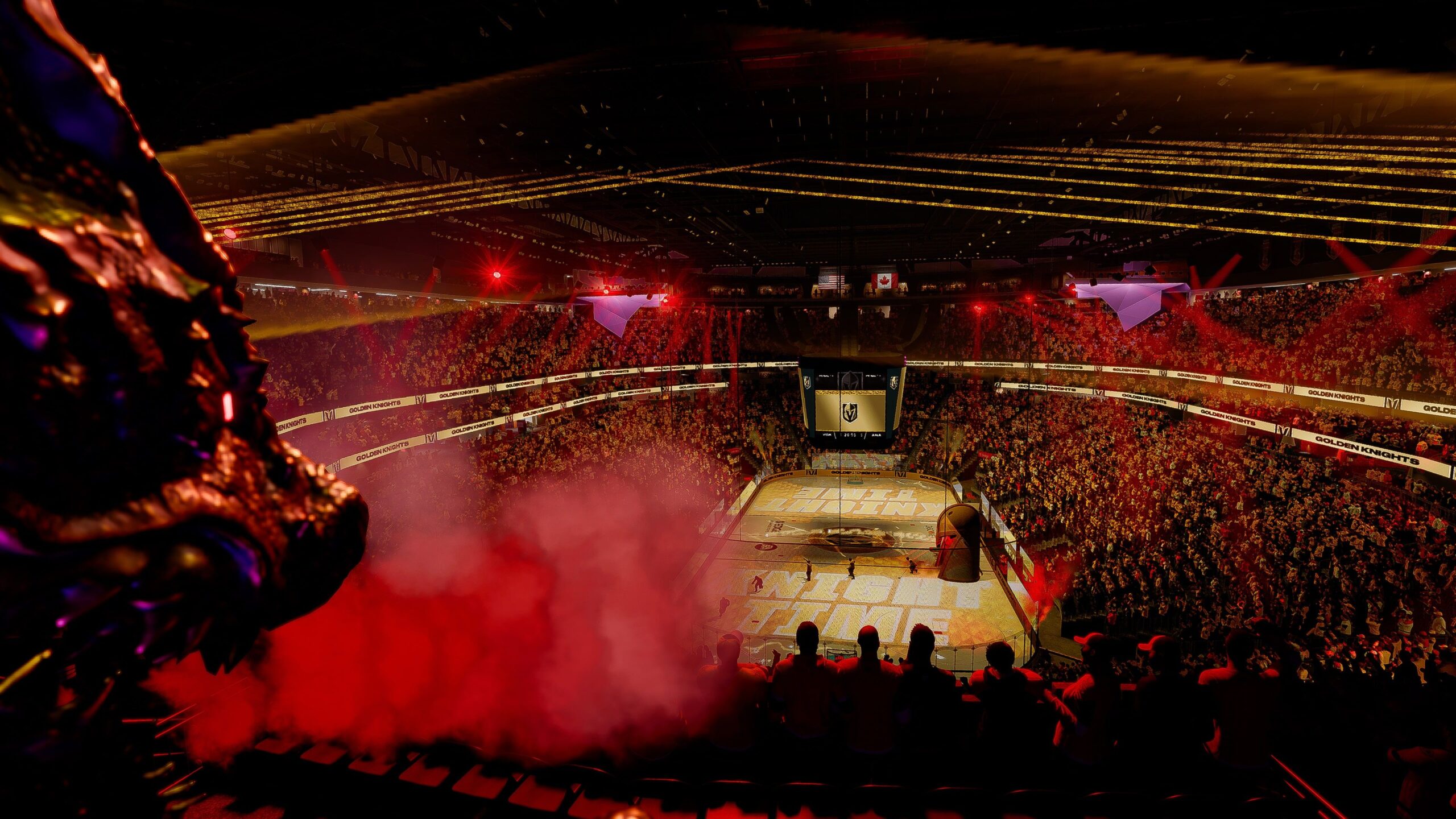
"There’s a confidence in NHL 27’s broadcast package which makes it feel like a televised hockey game"
And this is where I begin to wonder if the game is worth buying, as elsewhere, its carbon copied modes are stark. World of Chel is unchanged, again, while Franchise Mode is essentially the same outside of playbook integration. HUT similarly integrates playbooks alongside real-world coaches, while Be a Pro partially revamps its storyline, but by-and-large it’s the same experience as the series’ previous entries. So, yes, while NHL 27 has invested in making matches themselves feel different, it’s done comparatively little in making the broader experience feel new. It’s a blight on annual sports titles, sure, but it feels especially pronounced here. If you haven’t taken to the virtual ice in a while, then full price could be worth it. But, if you already own NHL 26, 25, or even 24, team-specific playbooks and refined presentation might not be enough to incentivise opening your wallet again.
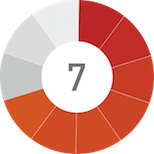
Given that, it’s fair to say NHL 27 leaves me feeling conflicted. On the ice, there’s an intelligence here that I genuinely appreciate. Its playbooks give teams more discernible identities, with AI mostly making those identities feel tangible. Adapting my approach to a team’s personality brought a surprising affinity where it hadn’t been before. I mean, no shade intended, but I appreciate the Montreal Canadians more than I did. Skating into a match for the first time, I really did feel like a stranger to the skates – and that piqued my interest.
But once the novelty wears off, NHL 27 struggles to justify its place as another annual purchase. Too much of the wider package remains overly familiar, leaving improvements that feel smarter rather than bigger or better. If you’re returning after a few years away, there’s plenty here to enjoy. For everyone else, though, NHL 27 may be a demonstration of where the series could go next – although I feel like we’ve said this before.
This game was reviewed on PlayStation 5.
Team-specific Playbooks introduce tactical identities that make adapting your approach more important than ever. Teammates react more convincingly to momentum, positioning, and evolving game situations. Authentic presentation makes the action feel properly televised, even if the change isn’t as significant as first thought.
Little meaningful evolution across the game’s other modes. AI isn’t always consistent, with teammates sometimes failing to capitalise on obvious opportunities. An expensive annual entry that doesn’t do enough to justify its price tag.