





We’ve had a little time with a preview build of Gears of Way: E-Day, with a specific focus on the Horde Siege and everything it has to offer us. We knew it was going to bigger in the upcoming prequel to the franchise, but what we found was something that was much broader, expanding on itself with variety in cooperative missions that followed a logical sequence even as what they threw at you seemed almost too overwhelming for a single squad of four operatives, no matter how skilled they might be.
With twelve players across three squads working in urban maps that are larger than anything before them, scale seemed to be the main focus of Horde Siege, but its scope has been built so well it could give even the highly anticipated story a run for its money. A satisfying loop that began with training before quickly weaving in objective-based operations, exploration, defence, wave survival, and the final extraction never felt predictable across four matches spread over several hours.
Even on its easiest difficulty, we found enough to keep us on our toes even in moments of respite between waves of hostiles, the need for survival necessitating the intelligent use of our arsenals and class-based skill sets. While we stayed on easy for the most part to get a better sense of the build overall, we should tell you that final balancing, along with mechanics, performance, and content, could change between this preview build of the game and the final release one.
With that out of the way, it’s time to dive into the fray, and what a glorious battle it is!
A Potent Mix Of Varying PvE Experiences
We began our preview with the Onboarding mission, which introduced the game’s mechanics like shooting, movement, and cover before having our squad defending a R.I.G. against several enemy waves. We were then ordered to proceed to an extraction site only to find it on the verge of being overrun. Purging the hostile presence enough to allow a safe landing for a helicopter finally let our team get up out of there.
It wasn’t important as merely a tutorial mission meant to get you familiar with the controls, but with the rhythm of what was expected of you. Defending a position, moving forward, clearing out areas, and finally extracting safely were strongly established as core parts of the gameplay loop on offer, encouraging staying on the move instead of doubling down at a safe spot for the entirety of the match. Of course, the rest of the activities on offer quickly built on that.
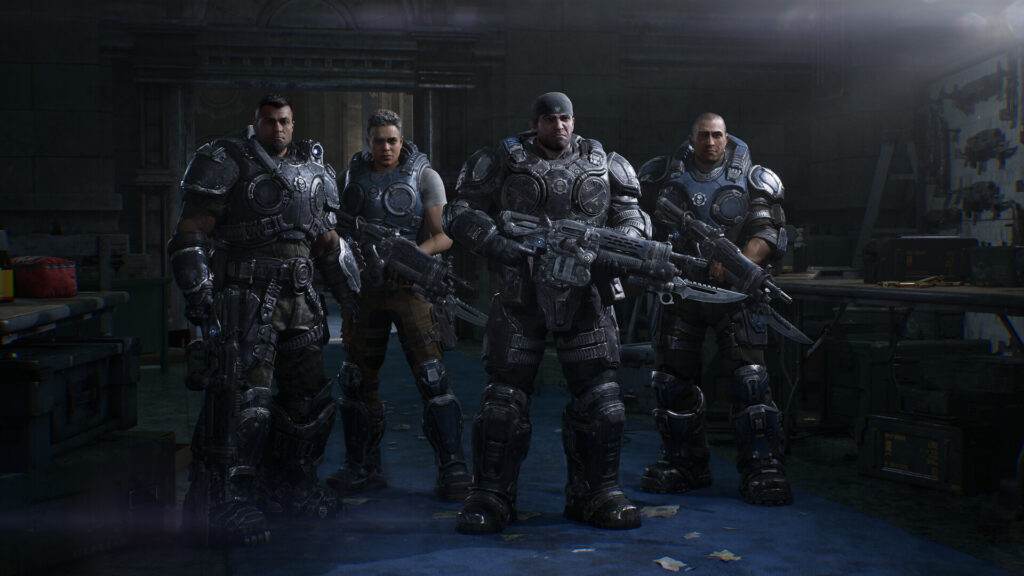
There was Blitz, an activity type that had us scouring the map for R.I.G. components before tasking us with their installation and repair, while enemy fire rained all around us was definitely a memorable first time experiencing it. Having to hold down positions to allow repairs to finish, and then having to take on a more conventional wave of enemies right after that was intense, and immensely satisfying when it brought the team together to pull off some excellent defence. Of course, the extraction area needed a bit of extermination too, so there was a lot of combat involved, but with interesting twists that encouraged unpredictability thanks to how scavenging, repairing, defence, and extraction were all variables that could go one way or another every time you began a match.
It’s saying a lot, then, that Siege was our favorite activity, and that’s simply because it was our favorite interpretation of the objective-based formula on offer. Collecting data pads strewn about the map at quite a distance from each other was an optional secondary objective that had our squad falling down and reviving each other way more than we’d have liked to admit.
Of course, the primary objective of calibrating the R.I.G. also meant that we needed to hold positions for as long as the calibration protocol was running. With that needing to be done across three different zones, while fending off coordinated attacks from vicious enemy squads, this one became a series of decisions to be made on the fly, each one bearing weight on the outcome of each objective.
Was it a good idea to split up, cover more ground, and try to knock out as many objectives as possible? Who would hold down the most exposed position? Were those data pads worth the risk of being downed far from the safe helping hands of our fellow squad members, putting them at risk if they were to attempt a rescue? Siege made Horde feel less like killing everything in sight, and more like carving a path to the best possible outcomes for you and your comrades.
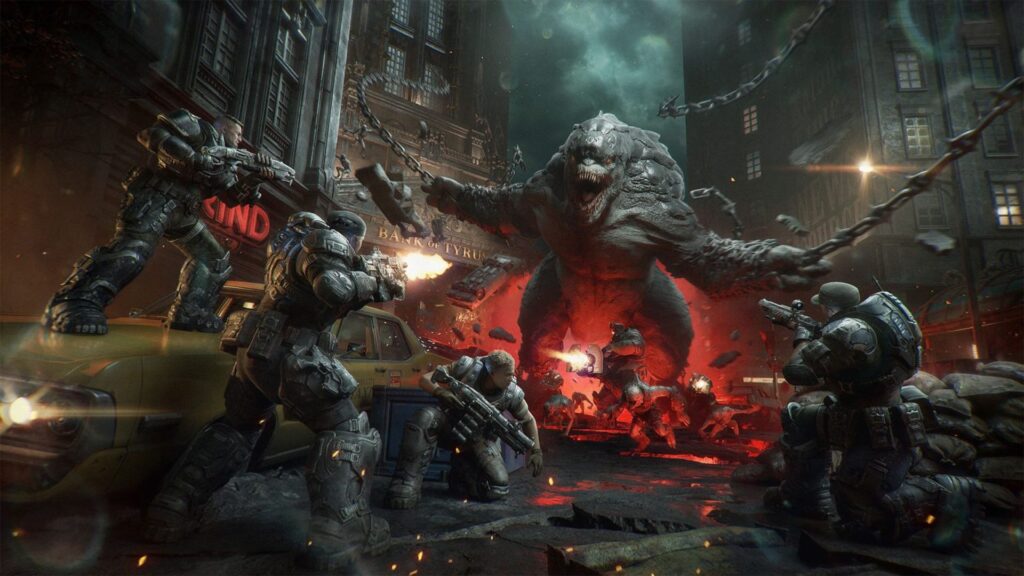
But that doesn’t mean that killing everything you see isn’t an option, as the traditional Horde activity returns in a gloriously familiar wave-survival format that gets brutally difficult even on the easiest setting. Ten waves of increasingly difficult enemies, with a bit of downtime between waves made this one a great reminder of the constant escalation that we’ve often felt when tackling one nasty wave after another. It’s nice to know that E-Day isn’t discarding something that’s felt so familiar, while also making it work alongside fresh new formats.
Between these four activities, Horde felt like a mode that could switch things up almost on a whim, while still being familiarly rewarding when we were able to work with our mates as a coordinated squad blazing a path through Locusts as if they were nothing while a single mistake could alter the delicate balance of the fight at any time.
But why has it made as much of an impression as it has? We’re happy to elaborate!
A New Rhythm
It’s important to think about how traditional Horde has evolved over iterations to appreciate just how good this one is. What began as continuous wave survival quickly expanded into classes, progression, fortifications, and deployable defenses such as Gears 3’s barriers and turrets against major boss waves. Gear 4’s Horde 3.0 let you establish a base almost anywhere with the Fabricator while deepening classes and abilities. But a common factor across the board has been a loop where you’re holding your ground against overwhelming odds.
E-Day switches that up, making travelling through the map across multiple stages a core part of the gameplay, with defensive stations acting as waypoints to take a stand against particularly nasty hostiles before making your way to the next bunch of encounters. Recovering missing items, capturing or holding separate zones, clearing extraction sites, and those secondary objectives that bring a whole new layer to each run are all factors that play on that forward momentum to make the whole thing feel very dynamic this time around.
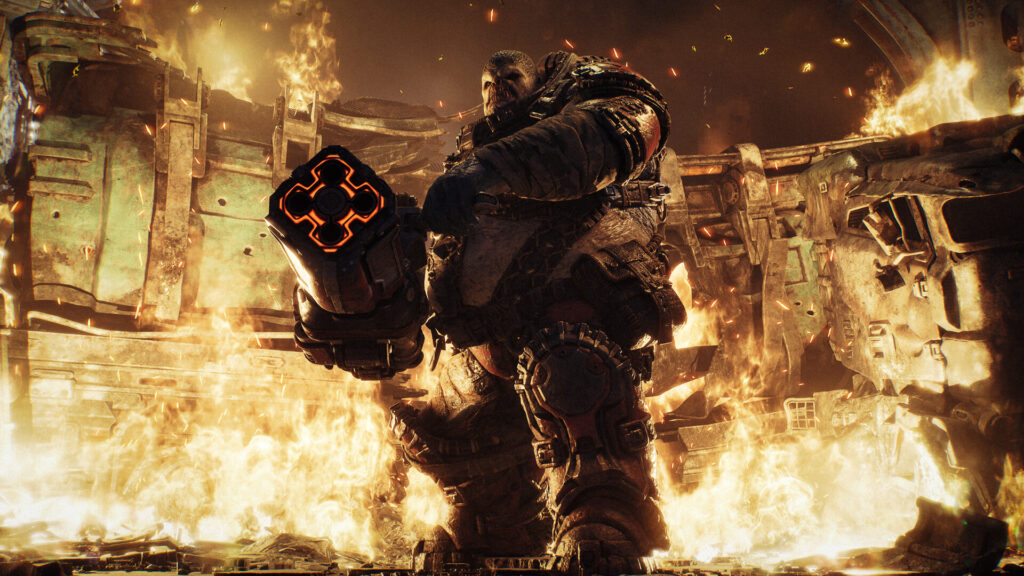
On that note, we believe that Horde’s maps deserve a special shout, being enormous enough to accommodate all the chaos while still supporting pushing forward in ways that felt natural. It’s in the way cover is laid out ever so organically, allowing for quick responses to tactical opportunities that arise. Separating from your squad at the right moments made as much sense as cooperating on other occasions, and it feels like the potential to craft your own journey is always at your fingertips.
It helps that everything’s quite readable, with clear markers on squad members if the need to split up arose, and this is the franchise’s great map designs at their finest. They’re impressive not just because they’re huge, but because they help you lean in to all the changes that have come, with revamped combat spaces and tactical decisions baked into their very foundations. The new movement system complements the maps, and is an exceptional part of the experience. It might be among the finest we’ve played in a third-person shooter if we’re being honest.
It’s familiar, but fresh in how smoothly you move in and out of cover, and how crossing huge distances didn’t feel like a chore. It’s in how responsive changing positions feels when you’re under heavy fire, while lending practicality to splitting off from the group and making your way back to it once you handle your business. It’s Gears as you know and love it, while removing some of the rigidity from past titles to make this one stand out.
Of course, what we were doing on those maps was as important as moving around them, and chasing down objectives felt natural rather than mandatory, a logical sequence framed very well by the narrative context lent to your desperate battles. While we found ourselves sticking with our squad for the most part, circumstances could change in seconds to force us apart. Those calibration zones we had to hold down were a good example of that, and we made good use of those markers to monitor each other, ready to leave our position and lend assistance if the situation demanded it.
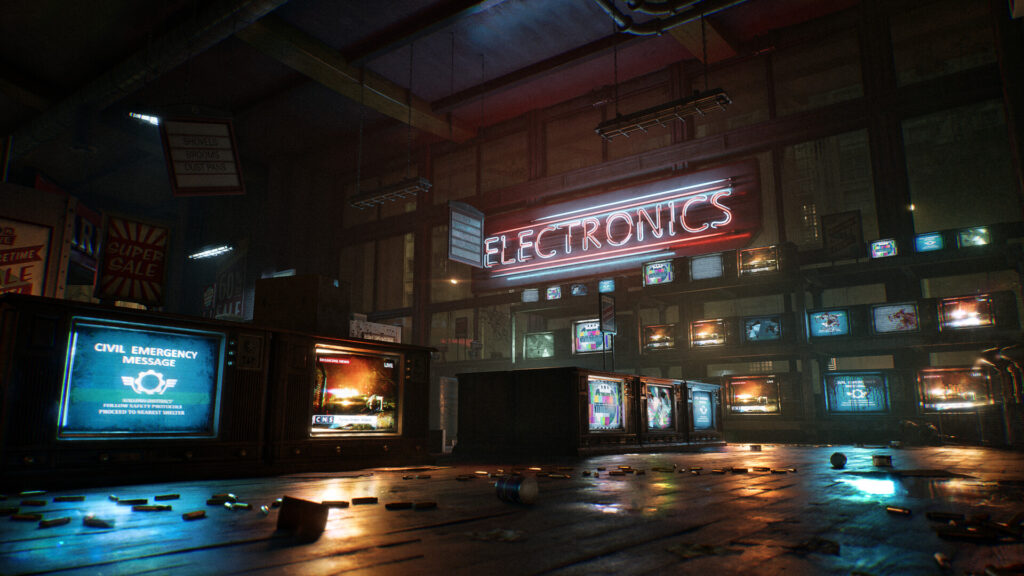
We liked that reviving a downed teammate was quick and straightforward, needing nothing more than a quick butoon press before they were back in the think of the action. It was particularly welcome when a stray rocket ended what should have been a near-perfect blaze of glory to a nearby data pad, the corpses of Locust forces strewn all around us. Instead, we crawled desperately in its direction until a fellow member gave us a helping hand to get us back on our feet.
The four classes are distinct enough to make settling into a role feel unique to each player, with each one coming with its own pros and cons. We’re going to hold off on commenting on the balancing between them as we stuck to the Assault class for the most part. But the Marksman, Medic, and Breacher are equally viable. We loved the combination of the Assault class and the Lancer, and there’s a lot of space for customising your build to the tiniest detail if the numerous locked options we encountered were any indication.
As Effective As Ever
Horde’s always been a fun part of Gears of War. Having it feels as brutal as ever in its own dedicated space is a great way to make it welcoming to long-term fans, while Onboarding is a great place for newbies to pick up their weapons and learn its nuances. It’s just the beginning of how this take on the popular mode feels exceptionally well crafted. It’d already given us so many fond memories.
We loved how Onboarding became a full blown shootout, a desperate battle to ensure our safe extraction. We loved how hunting for the R.I.G.’s parts while fending off waves of enemies felt like there was a sense of purpose and direction guiding the battlefield’s chaos towards a rewarding goal. We loved how the choice to pursue secondary objectives becomes a thing you have to deal with in the midst of heated firefights, and could affect your success at holding down calibration zones.
We absolutely loved the gradually escalating difficulty of traditional Horde, a reminder that E-Day was every bit as good at nailing down that nasty wave survival formula. With traversal that felt silky smooth, great level design with ample cover and opportunities to improvise on the fly, and those enormous spaces were all memorable enough to have us very excited to see what the final build looks like.
We’re counting the days to this one, and it isn’t just because we’re eager to play more of it. We can’t wait for you to join in on the fun too, and share in the joy that playing this early build has given us.
This game was previewed on Xbox Series X. (Access provided by Xbox).