





Some of you have probably already started your foray into Kalona City in Gears of War: E-Day if you picked up a copy, know that Kalona is a very impressive stage upon which the Coalition stages a story that relies on it to a large extent.
The once-proud city is certainly up to the task, and there are several reasons why we think it’s the best staging ground for a story and formula centered on urban warfare. From the events that unfold on its streets to the way The Coalition presents the scale and cost of the conflict with the Locust, there’s a blend of storytelling and gameplay that makes the city a haunting site of the franchise’s origin story and a vital part of E-Day’s value.
Here’s why we think that’s the case.
The Beginning Of A New Journey
You might think that E-Day isn’t going to bring new things to the table since it’s a prequel, and saving all those new offerings could be a great way for Gears 6 to carry the franchise and its present-day story forward after that cliffhanger that continues to bother us and will do so until it’s finally resolved.
But The Coalition hasn’t let a trip to the past prevent it from giving E-Day a level of technical competence that we found excellent, while allowing Kalona to become a world that we can’t wait to see the franchise build on in future titles. To that end, Emergence Day itself is probably the best starting point to see how it weaves itself into the game’s overall presentation.
The story of humanity and the COG’s first encounter with the Locust was always going to end badly for the former, and probably quite badly for Marcus Fenix. Well, we’re not spoiling anything for you, but that sense of loss that’s gradual rather than sudden underscores every scene, humanity’s desperation and desolation showcased on Kalona’s streets.
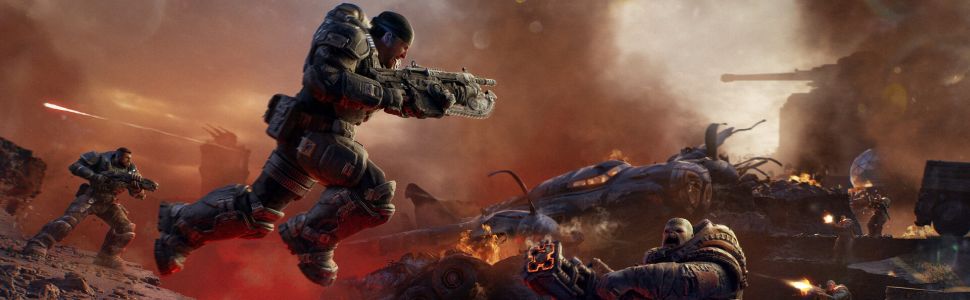
It’s evident from the game’s very opening, with the population running scared in the wake of the Locust’s invasion, streets and buildings being torn apart from below as they emerge, while abandoned vehicles now serve the grim purpose of blocking a few bullets as you attempt to take control of rapidly unfolding situations.
You see evidence of Emergence Day all around you, grounding you in the fact that you’re fighting a losing battle, and giving it your all anyway. Marcus Fenix is the type of man who’s most dangerous when he’s backed into a corner, and there’s a real sense of that when you’re on the move in Kalona.
The Price Of Conflicts
Of course, when it comes to people in need, Marcus is big of a softie as the rest of us, and you get to assist stranded civilians, each of whom adds a bit of flavor to the underlying examinations of futile conflicts. It’s important to remember that humanity itself had only begun to reconcile with an era of peace after its own internal conflicts, and that the COG was a big part of that.
When you examine all of what’s happening through that lens, the Locusts aren’t just destroying a city, but a bastion of humanity’s resolve to build a better tomorrow. It lends context to how hard Marcus and his team fight to defend its streets and structures while sparing no effort to save as many of its people as they can, despite facing an enemy that presents an increasingly dangerous threat.
It’s also great that choosing to help whenever you can takes you down detours you might not otherwise engage with if you’re trying to blaze a path through the story. Each encounter with Kalona’s citizens is worth engaging with and helps cement it as a world that’s perfect for the kind of experience E-Day attempts to be. It also helps present an altruistic side to Marcus and the rest of the squad, showcasing their commitment to saving lives even as the risks of an unknown threat weigh heavily on their shoulders.
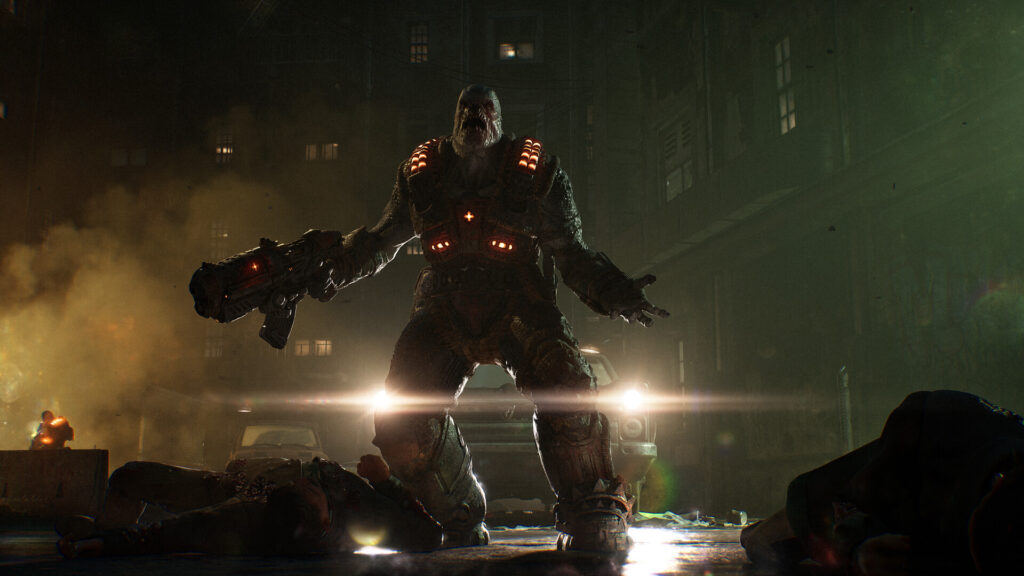
It’s great that many of those detours are often placed between mission objectives that make you feel the weight of choosing to stop and help, and that lends a bit of nuance to the game’s side content often enough for it to be a nice touch. Of course, the city and its defences are meant to fail, and that’s another facet that’s so subtly baked into the very fabric of Kalona’s many environments that it becomes a grim reminder of the losing stakes, and the outstanding resolve that Fenix and his crew demonstrate in the face of such odds.
Indeed, every location is an opportunity for both sides of the conflict to aim for some heavy casualties with intelligently placed bullets, while the new cover system is served very well by environmental destruction that sees bullets chip away at the available cover area you’ve got, forcing you to stay on the move and return fire as strategically as you can.
The city itself is a crumbling shield, one that you’re encouraged to use even though it means you’re a part of its destruction. That the Locust force you into such circumstances time and time again, making you use the very infrastructure you’re trying to preserve as much as you can against them, is part of what makes them a formidable and diabolical foe to face on the battlefield.
That the price of succeeding in an effort to repel them is Kalona itself presents a commentary on the futility of its defence to us players who already know that this is a losing battle, and must watch the tragedy gradually dawn on characters we’ve known for a while, and new faces we’ve come to like very much.
And then there are other familiar faces we may not like, but must grudgingly respect for being worthy opponents to struggle against for Kalona’s sake.
A City Being Put To Sleep
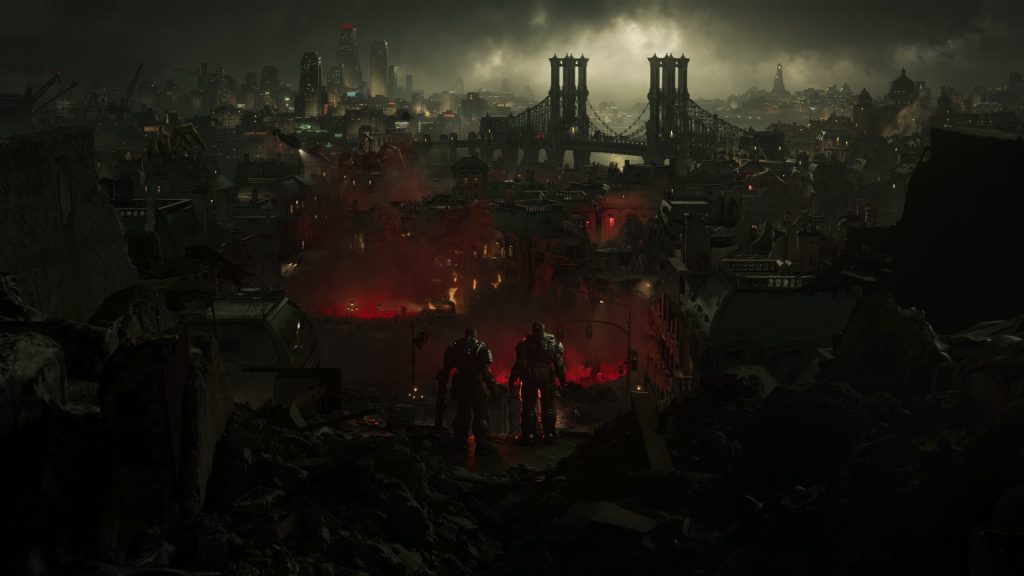
The Locust have always been a thorn in the COG’s side, but The Coalition has done very well to make them a threat that our heroes are not yet well-equipped enough to handle. That doesn’t mean the new gunplay and supporting systems don’t let you feel powerful; far from it. Marcus moves and fights with a sort of fluidity that he didn’t have before, while the new cover system means you get to stay moving and applying pressure on your foes almost constantly.
It’s to the Locust’s credit, then, that nothing is enough to reliably withstand their assault. You cannot fall into a comfortable strategy, as they bring every ounce of vicious aggression to the field, their origins and intentions being an unknown mystery that makes them seem like even more of a threat.
It helps that the narrative framing and the way scenes are presented to you consistently remind you that this is a version of Marcus who’s encountering the Locust for the first time. That immediately makes Kalona a place that’s sure to become significant to him as the story progresses in future titles, and we’re not writing off the possibility that its ruins might yet hold some secrets for the next generation of COG operatives to find.
But the way in which its proud architecture and bright buildings gradually fall to the incessant assaults of the Locust’s hordes lends a melancholy to the story that no amount of exposition-filled cutscenes could have managed. As a world that presents a crucial part of the story that it’s bringing to life, Kalona is a great presence in E-Day.
As one that simultaneously lets its makers use that narrative value to present gameplay changes that are great to engage with while setting a new benchmark in a long-standing franchise, it becomes an outstanding addition to a crowded genre that shows it rivals how things are done.
An Unwilling Host To Chaos
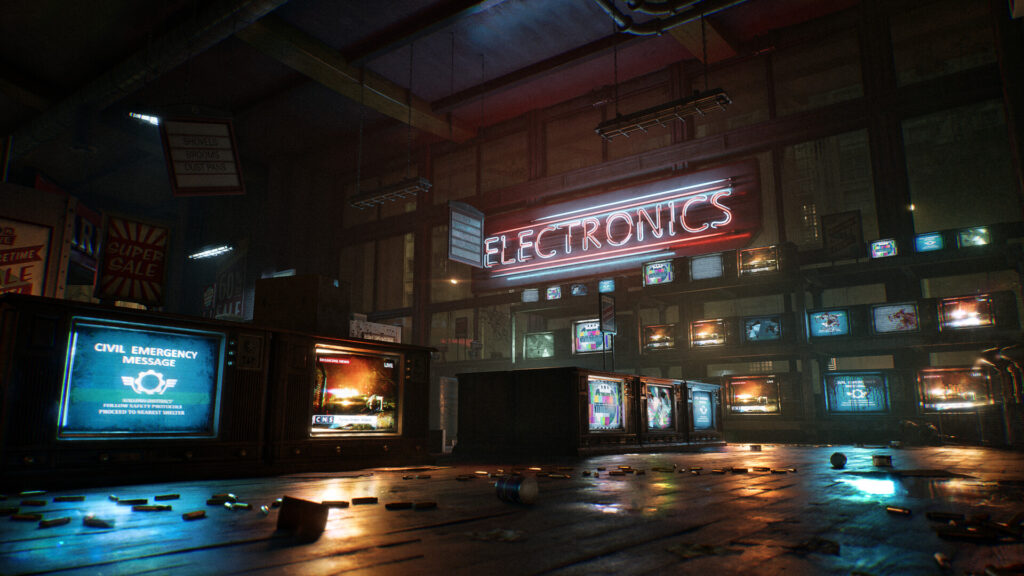
Kalona might not be a place where the Locust will ever belong, but as a city that’s gradually falling under their control, it’s one that allows Gears of War: E-Day to present a story and gameplay loop that rely on the threads it provides to hold them together, binding them into an experience whose intensity is evident in its story and gameplay.
E-Day is a prequel that benefits from confining the action to Kalona, showing us a chapter of Sera’s past that might have us backing further trips backward once we see more of where things are progressing in the present day. It’s where E-Day displays its finest work, and it’s also where our minds are going to automatically go when one talks about the beginning of the franchise’s almost perpetual conflict with the COG’s mortal enemies.
In a narrative that has spanned so many years, that’s an achievement in itself, and we think Kalona has now become a milestone for the genre and a benchmark for urban warfare in video games that future titles must look to for inspiration.
Note: The views expressed in this article are those of the author and do not necessarily represent the views of, and should not be attributed to, GamingBolt as an organization.