





You can’t really know where you are going until you know where you have been. A saying which holds all the more true when you look at the long, long journey Grand Theft Auto 6 has had, starting development shortly after Grand Theft Auto 5, with most of the team moving in around 2018 after Red Dead Redemption 2. And while going back to the Vice City of the PlayStation 2 era makes sense for tens of millions of fans, what better way to celebrate the upcoming biggest game in the series – and perhaps of the decade – than by returning to where it all began?
That’s right – before it started piling on the numbers and spin-offs, before it ventured into the third-person or even fully 3D space, before it commanded a gargantuan budget – heck, when it was still DMA Design instead of Rockstar North, Grand Theft Auto launched in 1997 for, surprisingly, MS-DOS and Windows (it arrived on PlayStation One about a month later).
Originally called Race ‘n’ Chase, it was, by all accounts, hated by leadership. You see, DMA Design wasn’t a company that specialized in crime epics or game mechanics revolving around cops and robbers. It created Lemmings – yes, that Lemmings – and its sequels for Psygnosis, which went on to inspire the likes of Warcraft. There were other titles like Hired Guns, Menace and even Shadow of the Beast, but for the most part, DMA Design was a fairly innocuous studio, and the team behind Grand Theft Auto even more so.
If you look back at any stories from the development team, especially in The Guardian’s fascinating 2013 mini-documentary, one thing became abundantly clear: It was a nightmare. Producer/creative director Gary Penn said it “looked rough from the start and it looked rough at the end. It was an unstable, unplayable mess at the start, and by the time I got there, it was still an unstable, unplayable mess.” Grand Theft Auto was developed in four years, and evolved past the cops-and-robbers dynamic to focus primarily on the bad guys. But as much potential as this germ of an idea, combined with a world referred to as a “fish tank” – feeling alive and which you could poke to provoke a response – the development team was all over the place.
Levels were created without plot, which had to be retrofitted and tied together later; programmers baulked at the various scenes and ideas that designers wanted to implement; milestones were missed, with leadership wanting to cancel it weekly. As head of audio Colin Anderson put it, “That was a team that did not know what it was doing a lot of the time.”
So with all that in mind, we get to perhaps the most unexpected question: How does Grand Theft Auto play?
Picture your first time with Grand Theft Auto 3, running through Liberty City, slowly discovering that you could attack anyone, gain a Wanted status, incur the wrath of the police, and so on. That sensation of being able to steal any car, or go almost anywhere. Follow the story of revenge or don’t. Steal fire trucks and become a part-time firefighter; take a cop car, and suddenly, you were the law in Liberty City. Liberating doesn’t even begin to describe it.
In Grand Theft Auto, however, you had a clear goal: Earn one million points, at least in the first of six levels. That total would gradually increase, but how you reached it is ultimately up to you. After selecting one of the eight playable characters – or four on PlayStation – it was time to roam the city and indulge in whatever mayhem you could get up to. Except, not in third person, oh no. Instead, the camera was from a top-down perspective granting a bird’s-eye view of the city streets, your character, and the action as a whole.
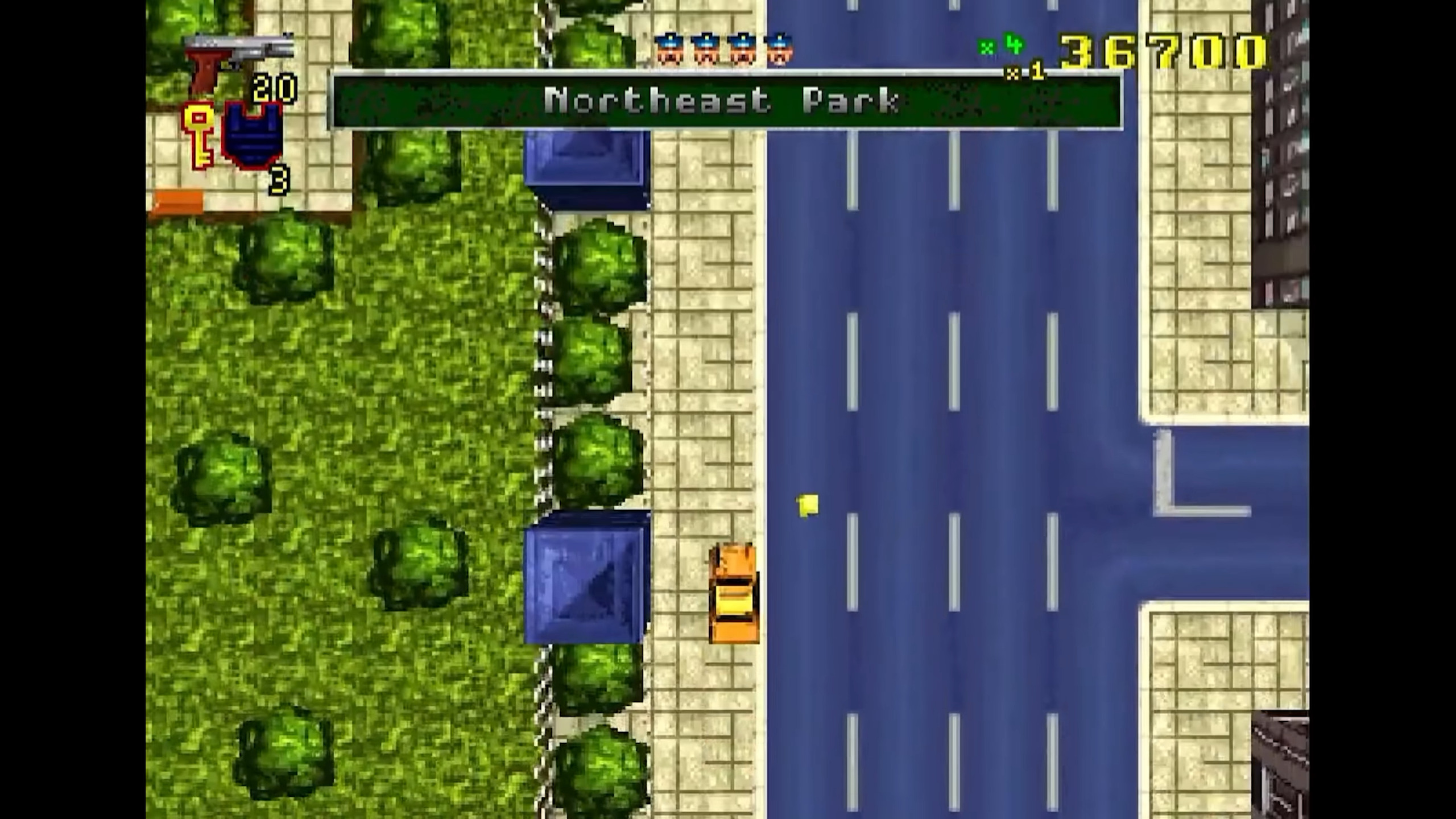
True to the game’s name, you could commit grand theft auto and earn points by selling vehicles. You could take on jobs that bestow points and grant a multiplier as long as you stayed alive (and didn’t fail the next mission). If you weren’t interested in doing a syndicate’s dirty work, the next best thing would be to cause chaos, though it wouldn’t be long before the police caught up with you. And, in what would become a staple of the series, you had the Wanted system. One police head meant only one cop car coming after you. At four, you’d have to deal with nothing but cops on the otherwise empty streets, and they wielded machine guns in as ruthless a manner as possible.
Provoking the police could often be a bad idea because you had a set number of lives. Furthermore, dying would cause all your equipment, meticulously gathered by exploring the map and completing objectives, to vanish. No more lives left? Have fun starting the level all over again.
In many ways, Grand Theft Auto was agonizing to play. And yet, despite its seemingly arcade-like appeal, very few games were like it. This unprecedented freedom to o out and do a crime, mostly unfettered by the story (however meager it was). Much like GTA 3, there was something special about being able to run over any pedestrians or go on killing sprees, culminating in shootouts with the cops.
Unlike today’s Rockstar Games (or even the past decade-plus), its scores ranged from 79 percent for the PC version to 68 percent for the PlayStation One version on GameRankings (Metacritic before Metacritic was a thing). Its visual presentation was criticized, especially the bland main characters. The frame rate and otherwise sluggish movement, the inability to see where you’re going because of the camera, and many other bugs ultimately dragged down what critics saw as a game with incredible freedom. Well, that, and incredible music, which surely wouldn’t also become a recurring theme.
Fortunately, that wasn’t enough to condemn Grand Theft Auto to the bargain bin of history. After its first year of release, it sold over one million copies, which, at the time, was considered a massive success for video games. By October 1999, around the time DMA Design released the sequel, it reached 3.5 million. By March 2001, six million units were sold.
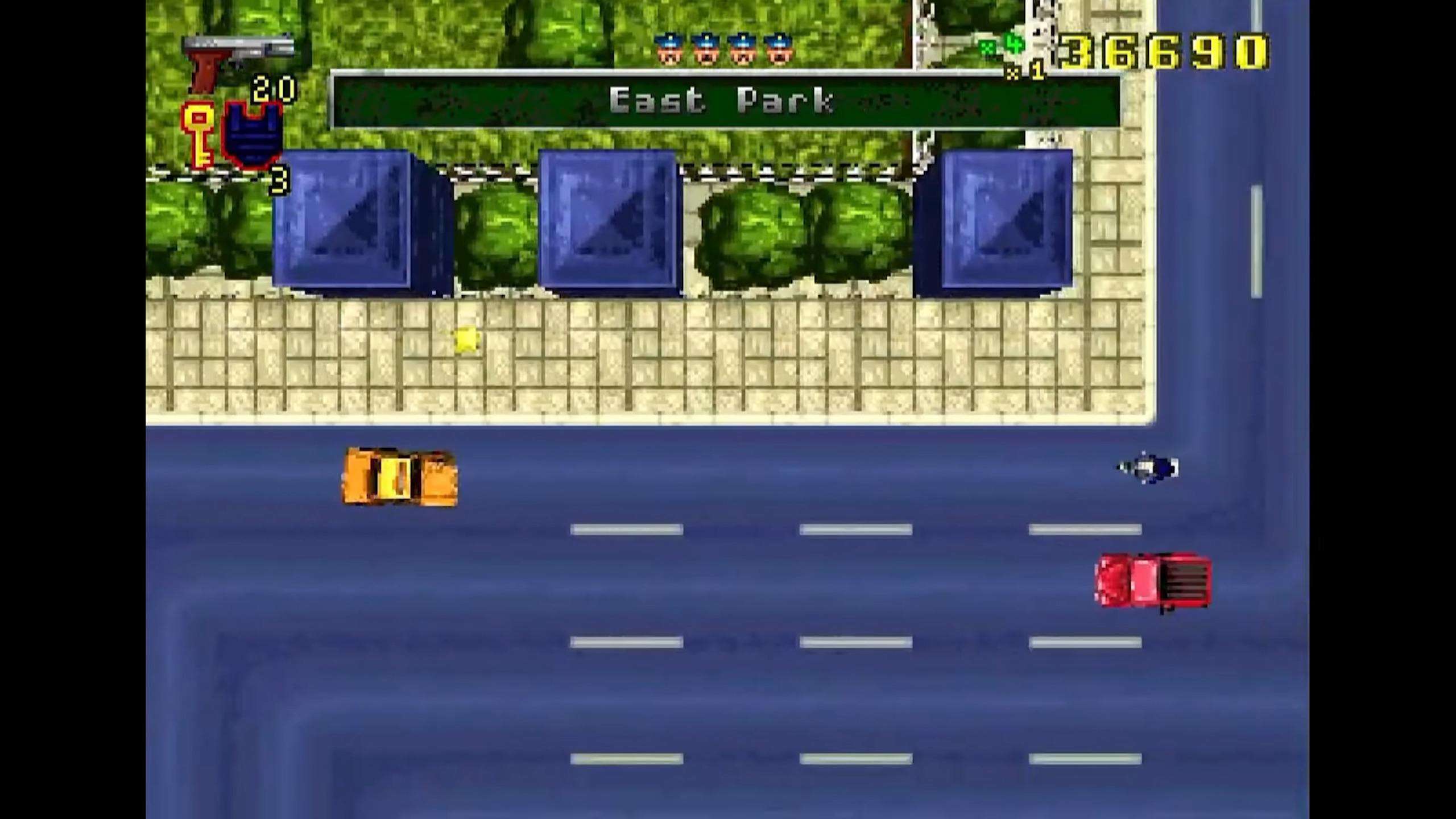
And even if it was criticized at the time, rightfully so for its various issues, what started as an “unstable, unplayable mess” would make it onto several top 100 games of all time lists for various publications. Say what you will about everything else, but the freedom it offered just couldn’t be denied, not even with the sheer amount of controversy about its subject matter.
In 1999, Grand Theft Auto received two mission packs set in a fictional version of London (the second released for free), this time developed by Rockstar Games after Take-Two Interactive purchased the IP. It later acquired DMA Design and integrated it into the same label, renaming it to Rockstar North. And lo and behold, a legacy was born.
Say what you will about certain franchises failing upwards and becoming massive successes, but from the outset, Grand Theft Auto felt well and truly doomed. Even if the original team did their best to hold it together and eventually release it amid innumerable challenges, even they couldn’t fathom what they were creating. Nevertheless, it found an audience, one that only grew with each subsequent entry. Rockstar North would, of course, ascend to even greater heights later on, creating the massive cultural juggernaut that we know today. But at this point in history, when it was still DMA Design, it was probably satisfied with just emerging unscathed.
Note: The views expressed in this article are those of the author and do not necessarily represent the views of, and should not be attributed to, GamingBolt as an organization.