






It’s easy to think that GTA was a franchise whose graphics were always ahead of the times, but that would be disrespectful to a journey that spans many years and a lot of effort, innovation, and ambition. Experiences like the ones the franchise goes for cannot just stop with looking great, but must come with enough meat on the world’s bones to make it a stage for the chaos it presents its players with.
All details and footage referenced in this article are sourced directly from officially revealed information.
To that end, we thought it a good idea to see what things have looked like in the franchise over time, a sort of timeline that begins in 1997 with the first GTA and ends just a little ahead of our present with the release of GTA 6. It’s not just a lovely trip down memory lane, but a showcase of how far gaming hardware and the minds that use it for excellent innovations have come. Let’s begin.
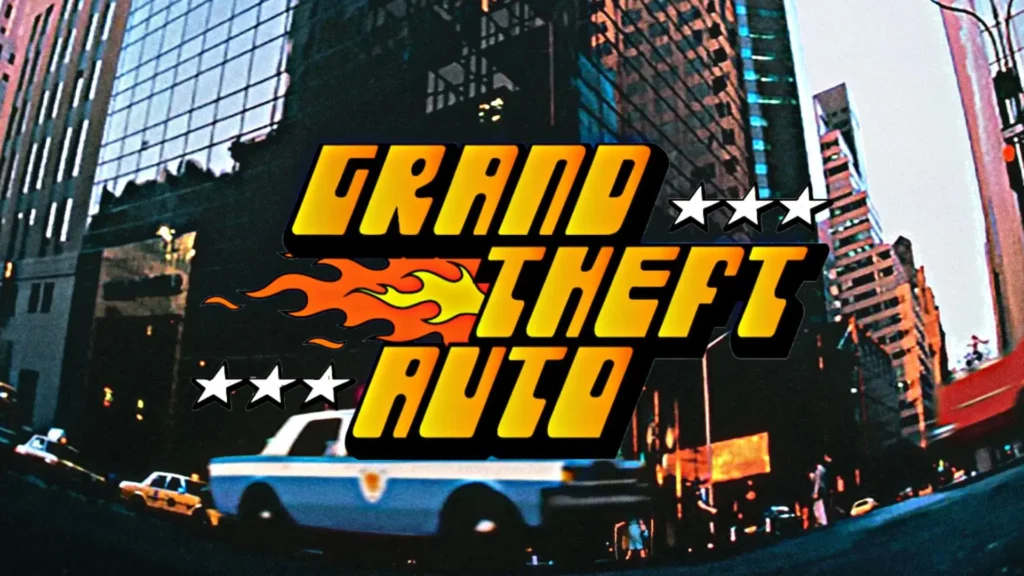
Grand Theft Auto (1997)
This one was the beginning of the beginning as far as its graphics were concerned, and they certainly don’t hold up well against the latest and greatest in the franchise. However, every great story has to start somewhere, and the ideas on display in its rather simple gameplay loop are beacons announcing great things to come, when you look at things with the gift of hindsight.
The overhead camera and simple sprites might have been an acceptable standard at a time when many of us were still too young to even think about asking for a copy of this one for any of its available platforms. Each of its areas, themselves reflections of real-life locations, had enough to differentiate it from its counterparts, although the lack of lighting and environmental detailing meant that this one relied on the premise of playing a criminal far more than its visual appeal.
Of course, indulging in your whims as a criminal, with the titular act of stealing cars and causing mayhem being a crucial part of what you do in each city. Sadly, things are once again too basic for this one to be comparable to the games that followed it.
On its own, that isn’t necessarily a bad thing, but we must consider that, as a parameter that often helps sell the premise and experience that a game aspires to, the visual fidelity on offer in Grand Theft Auto is significant only because of how it represents design philosophies that would evolve both graphics and gameplay over the franchise’s future titles.
GTA 2 (1999)
We know how much things can improve in a space of two years in the gaming world, and that was as true back in the day as it is now. This one retained the same overhead camera, but Anywhere City came with so much flavor to it that it automatically stood out from anything its predecessors could bring.
Its streets weren’t as empty, and were often teeming with opportunities for the gameplay’s signature chaos to unfold. But it’s more than that. Anywhere City, when you look at it through the lens of what the franchise has evolved into since its release, marked the early beginnings of the GTA franchise’s distinct vibes.
The lighting is an immediately tangible improvement over the previous game, and was certainly quite important in lending each district of Anywhere City a unique flavor. The improved environmental detail and a more reactive world made sure your actions felt noticed, and that was an important part of setting up the game’s many systems in a believable way.
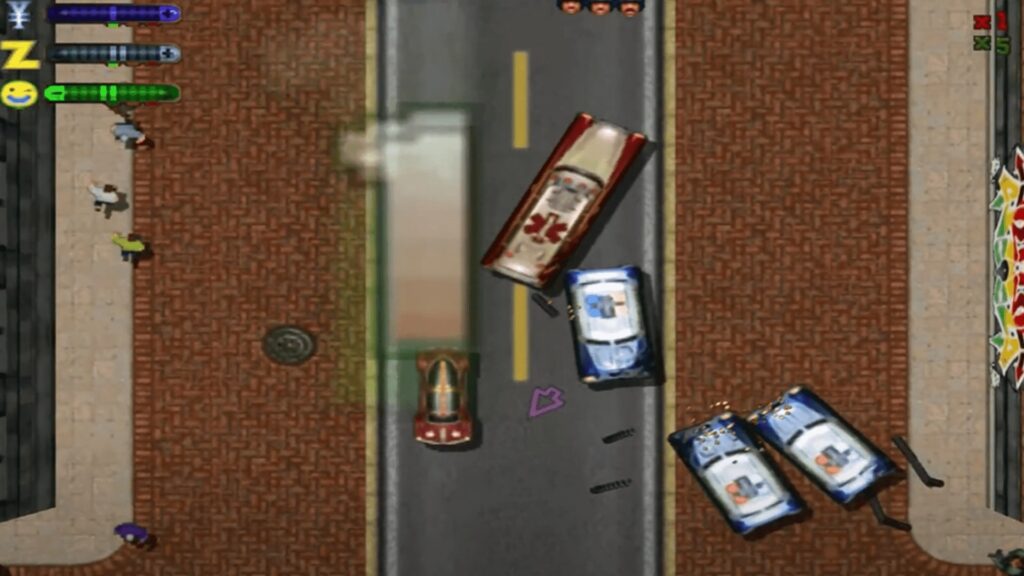
Collisions, explosions, and even gunshots felt more believable, while a hint of verticality in the form of overhead objects that played a role in the actual gameplay was brought into an already addictive loop. Better detailed cars, buildings, and streets also helped.
As a means of better selling the game’s mechanical improvements, GTA 2 is a significant title as it begins to showcase how the franchise’s graphical improvements often tied into gameplay features in meaningful ways, resulting in more cohesion and immersion for players.
However, its successor was where things began to get very interesting.
GTA III (2001)
The turn of a new century brought us Liberty City, and the first 3D world that the franchise let us explore to our heart’s content. Claude’s time in it was marked by a major graphical leap for GTA, with a world that left behind animated sprites and the overhead camera for a perspective that immediately felt closer and more personal.
The third-person camera was immediately more immersive and an obvious leap forward on the graphical front. But it didn’t operate in a vacuum, and Liberty City’s streets made good use of the new point of view. Yes, they weren’t as populated or lively as what’s on offer today, and certainly not even in the range of what GTA 6 is bringing to the table, but they were certainly impressive for what they achieved back in the day.
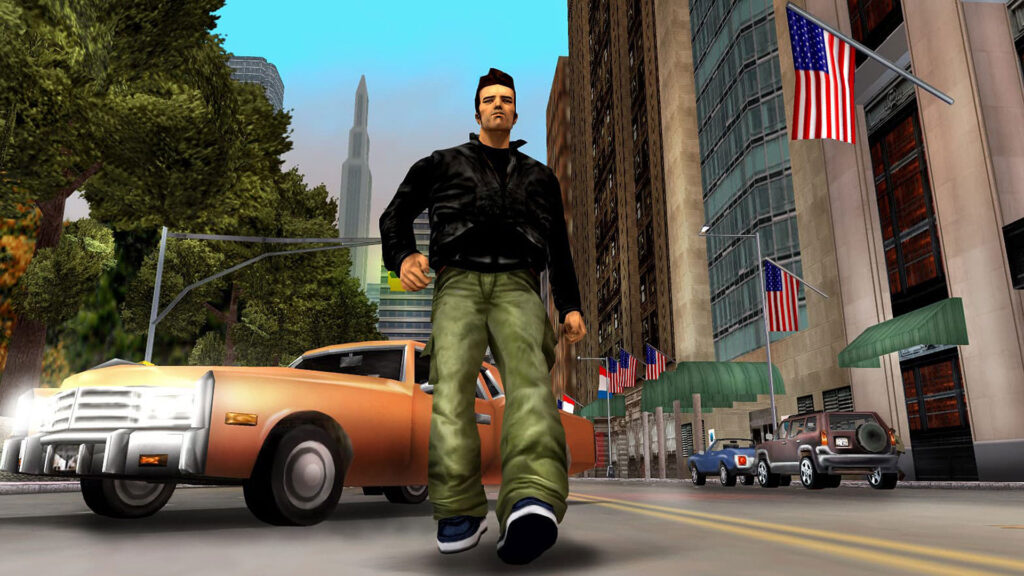
The same responsive world was now a detailed labyrinth of streets and buildings that you were let loose in, free to navigate them on foot or in a car with a level of immersion hitherto unseen from the franchise. Character models and cars that showed actual damage from collisions joined an art style and lighting system that was very capable for its time.
Actual assets and reasonably good textures meant that getting in trouble now felt more akin to something likely to happen in the real world, although the underlying capability for what we’re expecting from the franchise today simply didn’t exist at the time. It’s hard to fault the game for that, and it remains a very impressive first step towards a very bright future for the franchise.
GTA: Vice City (2002)
A year later, we were taken to Vice City, where things were definitely better. But with only a year between the two titles, they were perhaps iterative improvements rather than evolutionary changes.
The streets were still showing the same NPC density and level of activity, which wasn’t necessarily a bad thing considering how effective at being engaging it was at the time. But in the context of our examination, it was the early indicator that quantity wasn’t necessarily tied to quality.
However, what did change was certainly great, and improvements to the art direction certainly helped Vice City stand on its own merits. That was an area where there were marked improvements. Neon signs and colorful pastel buildings joined more tropical scenery.
Boats floated gently on waves, the water and lighting working very well together to make the ocean feel as endless as it is in the real world. Sunlight felt more natural thanks to a more vibrant tone to life in the city, a step-up over Liberty’s relatively drab overtones in hindsight. Getting into a chopper to take it all in from above felt very futuristic at the time, although it’s something we take for granted from the franchise today.
The presence of better vegetation and improved atmospheric effects also helped sell the experience of a living, breathing city that was just waiting for you to engage with what it was offering. The strong foundations established so far would soon begin to be the framework of the next major leap for the franchise.
However, there were a few other titles to go before that, each bringing something unique to the table that would then culminate in the next major leap.
GTA: San Andreas (2004)
Carl’s adventure saw the franchise expand the scope of its world to include three whole cities under San Andreas’s umbrella, and the good news is that it brought the scope for a lot of biome variety and distinctive vibes to districts that now showcase the franchise’s penchant for worlds that draw you in and keep you there almost effortlessly.
We can’t quite say this one was there yet visually, thanks to its character models, lighting, and basic geometry, which just feels so outdated today. But you have to remember that this was a title that let you ride on to a moving train on a motorcycle to deal with some bad guys. Getting to fly planes for the first time was also a welcome addition, bringing the sky into the mix in a way you’d never experienced before.
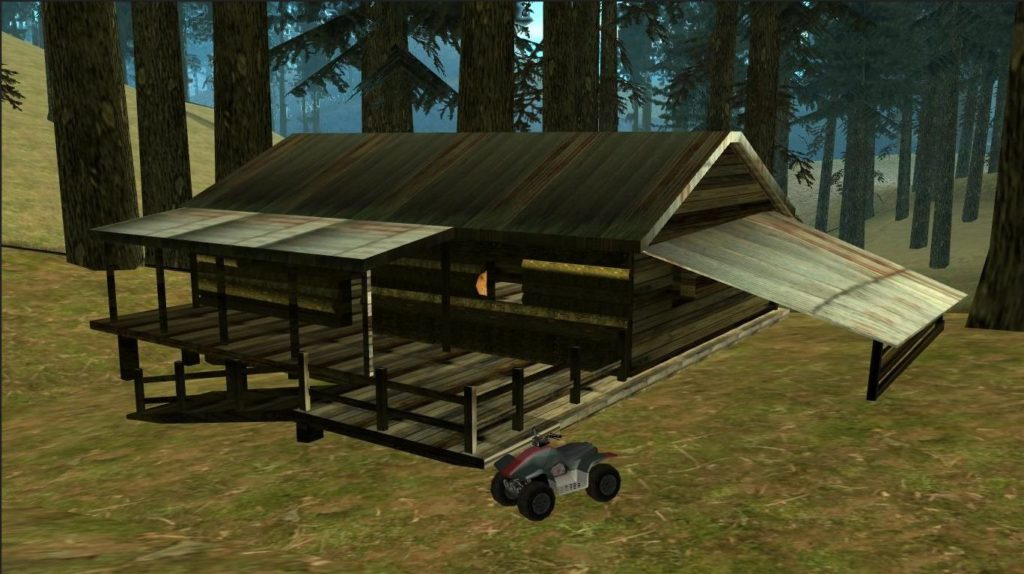
That’s a long way to come from animated sprites, all in a period of seven years, which is impressive even by today’s standards, and probably an interesting way to look at how long GTA 6 has been in development, and the expectations it carries because of it.
We’re going to talk about that when we get to the franchise’s latest, but there’s a little detour on our journey there.
GTA Advance (2004)
Taking things back to Liberty City, and all of its graphical goodness or lack thereof, might seem like a step back for a franchise that was already well on its way to the next big visual leap it was bringing. But weigh that against the Game Boy Advance’s hardware, and you begin to see a formula that could be adapted well across different platforms.
It’s probably GTA Advance’s biggest claim to fame, though, as what it was offering was more or less something you’d already seen in the franchise’s first two entries. But it did manage something else: it paved the path for future entires to wind the clock back, taking us to already familiar places that had more stories to tell us.
Yes, its streets were reliant on the overhead camera that was a part of the franchise’s humble beginnings, while the same sprites could be seen as a step back from the 3D models we’d already gotten used to. But as a title for the Advance, this one managed to be a world that could still immerse you in its gameplay loop if it weren’t for those cutscenes. Still, it’s a credible effort and is one that deserved its due on this list.
Of course, another trip to Liberty City on a different handheld must now take the stage.
GTA: Liberty City Stories (2005)
The Game Boy Advance wasn’t the only handheld to take a stab at Liberty City. This one brought the city’s magic to the PSP and did well to preserve the environmental detail that was on display in previous iterations of the world.
The 3D models, textures, and assets from Liberty City carried over well to Sony’s gaming on-the-go attempt, but there were compromises. Even contact with water was fatal, naturally removing a major part of Liberty City’s explorable area. The draw distance was also quite limited, though the game did a good job of keeping you in the moment.

But put those issues aside, and you see a city brought to life quite well on the hardware it was running on, and it was one that helped the gameplay loop on offer be immersive enough to make this one a very successful effort from a commercial perspective. It was certainly a strong offering, but one that did showcase a penchant for adaptability that had already begun with Advance, and is significant because of it.
GTA: Vice City Stories (2006)
Another PSP offering, but with Vice City as the playable stage this time around, this one brought all of the city’s color and flair to the console. However, the character models, animations, and environments were certainly getting stale in the run-up to the franchise’s next big graphical leap.
By this point, the franchise’s signature formula was established well enough to make its gameplay loop addictive and immersive on its own merits, but Vice City’s varied environments, colors, and lighting did well to sell it on the PSP. Would it have been nice to see the improvements that we’re yet to talk about make their presence felt in this one? Of course.
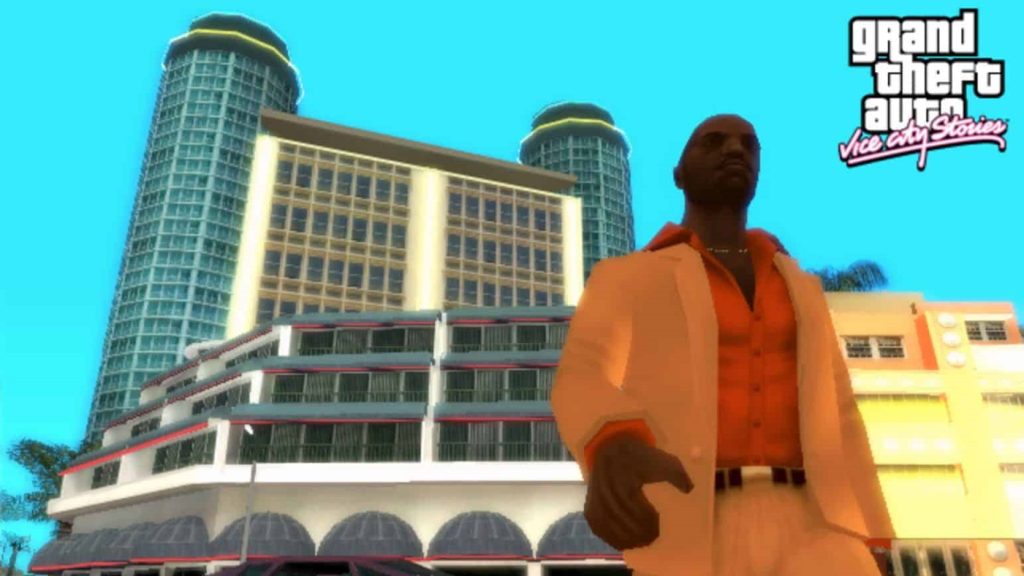
But was it fair to expect that kind of leap on a platform that might not have been able to handle it? We’d say yeah, and Vice City Stories might have done well to expand on the history behind our time on its streets, but it was only another step towards something bigger on the graphical front.
Well, that leap wasn’t too far away.
GTA IV (2008)
We’re getting closer and closer to the good stuff now. Returning to Liberty City this time around was a clear indicator that the franchise had moved forward with its presentation and visuals. The character models had believable faces now, which is probably among the most tangible improvements you can see right off the bat.
However, it wasn’t the only one, as the open world now had a level of detail that we hadn’t previously seen from the franchise so far. The streets were denser, packing more people and architecture into the playable real estate to make Liberty City feel like it had grown alongside the franchise.
The lighting felt way more believable and polished, lending an air of vibrancy or muted subtlety to scenes based on what was required of it. Assets, textures, and environmental objects were not only better, but woven in well to make this new and improved take on Liberty City stand out very well from anything that had been done with it before.
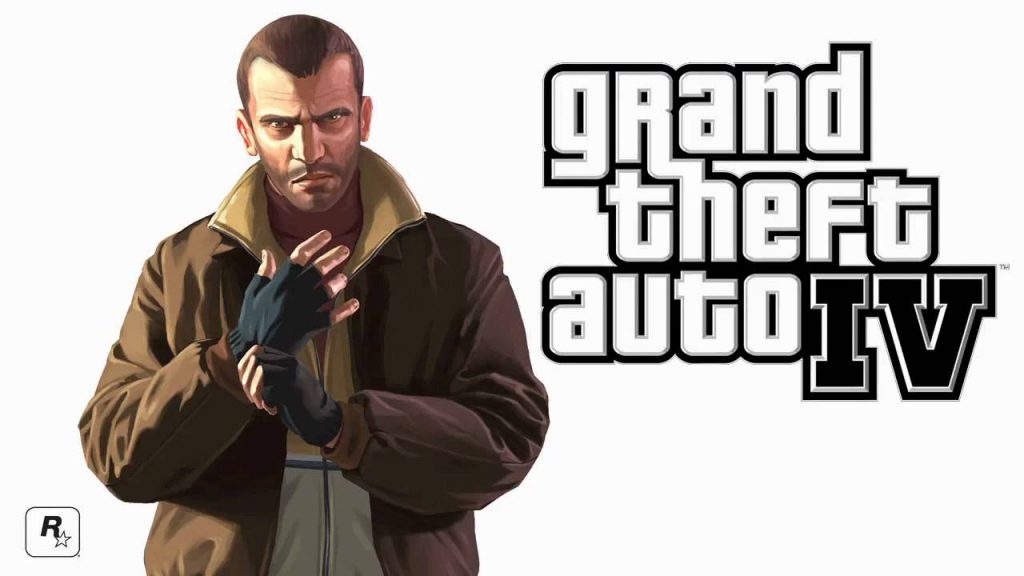
Improved verticality also let this one manage to make its world go toe-to-toe with anything that preceded it, alongside other details like damage to your vehicles after collisions, all of which were done before but not with the detail and polish that was on display this time around.
The water and tropical settings were important parts of making the presentation feel like such an evolution, with reflections and gentle waves to behold as you sped across the surface on your boat, or perhaps looked at it from the coastline. As far as the view was concerned, GTA 4 was definitely the finest the franchise produced at the time, and with good reason.
GTA: Chinatown Wars (2009)
We’re getting close to the end of our look back at how GTA has evolved over the years, and Chinatown Wars is a great showcase of how the earlier top-down perspective still had enough bite to carry it into an era with better hardware and potential for polish.
Both were used quite well in making this stylized take on Liberty City feel like a refreshing departure from anything that preceded it. The cel-shaded art style immediately stood out, allowing the overhead camera to make great use of the lighting and shadows to make the world feel immersive.

Character models and faces met the standards of what the franchise had achieved so far, while the world itself felt like a solid step forward from anything that the other overhead titles in the franchise’s lineup could manage. Of course, the PSP version did manage to look better than its DS counterpart, but that doesn’t mean that the latter was a slouch when it came to presenting a slick, stylish experience.
The comic-book-styled storytelling and the kind of experience this one aimed to be were well-served by the graphics on this one, and it remains a testament to how Rockstar has been able to evolve experiences without falling into a rut over the years.
GTA V (2013)
We’re finally through the franchise’s past, and GTA 5 is the current torchbearer for the franchise’s graphical evolution. It’s a well-deserved distinction, to be sure, with Los Santos marking the culmination of a journey that had begun so many years ago.
From its dense, populated streets, NPC interactions, excellent lighting and environmental detail, a draw distance that truly let you feel like you were a speck in a much larger world, and much better character models, GTA V was a leap forward in every aspect as far as its visuals were concerned.
Rockstar’s familiarity with the platforms it was making the game for notwithstanding, Los Santos’s effort to recreate the vibe and feel of Los Angeles was certainly helped along by visual fidelity that saw light gently glance off vehicles and people, lending an air of authenticity to every scene we witness.

The world around you was similarly engaging, with varied flora and fauna punctuating the urban vibe that Los Santos aimed for, while the surrounding wilds felt like sprawling areas that beckoned you over with the allure of discovery, working well with the visuals to be as enticing as it could be.
Combat and chases were similarly immersive thanks to well-rendered explosions, impacts from bullets, environmental damage, collisions with other vehicles, and so much more, all of which made the experience feel like a true simulation of a world where you were free to do as you pleased and deal with the consequences as you saw fit.
It was clear that the five-year gap between this one and its predecessor was used well, and the subsequent releases of this game on not one but two future generations of gaming hardware are a testament to its popularity and the flawless execution that has made it as legendary as it is.
That brings us to GTA 6, but it’s important to remember a rather controversial effort to modernize GTA 3, San Andreas, and Vice City in the Trilogy: Definitive Edition that came out for current-gen consoles a while ago. It was a mixed effort that did retain the magic of the games it aimed to modernize, but with GTA 5 already in play, those improvements haven’t landed as well as they might have in its absence.
GTA: The Trilogy – Definitive Edition (2021)
This one comes with a bit of context that needs to be set. With the franchise dormant for a while up until that point, and with no indication of a sequel to GTA 5 at the time when this one was released, it’s important to know that it came out to a rather passionate fan base who would have much rather had a new addition to its ranks.
That the sequel is now a month away, almost five years later, is a story of its own best tackled over another conversation. But The Trilogy’s improvements, such as better visuals, more polished character models and textures, and lighting improvements that helped things along, were outshone by other issues that brought things down by a lot.
Our own review of that release laments an uneven experience that we believed was going to be an easy win for Rockstar, but ended up being among the year’s most disappointing experiences. Of course, credit must be given to the numerous fixes that its 2024 update brought in to fix a lot of those complaints, but this was one flawed release in a long line of successes that stood out, and continues to do so.
However, that might soon be in the past if Leonidas City has anything to do with it, and the franchise is poised to enter a new chapter to usher in its future.
GTA VI
It’s taken a while to get here, but Leonidas is now a month away at the time of writing. We’ve seen enough of it to know that it is certainly a leap forward for the franchise’s graphics thanks to the beauty of current-gen hardware and a very ambitious effort to make Leonidas an open world that should serve as a benchmark for the genre if it manages to click with its players.
Jason, Lucia, and everybody they come into contact with look so darn real it feels unreal, a sentiment that extends to the city and its infrastructure. From materials, textures, the level of detail in the environment, the foliage, lighting, shadows, and the way everything responds to your actions, it’s definitely a leap forward, and could be a very giant one that justifies the thirteen-year gap between this one and its predecessor.
Simply comparing it to GTA 5 is going to make that leap feel so tangible in so many ways. It’s evident in how rays of light now look so much better thanks to ray tracing being a part of its underlying systems. Cars, roads, the ocean, and so many other visual cues exist to show you just how far we’ve come as far as representations of dense cities that have unpredictability woven into their very fabric are concerned.

It’s been a hell of a journey, but we’re thinking that GTA 6 is only the latest stop in a franchise that clearly knows how to stay afloat with the times, and even surge ahead of them thanks to the effective use of a well-established formula and visual leaps that make each subsequent entry now feel like a sort of beacon for the rest of the gaming world to follow.
We can’t wait to see how it all comes together in Rockstar’s latest, and perhaps begin speculating on what it could bring to the table once it’s done with Leonidas. With a journey as fascinating as the one it’s already had, it’s hard not to expect greatness from GTA, and we’re hoping we get to do more of these showcases over the years.