





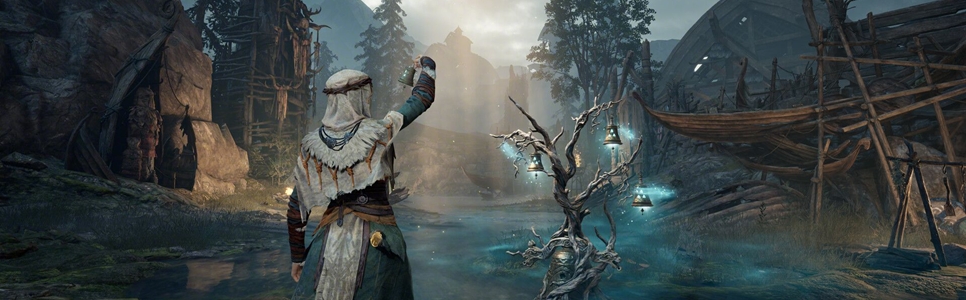
Fresh off the back of its Steam Next Fest success, where it ended up as one of the most-downloaded and wishlisted titles, Mistfall Hunter developer Bellring Games is gearing up for its full release. Largely unrecognisable from early builds, the PvPvE extraction ARPG has grown in complexity, with deeply customisable character classes, specific archetype paths to follow, and numerous weapon skills to master raising the barriers to entry. Crucially, however, to counteract this the studio has implemented numerous systems to ease the friction of long-term progression. We’ll get into these, and more, as part of the fifteen things you need to know before you buy Mistfall Hunter.
A Dark Fantasy PvPvE Extraction ARPG
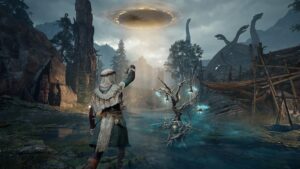
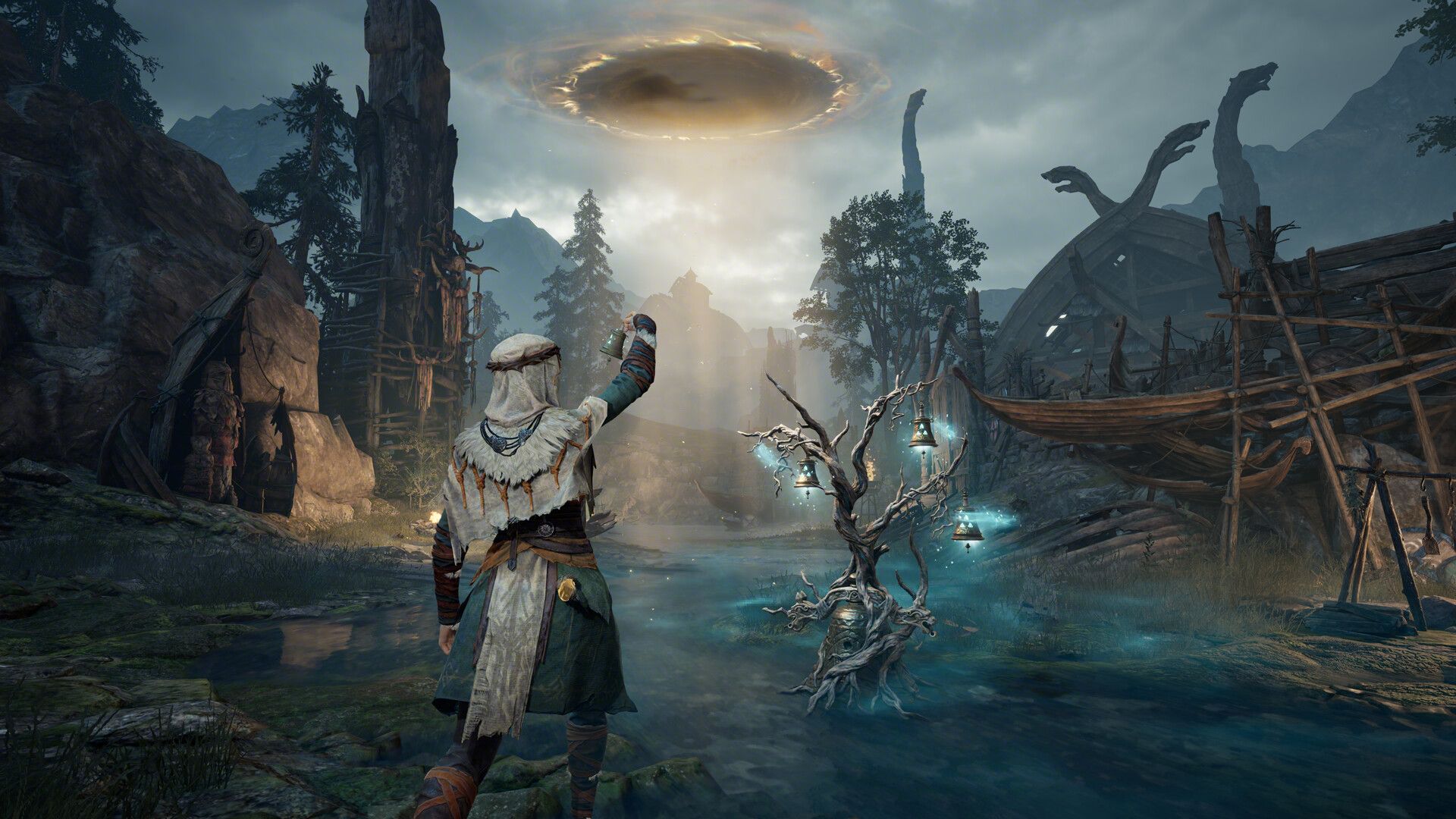
Pitched as a “gripping dark fantasy extraction journey”, Mistfall Hunter augments extraction’s familiar high stakes drama with deep RPG mechanics and a grimdark setting. Inside the corrupted realm of Weavereach, a dank land of mist and ruins, you are thrust into a cycle of fighting, scavenging, and surviving; your new role as a Gyldhunter not only to acquire riches but to restore hope throughout the despairing kingdom.
Playable Solo or Co-op
While you can stalk the mist as a lone wolf, with character classes facilitating solo runs – more on those later – Mistfall Hunter appears designed around co-operative play, where stepping into the fray as part of a three-person squad is suggested by the developer as the surest way to overcoming a gauntlet of monstrous creatures and rival hunters. Every expedition is fraught with risk, with every encounter pushing the threat of losing your entire hoard, so teaming up might just be the likeliest path to a safe extraction.
PvP Isn’t Mandatory
Will Mistfall Hunter mirror Marathon’s culture, or will its players follow ARC Raiders’ tendency to foster tenuous, short-term partnerships? Either way, Bellring Games has acknowledged that not everyone enjoys PvP gameplay by offering the best rewards through defeating powerful PvE bosses. You and your crew can still target rival parties, and other players remain a constant danger to you too, yet it remains to be seen how viable it’ll be to avoid other Gyldhunters if your plan is to take down the recently revealed Cursed Moonwane boss before getting out of there.
Six Playable Classes
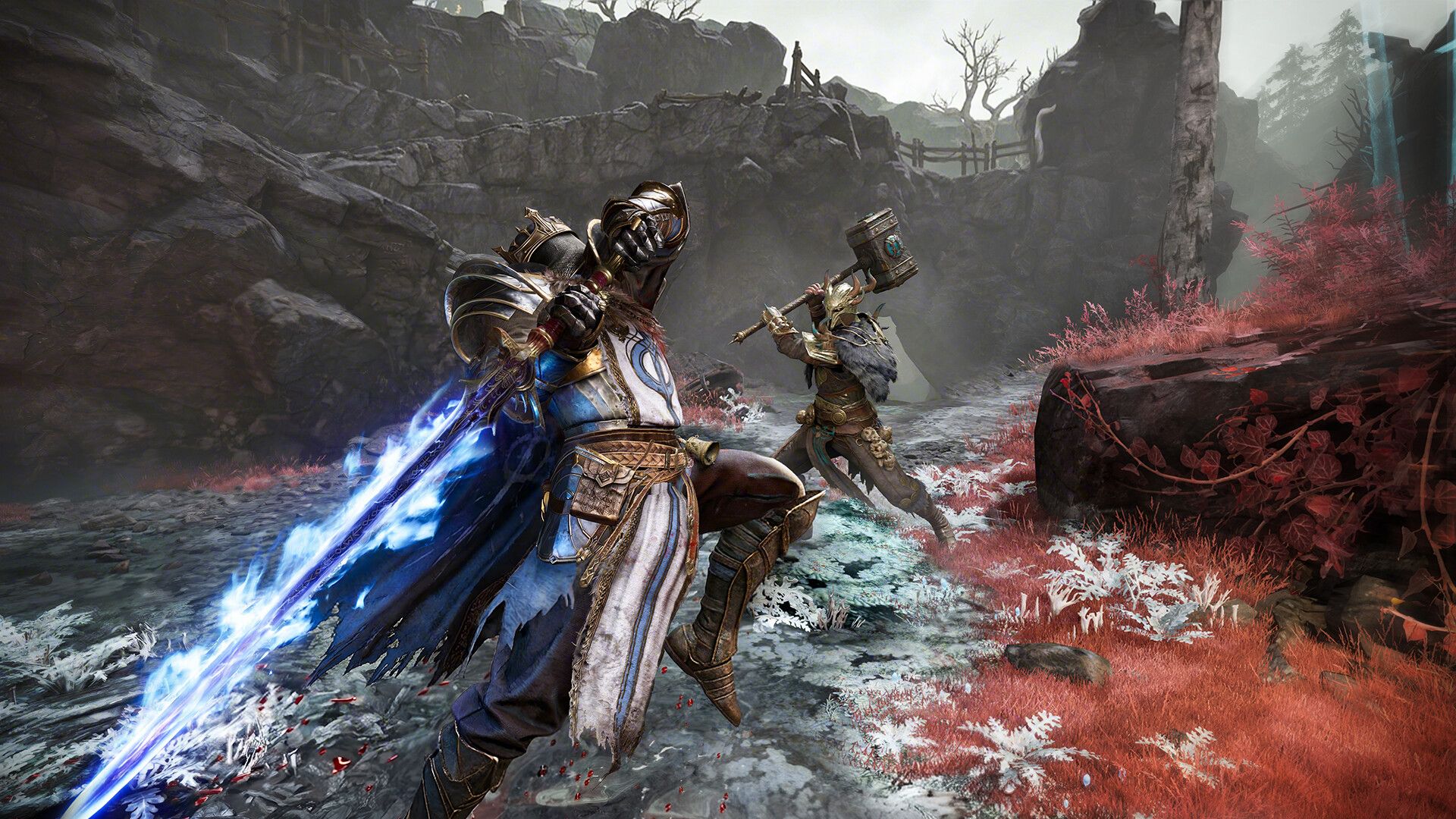
Mistfall Hunter features six playable classes, each distinguished by their unique weapons, combat stances, and overall archetypes. The Shadowstrix is the silent assassin type, arguably most relevant for solo operators, while the beginner-friendly Mercenary is a versatile option suiting both offensive and cautious playstyles. The Blackarrow is the bow-wielding, long-range specialist, the Sorcerer is a powerful spellcaster, and the Seer brings healing and protection spells to battle, making them useful in co-operative runs. Debuting in June’s beta playtest, the Withered Knight is a sword swinging powerhouse, where controlled aggression and thoughtful positioning make them a sturdy choice if you’ve a handle on the combat’s rhythm.
Dual-Weapon Combat System
Each character class in Mistfall Hunter features two dedicated weapon stances, bringing tactical flexibility by offering the option to switch weapons during battles to suit the enemies in front of you while recharging ability cooldowns. See, abilities are tied to weapons, not your character, so in theory you could unleash all your might with your primary weapon then instantly switch to your secondary to continue the assault or take a defensive stand – all while your abilities recharge. Take the Mercenary, for instance, who can switch between a traditional sword-and-shield and heavy-duty hammer for some AoE clearing, or the Shadowstrix who can swap between fast-stabbing daggers or more devastating dual-blades.
Combat Suggests a Less Clinical Soulslike
Mistfall Hunter’s combat is indebted to FromSoftware’s Soulslike design. Tactical pace, heavy wind-up animations, deftly-timed blocks, and dodge rolls are all present, yet early hands-on impressions suggest that the fighting overall leans closer to arcade feel, where positioning is more important than studying enemy patterns. Furthermore, without a dedicated target lock-on, Mistfall Hunter’s combat shows a pace and style closer to modern Ghost of Tsushima.
More Forgiving Than Soulslikes Overall
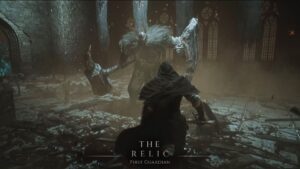
Even if the combat shows a Soulslike inspiration, elsewhere, Mistfall Hunter’s death, revival, and extraction systems appear more forgiving than the titles in FromSoft’s back catalogue. For instance, during the recent beta, players defeated by AI-controlled enemies were granted a single opportunity to revive in spirit form, allowing them to re-enter the fray to recover their spoils. Likewise, bosses retained a portion of the damage dealt before death, meaning even failed encounters don’t result in a complete reset. Bellring Games may adjust these systems before launch, but it seems at this stage the studio wants progression to always feel like it has momentum. And, underlining this thought: only one member of your three-player squad needs to successfully extract for you all to secure your loot.
Extraction’s Familiar Risk vs Reward
So, whilst the game is indeed more forgiving compared to typical Soulslikes, Mistfall Hunter still exudes tension. Like other extraction games, failure here carries meaningful consequences; any equipment you take into a run can be permanently lost, making every expedition a balancing act between power and caution. See, there’s temptation to equip your most powerful gear for an easier fight, and hopefully more spoils, but this is weighed against the possibility of losing it all.
Three Maps Expected At Launch
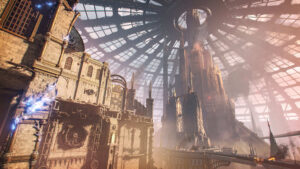
Mistfall Hunter is set to launch with at least three maps: Brandrgarde, the Solemn Needles, and Hallowgrove, the latter being playable for the first time during June’s open beta. Each location appears to serve a distinct gameplay purpose. Brandrgarde’s twin fortress, for instance, is seen in official gameplay footage with a battle royale-style, shrinking Gyldenmist circle, while the Solemn Needles’ bleached forest will serve as the backdrop for Mistfall Hunter’s “chaos” difficulty mode. Bellring Games has confirmed that seasonal updates will arrive post-launch, with new maps expected to be included.
Deeply Customisable Buildcrafting
Once you’ve returned to Windrest, Mistfall Hunter’s hub world, you’ll be able to spend your spoils to strengthen your character build. You can upgrade your skills, invest in talent nodes, and engage with the gem socketing mechanic whereby you’ll affix specialised gemstones into your gear to hit specific stat milestones. Customisation paths are layered and plentiful, gradually pushing you toward specialised builds which can be saved via the Loadout System; a preset store where your assortment of gems and equipment can be assembled and interchanged for exploration or combat.
Scavenger Squads Gather Resources For You
One of Mistfall Hunter’s more unusual features are Scavenger Squads, autonomous AI-controlled squads that’ll acquire resources for you. Designed to ease the friction of long-term progression planning, Scavenger Squads will steadily accumulate materials, meaning even if you lose everything you took into battle you’ll still be gaining something new. What’s more, they’re upgradeable, with search areas, pace, and strategies for deployment unlocking over time.
Launch Includes Beta Improvements
Mistfall Hunter has already evolved considerably through numerous playtests and closed betas. The latest open beta introduced the already mentioned Withered Knight class and Hallowgrave map, alongside a redesigned stamina system, legendary equipment, additional enemy types, and numerous combat and balance adjustments. If Bellring Games maintains this pace of iteration, the launch version will be unrecognisable from its early builds.
Balance Remains a Work in Progress
That said, one area Bellring Games continues to monitor is class balance. Indeed, as recently as May’s dev blog update, the studio outlined some significant imbalances, including melee-type characters struggling against long-range specialists, and accelerated late-game scaling for, again, range-types. These assertions are mirrored in hands-on impressions, where the Sorcerer is frequently highlighted as the strongest option. The studio has pledged to continuously optimise character archetypes before launch, but it’s still something you should keep an eye on.
Release Date, Platforms, Price, and Game Pass
Bellring Games plans to release Mistfall Hunter on July 30th, with PC via Steam, Xbox Series X|S, and PlayStation 5 the confirmed platforms. If you’re on Xbox, you’ll find the game available through Xbox Game Pass on day one. Standalone prices, however, are yet to be confirmed by the developer or the game’s publisher Skystone Games. The latest information, published June 22nd, is that locked-in pricing will be confirmed in the next developer update.
PC Requirements and Online Features
Mistfall Hunter‘s minimum PC requirements include an Intel Core i7-4770 or AMD Ryzen 5 1400 processor, 12GB of RAM, and either an Nvidia GeForce GTX 1060 or AMD Radeon RX 580 graphics card. To meet the recommended setup, you’ll need to step up to at least an Intel Core i7-9700 or AMD Ryzen 5 3600 CPU, 16GB of RAM, and a GeForce RTX 2070 or Radeon RX 5700 XT GPU. You should also note that the game uses Bellring Anti-Cheat, requires an online connection for its PvP and co-op gameplay, and includes optional in-game purchases.