





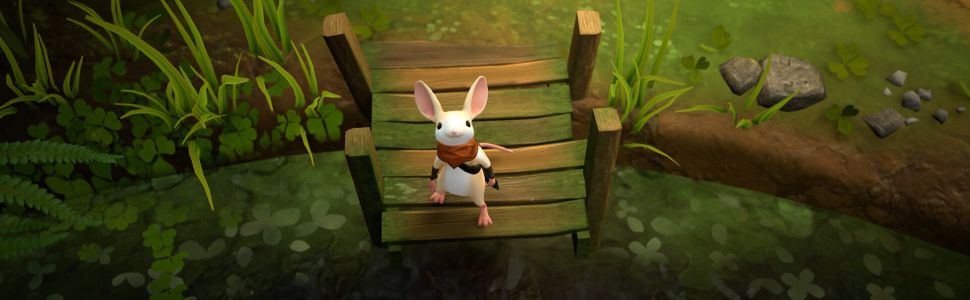
Following the release of Moss: The Forgotten Relic, developers Polyarc and Blackbird Interactive have managed to bring the adorable and brave adventures of Quill to an entirely new, non-VR, audience. Polyarc co-founder and the game’s design director, Danny Bulla, was kind enough to talk to us about a series of subjects, from the transition out of VR, to the future of the studio.
Now that Moss: The Forgotten Relic has launched, how has its reception compared with the expectations Polyarc and Blackbird Interactive had before release? Has anything about the response particularly surprised the team?
From the beginning, we knew it would be difficult to predict how expectations would shift across mediums by bringing Moss: The Forgotten Relic to PC and consoles. Now that the game has launched, we couldn’t be happier with the reception from both players and the press. It’s been incredibly rewarding to see it welcomed as a new addition in the Moss universe.
The game was intended to introduce Quill’s story to people who could not experience the original VR releases. What can you tell us about the balance between completely new players and returning Moss fans so far?
Our biggest goal was to allow more people to meet Quill and experience her story, regardless of where they play. What surprised us most was just how many players were already familiar with Moss and had been waiting years for the opportunity to play without VR. We certainly expected to introduce Quill to an entirely new audience, but it’s been equally rewarding to see longtime lurkers finally able to join Quill’s adventure.
Before launch, the central question was whether an experience originally constructed around VR could retain its identity on a standard display. Having now seen players complete the game, where do you believe the transition succeeded most strongly?
At its core, Moss is a classic adventure game built around exploration, platforming, puzzles, and combat, and would translate well beyond VR. What we knew we absolutely had to preserve was the emotional connection between the Reader and Quill. We wanted that relationship to feel just as meaningful for players on a TV or monitor, and from the reactions we’ve seen, we believe we’ve accomplished that! When Quill looks up at you, your first celebratory high-five, asking for help… these moments emotionally resonate and fortify the bond between player and hero, regardless of platform.
Conversely, is there any part of the original VR experience that proved impossible to reproduce completely on a flatscreen, regardless of how much it was redesigned?
It’s impossible to recreate the feeling of physical presence that VR offers on a television or monitor. Any VR developer will tell you how difficult it is to communicate or capture that in a screenshot or gameplay trailer.
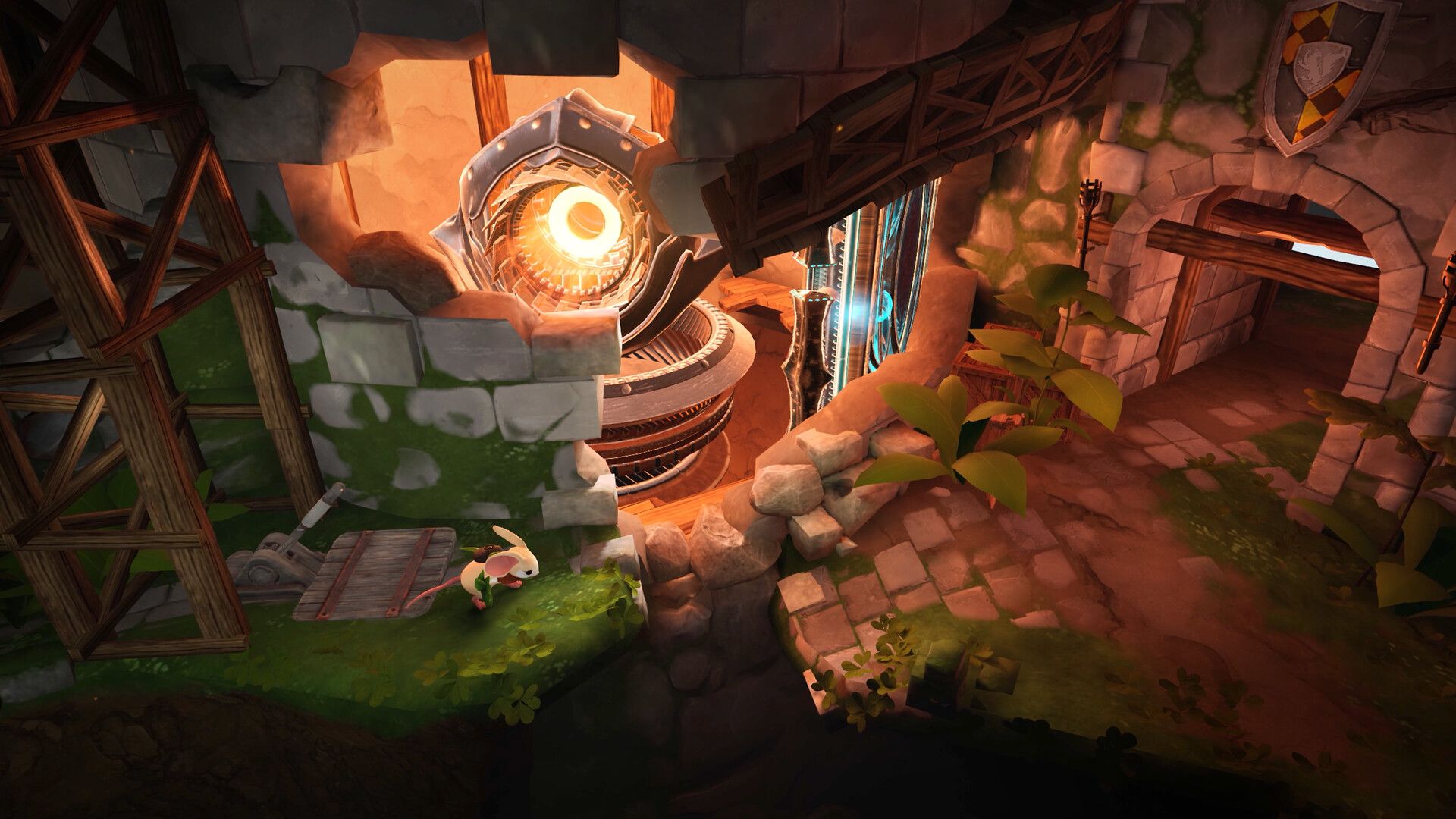
Rather than trying to imitate VR, we focused on what a traditional display could do exceptionally well. That gave us the opportunity to lean into cinematic camera work and carefully composed scenes that feel almost like a director’s cut, allowing us to emphasize the story and emotional beats in ways that simply aren’t possible in VR.
What has player feedback revealed about the new camera system? Have players generally understood why the game retains its composed, diorama-like perspectives rather than using a conventional freely controlled camera?
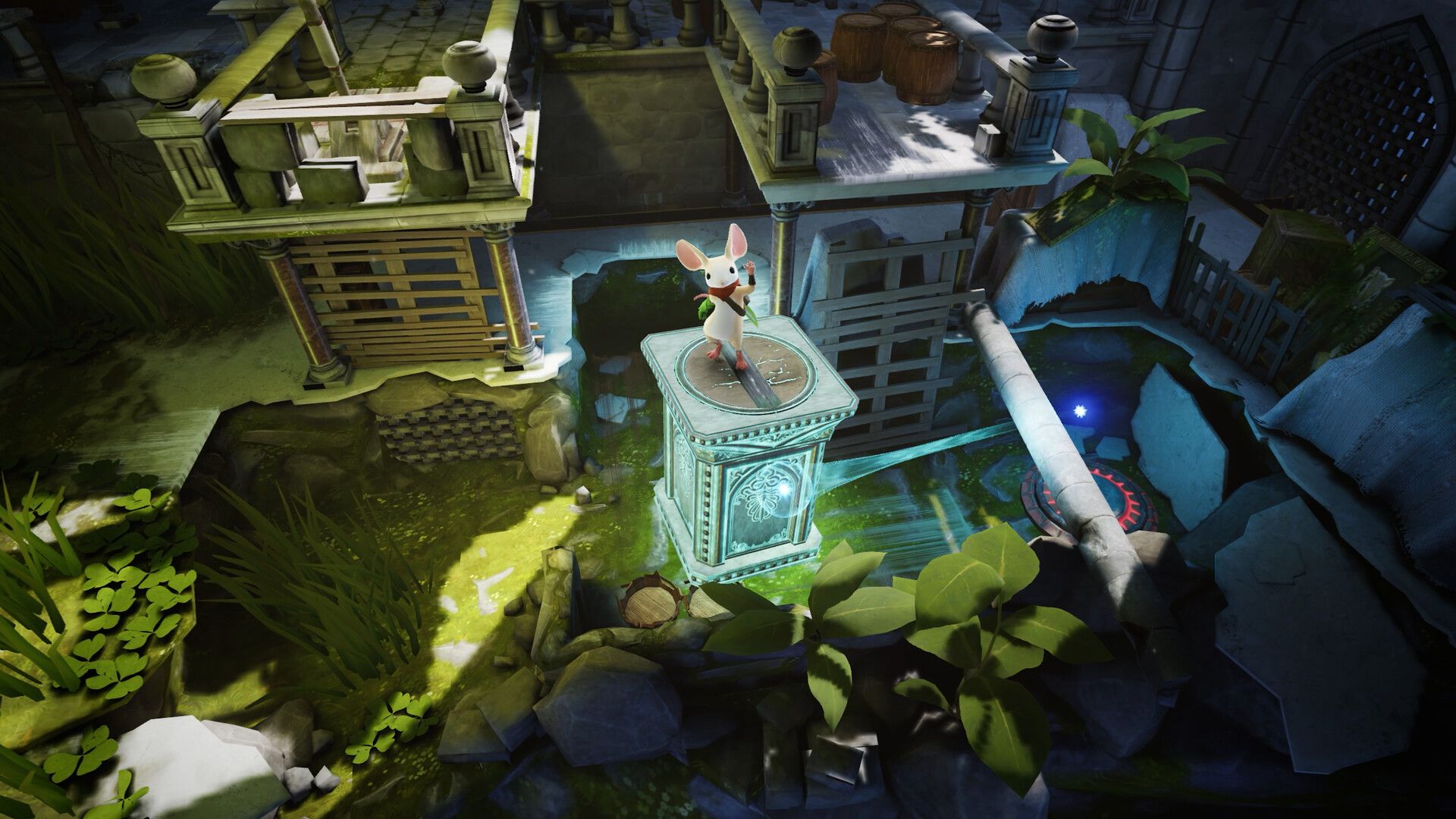
We’ve been really pleased with how players have embraced the new camera system and cinematics in Moss: The Forgotten Relic. We intentionally kept the handcrafted, storybook framing because it’s fundamental to the world and Moss’ core identity. Instead of giving players complete camera control, we wanted every composition to support gameplay, readability, and the subtle beauty of Moss that can be appreciated in those intimate, vignetted moments.
The Forgotten Relic combines Moss, Moss: Book II, and the Twilight Garden expansion into one continuous package. What changes were required to make content originally developed at different times feel like one cohesive adventure?
Narratively, Moss: Book I naturally flows into Moss: Book II, so there wasn’t much we needed to change there. Twilight Garden is also presented the same way it was in the VR version, remaining an entirely optional realm for players who want to explore it.
We also chose to keep both Books accessible separately within the menu so returning players could jump back into the point where they left off in VR. For new players, though, we definitely recommend starting from the beginning to experience Quill’s journey as one continuous adventure.
Did combining the two main games require changes to progression, difficulty, abilities, tutorials, or pacing so that the transition between them felt natural?
There was some balancing required as players progress from Book I into Book II, but there’s also a natural evolution as Book II expands how you solve puzzles, approach combat, and tackle increasingly complex challenges.
In regard to tutorials, one of the larger changes was to the number of things we tutorialized. In the VR version, reaching out and interacting with the world is much more intuitive. For the PC and Console players, not everything was immediately obvious. Moments like high-fives, collecting items from Quill, and even basic actions like Jump needed more explanation.
How extensively were the original environments rebuilt or modified for the new cinematic camera system, rather than simply being adapted from their existing VR layouts?
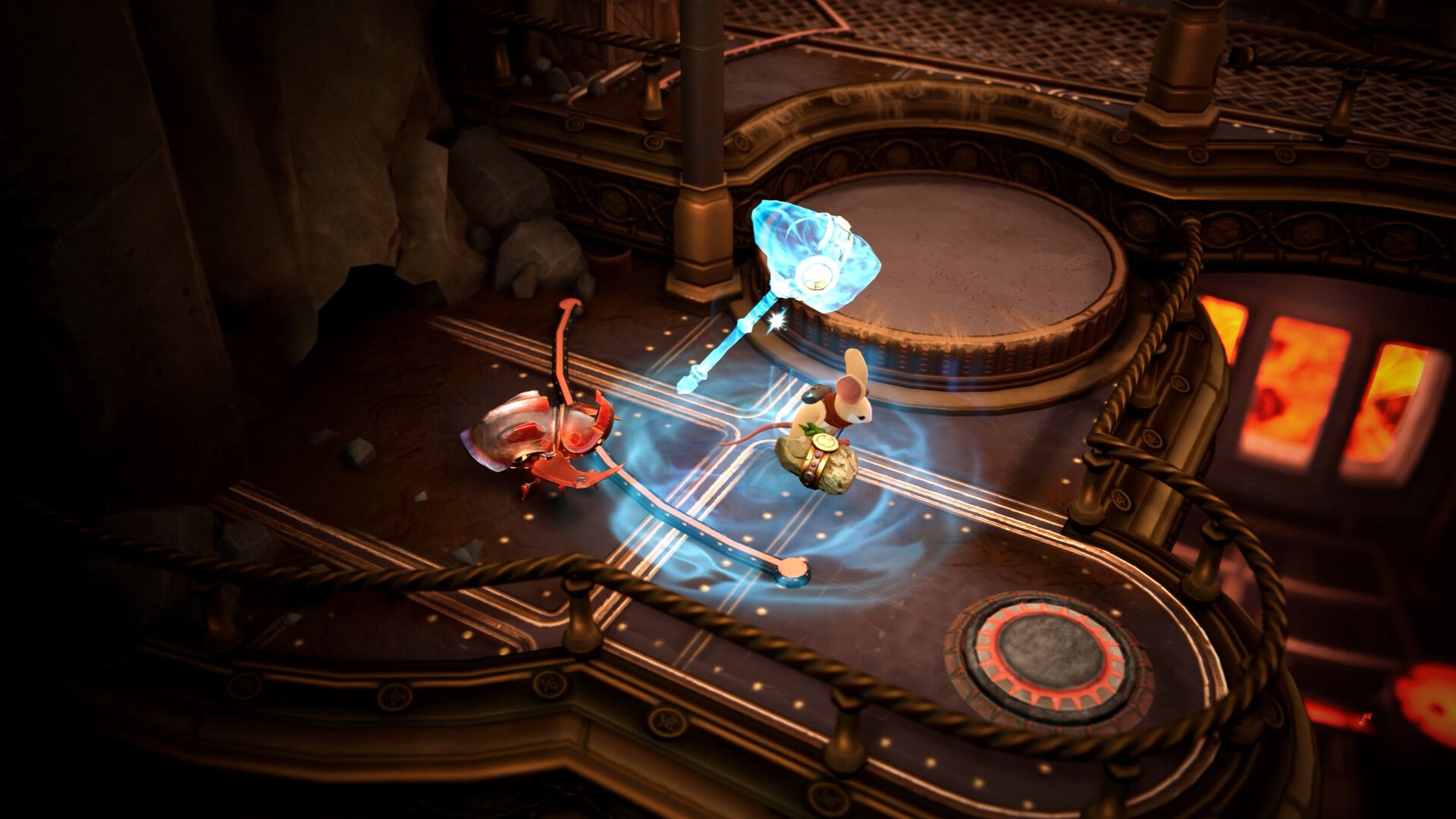
We were careful to preserve the original layouts and handcrafted feel of every diorama, rather than fundamentally redesigning the game. At the same time, bringing Moss to modern consoles and PC gave us the opportunity to elevate lighting, visual effects, resolution, and overall presentation.
Revisiting the world reminded us just how timeless Moss is. We never wanted this to feel like a complete remake, but we did take the opportunity to carefully review every environment and identify places where we could enhance the visuals to meet each device at the possible highest fidelity.
How were responsibilities divided between Polyarc and Blackbird Interactive during development, and what expertise did Blackbird bring to the process of rebuilding Moss for conventional platforms?
It was a true collaboration from the start. Polyarc remained deeply involved in preserving the identity of Moss: its world, characters, gameplay philosophy, and creative direction. While also contributing to much of the development of the core game systems, such as authoring the camera and developing the Reader’s cursor movement. Blackbird Interactive not only brought tremendous expertise in adapting that vision across multiple platforms, but they were also equally impactful in the creative exploration of how we translate the game’s controls and presentation for players. The project wouldn’t be what it is without that partnership.
Did working with an external development partner change the way Polyarc approached its own world, characters, and technology?
Throughout development, we constantly challenged our own assumptions about what absolutely had to remain the same and where thoughtful redesign could improve the experience for a different audience. Overall, the collaboration was so seamless that it felt less like we needed to change our ways and more like we found partners who shared our same perspective on game development. It helped that they were also big fans of the Moss franchise and wanted to preserve as much of the soul of the original games as possible.
Does the launch response make another flatscreen adventure featuring Quill more likely, whether that takes the form of a new Moss chapter or a continuation of the existing story?
We’re thrilled by how players have embraced Quill on consoles and PC. Right now, our focus is on supporting The Forgotten Relic, listening to player feedback, and taking a moment to celebrate everything the team accomplished. We love this universe, and we’re incredibly proud of what we’ve built, so we’re excited to see where the future may lead.
Has The Forgotten Relic changed Polyarc’s view of Moss as primarily a VR franchise, or do you still see virtual reality as an important part of its future?
VR will always be an important part of Moss‘ history and our studio’s identity. At the same time, The Forgotten Relic has shown us that Quill’s story resonates well beyond VR. That’s incredibly exciting because it means even more players can experience this world.
Could future Moss projects be designed for VR and flatscreen platforms simultaneously, or do the differences between those formats require each experience to be created independently?
Every project deserves the platform that best serves the experience we’re trying to create, and we’ve learned an incredible amount from bringing Moss to traditional platforms.
But perhaps the biggest lesson is that Quill was never defined by the platform she lived on. Players connect with her because she’s brave, expressive, and hopeful, whether they’re meeting her in VR or on a TV for the very first time. Seeing that connection endure over the years has meant more to us than we can express. We’re incredibly grateful to everyone who has shared this adventure with us, and we hope Quill’s story continues to inspire courage and kindness wherever players discover her.