





It’s a shame that virtual reality gaming hasn’t panned out the way we thought it could. With so much potential for another leap in immersion at the same scale as moving to 3D or high-definition graphics, VR has fallen so far short of expectations in terms of its impact on games, instead becoming a luxury rather than a necessity.
There aren’t many killer apps, nor does it seem like anyone is determined to make one anytime soon, so we’ve been left with a dearth of reasons to invest in prohibitively expensive hardware and just a handful of truly unique experiences.
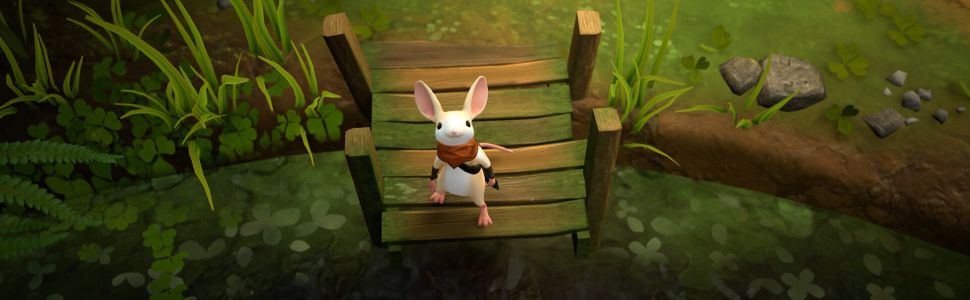
"The Moss games follow Quill, an adorable young mouse who sets out on a magic-filled quest to find her lost uncle."
The Moss games, across Book I and Book II, were long among that small handful of games that had been developed with VR in mind and had remained exclusive to the platform, but with Moss: The Forgotten Relic, developer Polyarc has offloaded the VR requirement and brought both of its storybook mouse tales, arguably some of the best reasons to have a headset up to this point, to consoles and PC in one package. It abandons the headset and transitions to a fixed third-person camera without adjusting much of the content underneath, and while it can become apparent at points that these levels were not designed for this type of camera, it’s a small price to pay to bring a beloved, emotional puzzle-platformer to an entirely new audience.
The Moss games follow Quill, an adorable young mouse who sets out on a magic-filled quest to find her lost uncle and ultimately save her mouse community from the arcane magic taking over the castle and the evil animals that want to hunt them, notably an evil snake and an all-powerful owl.
This is a concept that could tonally end up all over the place, but Moss plays it entirely straight, telling a surprisingly hard-hitting tale of Quill overcoming what, to her, are seemingly insurmountable obstacles and sticking the landing multiple times over across both books. Without speaking a word, Quill exudes joy and determination, and the adorable animation style makes her someone you truly root for and want to protect.
Fortunately, you can do just that, because where the twist lies with Moss is that while you do follow Quill, you don’t play as her. Instead, the titular books are literal books, and you play in first person as “The Reader,” paging through them and getting immersed in a way that good books often do, only this time it gives you the ability to physically interact with the world and guide Quill through her trials as if you were writing the stories yourself. In practice, as you control her through each puzzle level, there are contextual areas where you can interact with the world to change it in some way, and this is the primary avenue for the game’s puzzles.
Whereas in VR you were able to put your hand on pieces of the environment, you now just have a cursor you move with the right stick, using the trigger when hovering over a contextual spot to do anything from slide boxes across the floor in puzzles to linking vines that create platforms for Quill to run across and reach new areas. She knows you’re there, too, and she frequently looks directly to the camera to thank you or give you a high-five, which always got a smile out of me.
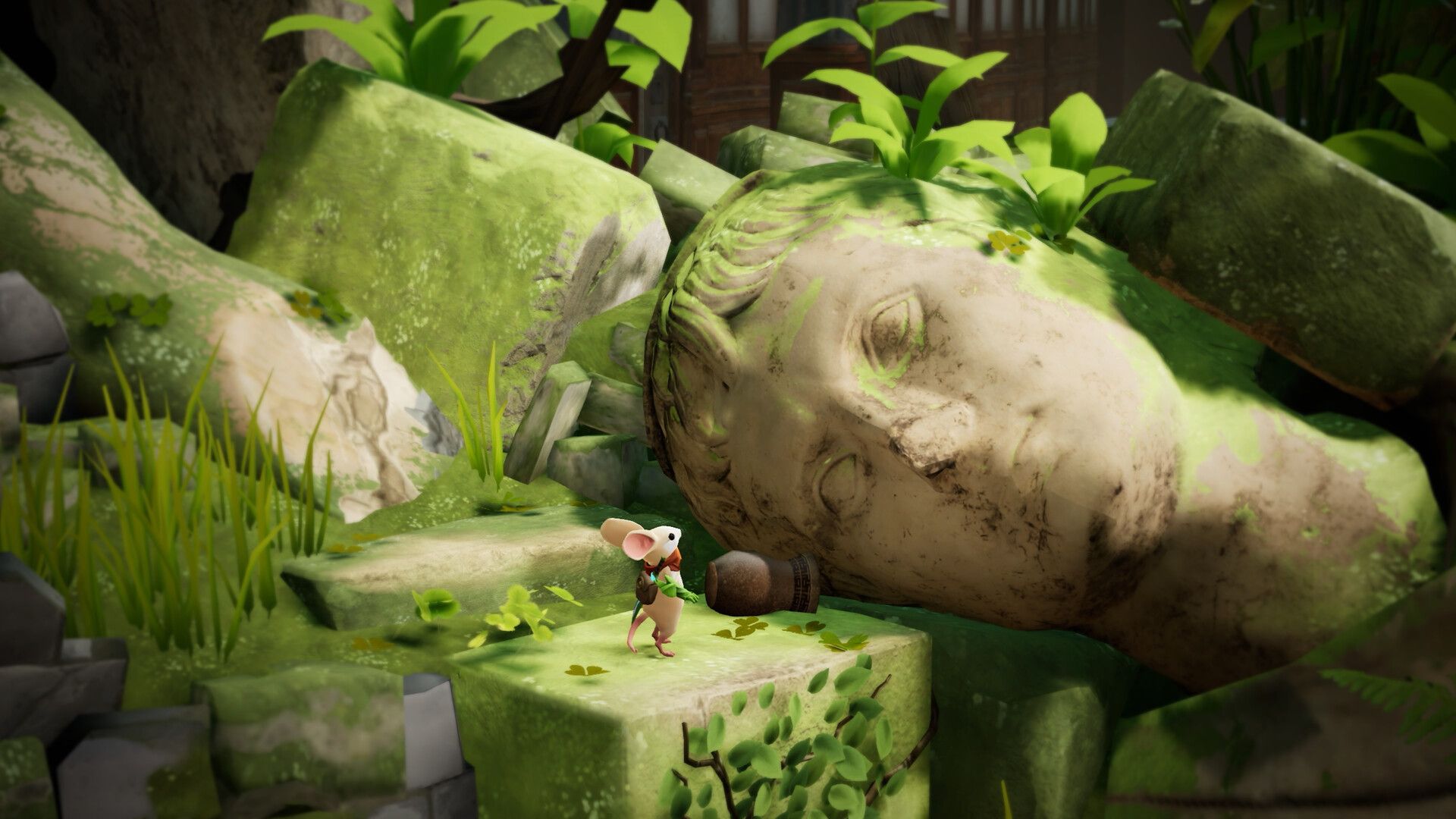
"Where the twist lies with Moss is that while you do follow Quill, you don’t play as her."
The ability to look around was clearly built into the game’s design, and while it does its best to accommodate for it in the transition, the experience undeniably loses something without a full range of motion. With a screen wrapping 360 degrees around your head, the originals built a strong sense of scale and atmosphere that the headset experience enhanced because it was so much easier to feel how small Quill and her family were compared to the rest of the world, nailing the feeling that you were truly The Reader with a bird’s eye view of this story as you were conjuring it.
In some ways, that’s more of a compliment to the originals than a complaint about The Forgotten Relic, because there’s really no way around losing some of that immersion when transitioning from VR to a fixed third person camera. This remains a phenomenally strong emotional experience across two games and 8-10 total hours with an absolutely gorgeous score and a story that tells a classical hero’s journey in a familiar but interesting way. It retains some of its VR visual idiosyncrasies, but accompanied by great narration and a fun presentation when you back out and flip through the pages of the book to advance the plot, the entire experience remains incredibly memorable.
Where the transition from VR becomes a little more apparent, though, is in the level design. You guide Quill through half a dozen or so puzzle rooms per chapter, the vast majority of which require you to simply find a route to an exit on the other side. The puzzles are never overly difficult, and at their best they are tests of your spatial logic with some sequencing of Quill’s and your own interactions to open certain doors and reveal new pathways to get her to where she needs to go. I particularly enjoyed using my powers to control different bugs to act as minions who love to stand on pressure platforms on the other side of the level.
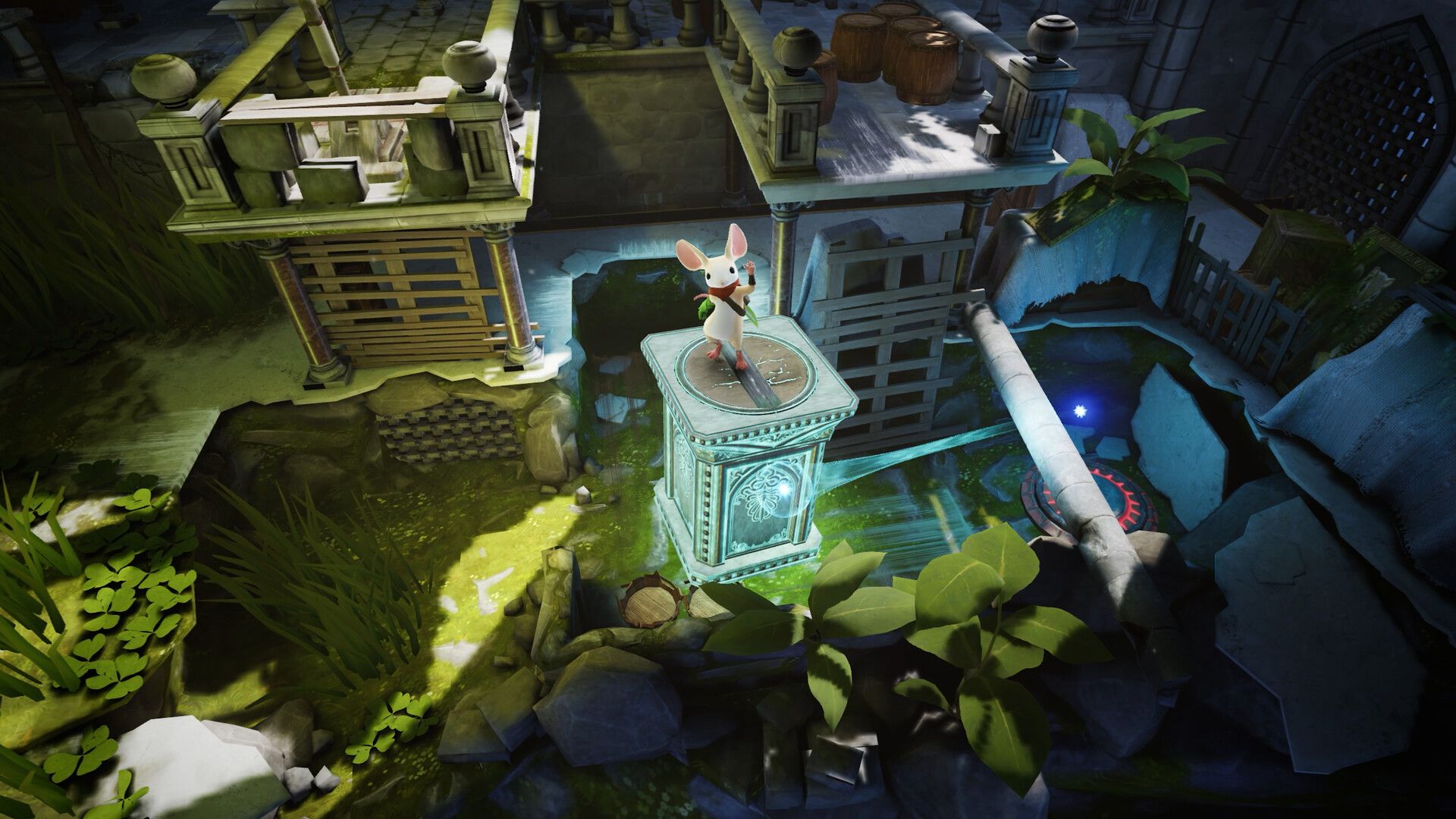
"Where the transition from VR becomes a little more apparent, though, is in the level design."
The issue is that these environments were often clearly made to be played with an ability to peek around corners or look around from different angles. While the fixed camera angle tries to maximize visibility, it can’t always do so, and the spots where it does zoom in or change angles are contextual and less prevalent than they could be. Indeed, it can add a bit more fun to the exploration if it’s hiding a collectible or secret, of which there are many, but there were a few too many times where a puzzle solution or critical pathway was hidden behind some visual obstruction in the foreground.
Both games also feature combat against other creatures of Quill’s stature like spiders and beetles. I can’t say I ever looked forward to combat compared to the puzzles or story moments, but fights are typically short and sweet, especially since your bug-controlling ability also allows you to take control of the ones that shoot projectiles. Quill learns new abilities over time, too, that allow more powerful and ranged attacks, and as the game progresses, its ease becomes more of a reflection of your bond with her and the amount that both of you have evolved over time.
Moss: The Forgotten Relic represents the virtual reality ecosystem losing one of its most unique and interesting exclusive experiences, which is a shame for those platforms but a welcome sight for the games. Both books of Moss tell a beautiful tale of a small but mighty mouse, an apt metaphor for a great game breaking out of its trappings on a less popular platform, and while its design loses some precision in the transition, the combination of the story, puzzles, and combat holds up as a lovable and emotionally impactful package, nonetheless. When the second book closes in-game, a third lights up nearby, and I hope moving Moss from its clearly intended home on VR to a broader audience on console allows us to see that third story.
This game was reviewed on the PlayStation 5.
Phenomenal story, Intriguing puzzles, Gorgeous score, Adorable visuals
Boxy level design can clash with the fixed camera