






Since it first came out in 2024, Palworld has been a difficult game to ignore thanks to its brand of survival crafting gameplay paired with creature collection and automation. Over the years, the game has seen plenty of updates throughout its Early Access stage, with developer Pocketpair bringing in heaps of new content along the way. Two years after its initial release, Palworld has officially hit version 1.0, casting off its Early Access label and is now being sold as a more-or-less “complete” game.
"The 1.0 release of Palworld feels like nothing short of a triumph, with it being able to seamlessly meld several gameplay styles from a vast variety of genres into one cohesive experience."
The biggest thing worth keeping in mind with Palworld is that, despite numerous updates over the years, it never really lost its charm. Its premise on its own was enough to sell several copies at the time, and even now, little has changed in this regard. Washing up on a strange island populated by weird creatures called Pals, you have to figure out your own means of survival. This means getting your hands on some raw materials to craft tools, which can then be used to take down trees and rocks for even more materials
The twist, however, is the fact that Pals can be captured and befriended, and while they’re helpful in fights – a concept will get to a bit later – they can also be put to work throughout your camp. Just about everything you do has a real time cost, after all, and you can’t really set off to explore the world and capture more Pals if you’re stuck at base trying to build more beds or craft more arrows. While automation elements are exactly new to the survival crafting genre, the creature collection aspects of Palworld bring in an entirely new dimension to the process.
Not all Pals are created equal, so you can’t really throw random tasks their way and expect them to get finished. Setting up a berry farm, for example, needs dedicated Pals that can plant seeds, water the field, and eventually harvest the berries. Similarly, even though you have a medicinal table, you’ll still need a Pal that can actually mix materials together in order to get things crafted.
The base-building aspects of Palworld are further expanded by the fact that each one of your Pals will often have distinct needs that need to be fulfilled. Sure, they’ll still slave away at the forge to craft you a thousand ingots, but make them happy, and they’ll do it at a much quicker pace.
Through these systems, Palworld is able to showcase the variety of its strange fauna from early on. You’ll get to meet Cattivas and Lamballs right away, and these Pals will end up forming the backbone of your entire base, at least for the first several hours. Cattiva is definitely a useful Pal to get in the earlier parts of the game, since it can craft and transport items all over your base, making it a helpful support creature next to, for example, your tree-cutting Pupperai.
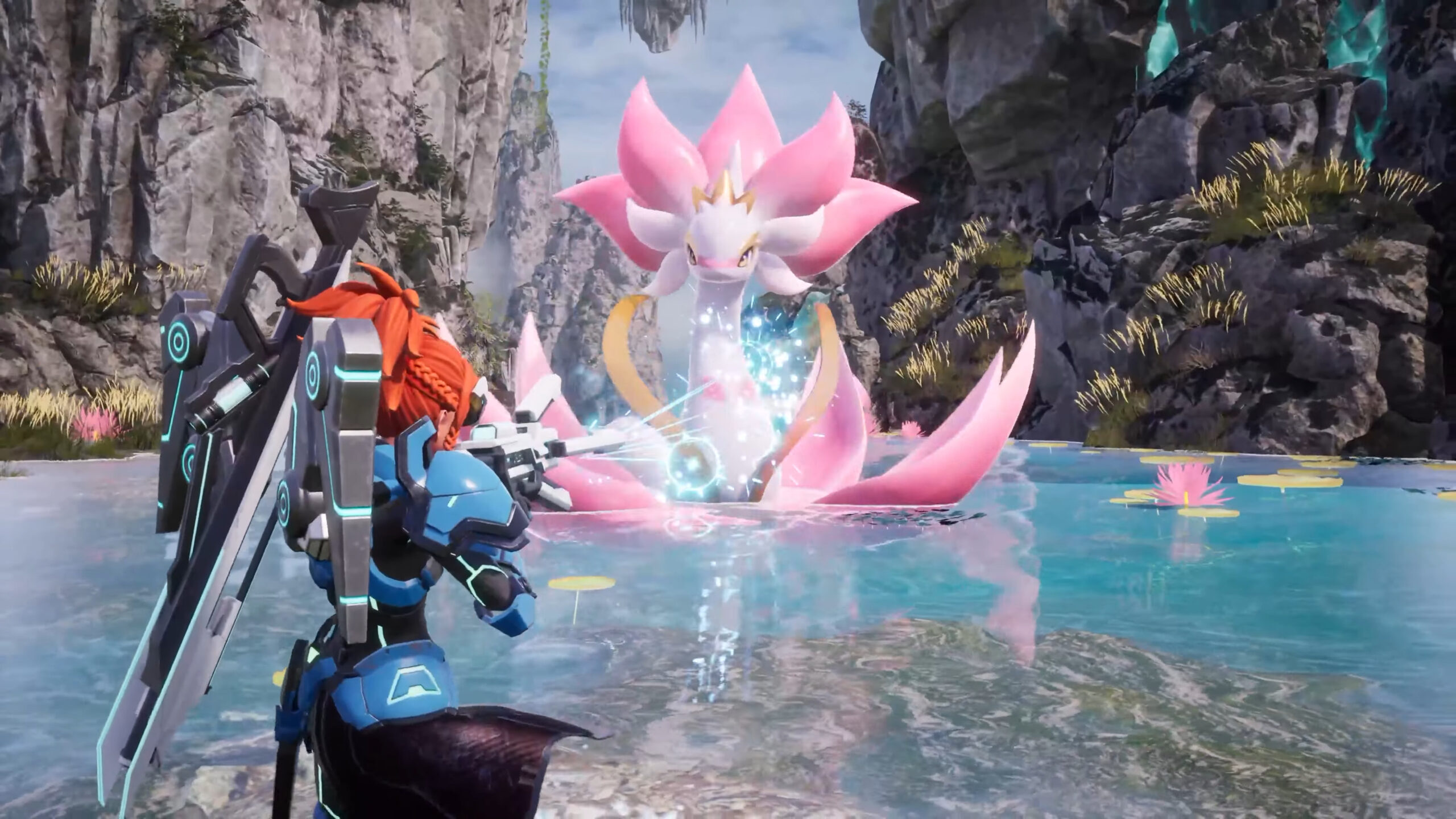
"Not all Pals are created equal, so you can’t really throw random tasks their way and expect them to get finished."
That’s just one aspect of Palworld’s gameplay, however. It is a creature collecting and battling game, after all, and you’ll also need your own party of Pals that travels alongside you to take on challenging fights. The gameplay isn’t terribly complicated in this regard; get a wild Pal’s health low enough and you can capture them using Pal Spheres, and the lower you can get their health, the higher the likelihood of your Sphere succeeding. Status effects help quite a bit in this regard too. However, you will want to be careful with the kinds that cause damage over time, like poison, since that can end up killing the Pal before you even get a chance to toss your Sphere.
When it actually comes to battles, an entirely new layer of strategy starts getting involved once you are introduced to the concept of elemental weaknesses and strengths. A great early-game example is the boss fight with Zoe and Grizzbolt – a legendary Pal. A majority of the story quests leading up to this encounter revolve around introducing you to Foxparks, getting you to capture one, and then crafting a harness that allows you to use it like a flamethrower. This ability is then put to the test against Zoe and her Grizzbolt, with the latter being quite weak against fire damage.
Elemental weaknesses aren’t the only thing you have to pay attention to when fighting, however. You also have to make sure that you’re appropriately leveled for anything you might encounter. Unfortunately, the game itself doesn’t really do a good enough job of explaining just how vital leveling up can be when it comes to battles, since the numerical advantages you get by raising your stats seem miniscule at best. However, these advantages tend to translate to major differences in how fights will play out. Just two levels could be the difference between you getting one-shot by Grizzbolt, and you being able to take it on without much stress.
Palworld has seen some of its biggest changes since its Early Access release on the story front. While it still doesn’t really hammer you over the head with a core narrative that is constantly pushing you forward, the series of quests you do are a great combination of tutorialzing aspects of gameplay and pushing you to explore more of the island. Thankfully, you’re never really forced to engage with the story until you feel like you’re ready to, and you’ll often want to take breaks to check in on your base anyway.
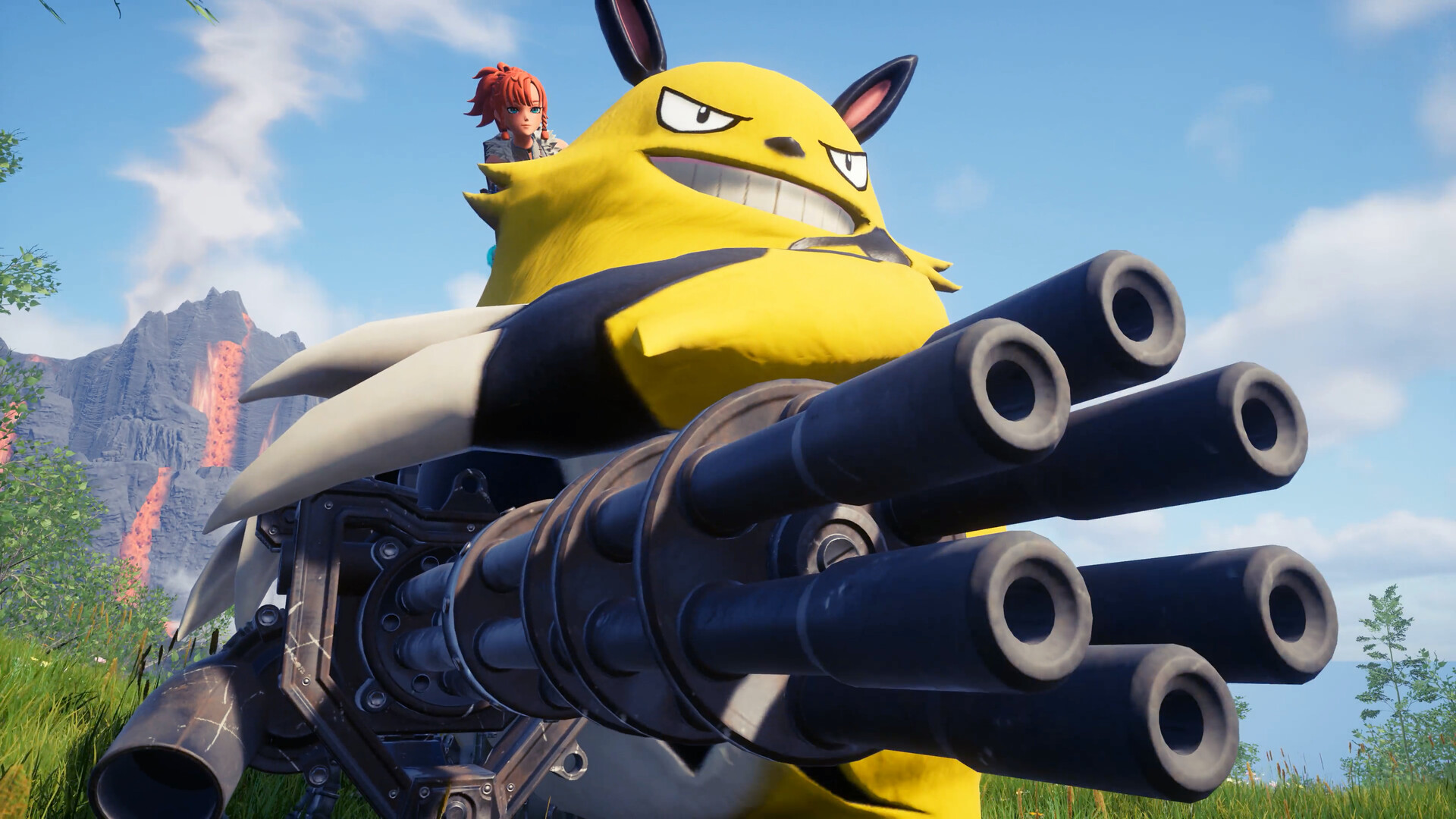
"Elemental weaknesses aren’t the only thing you have to pay attention to when fighting, however. "
With the core narrative revolving around the World Tree and the various factions trying to control it, there isn’t really a singular antagonist in Palworld. Rather, you’ll often encounter these factions, like the Rayne Syndicate, which tend to act as the main boss fights. With eight towers forming the crux of the story quests in Palworld, you get to take on each one of the factions, which can range from groups of poachers to a corrupt police-like military organization. All-in-all, however, the story was built from the ground-up to be quite ignorable if you just want to focus on the gameplay sandbox.
Palworld also happens to be an excellent-looking game, with sharp art direction that imbues just about every Pal you meet with tons of personality. The environment itself is quite beautiful, and reaching high vantage points was a favorite activity of mine when I wanted to take a break from managing my base and capturing new Pals. Performance has been quite smooth as well, with my PC powered by an AMD Ryzen 7 7800X3D CPU and an AMD Radeon RX 7800XT GPU, along with 32 GB of RAM, being able to maintain well over 100 FPS at a resolution of 2560×1440.
The 1.0 release of Palworld feels like nothing short of a triumph, with it being able to seamlessly meld several gameplay styles from a vast variety of genres into one cohesive experience. Along with its survival crafting and automation elements being fun to engage with thanks to Pals, the battle systems are also quite well-designed, with a satisfying progression arc that goes from giving you sticks and stones as weapons all the way up to shotguns and assault rifles. Paired with a story that never gets in the way while still offering you some direction, Palworld feels like an easy game to recommend to just about anyone.
This game was reviewed on PC.
Pals are full of personality; Great visual style and fidelity; Engaging core gameplay loop that offers plenty of variety so you never feel bored.
The narrative fails to live up to its potential.