





Pragmata wowed us with its gameplay, but the main narrative was no slouch either. It helped that Diana was adorable even though her nature as an android could give her a creepy vibe from time to time. But that was the point. That contrast between her two sides is precisely what her budding friendship with Hugh was aimed at exploring.
Was she a mere machine, created to serve a single purpose with no emotions whatsoever? Or did her autonomy allow her to function as a sentient being, capable of choosing a path for herself? Of course, it’s Hugh who helps her explore her own desires, encouraging her to discover her humanity when anybody else might have assumed there wasn’t anything to find in the first place.
And while the bittersweet conclusion to their story might seem absolute if you didn’t complete all the Unknown Signal challenges, you might be under the impression that Diana made it to Earth with the Dead Filament contained, while Hugh succumbed to his infection. But if you’ve been diligent and unlocked the secret ending, you already know that the developer has left the door open for a reunion, and a potential sequel in the process.
How, you ask? Well, that’s why we’re here. Let’s dive right in!
World-Weary Choices
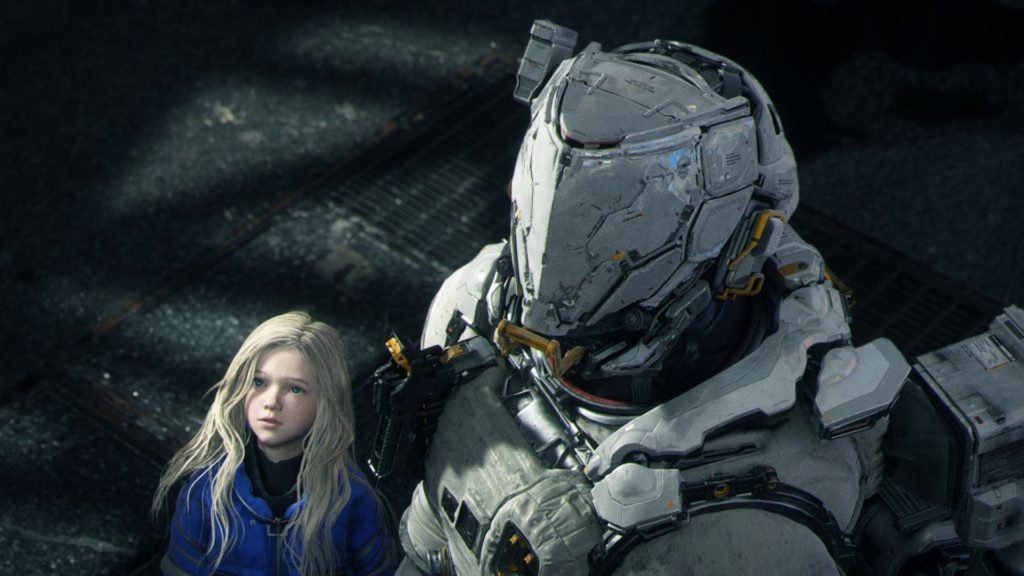
If you’re worried about spoilers, you might want to come back to this one after you’ve rolled the credits on Pragmata. But if you already got there, you know that Hugh and Diana manage to stop Eight’s misguided effort to bring the Dead Filament to Earth, and even defeat the organism that arose from it. Hugh’s decision to power Diana’s escape pod with the port from his own suit was an emotional sledgehammer, but we’re sure that many of you saw it coming.
He was of the opinion that he didn’t have long anyway thanks to his infection from contact with the Dead Filament, an impression that Diana herself gave him over the course of the story. The same story set up how much he came to care for Diana, making his decision to give her the life she dreamed of all the more logical, while giving the game’s narrative a rather melancholic twist.
But before we get into the “true ending”, and why we think it sets up a sequel very well, we’d like to nudge things away from our protagonists toward Eight, and why she’s an antagonist that matters. Her actions weren’t born out of malice, but rather from a misguided interpretation of Dr. Higgin’s intentions for the Pragmatas. His ill-fated efforts to cure Daisy, his daughter, were the reason for Diana and Eight’s existence.
The two Pragmatas were polar opposites of each other as far as their functions were concerned, with Diana purging the Dead Filament from her system while Eight was designed to collect it from other ones. And with Daisy’s death, Dr. Higgin’s grief and his wish for the world to know his tragic tale became a weight that Eight had to carry while Diana remained none the wiser. Of course, Delphi’s involvement in the whole thing, and its push towards human trials, was the catalyst for the tragedy. The developer certainly likes shady corporations in its stories, doesn’t it?
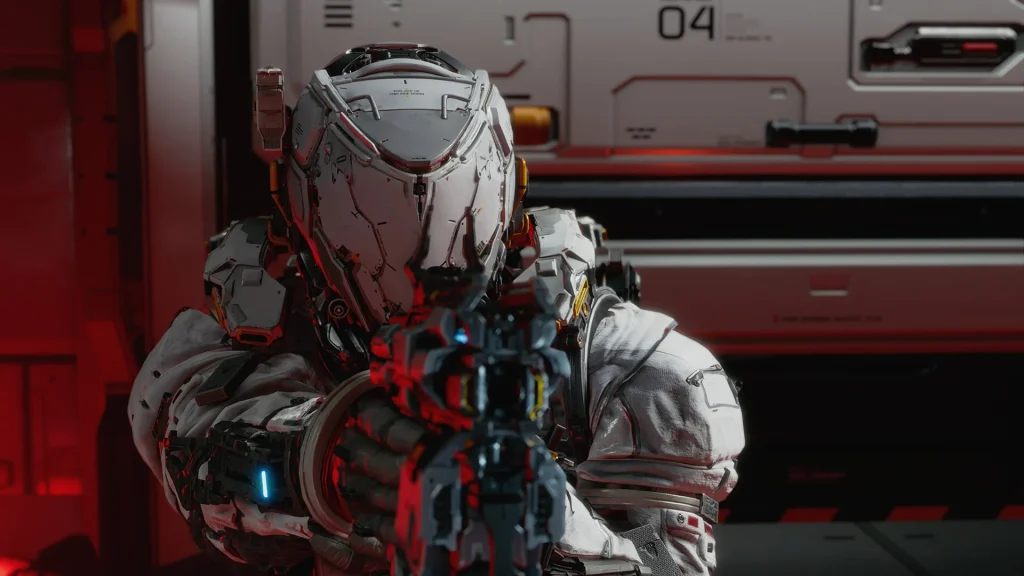
All of this makes Eight a nuanced villain, with no actual evil intent, but actions that were literally the worst way to achieve a noble goal. She lacked the moral core or the maturity to process grief the way a human would do, making her an interesting contrast to Diana whose time with Hugh awakened her to perspectives and a sort of free will that might otherwise have escaped her grasp.
Of course, Hugh’s sacrifice is the perfect end to his arc, and his gradual shift from a jaded survivor to a caring companion to Diana was among the major draws of the narrative. But it also serves the purpose of giving Diana several routes to take if the story was to continue, as she is now a being who is left to discover her purpose outside of the one that Dr. Higgins intended for her. Hugh never saw her as a replacement to his daughter, but as a being who deserved a chance to find her own way.
Through Hugh, Diana didn’t just gain sentience, but was also given a sort of moral and emotional structure that she could use to exercise it responsibly. And that’s where the true magic of Pragmata’s narrative begins from the standpoint of continuing the story. It’s now time to look at the game’s true ending.
Going Beyond The Credits
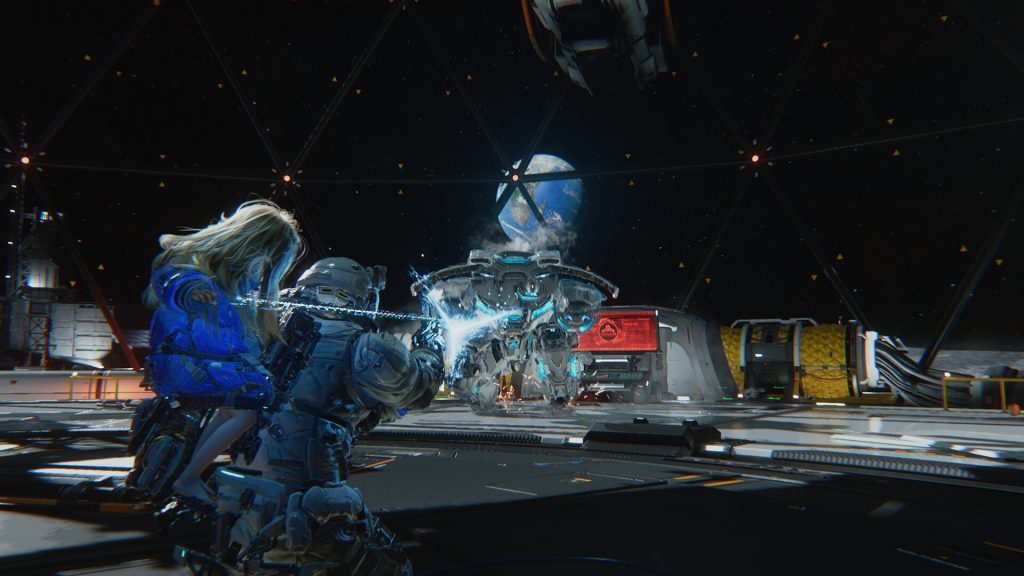
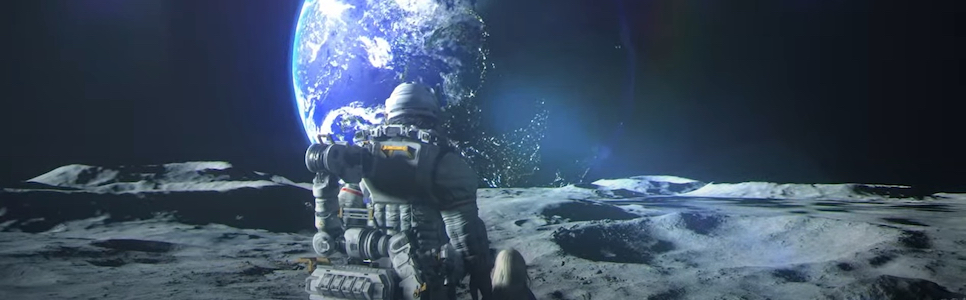
Let’s begin with the post-credits scene, and what it could mean if we were looking to future titles. We see Diana finally getting to see a beach, before she looks up at the Moon and says that she’s ready? Ready for what, though? Well, it could mean that she’s ready to start living her own life, free of her duties at The Cradle and her role in it, and potentially free to see what she’s like outside of her bond with Hugh.
It could also mean that she’s ready to carry on Eight’s goals, telling the world about Delphi’s role in events at The Cradle, exposing the existence of the Dead Filament and alerting the world to the threat it carries. It could also mean that she’s ready to return to the Moon to find Hugh, refusing to accept his loss especially if you assume she knows what the Black Box does.
What is the Black Box, though? If you completed the story, all Unknown Signal challenges, got to a 100% across all sectors, did the pod missions in the Hidden Room to get your hands on it, and fought Eight with it equipped, you might already know what’s coming. But if you missed reading the Black Box’s item description, that audio log you unlock after going through all of the hoops we’ve listed might not seem as significant as it is.
That’s because it’s described as a potential way to purge the Dead Filament from organic life forms, similar to what Diana can do. How does that matter to the audio log we spoke of? We know that somebody entered The Shelter, and that friendly bot Cabin confirms that whoever it is entered alone. Cabin knew only Hugh and Diana, which implies that Hugh got to The Shelter with the Black Box in his possession.
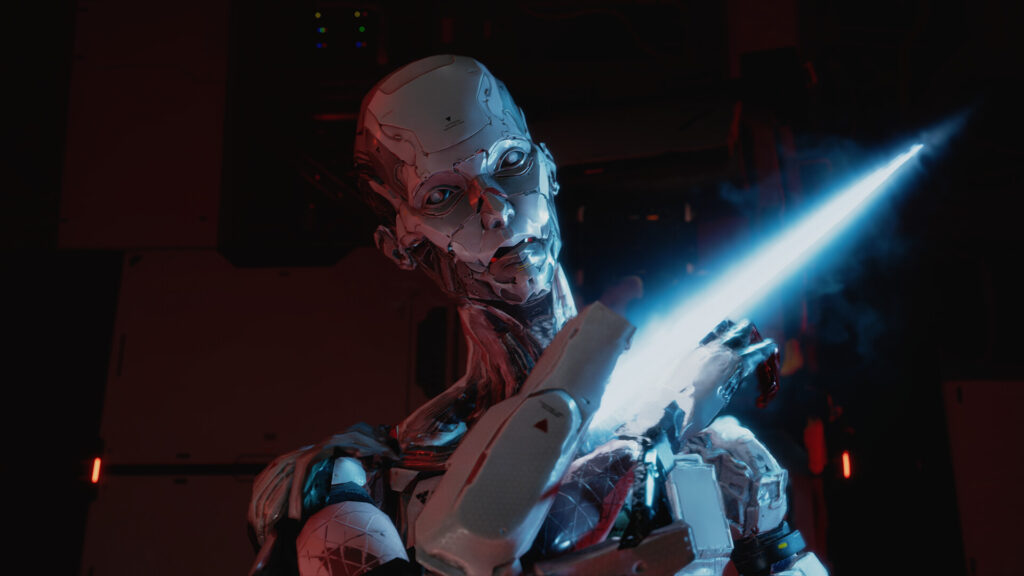
And that’s the “true ending”, bringing the implication that Hugh survived, but has no way of returning to the Earth unless an effort to rescue him from The Cradle is underway. That’s an interesting setup for the next Pragmata title, don’t you think? We certainly do, and think that there are several narrative routes for the sequel to take that would stay true to the first game’s emotional core while giving it interesting ways to further explore its nuanced examination of sentience and free will.
Different Roads, Different Destinations
Let’s begin with Diana. She’s now an android-human hybrid, and is on Earth where her existence might have been a secret to most of its populace other than the folks at Delphi. And they may not be too happy with her existence, the knowledge that proof of their actions exists being a catalyst for a game where Delphi tries to capture her for further experimentation or perhaps use her in other ways.
Hugh’s survival could become an emotional core that drives her to return to The Cradle to bring him back to Earth, which becomes the sequel’s new battleground, a stage for an epic confrontation with Delphi where Diana takes the lead with potentially new powers making themselves available to her. It’s equally likely that their story continues on The Cradle, with the Dark Filament perhaps surviving just as Hugh managed to. That would be interesting as Diana’s time on Earth could change the dynamic she has with Hugh. She’d obviously know about his survival in such a scenario, with Cabin being the one to pass on the news to her in some way.
It’s now time to take a look at Hugh. He may still be alive, but that doesn’t mean he’s completely safe. What if the Black Box saved him by using Lunafilament to make him a sort of android himself? That would certainly hold up a mirror to the first game, reversing his equation with Diana. She may be the one to help him find a balance between his human and er, pragmatic sides, and perhaps discover more about the kind of person she would like to be along the way. That would be a great way to carry both their arcs forward while keeping their bond at the very center of a new story.
And then there’s Delphi. The corporation is sure to take measures against the revelation of its involvement in The Cradle’s fiasco, and make it a much larger threat than the Dead Filament. It isn’t too much of a stretch to imagine that it has a sample of it sealed away on Earth, somehow, or that it could discover a way to circumvent Diana’s own defences in an interesting twist on her own ability to hack her way past enemy shields. The Dead Filament’s destruction may have stopped the immediate threat, but we think that the real fight is yet to unfold as far as Pragmata is concerned.
We love that Pragmata’s ending has left so many avenues open for a potential return to the stage. Diana now has what she always wanted, but remains separated from the person who gave her freedom meaning. Her search for her identity is far from over, and while Hugh might think that his part in her story is finished, he might still have a role to play in her journey of self-discovery. Whether he does that as a human or as something else is up in the air, and in a very exciting way.
Pragmata might have ended with Diana looking out at the sea, but if her journey is to continue, it could very well take her back to the Moon, and to the one who made it all possible in the first place. And with the game doing as well as it has, the developer could very well be considering what the next game could bring to the table as we speak.
Perhaps that’s wishful thinking at this point, but we’re might eager to tell you that a sequel has been greenlit sometime in the near future. Until then, Hugh and Diana get some well-deserved rest unless you’ve chosen to dive back in for another playthrough.