







Resident Evil franchise is one of the biggest and most influential names in the video game industry, with the original 1996 release widely credited as the title that laid the foundational blueprint for modern survival horror. While landmark entries such as Resident Evil Village and Resident Evil 2 are rightly celebrated for refining and evolving that formula, the franchise’s long history is filled with experimental offshoots that never received the same level of recognition.
Some of these titles were bold to a fault, attempting ideas that audinces and technology simply weren’t ready to fully embrace. One such game is Resident Evil: Outbreak, released in 2003 for the PlayStation 2. It’s definitely different from what fans were used to from a Resident Evil game, but it’s something that deserves a lot more appreciation.
And now that we are seeing a slew of great Resident Evil games both new and remade, there’s always an urge to look back to these entries and think about whether they would survive in the current gaming landscape or not. This feature runs down this very thought as we try to look at Resident Evil Outbreak – not from a lens of nostalgia but pitting it against what we have today to understand it’s strengths and weaknesses.
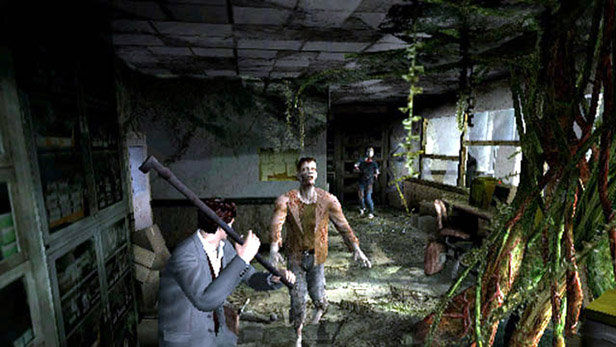
Resident Evil Outbreak has a rather different way in how it goes about telling the story. Even in the year 2026, the game’s titular narrative restraint feels purposeful rather than lacking in spirit. Unlike most games in the franchise which overtly rely on exposition-heavy storytelling, Resident Evil Outbreak uses subtle cues and snippets to tell its story. The story is scattered across overheard radio chatter, abandoned notes, and environmental clues, which lends a strong sense of character to Raccoon City. Each scenario represents a snapshot of the outbreak from the perspective of ordinary people trying to survive as the city collapses around them, rather than portraying a single protagonist as a knight in shining armor. This narrative approach also lends the narrative a documentary-like quality, grounding the game in horror.
Outbreak trusts the player to piece together what happened and why it matters, and that gives this game a resemblance to Dark Souls. The environmental storytelling is supreme, and each location tells its own story through layout and clever prop placement. You understand what went wrong, not because the game tells you but because you’re standing in the aftermath of that destruction. At a time when most commercial games dilute a narrative to placate the lowest common denominator, Outbreak’s minimalism feels refreshing and quite appropriate for a survival horror experience.
This narrative philosophy feeds directly into the game’s approach to survival horror. Outbreak is fundamentally about limitation – limited resources, limited information, limited time. You are not equipped to dominate your surroundings, and the game doesn’t spend much time convincing you otherwise. Survival horror here is not about mastering combat mechanics or finding the optimal build; it’s about restraint, caution, and making decisions under pressure. Every door you open could lead to safety or disaster, and every bullet you fire is one you might desperately need later. The constant threat of infection acts as a slow-burning reminder that survival is temporary, turning even successful encounters into white-knuckle challenges.
Unlike later entries that gradually empower the player, Outbreak maintains its tension by refusing to let you grow comfortable. Enemies remain dangerous throughout, not because they scale aggressively, but because you never truly outgrow them. Zombies are slow, but they’re persistent. A single mistake can turn into a culmination of constant panic, wasted resources, and accelerated infection.
The scenario-based structure is one of Resident Evil Outbreak’s most quietly genius ideas, and it’s central to why the game’s tension never fades out. Rather than guiding the player through a single, continuous journey, Outbreak splits that experience into self-contained crises, each with its own rules, pressures, and priorities. One scenario might emphasize crowd control in tight interiors, another might revolve around environmental hazards, timed escapes, or protecting vulnerable NPCs. Items don’t carry over in a comforting, power-building way, and knowledge from one scenario only partially applies to the next. As a result, players are constantly forced to rethink strategies such as how aggressive they can afford to be, which resources are truly essential, and how much risk is acceptable in the moment. Just as you begin to feel competent, the game pulls the rug out from under you and demands adaptation all over again. That perpetual state of uncertainty is what keeps Outbreak from ever settling into a groove, ensuring that survival remains dynamic.
Resident Evil: Outbreak has the same tank controls as the originals, and this might initially feel uneasy, but ultimately serves the game’s intent. Movement requires commitment and turning can take time, and that friction creates a sense of vulnerability that you start to appreciate as you keep on playing through the game. You can’t instantly react to threats or spin the camera to gain perfect awareness like a decked-out super soldier, but instead have to think two steps forward to ensure that you make it out alive.
Of course, appreciating these controls requires a shift in mindset since this is not about technological limitations, but rather building mechanical tension into the very heart of the experience. The fixed camera angles intentionally obscure danger, forcing you to advance cautiously rather than charge forward. Hallways feel narrower, and rooms feel more claustrophobic. What might be considered clunky in another genre becomes a source of dread here, and it almost feels that these foreign controls are a part of the language Resident Evil Outbreak uses to communicate fear.
Player progression in Outbreak is subtle and intentionally restrained. There are no traditional upgrade trees, no stat boosts, and no escalating arsenal designed to turn the tides of battle in your favour. Progression is expressed through knowledge of the game’s layouts, learning enemy behavior patterns, figuring out puzzle solutions, and smart resource management. This approach to progression not only serves to accentuate the feeling of survival horror but also neatly carries over from one scenario to another. Furthermore, this also aligns perfectly with the game’s narrative focus on portraying its protagonists as ordinary people rather than action heroes.
Combat, as a result, is something to be engaged with reluctantly. You fight not because it’s fun or empowering, but because it’s sometimes unavoidable. Weapons feel appropriately unreliable, ammunition is scarce, and healing items are precious. You have to pick your fights – learning when to run, when to barricade, and when to accept damage as the cost of progress.

The co-op design itself remains one of Outbreak’s biggest achievements, and it’s something that sets it apart from what came before and also after. Communication is intentionally limited, encouraging players to read situations rather than issue constant instructions. This helps in building a sense of shared vulnerability that few modern co-op games replicate. Success feels collective, and failure likewise feels communal. When someone sacrifices themselves to buy time for the group, it feels meaningful leading to emergent narratives that are personal to the player. Even today, that design choice feels bold in an era where co-op games often prioritize accessibility over tension.
All of these elements – narrative restraint, survival-focused gameplay, deliberate controls, and understated progression come together to create an atmosphere that remains remarkably effective. Visually, Outbreak is unmistakably a product of its era – but some beauty still buried under the PS2-era muddy graphics. Pre-rendered backgrounds allow for dense, carefully composed environments that drip with decay and despair, but they are still no competition to what the current-gen offers.
Sound design fares a lot better – distant moans echo through empty corridors, doors creak ominously, and sudden crashes shatter moments of uneasy calm. Music is used sparingly, often giving way to silence that heightens tension rather than relieving it. The result is an atmosphere that presses in on the player, making even brief moments of safety feel fragile.
Revisiting Resident Evil Outbreak in 2026 makes it clear that this was not a misguided experiment but something that was ahead of its time. Few survival horror games, even today, commit so fully to vulnerability, cooperation, and restraint. When viewed from a modern-day lens, Outbreak stands as a reminder that horror is often most effective when it limits the player rather than empowering them.
It may not have received its due in 2003, but in the modern landscape of co-op horror, its influence and ambition are impossible to ignore. It’s still not a perfect game by any stretch of the imagination, and most players would probably give up on the game on account of those tank controls and brutal survival horror mechanics – but those who stick with it in the long run would be able to appreciate its strengths. And if we were to rate it today – it would rank up as a 8 out of 10.
Note: The views expressed in this article are those of the author and do not necessarily represent the views of, and should not be attributed to, GamingBolt as an organization.