





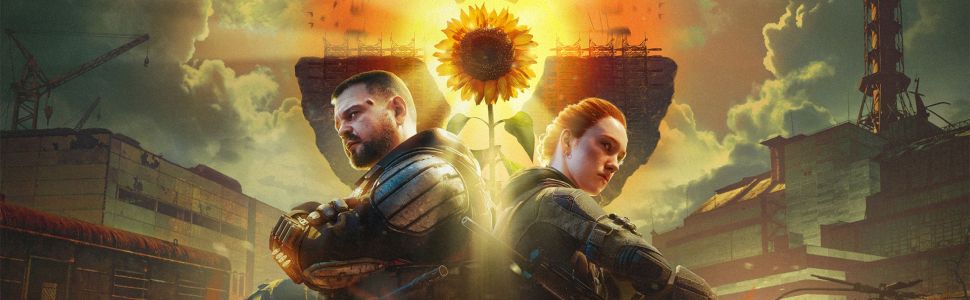
When S.T.A.L.K.E.R. 2: Heart of Chornobyl first came out, reception was fairly mixed; while many loved the visuals, the story, and the open world, others (yours truly included) were disappointed by how much the A-Life system had been hobbled when compared to the older S.T.A.L.K.E.R. games. Over time, however, GSC Game World kept working on the first-person shooter, and while it never did quite reach the same heights as Call of Pripyat, Heart of Chornobyl managed to carve out an identity of its own. Now, over a year after the base game’s release, the studio has released its first major expansion for S.T.A.L.K.E.R. 2: Heart of Chornobyl – Cost of Hope.
In many ways, Cost of Hope feels like a love letter to fans of the original S.T.A.L.K.E.R. trilogy. Many of the new locations you get to explore in the expansion are essentially remade versions of places we’ve been to during Shadow of Chornobyl, Clear Sky, and Call of Pripyat, after all. What makes the DLC more interesting than just a retread of content we’ve already seen before, however, is just how these older locations feel to explore with the more modern gameplay systems offered by S.T.A.L.K.E.R. 2.
"The new zones added with Cost of Hope form the core of what GSC Game World is trying to achieve with the expansion."
Right off the bat, Cost of Hope feels quite different from the kinds of expansions and DLCs we typically see released for open-world games. Rather than offering just a new questline and perhaps a few new enemies, for instance, Cost of Hope instead offers a much more non-linear experience. Don’t get me wrong; there are certainly missions to complete, and plenty of breadcrumbs for players who want to experience the new plot. However, at its best, the expansion essentially offers a new playground with its own unique set of challenges. Despite my earlier assertion that the expansion feels like a love letter to older games, Cost of Hope also holds its own.
The new zones added with Cost of Hope form the core of what GSC Game World is trying to achieve with the expansion. Legendary locations that we last got to explore more than a decade ago, like the Iron Forest and the Chornobyl Nuclear Power Plant, have been beautifully reimagined for S.T.A.L.K.E.R. 2. For entirely new players, these locations, which you can visit in just about any order you like once you progress far enough into the main story of the expansion, will offer fresh grounds for exploration, including their own navigational and combat challenges. Fans of the franchise might also start getting quite excited at the prospect of revisiting these old zones once more, but many years have passed since we last saw them, and the exclusion zone is a volatile place. This means that there have been plenty of changes made to these zones.
The core theme of Cost of Hope is an overwhelming feeling of decay; we’re exploring these locations for the first time after many years, after all. Along with this, there is also an undercurrent of an invisible war being waged against two primary concepts: Duty and Freedom. This also plays into the choices you may have made in the base game, where you essentially have to side with either the Ward or the Spark. These choices affect your path through Cost of Hope in more subtle ways than just deciding which NPCs are hostile, however.
As the expansion notes, both of these sides also represent Duty and Freedom in their own unique ways. The Ward is more than happy to strictly control the exclusion zone, while the Spark wants to unleash it on the rest of the world. However, in the case of the base game, the concepts were being applied to the exclusion zone as a whole. In the expansion, things get more personal, with many of the characters you’re going to meet having to deal with their own conflicts regarding the concepts. Along with this, the new factions also fall under similar lines, and will have you working to ensure that the opposing faction doesn’t get too far ahead with its own plans.
However, while these themes are pretty great concepts to explore, S.T.A.L.K.E.R. 2: Cost of Hope never feels like it lives up to the full potential of its ambitions. While the S.T.A.L.K.E.R. games have often had some interesting stories, their biggest hooks have always been the world and gameplay, and Cost of Hope doesn’t really change much in this regard. The fact that most of the NPCs you meet are fairly shallow side characters whose entire personalities are basically decided by their factions drags the narrative down a bit. There are some attempts made at intrigue, with characters from either Duty or Freedom giving you tasks to accomplish with justifications that can be, at the best of times, half-truths, and at worst, complete lies, which presents an interesting quandary for the player since they have to decide who to trust without many ways of figuring out just what’s true. However, these choices never quite pay off in a satisfactory way, unfortunately.
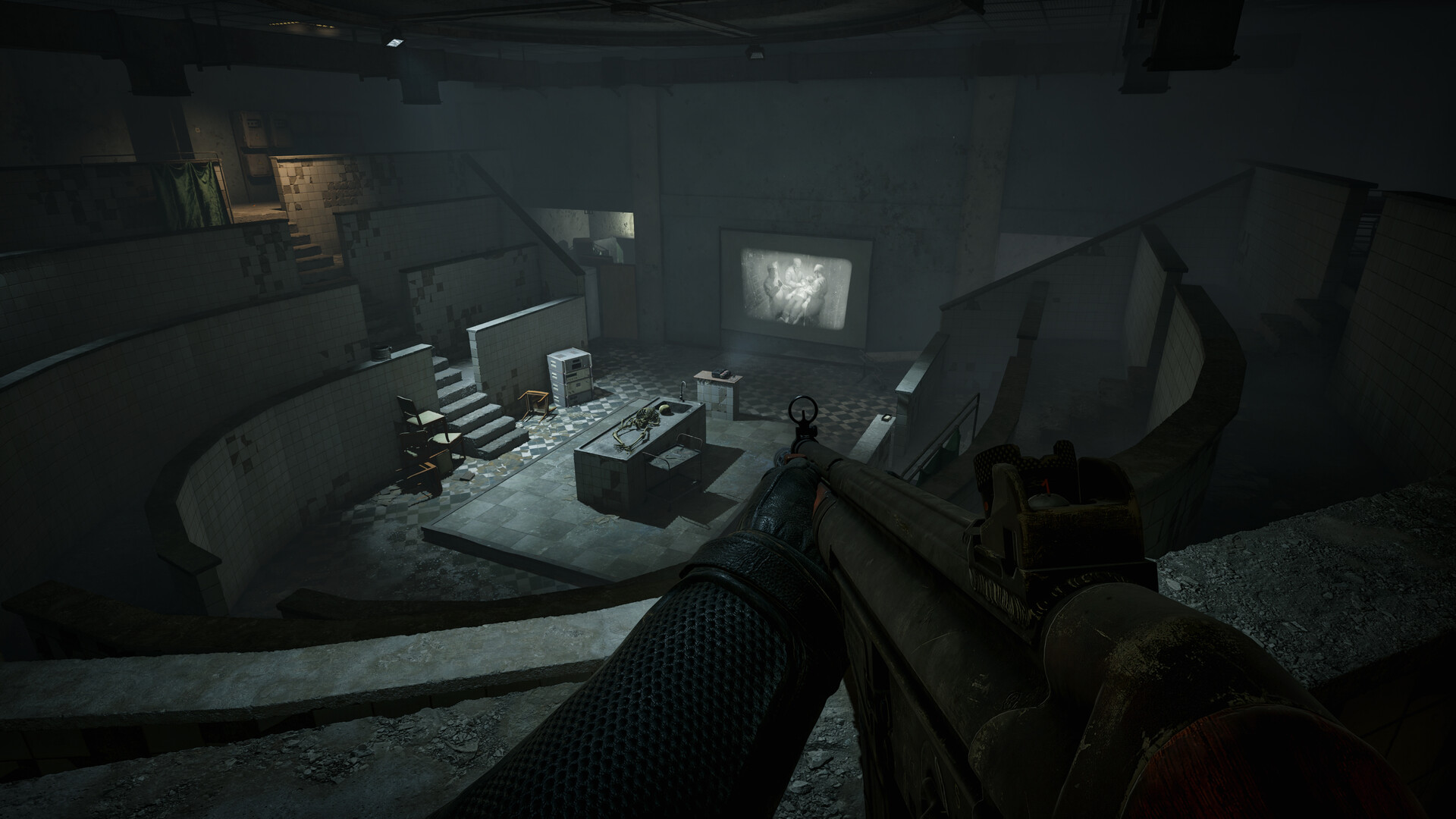
"When it comes to moment-to-moment gameplay, Cost of Hope acts as a major distillation of all of the Update 2.0 changes."
The most interesting part about the entire conflict between Duty and Freedom is the fact that they have had to get along for several years because of the D4 Treaty. Cost of Hope starts out really strong, letting you see first-hand how this treaty is falling apart at the seams, and in the process, you get dragged into the conflict. On their own, neither Duty nor Freedom feel like fully fleshed out factions on their own, and rather, end up feeling like extensions of the Ward and the Spark from the base game, with Duty wanting to contain and research the exclusion zone, and Freedom wanting to treat the exclusion zone as if it were a gift to humanity.
When it comes to moment-to-moment gameplay, Cost of Hope acts as a major distillation of all of the Update 2.0 changes that have also been applied to the base game. This means that, in general, things like movement and gunplay feel a lot more refined.
The A-Life system – the biggest reason I enjoyed the original S.T.A.L.K.E.R. games – has also seen some massive upgrades. Sure, you won’t quite see things like NPCs wrapping up the game’s objectives without your involvement like we saw in the early development of Shadow of Chornobyl, but seeing the various groups of NPCs moving around in the massive open world and completing their own objectives, living out their own stories, is quite a joy. However, there are still a few bugs to work out in the A-Life system, and I’ve often noticed NPCs randomly sinking into the ground while simply being out on patrol, for example.
Despite this, however, there is something quite satisfying in just roaming around the exclusion zone, hearing some gunshots in the distance, and stumbling into a battle between some friendly NPCs and bandits. True to classic S.T.A.L.K.E.R. conventions, emergent NPC behavior can range from this to something more expansive, like setting up new bases and forward camps in areas you may have cleared of hostile forces. Similarly, the opposing faction NPCs don’t simply sit in a corner and twiddle their thumbs either; you’ll also often run into enemies that have simply been on your trail to get revenge for a previous gunfight, for instance.
Cost of Hope also includes a host of new gear to find, and while many of these additions were made to the base game as well with Update 2.0, they become easier to find in the expansion thanks to some of the newer enemy types you’ll fight. They’ll often be equipped with guns like the Arev assault rifle – a personal favorite of mine – that manages to set itself apart from the standard guns of the base game by offering its own unique feel when you pull the trigger, from the smallest factor, like how it sways while you’re aiming, to larger aspects, like what kinds of attachments can be equipped, the new gear opens up plenty of choices.
The new fog system also plays a major role in Cost of Hope. Since many of the new locations are even more dilapidated now than they were in older S.T.A.L.K.E.R. zones, GSC Game World has decided to further add on to the atmosphere by adding gameplay consequences to fog. Rather than simply being a visual effect, a foggy atmosphere also plays a role in making people and other creatures in the area harder to see and hear. These same properties also apply to you, however, so stealth-based gameplay has also gotten a considerable boost thanks to this change.
The entire expansion ends up feeling part of the larger whole presented by S.T.A.L.K.E.R. 2: Heart of Chornobyl, since you have to make quite a bit of progress in the main story to even start it. And while its introductory missions can be wrapped up relatively early after starting up a fresh playthrough – you get the first mission right after leaving the Lesser Zone – its story essentially grinds to a halt for a while, only picking up after you make your way around halfway through the campaign. Due to this, and the general nature of the game, it’s difficult to gauge the length of Cost of Hope in just hours. I spent multiple hours during my time reviewing it, but it is worth noting that I was also trying to be as thorough as possible when exploring its new locations.
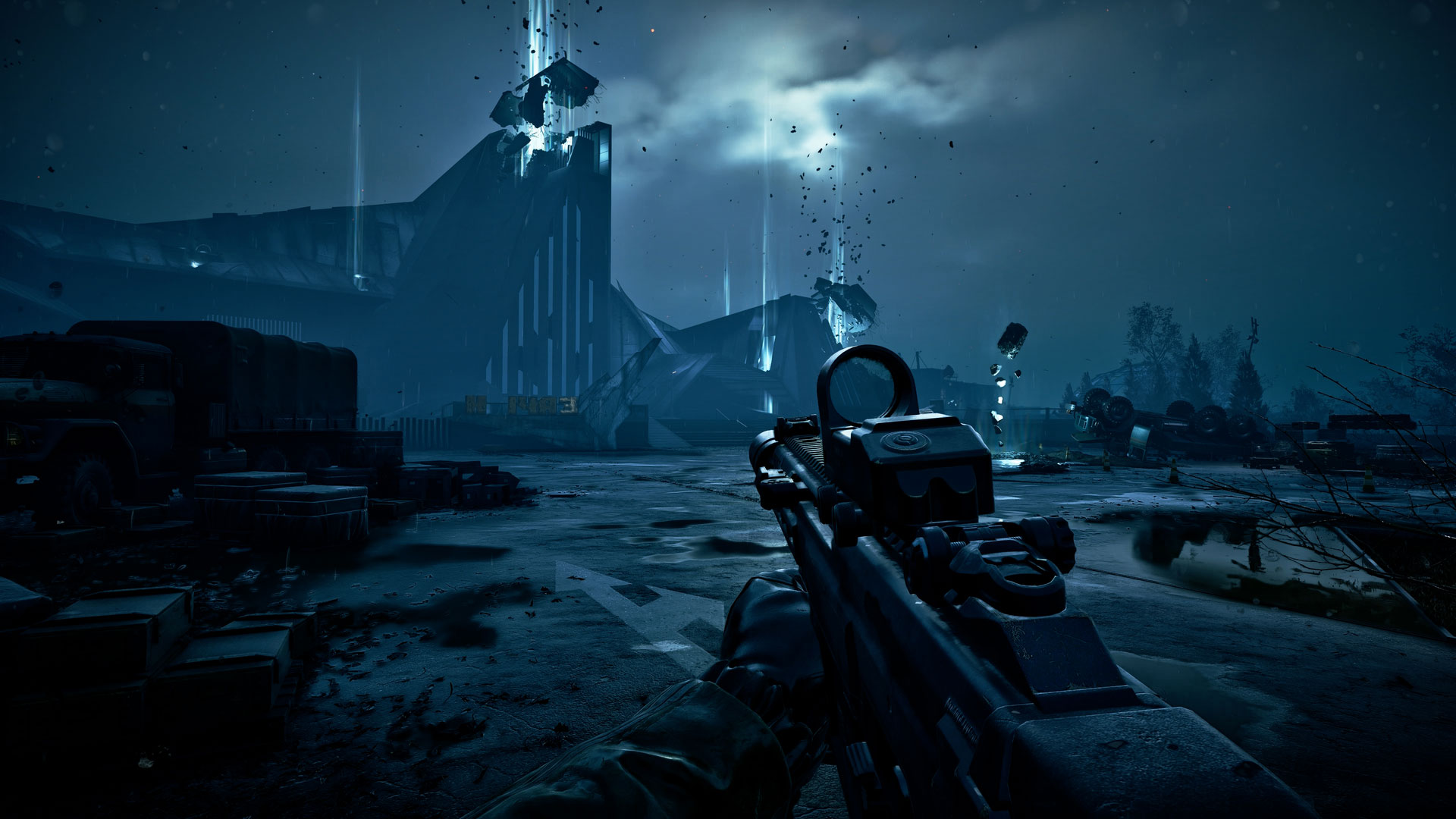
"The entire expansion ends up feeling part of the larger whole presented by S.T.A.L.K.E.R. 2: Heart of Chornobyl."
In general, the mission structure hasn’t changed too much from the base game, with objectives largely revolving around going to certain places, talking to characters, and occasionally clearing out an area of hostile units and getting your hands on specific items. If you’re looking for more interesting rewards than guns, armor, healing items, and bullets, however, S.T.A.L.K.E.R. 2 has never really had much to offer in that regard, and the expansion doesn’t change this.
My favorite thing to happen with S.T.A.L.K.E.R. 2 thanks to Cost of Hope and Update 2.0 is the fact that GSC Game World made incredible gains in performance improvements. On my PC running on an AMD Ryzen 7 7800X3D CPU, 32 GB of RAM, and a Radeon RX 7800 XT GPU, I was able to manage a steady frame rate of just over 70 FPS at 1440p. This then gave me further confidence to boost up my graphics settings ever-so-slightly, like higher texture quality, softer shadows, and more volumetric lighting, to hit a smooth 60 FPS and get some visual improvements out of the bargain without having to touch frame generation. Setting FSR 4 to Balanced has also offered a considerably more favorable ratio of visual fidelity to frame rate than previous versions of the technology have.
Thanks to GSC’s continued post-launch support, S.T.A.L.K.E.R. 2: Heart of Chornobyl has steadily evolved into a much stronger open-world experience, particularly for fans of atmospheric sandboxes. Cost of Hope, with its new zones and returning locations from older games, alongside the improvements introduced with Update 2.0, has only accelerated that evolution. While there are still bugs that need fixing and hard edges that need further polishing, the fact that Cost of Hope gives you even more of a reason to jump into the exclusion zone, even if you’ve already finished the base game, is a definite success.
While some of the open-world additions with Cost of Hope might seem like they’re geared specifically towards long-time fans of the franchise, even newcomers who jumped in with the release of S.T.A.L.K.E.R. 2 will find plenty to enjoy here. The new environments strike the perfect balance between creepy, dilapidated, and enticing that makes exploring them a lot of fun, and regardless of how much time you may have spent with any of the S.T.A.L.K.E.R. games before, you’ll undoubtedly find yourself sitting on the edge of your seat thanks to the tense gameplay.
Add on top the fact that Cost of Hope has been designed to weave in and out of the Heart of Chornobyl story, and you get an expansion that feels well worth the price of admission thanks to its fog-intensified atmosphere, new locations, missions, and even some of the new gear you can get your hands on.
This game was reviewed on PC.
A new twist on classic S.T.A.L.K.E.R. zones that are plenty of fun even for newcomers; There are some hints of an interesting story to be told if you know where to find them; The fog adds plenty of tension to an already-atmospheric game; The story starts strongly.
Both of the new factions feel like retreads of what we’ve already seen in the base game; There are still a fair number of random glitches that are annoying without breaking the game