





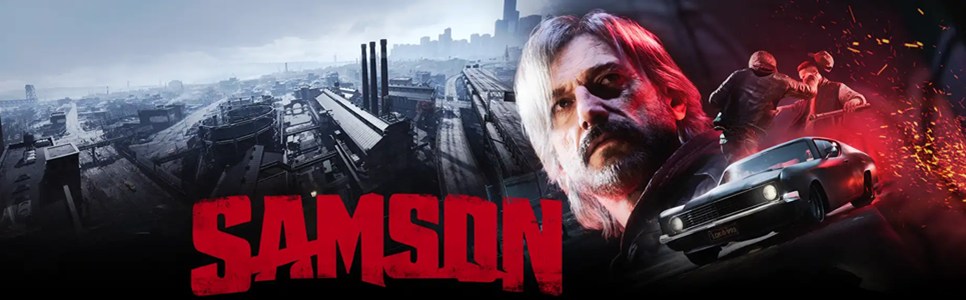
I was looking forward to Samson: A Tyndalston Story. It looked a bit like Sleeping Dogs, putting me in the shoes of someone with nothing to lose and letting me take on baddies as I saw fit. Its pre release footage hooked me instantly.
The combat felt punchy, the graphics looked absolutely stunning, and the story seemed like something that might be right up my alley. And all of that at a price point of 25 USD? The whole combination felt almost unbelievable. Something had to give, right? Well, after playing the game, things are not always smooth for our protagonist Samson.
Let’s focus on the story first. You play as Samson McCray, a former driver who returns to his hometown of Tyndalston carrying a huge debt after a heist gone wrong. His sister Oonagh made a deal with the bad guys, and if Samson pays back the debt, their lives will be spared. Much of the plot has a serious, dark tone, as you take on jobs (more on that in a bit) to slowly pay off what you owe. Along the way, you meet quite a few characters, each with their own twists to the tale.
"There is pretty much every kind of job you could imagine here, whether it is tailing an NPC, chasing down a convoy and crashing it out, taking out bad guys, delivering items, tackling time trials, or escaping the law in a chase."
Without revealing too much, this is a grounded urban crime story very much in the vein of Sleeping Dogs, and although it never reaches those heights, Samson still has a decent tale to tell. The voice acting is decent overall, though Oonagh’s performance can be pretty corny. Samson, on the other hand, kept me curious enough to see the story chapter by chapter. So overall, the plot is decent, and while it does not do much that feels fresh, it stayed engaging enough in my experience.
The core of Samson revolves around taking on jobs, earning money for the day, progressing the story, and paying off your debt. There is pretty much every kind of job you could imagine here, whether it is tailing an NPC, chasing down a convoy and crashing it out, taking out bad guys, delivering items, tackling time trials, or escaping the law in a chase.
It is all the sort of stuff that many open games have explored in the past. As such, these missions do not bring much novelty to the table, even if they are generally serviceable. If you are interested in Samson, chances are you have already played missions like these before. That is not necessarily a bad thing. Sometimes simplicity and a sense of familiarity are all you need, and Samson generally does an okay job with its mission design. However, if you are hoping for something truly remarkable like the standout missions you find in GTA, no, that is not happening here.
Once you complete jobs, you earn cash and action points, with the latter being used to complete or retry missions. Cash, meanwhile, can also be spent on repairing your vehicle, refilling petrol and nitro, and changing tyres.
Once you are out of action points, you return to your apartment. If you hit your daily debt targets, all is well, but if you keep missing them, you receive a strike, and the next morning enemies will show up at your place to beat the socks off you. It is an interesting system because it makes missed targets feel consequential and gives players a real sense of urgency as they try to stay on track.
"Speaking of that lack of polish, the game clearly has its share of animation and bug related issues. Samson climbs over fences awkwardly, his jump feels clunky and can sometimes leave him stuck between objects, and there is clipping here and there."
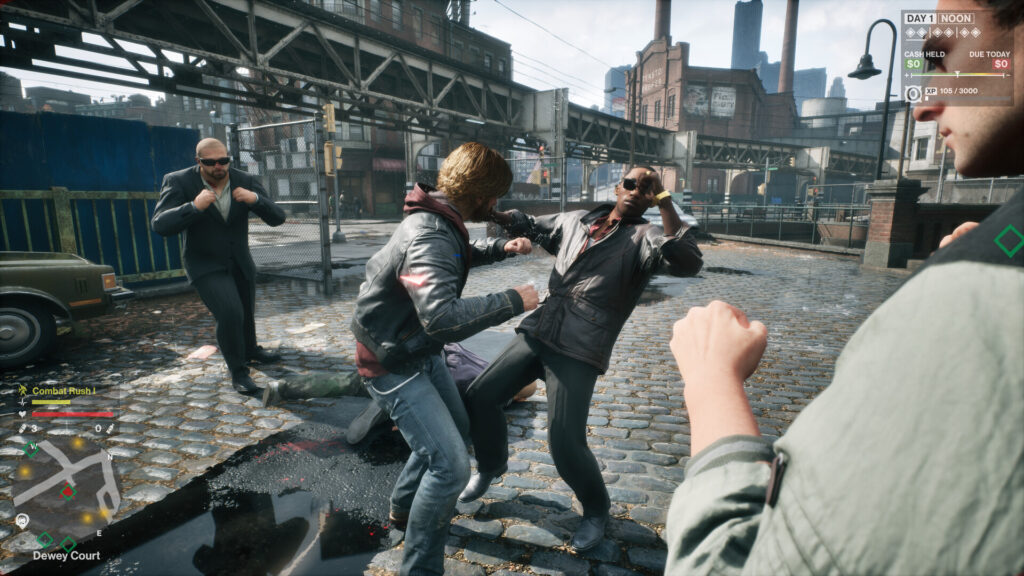
Combat forms the core loop of the experience, and when it works, the game does pack a punch, no pun intended. The combat itself is simple. You can dodge, throw light attacks, land heavy punches, use objects to lay the smackdown, and even make use of the environment to take enemies out.
The enemy AI is acceptable, but nothing special, and at times foes would just stand there and do nothing. The camera can also become hard to deal with, sometimes putting me in situations where I could not efficiently track multiple enemies at once. This kind of inconsistency does hurt the flow of fights, but when everything clicks, the combat system could be brutally satisfying.
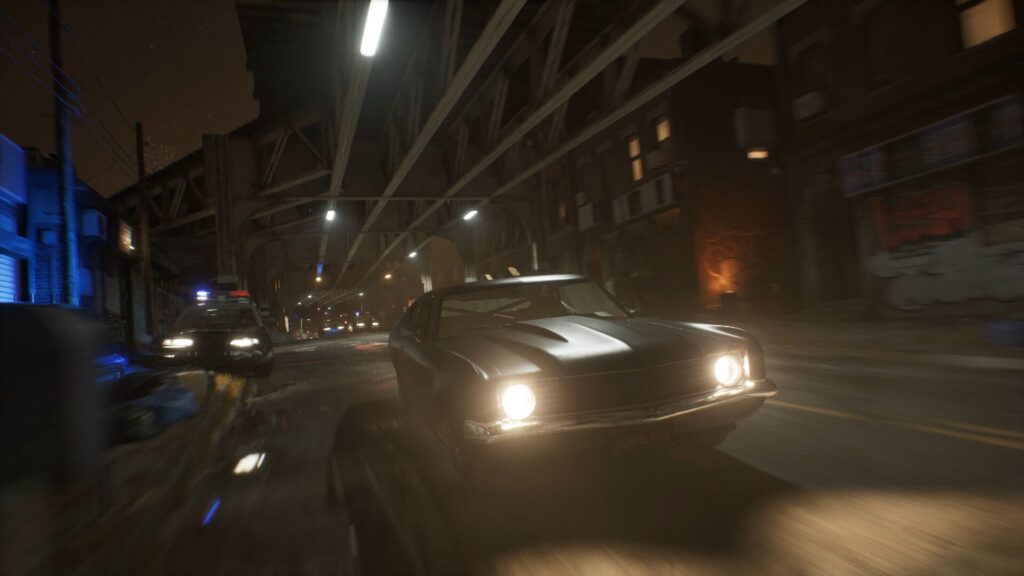
The vehicle handling is on point, but its combat sequences are no Burnout. These are simple chase encounters where you just keep ramming enemy vehicles until they go down. There is no real sense of style to them, but they get the job done.
There is also a compact progression system where you earn XP and skill points to unlock abilities such as seeing police patrols on the minimap, carrying more painkillers, or making your vehicle deal more damage to targets. Overall, the combat system is solid, but there’s a clear sense that the game needed more time in development, as the inconsistent level of polish is hard to ignore.
Speaking of that lack of polish, the game clearly has its share of animation and bug related issues. Samson climbs over fences awkwardly, his jump feels clunky and can sometimes leave him stuck between objects, and there is clipping here and there. NPCs feel stiff, both visually and from a technical standpoint. Many of them simply stand around doing nothing or engage in random animations, nonsensical activities.
Their AI is fairly basic, and most of them feel like background filler more than meaningful parts of the world. Although some of them offer Stories, which serve as the game’s side lore, most interactions with them are bland or just lead to brawling. I wish Liquid Swords had done more with them, but it is clear they were never much of a priority. It all adds up to a game that feels like it needed more time to cook.
Fortunately, Samson’s world looks amazing, and it feels like most of the game’s budget went into the streets of Tyndalston and the sheer amount of detail they pack. Made up of several districts, Tyndalston is extremely well designed, with its drab, dark, and sad aesthetic standing out in all the right ways.
Thanks to the developer’s attention to the game’s art style, the city tells a story of its own. Finding points of interest and collectibles does add a welcome sense of exploration while free roaming. The visual quality of the world is easily one of the game’s biggest strengths, and although there is no dynamic day night cycle with time changing automatically as you take on jobs, the lighting and the overall charm of the city are still impressive.
On the technical side of things, Samson is a fairly demanding game. We ran it on an RTX 3080 Ti, Ryzen 9 5950X, and 16 GB of RAM, with every setting cranked up to Ultra and DLSS set to Performance. Frame rate stability was solid. We were not necessarily aiming for 60 FPS and above given the genre, but I can confidently say that dropping a few settings likely would have pushed it to that mark.
"At times, Samson does feel built around familiar mission templates, with the developers leaning more on proven ideas than bold ones."
Perhaps Samson’s biggest selling point is its price. At 25 USD, you are getting a largely functional game, and although there are noticeable issues across several areas, the price point and what the game gets right are definitely its biggest strengths. I doubt the AI problems can be fixed through patches, since that would require considerable effort, but the technical issues I mentioned certainly could be, if Liquid Swords intends to address them.
At times, Samson does feel built around familiar mission templates, with the developers leaning more on proven ideas than bold ones. That feeling is not entirely misplaced, as Samson does not take too many risks. On the other hand, it knows what it wants to do, and it does that in an acceptable manner. Its world design, hand to hand combat, visuals, daily debt paying system with consequences, and decent story do enough to make it worth that 25 USD asking price.
This game was reviewed on PC.
Tyndalston is richly detailed, Hand to hand combat can feel satisfying, Decent story, Decent tech performance.
Mission design feels overly familiar, NPCs are stiff, Enemy AI is basic and at times buggy, Camera issues during combat, General lack of polish.