





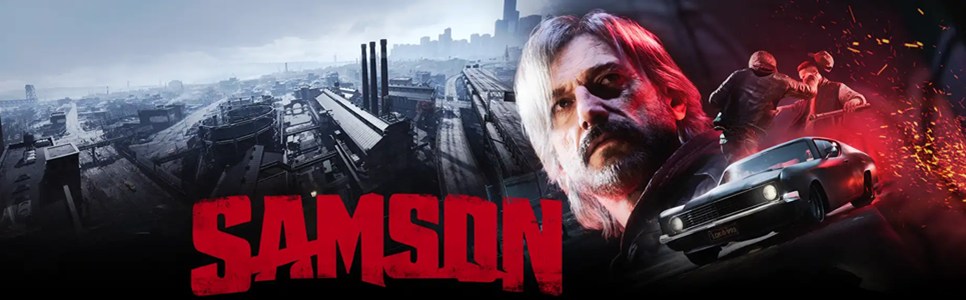
Now that Liquid Swords has accomplished the hard task of shipping its first game as a studio—Samson—studio founder Christofer Sundberg was kind enough to answer some of our questions, and clear up things about what the next plans for Samson are. Sundberg discussed a number of topics, from the lessons learned from development, to the performance and resolution targets for the upcoming console release of the game.
Now that Samson is out, what has been the biggest lesson for Liquid Swords from the game’s launch?
When you are a team of experienced developers, sometimes, we think we have all our ducks in a row. This was the first time we launched a game on our own; a new IP from a new team /studio. It’s been a massively learning (the hard way) experience.
The biggest lesson is that players are a lot less forgiving when your fundamentals are inconsistent, even if the ideas behind the game connect. We built a game with a clear identity and a lot of systems people genuinely responded to, especially the driving, the pressure(debt) systems, the atmosphere, and the way Tyndalston feels when the game clicks. But we underestimated how much technical friction, combat readability, repetition and rough edges would drag down the overall experience.
Personally, I think our biggest lesson learned was failing to communicate clearly what kind of game Samson actually was at launch, both in terms of scope and most importantly condition. That blew up in our faces. People walked in with expectations we did not properly manage, especially around the level of polish, scale and technical state. That’s something we have to live with and are currently working on correcting.
You don’t get partial credit from players because you’re ambitious on a smaller budget. If the combat camera fights the player, if AI gets stuck, if performance stutters, if chases become repetitive, then the experience breaks down no matter how much personality the game has underneath. That execution and communication matters equally has been the two biggest lessons learned.
Samson launched to a mixed response from both players and critics. How has that reception affected your immediate priorities for the game?
It changed the order of priorities immediately. Before launch, a lot of the focus was naturally on getting the full experience shipped. After launch, it became very clear that stability, responsiveness, combat readability, AI behavior and mission variety needed to move to the top of the list.
The first patches focused heavily on performance and crashes because they had to. We pushed fixes almost immediately after launch. Since then, the work has shifted more toward gameplay feel, polish and long-term replayability.
The community feedback has actually been fairly consistent. Most players are pointing at the same things. That makes prioritization easier and we can avoid guessing or just going after the game-internal “passion projects”.
Were there any points of feedback from players that genuinely surprised you after launch?
Yes, a number of them. A personal favourite was how positively people reacted to some of the smaller systems. Jake Baldino calling out things like turning off the engine and lights to hide in your car, or using the nitro system, was important internally because it confirmed that players were noticing details we cared deeply about.
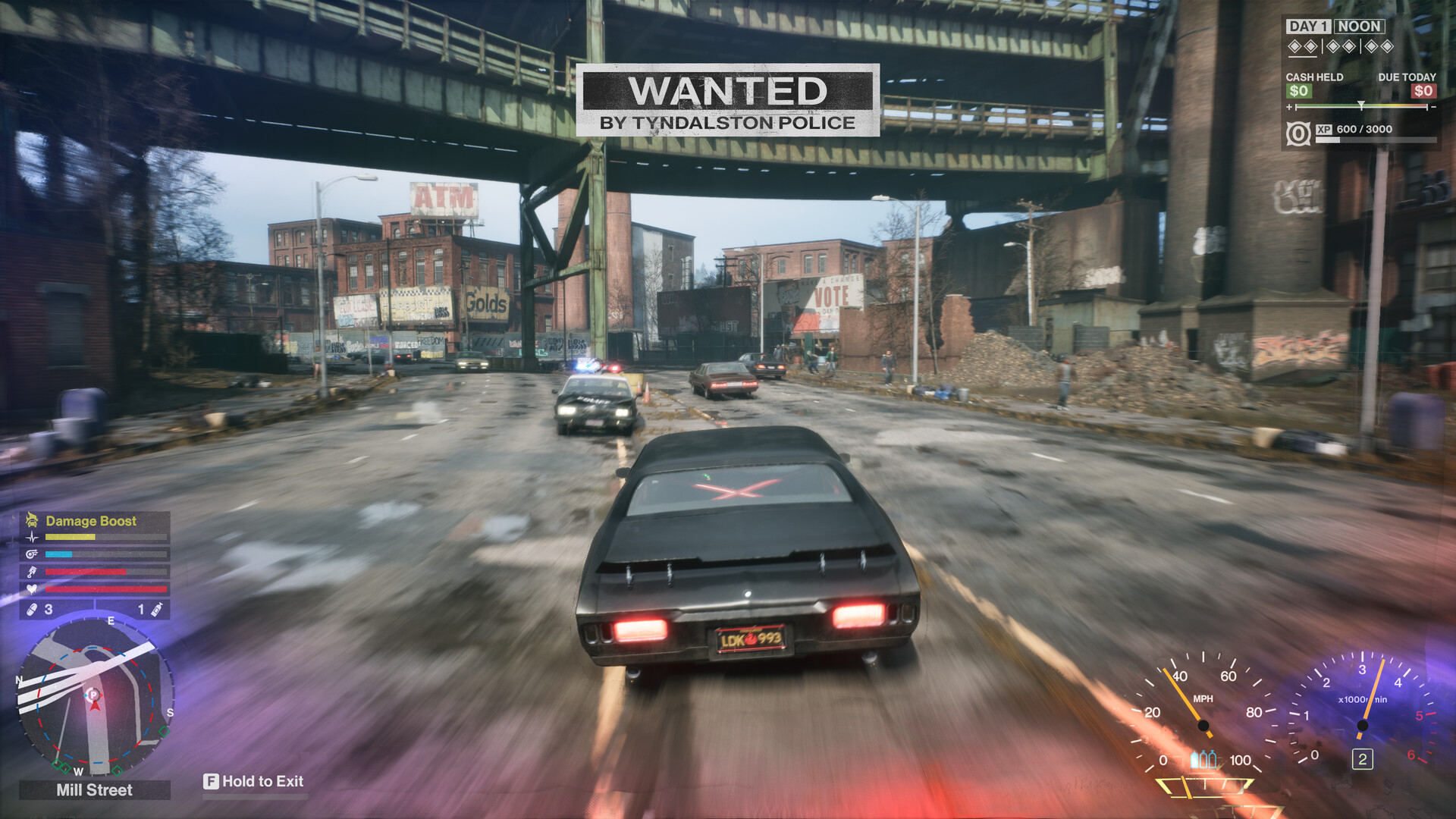
"A personal favourite was how positively people reacted to some of the smaller systems."
Another surprise was how divided players were on the debt and pressure systems. Some players absolutely love the anxiety and momentum it creates. Others find it stressful or restrictive. We expected that system to be polarizing, but probably not to that degree. Here’s also a lesson learned as we communicated heavily around the game loop / debt and how it tied into the narrative of the game. There are a lot of improvements to be done in this area.
The strongest surprise overall was how many players saw potential through the roughness. Even some of the harshest reviews described the game as a rough diamond. That tells us there’s a foundation worth continuing to build on. With every update we release, we get a lot of constructive feedback that actually is based around an understanding of the state of Liquid Swords as a business and the state of the games business in general.
Liquid Swords has already acknowledged that Samson launched with issues. Looking back, what do you think were the biggest factors that led to the game releasing in that state?
The biggest factors were scope versus resources (including financial resources). We’re not a 1000-person studio. We’re a relatively small veteran team trying to build a dense urban action game with driving, systemic combat, AI, police escalation, streaming open world systems and heavy atmosphere on a much tighter budget than people probably assume.
At some point you start making tradeoffs, because you have to. Some systems got more attention than others. Some issues were known but not solved to the level they should have been before launch. We probably also held onto certain ambitions for too long instead of simplifying earlier.
There’s also the reality that games like this become exponentially harder toward the end. Small technical issues start stacking together. AI navigation, collision, combat readability, streaming performance, camera work, vehicle interactions, all of it overlaps.
I’m not making excuses here, so the honest answer is that players paid for the game. They expect it to work properly or at least be informed of the state of the game they are buying.
The roadmap has focused heavily on stability, polish, performance, and community feedback. Which areas of the game are currently the highest priority for the team?
Combat feel, more variation are the biggest priorities right now. That includes camera work, enemy behavior, readability in larger fights, feedback, responsiveness and encounter pacing. The recent combat camera changes are only the first step there and we updated the game as of today (Wednesday the 20th), with a lot of focus on combat/camera.
NPC behavior is another major focus. Enemies getting stuck, navigation issues, inconsistent reactions, those things damage immersion very quickly in a game like this.
Mission variety is also high on the list. Not necessarily entirely new mission categories, but expanding what existing jobs can become. More scenarios, more unpredictability (or even predictability to avoid chaos), more tension and more layered objectives. Right now, we work with what we have in the game and avoid throwing in new stuff, before the game is fixed.
Then there’s continued optimization and polish across the board because the game still needs it.
Beyond fixes, are there any parts of Samson’s core gameplay loop that you are reconsidering or meaningfully improving based on player feedback?
Yes, absolutely! We are looking closely at pacing and repetition across the larger loop. Some players love the pressure structure, while others feel certain loops become too predictable over time.
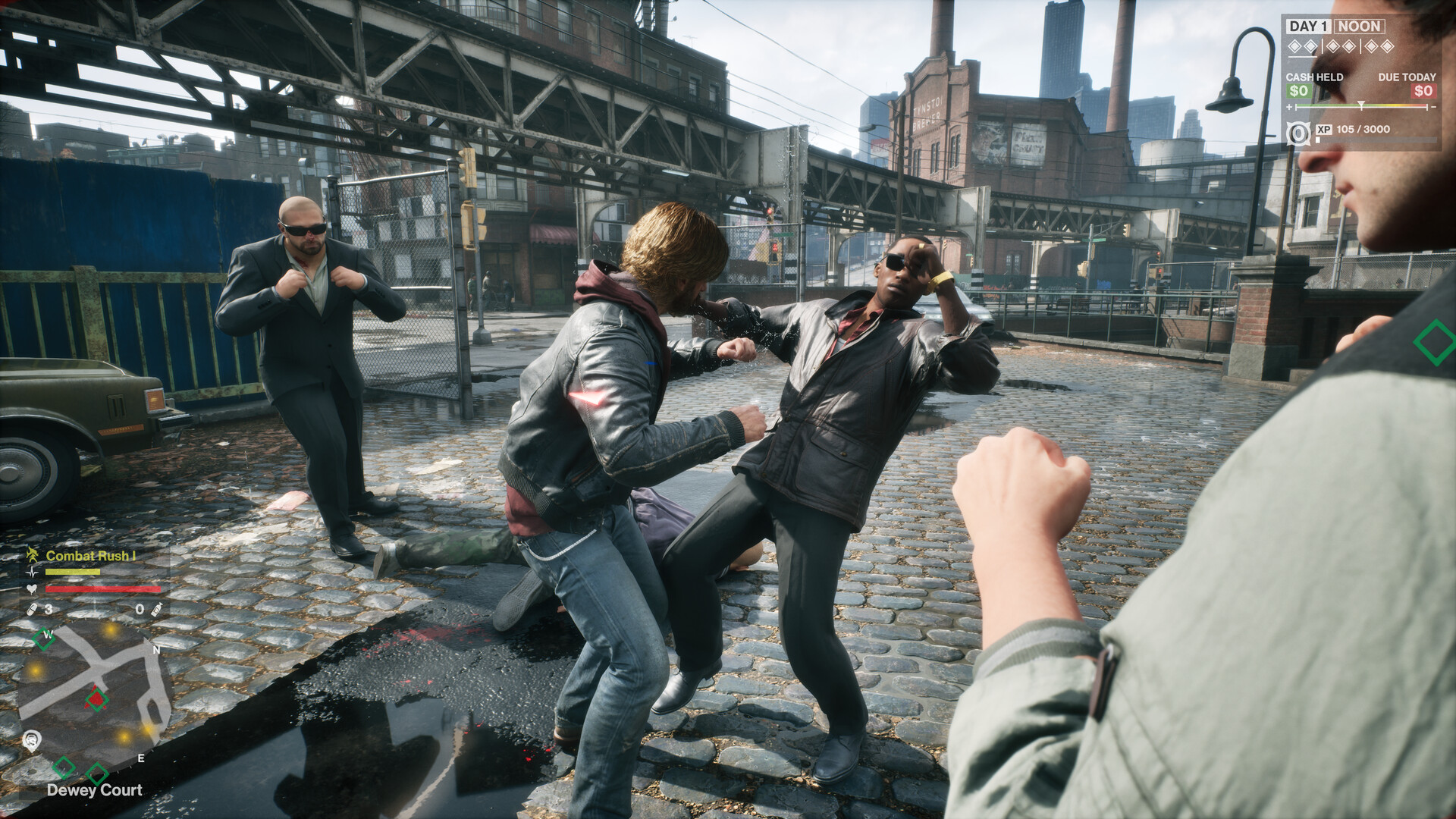
"Mission variety is also high on the list. Not necessarily entirely new mission categories, but expanding what existing jobs can become. "
The debt system itself is something we still believe strongly in, but the surrounding gameplay needs more variation and more emergent situations to keep that pressure exciting rather than repetitive.
We’re also looking at how pursuits evolve, how combat escalates, how city systems react to the player, and how jobs chain into unexpected situations. The core identity of the game is not changing. But the depth and variety around it absolutely can and will improve.
Samson’s structure, the daily quota, action points, debt pressure, and escalating consequences, is one of its most distinctive ideas. How have players responded to that system?
It’s been very split, which was expected and completely natural. Some players completely understand what we were trying to do. They like the tension and they like feeling trapped in a system that constantly pressures them forward. It creates urgency and gives the game its personality. Other players feel restricted by it. They want more freedom and less pressure. The world we currently have is quite small, so we will gradually expand player autonomy as we expand the world.
What’s interesting is that even players who dislike the mechanic often still admit it makes the game feel different from other open world games. That’s important to us and we never wanted Samson to feel passive or comfortable.
The challenge now is making the system feel less repetitive while keeping the pressure intact.
Combat has been one of the major areas discussed by players. What specific improvements are you looking at for brawling, enemy behaviour, feedback, and encounter variety?
The biggest issue with combat at launch was readability and was frustrating to us as well. When fighting multiple enemies, the camera often became too tight. You simply felt too swarmed. Situational awareness broke down. Enemy attacks became harder to track and sometimes was unfair to the player.
Enemy behavior is also being expanded. Bulkier enemies now have more attack variety. Navigation and positioning have improved. We’re continuing to work on crowd behavior, spacing and reactions. We want players to feel that they can walk into a room and simply go “F-K you!” and start beating the crap out of a group of enemies with self-confidence, not relying on luck. Improvisation – look at your surroundings and use environmental hazards (my current favorite is the not-so-often used A/C falling down on enemies). Adapt – you can strategize and some enemies might have moved back in the group and can easily be taken down with a bottle thrown to the head. There are so many ways we can make the combat more varied and fun and on vision and we keep our fingers crossed we’ll be able to go all the way.
Feedback is another important area as hits need to feel clearer and heavier. Environmental interactions need to trigger more reliably. Combat rhythm needs to feel more intentional instead of chaotic. That pretty much sums up what I said earlier.
Encounter variety is equally important. Better combat systems matter, but if encounters feel too similar, players still burn out. That’s where expanded job scenarios and layered situations become important. For clarity, layered situations means that we combine different types of jobs into one and try to get the heart rates racing.
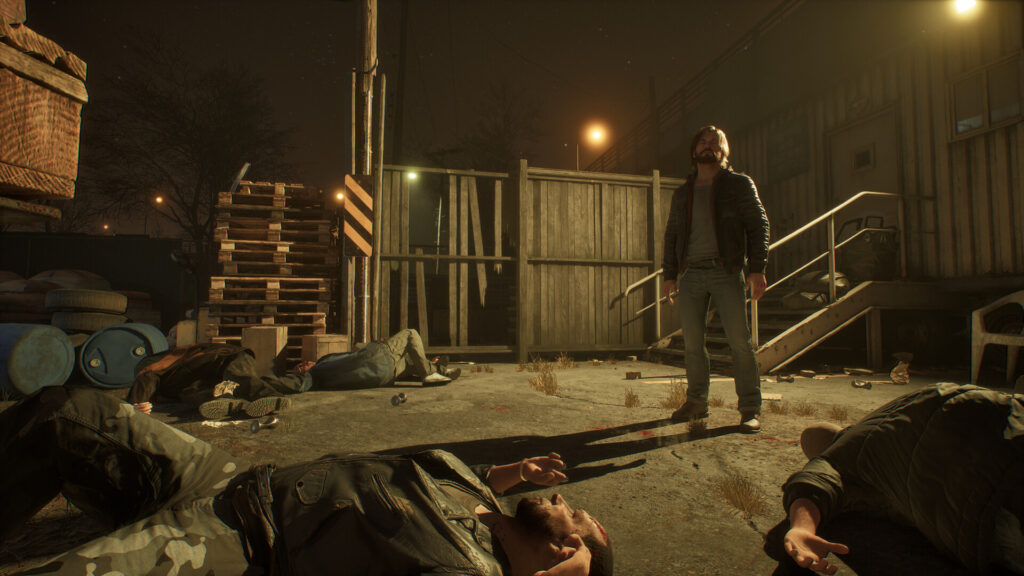
"Better combat systems matter, but if encounters feel too similar, players still burn out."
Tyndalston is clearly central to Samson’s identity. How satisfied are you with how the city came through at launch, and are there plans to make it feel more reactive or alive through updates?
The atmosphere and identity of Tyndalston are the parts of the game I’m most proud of. We have spent so much time building this world and there’s still so much we want to get into the game or in a sequel.
A lot of players connected with the city exactly the way we hoped they would. It feels hostile, decaying, oppressive and strange. Tyndalston has personality and that was one of the goals from the very get-go – City as a Character.
But there’s still room to make it feel more reactive and systemic. We want more situations that emerge naturally. More reasons for the player to pay attention to the city beyond navigation. More pressure. More unpredictability. More environmental storytelling. Traffic improvements, navigation updates and future world systems all feed into that.
Are you looking at adding more missions, activities, enemy types, vehicles, or districts, or is the focus still primarily on polishing what is already there?
Polish still comes first because it where we failed to deliver in the first place. We are actively discussing additional missions, expanded job scenarios, enemy variety, gameplay modifiers and new systems that build on what already exists.
The important thing is avoiding feature creep. We don’t want to randomly bolt on systems that dilute the game. The additions need to reinforce the identity of Samson and not introduce new features before we’ve fixed the existing ones. Right now, mission variety is probably the most important content area.
When will you consider Samson to be truly “done”? Is there a specific quality bar, content target, or player reception milestone you’re aiming for?
That’s a tough one and a very valid question. I think the best answer is when the conversation around the game shifts from technical frustration to the actual experience itself.
The game has rough edges and we know some reviews focused heavily on issues that deserved criticism. What is very inspirational to us is that there’s also a version of Samson underneath that people clearly connect with and that’s worth building on.
There’s no exact review score or sales milestone attached to that internally. It’s more about reaching a point where the game fully delivers on the experience we intended. Not from the very beginning as that is a completely different beast but sharpen the experience we have set out to build.
Do you think Samson’s smaller, rougher, more focused approach is something the industry needs more of, or has the launch shown how difficult that path can be?
I think it is the way forward, for independent developers such as us. Not saying that big-budget AAA is dead, because they are not. However, there is no publisher in the world right now that spends any money on a new IP with an external team. And I say that for certainty based on my own experience. Sure, there are older IP’s that some try to reawake, but those doesn’t come with a big budget either. There are obviously exceptions, like IO’s awesome looking 007 First Light.
With that said, smaller and more focused games is the way forward and the industry need more games that takes risks, have identity and don’t cost $300 or more to make. The middle ground has kind of disappeared.
The industry for sure needs more games that take risks, have identity, and don’t cost 300 million dollars to make. The middle ground has kind of disappeared. The launch of Samson also shows how difficult that path is technically and commercially. Players still compare your game against the biggest productions, especially when you work in a genre which is associated with sky-rocketing development costs. That puts a lot of pressure on smaller developers developing in that genre.
At the same time, there’s value in games that are a bit rougher but more personal and focused. The challenge is making sure the roughness doesn’t undermine the experience itself, as many players unfortunately experienced with the launch of Samson.
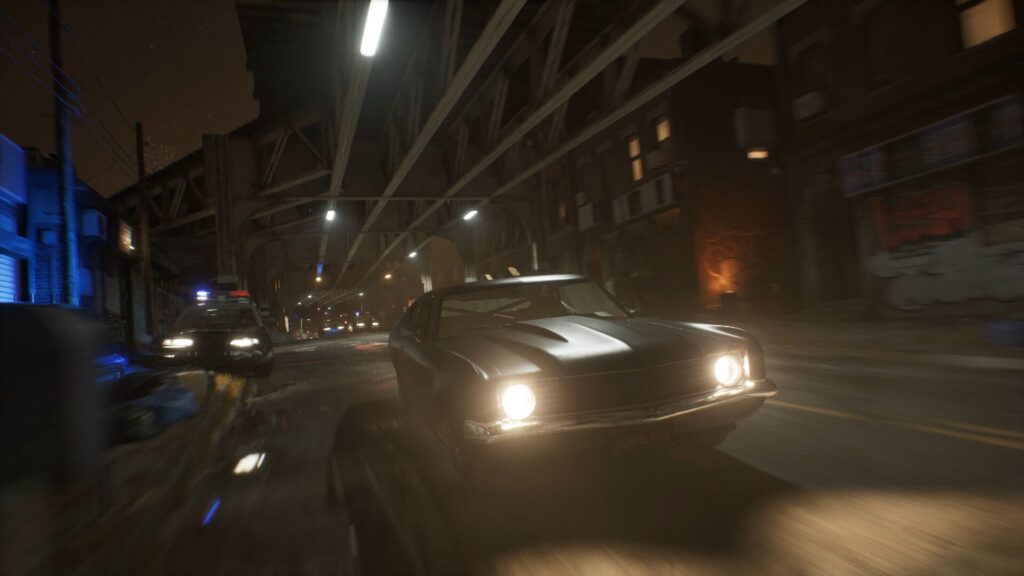
"There’s value in games that are a bit rougher but more personal and focused."
With the console versions planned for later this year, how much of the PC feedback is being folded into the PS5 and Xbox Series X/S versions?
Everything we’ve fixed and updated in the PC version will be folded into the console versions. That means that the console versions will benefit directly from everything we’ve learned post-launch on PC. Stability fixes, AI improvements, camera work, navigation improvements, combat updates, all of it feeds directly into the console builds.
In some ways, the PC launch became a very aggressive learning process for the whole game. The console versions should feel more mature because of that.
What kind of performance and visual targets are you aiming for on PS5, Xbox Series X, and Xbox Series S?
Our Tech Director Fredrik Lönn has responded to this question.
For PlayStation and Xbox Series X, we plan to have a performance and quality mode to choose from.
PS5 & XSX
- Quality: Dynamic resolution 1080-1660p with upscaling 4k
- Performance: 1080p with upscaling 4k
XSS
- 720p – 1200p with upscaling 1440p
Are you planning any PS5 Pro-specific enhancements, whether that’s higher resolution, improved frame rates, better visual settings, or ray tracing features?
Our Tech Director Fredrik Lönn has responded to this question.
PS5 Pro will feature higher-quality graphics.
Given the game’s current technical demands, is a Nintendo Switch 2 version something you would consider later, or is that not part of the plan for now?
Nintendo Switch 2 is currently not in the plans; our current focus is to make as great an Xbox and PlayStation version as possible.
After everything the team has gone through with development and launch, what gives you confidence about Liquid Swords’ future?
The Team! Despite the criticism, despite the rough launch, the team shipped a very difficult game with a very clear identity under tough conditions. Just releasing a game today, especially self-published, is a daunting task.
They also stayed with the company and as soon as the game was out, they tackled as many issued as they possibly could enabling us to respond quickly. They really owned the criticism rather than pretending it didn’t exist. As a founder and studio head, that loyalty, dedication and iron will, means a lot to me.
Many games, big and small, launch rough for various reasons. What matters is that the developer (us – Liquid Swords) understand why and learn from it, and keep on fixing the issues, improving the game with honesty instead of making excuses. We are doing just that!
We keep all the social channels open for discussion and have got some great feedback from the players and we continue to update the game. The next update is planned for June 9th and will be a BIG one.