





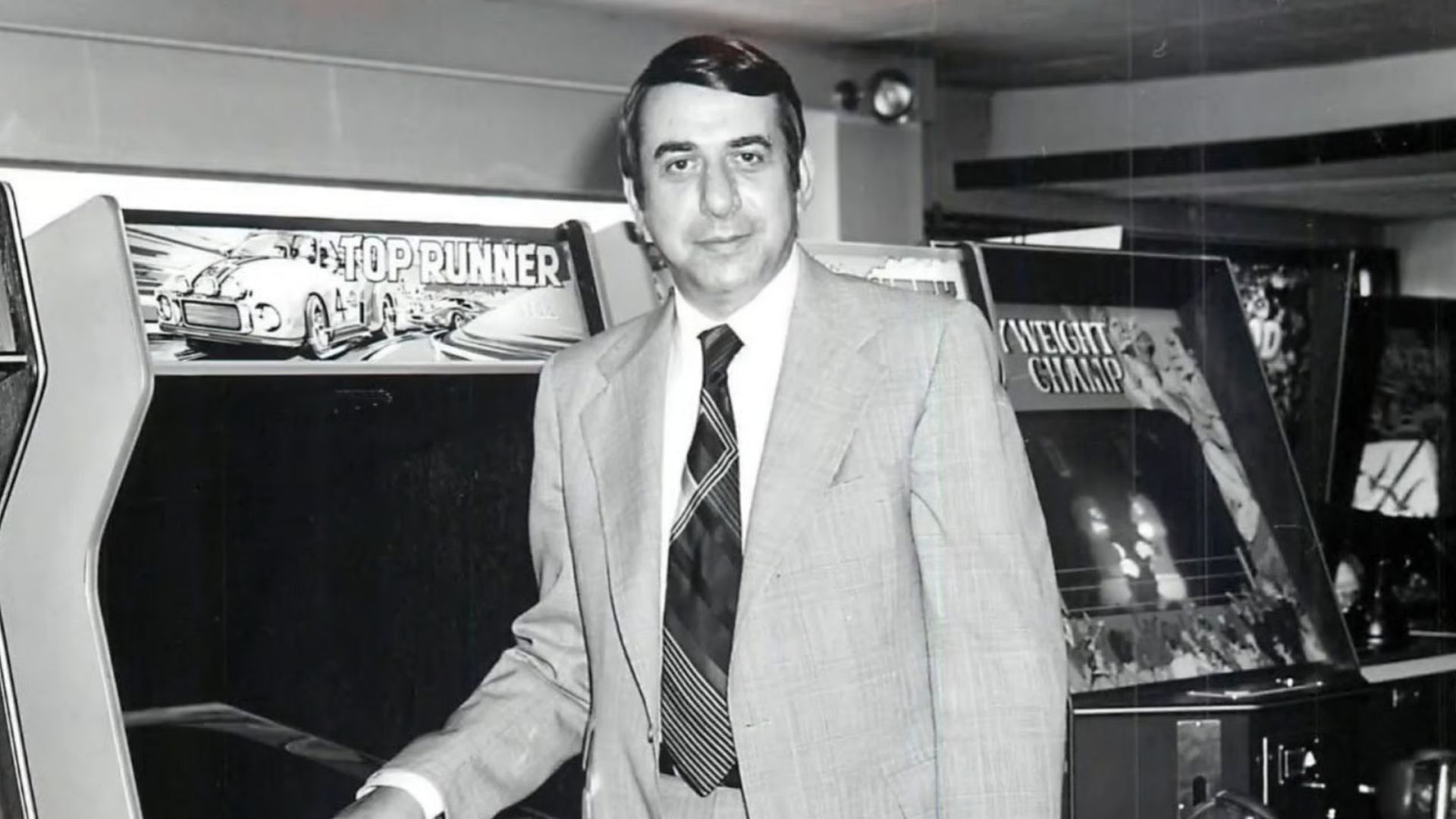
Sega co-founder David Rosen has died at the age of 95. The news was confirmed by Rosen’s spokesperson, Brad Callaway, revealing that Rosen passed away on Christmas Day at his home in Los Angeles.
Since the founding of Sega, Rosen, alongside fellow co-founders Marty Bromley, Ray Lamaire and Dick Dodderer, have been important to the gaming industry as a whole. The company was initially founded with the intent of focusing on amusement operations and was originally called Service Game. This was eventually shortened to its present name: Sega.
The founding of Sega is its own unique tale, revolving around the founding of Rosen Enterprises Ltd. in the 1950s in Japan. The company’s initial focus was on art dealing and photography for official documentation. After the founding of Sega, Rosen would be a key figure in not only the home console market but also the at-the-time thriving arcade market.
“Right off the bat, the machines were tremendously successful,” recalled Rosen in an interview with Next Generation Magazine in 1996, as caught by VideoGamesChronicle. “It’s embarrassing to say this, but the return generally came in less than two months.”
“At this point, I was opening up arcades with these shooting and hunting games throughout Japan, and we were fortunate… I don’t know [how many arcades we had], but by the time I left, there wasn’t a city in Japan that didn’t have one of our arcades.”
After the success of Sega’s arcade games, the company was acquired by Gulf+Western, which kept Rosen as the CEO of the Sega division in 1969. In 1984, Rosen and Hayao Nakayama formed their own group to buy Sega out from Gulf+Western.
Rosen would continue to serve in his leadership role at Sega until the buyout, which would lead to Isao Okawa becoming chairman and Nakayama taking on the role of president of the company. Rosen himself would help in setting up Sega of America, which would handle the company’s American businesses. Rosen would serve as the division’s chairman and director of Sega Japan until 1996.
During his tenure at the company, Rosen oversaw the release of several gaming systems across various generations. Having kicked off Sega’s home console business with the short-lived SG-1000 in 1983, the company made waves in the industry with the release of the Master System in 1985. 1988 would then see the launch of the Mega Drive/Genesis, depending on where you lived at the time, which would go on to introduce iconic characters like Sonic to the world.
The last major console release by Sega was 1998’s Dreamcast, which was launched well after Rosen resigned from the company. Before that, however, his tenure also coincided with the launch of the Saturn, the handheld Game Gear, as well as a variety of add-ons for the Genesis, like the Sega CD and the 32X.
“Sega was involved in video games very shortly after they were invented,” said Rosen. “Certainly, we were importing games like Pong from day one. We started producing our own video games shortly thereafter.”