





Following the release of the Last Variable expansion for The Alters, senior writer Katarzyna Tybinka and game design coordinator Marcin Łazowski were kind enough to answer some of our questions. The duo spoke about a number of things, from critical reception to lessons learned and even decisions that led to focusing on Jan Scientist for the core narrative.
Now that Last Variable has launched and reviews are out, how closely has its reception matched your expectations for the expansion?
Marcin Łazowski: It exceeded my expectations, I am very happy about the reception!
Reviews have generally praised the expansion’s new management systems, but the overall critical reception has been more divided than it was for the base game. What do you think caused that difference?
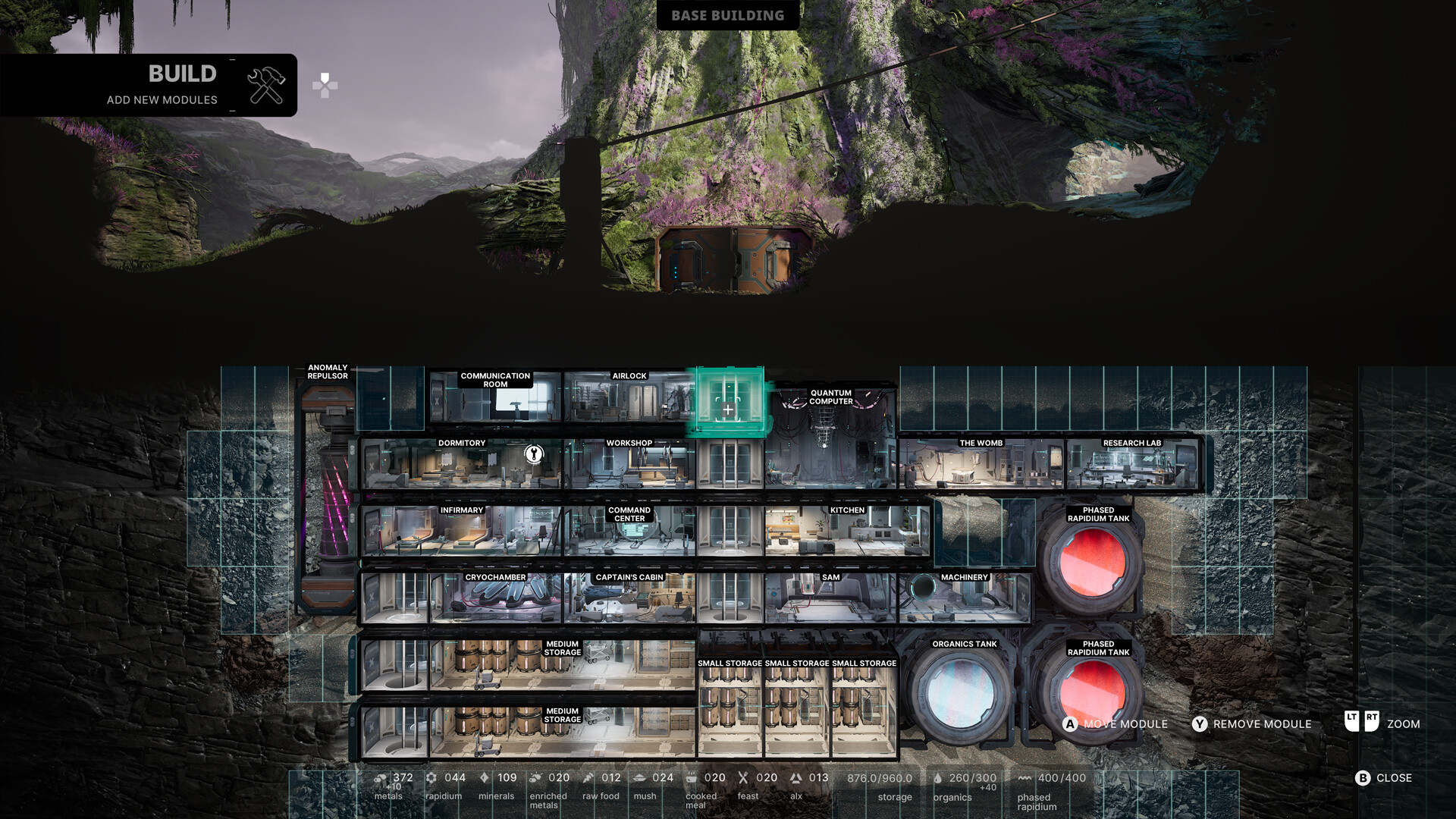
Łazowski: We decided to modify our approach for the DLC. While the base game emphasized the story and it drove the experience forward, with the DLC we wanted to focus on the players who enjoyed the base building, economy and planet exploration gameplay most and wanted more of that.
Several critics felt that focusing exclusively on different versions of Jan Scientist resulted in a cast that lacked the emotional and professional variety of the original Alters. How do you respond to that criticism?
Łazowski: We found it was a great opportunity to increase the humour of the DLC’s story, but personally I believe that the Scientist’s alters are still complex, with different personalities and emotions. While on the surface the professional variety may seem lackluster (they are all men of science), in the game’s mechanics we actually introduced a double skill system so that there are more combinations of how to utilize your team.
Katarzyna Tybinka: The question I’d ask is: why would we want them to be more varied? Look at it this way: in the base game, Jan wanted to create Alters with completely different life choices in order to be able to revisit what he thought were his mistakes. In the DLC, the Scientist creates versions as close to his original self on purpose, in order to assemble a team of like-minded people who will only echo his own ideas. The paradox is that he ends up with a bunch of guys with a superiority complex who will constantly challenge him, precisely because they are like him. And it’s exactly this kind of mirror that he needs to see to learn more about himself and the reasons why he really stayed behind to study that planet.
Was creating a more intellectually driven and emotionally restrained group of Jans a deliberate narrative risk, even knowing that some players might find them less immediately relatable?
Tybinka: It simply felt like a natural choice given the protagonist’s personality. But it also opened up new narrative possibilities, such as a whole new theme of perfectionism. While base Jan struggled with his regrets, the Scientist has to face his ego and in that way his Alters are equally challenging to him. The fact that they don’t require constant attention doesn’t mean that they don’t offer deep, emotional stories allowing the player to access unexpected layers of the Scientist’s humanity.
The original game derived much of its tension from forcing together Jans with substantially different lives, skills and emotional baggage. What was the biggest challenge in recreating that tension between characters who are all variations of a scientist?
Tybinka: Actually, it was fun. I come from a family where a scientific career was quite prevalent and I always found it fascinating how different scientists can be: from pompous academics, introverted eccentrics, to whacky Peter Pans. Take that and add the signature “what if” Alters component and you’re imagining all sorts of ways in which a career can vary depending on the environment, people or even pure chance. As for the tension, it comes from a similar place as in the base game: the fact that despite their differences, they are the same man. The difference is that in the base game it was Jan’s insecurity that caused all the problems, in the DLC it is the Scientist’s ego. They all share it at the core, so tensions are inevitable. This time though, we wanted them to be a little more tongue in cheek.
Some critics praised Last Variable‘s narrative depth and ending, while others felt that its major revelations and final twist were not sufficiently supported by the preceding events. What did you want players to take away from the conclusion?
Tybinka: As in the base game, the goal was to make this experience as personal as possible for the player. Regardless of whether you identify with the Scientist’s perfectionism or not, you put a lot of effort into completing the game. The ending asks the player to give their own meaning to this effort and, truthfully, any other kind of struggle we willingly choose to go through in our lives – whether it is for the sake of achievement, personal satisfaction or idealistic reasons.
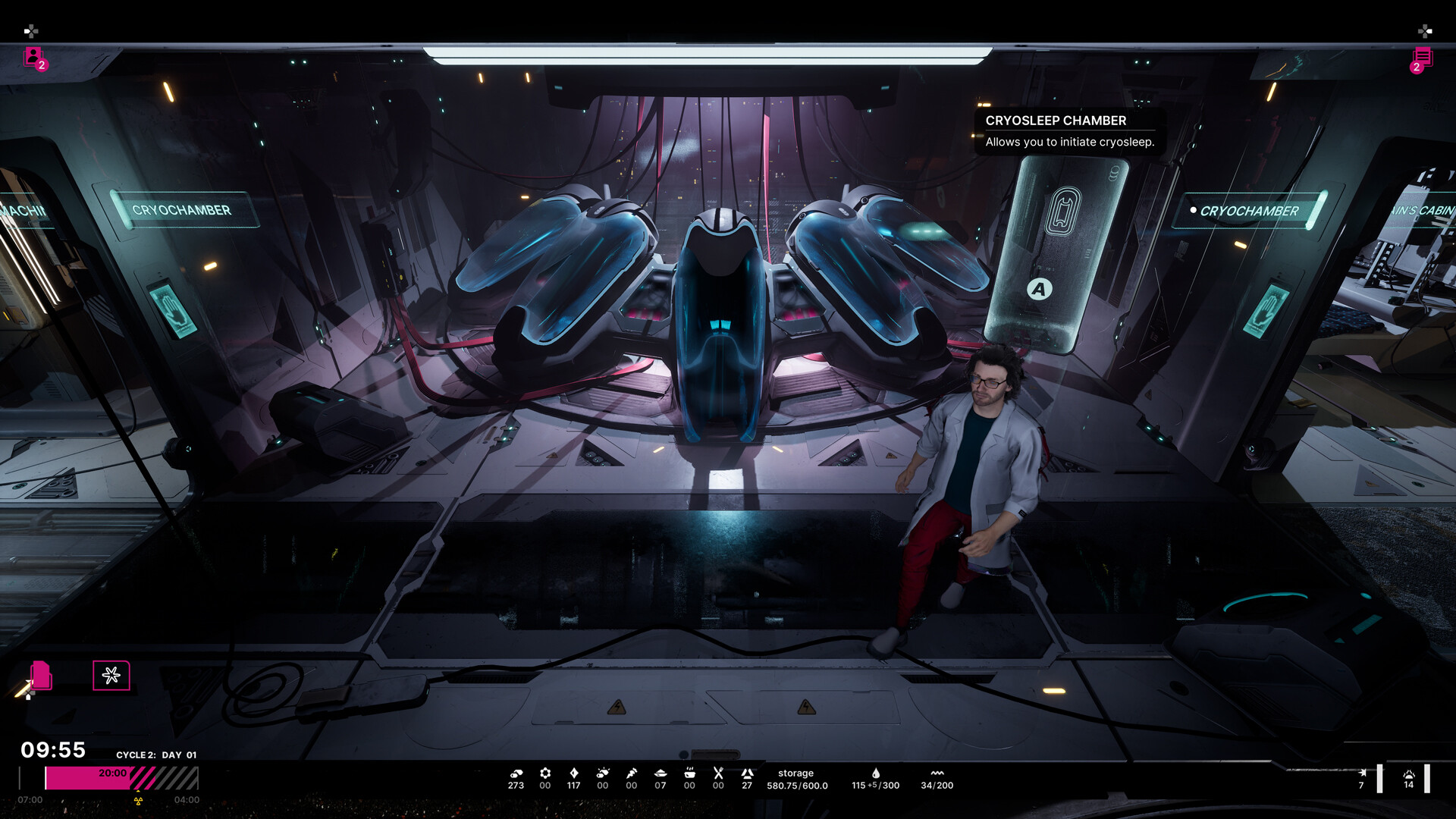
How has actual player behaviour compared to your expectations regarding Cryosleep? Are players carefully planning each cycle, or are they finding ways to bypass some of the pressure the mechanic was intended to create?
Łazowski: The Cryosleep mechanic’s goal was to give the control over the game’s pacing to the player. The original game had a strict time limit, but this time, as long as you can go to cryosleep, you can take as much time as you want or proceed to the next cycle. We’re finding that generally the players still feel pressure and want to squeeze as much as they can out of each day, at least in the early and mid game.
Terraforming has been one of the expansion’s most widely praised additions. Which part of that system underwent the most significant changes during development?
Łazowski: The general idea of terraforming didn’t change much during development, however after playtesting we were tweaking the details. I think the pipe connection system overall received the most changes, we were testing different UI and UX approaches. One big change was that at the beginning you were required to connect all the pipes to a placed down terraformer, but we iterated that because it caused much backtracking. Placing a pipeline along another pipeline going in the opposite direction just felt wrong, and instead of complicating the system more we decided to simplify it and add complexity elsewhere.