





It’s easy to expect a whole lot of scares and a fear-inducing gameplay loop from a title like The Occultist. But that would be missing the point of what developer DALOAR has crafted, as this narrative thriller aims for more than just jump scares and cheap thrills. Instead, we’re given a narrative experience that’s quite unsettling to engage with, while its melancholic take on the occult can haunt you long after you’ve powered down your systems.
But does it stick the landing as well as I’d have liked? Probably not, but there’s still a lot to compliment in the way The Occultist presents and executes its ideas. As a debut effort from the studio, this one had me quite impressed with its visuals and story, even as certain gameplay elements left me frustrated and wishing they were done a tad better.
"It’s a chilling tale of a callous disregard for the consequences of one’s actions."
Beginning with the story on offer, you take control of Alex, an occultist who comes to an island in search of his father, who just up and vanished prior to the game’s beginning. Armed with only a magical pendulum, his trusty notebook, and a gravelly voice that immediately spoke to the Witcher fan in me, he sets out to explore the island and find some answers.
But things aren’t as simple, considering that all of the island’s inhabitants are long dead, and most of the only sentient forms around aren’t too prone to having meaningful conversations. Relying on only his wits and the ability to run away from danger fairly quickly, Alex quickly uncovers evidence of a ritual gone wrong and how it affected the lives of the residents.
It’s a chilling tale of a callous disregard for the consequences of one’s actions that had me hooked well enough to power through some of the more annoying parts of the gameplay loop as I wanted to know what went wrong almost as much as Alex did.
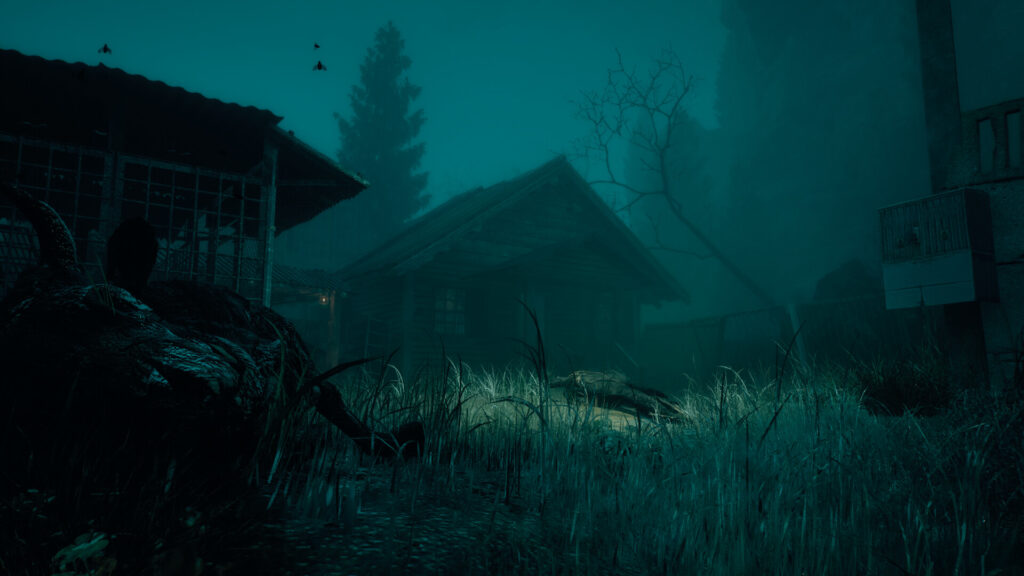
"The cramped spaces of the hospital and orphanage often have you walking around on high alert, waiting for a jump scare that you know is coming."
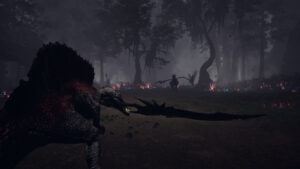
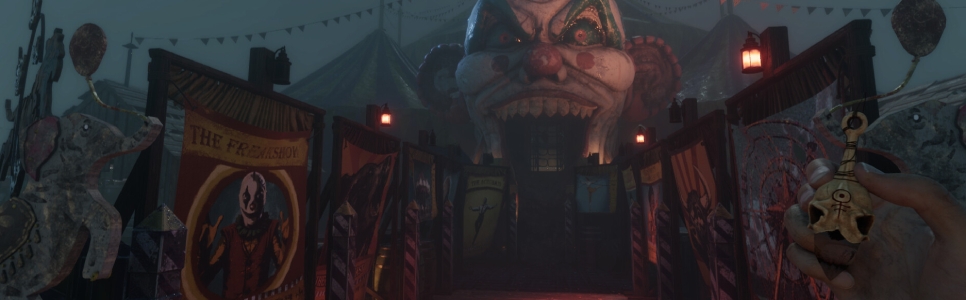
As for the game’s visuals, I’d say that the island is definitely well-designed and rendered. Each of the areas you explore as part of your investigation is quite impressive, with level designs that make sense while managing to create a sense of unease as you make your way through them.
The cramped spaces of the hospital and orphanage often have you walking around on high alert, waiting for a jump scare that you know is coming. They’re there, and they always managed to catch me off guard. Later areas in the game are more open but manage to be scary enough to let a sense of imminent danger seep into the moment-to-moment gameplay.
With solid visuals and a superb story, you’d expect The Occultist to be a hit. Sadly, its gameplay does let it down just enough to deny it a place among the horror genre’s greatest hits. You progress mainly through exploring levels and using the art of deduction to get past obstacles that stand in your way.
Your magic pendulum is a huge asset on that front, allowing you to see through it to find clues that are otherwise hidden, reverse time in applicable scenarios, and even summon ethereal creatures to help you out. It’s all done really well, and the game remains opaque enough to make navigating its obstacles a challenge.
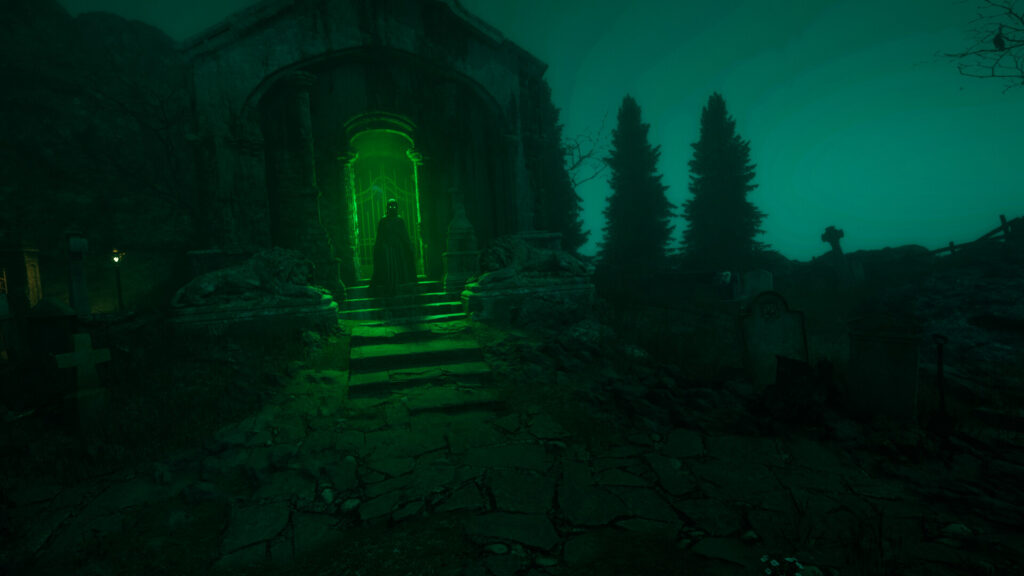
"With solid visuals and a superb story, you’d expect The Occultist to be a hit. Sadly, its gameplay does let it down just enough to deny it a place among the horror genre’s greatest hits."
However, I’d say that the lack of any ability to dispel hostile ghosts using the pendulum is a missed opportunity. It doesn’t make sense for Alex to come to a place such as this island without any means to protect himself. The fact that the island had remained ominously quiet for a very long time before he decided to visit should have been reason for an occultist to consider that things could be very badly wrong within it.
Of course, there are ghosts, both hostile and friendly, for you to encounter. The friendly ones are a helpful bunch, giving you snippets about the events that led to the island’s current state while pointing you in the direction of your next objective, displayed ominously in red every time you uncover them. It’s all a little on the nose, but it works in the context of the story.
The hostile ones, however, are probably the weakest part of the experience. They’re locked away until you let them loose, and then just swoop past you to patrol fixed paths that they absolutely do not deviate from. This makes staying out of their way as absurdly easy as just ducking into the nearest room, where they simply stand and watch you stare at them before reverting to their fixed routes.
That those routes are often ones you need to take to find important pieces of the puzzle you’re meant to be solving makes them more of an annoyance than a threat. I’d have loved to see a mechanic where a mechanic was using the pendulum in conjunction with a few spells to perhaps freeze them in place, but alas, all you can do is run from them.
Of course, there are a few moments where the ghosts act in clever ways, like an early game moment where the one chasing me lurked at a window and grabbed onto my arm as I walked by, but they’re so few and far between that they fail to create any fear or panic. It doesn’t help that Alex remains unperturbed by their presence, his dour voice never wavering even in the face of a presence that other mortals would be screaming at.
The puzzles themselves are quite intricate and well implemented, aside from a few ones that required very precise drawings for them to register as complete. My playthrough included a lot of time spent trying to put makeup on a decomposed skeleton, only for the game to stoutly refuse to acknowledge that I was right. It almost felt like a bug, but the developers have since assured me that it wasn’t, and that they’re working on making it more accessible.
But moments like that break the illusion of a well-crafted narrative thriller, reminding you that you’re indeed in a video game and bound by its eccentric rules. However, I must complement how the puzzles are woven into the environments you explore, and the way in which they’re challenging but not impossible. It’s a good balance overall, and one that was quite entertaining when everything worked as it should.
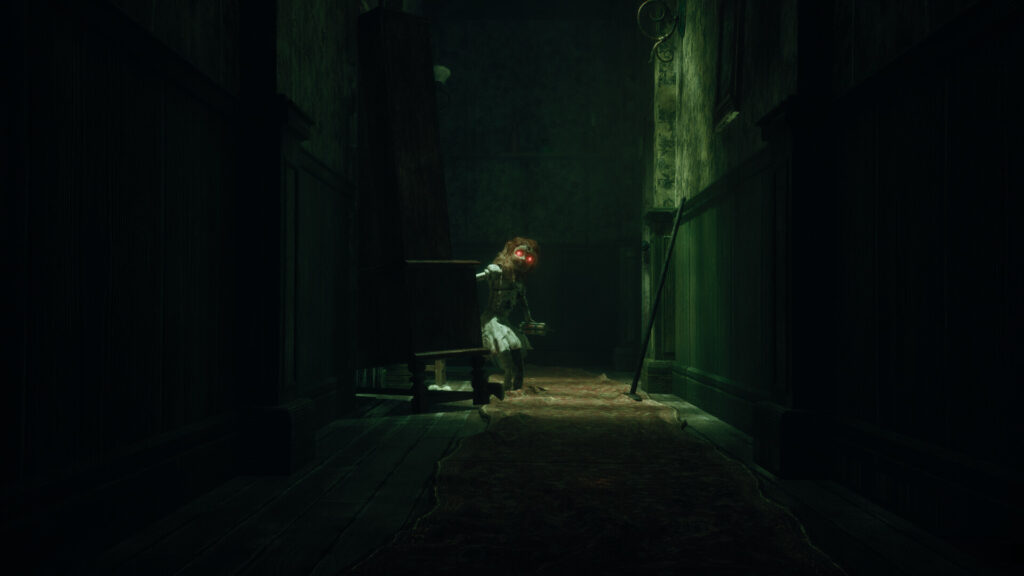
"I’d say that the lack of any ability to dispel hostile ghosts using the pendulum is a missed opportunity."
The audio design, always an important part of the experience, is serviceable and does a good job of setting the scene and keeping you on edge for the most part. I’d have liked more immersive dialogues, but the cast does fairly well with what’s been given to them. Performance on a base PS5 was quite good, and I didn’t have any noticeable frame drops, pop-in, or other graphical issues while the loading times were quick enough to keep me from doom scrolling.
With all that’s been said, would I recommend you dive right into The Occultist? That’s a tricky one. On the one hand, its story and world-building are immersive enough to make it a great title to play over the weekend. But with its gameplay being as bland as it is, it probably is not going to be high among my list of the best horror titles around.
If you’re looking for a game that challenges your brain over brawn, and you don’t mind a lack of compelling action, this is a story that’s worth your while. But if you’re looking for a game that has you reaching for a light switch, you’re not going to get that here. Either way, I’d recommend waiting for a sale on this one, but it does deserve a place on your wishlist if that’s the case.
This game was reviewed on the PlayStation 5.
Great story and world-building, solid visuals, challenging puzzles.
Bland enemies, poor implementation, wasted potential of the pendulum.