





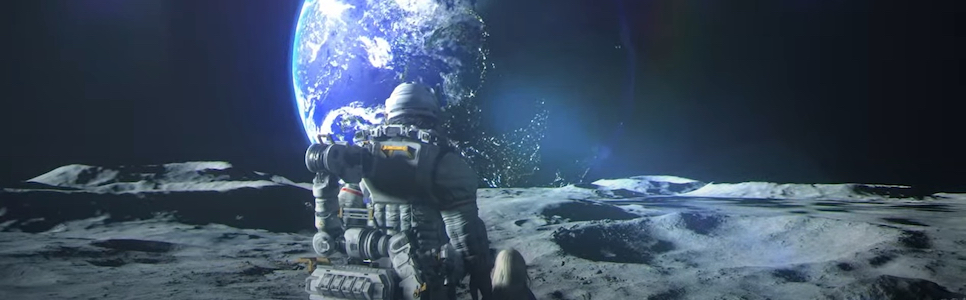
Replaying Pragmata’s thirty-minute demo in preparation for this feature, I’m mindful of its eight possible endings which I only discovered as existing a month-and-a-half after my first run. The resolution you receive – illustrated by Diana’s cute crayon drawings – is determined, mostly, by how you play: finish enemies using only Diana’s hacks; control space to handle multiple threats at once; take down the final boss without taking damage (thus relying on Hugh’s manoeuvreability).
Exploring the idea of whether Pragmata is for everyone or not, this level of systemic flexibility could suggest two opposing truths: one, that Pragmata will indeed be universal thanks to its range of playstyles, or two, it might not be for everyone precisely because the hack-shoot-destroy interplay forming the core of its design can’t be ignored.
Everything in this article is based on officially revealed information.
If Hugh and Diana’s symbiotic combat was just a gimmick, that would imply a needlessly flashy, wholly unnecessary system. Yet, eight possible demo endings suggests a fully-realised system. This is a game with meaningful mechanics, even if there’s a heavy chance they’ll be polarising.
First though, it’s worth rebuking any suggestion that Pragmata’s sci-fi tone is inaccessible, as what’s been shown so far is surprisingly familiar. Sterile white corridors, rogue AI, advanced weaponry – these are well-worn genre staples. If anything stood out about the demo’s setting, it’s how clean the lunar facility appears, almost to the point of artificiality. But, as subsequent preview footage emerged showcasing a 3D-print Times Square replica, it became clear the moon-base’s sterility is intentional, demonstrating tangibly the game’s underlying themes.
Narratively, too, the game isn’t as opaque as it might first appear. The demo, for instance, establishes clear story beats immediately, leaving longer-term questions simmering in the background. You know, like orthodox storytelling. So, if you bounce off Pragmata, it likely won’t be because of any perceived ambiguity. It’ll be for deeper, more mechanical reasons, like the game’s full-commitment to its dual-protagonist setup.
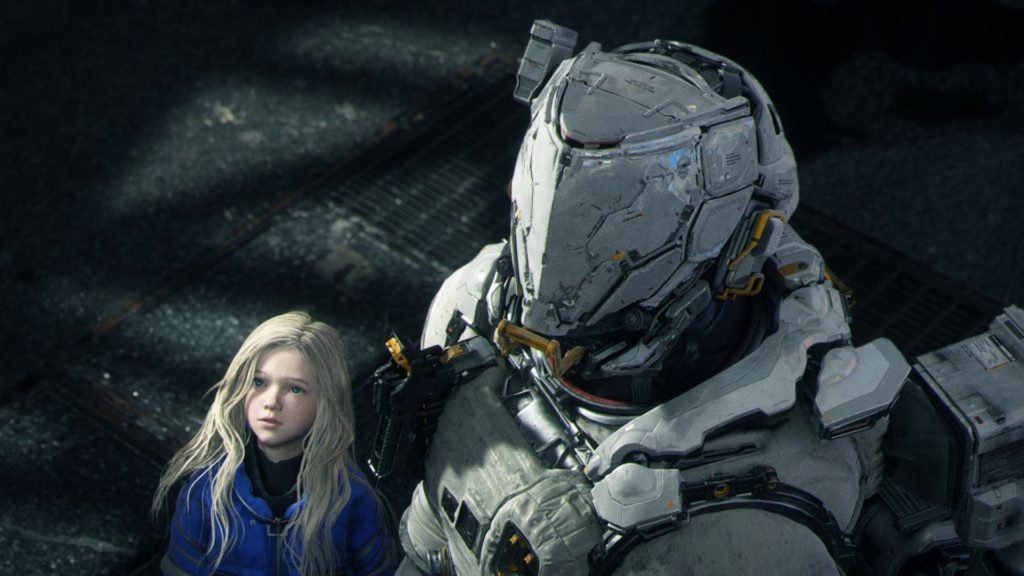
See, the central relationship is where Pragmata begins to separate itself. As much as Hugh and Diana’s dynamic feels unconventional, they’re mechanically inseparable. And the game makes it clear that they’re more than just narrative partners, as every encounter builds around their cooperation. Controlling them both in tandem might initially seem like a novelty, but theirs is a relationship which informs everything beyond combat – pacing, theme, mood, and more.
If you’re the sort of player who prefers autonomy, or the joy of controlling an individually powerful character, then Hugh and Diana’s mechanical bond might not resonate. Ultimately, if the bond doesn’t land then a huge part of the experience risks falling flat.
But, actually operating in combat – the one-two punch of hack ‘n shoot – is where Pragmata could really draw the line. At a glance, the game is just another third-person shooter. In practice, however, it’s two distinct, interrelated layers, each demanding real-time co-ordination. You’re continually utilising spatial awareness to manage Hugh’s positioning, movement, and firepower, all whilst simultaneously engaging with Diana’s hacking mechanics. If the mental load is too great, then friction materialises. Not everyone wants to think this much in the middle of combat, and not everyone will have the dexterity to comfortably manage both sides of the process.
But here’s where it flips: once the process becomes intuitive, then Pragmata starts to offer a different kind of power fantasy. Not one rooted in brute force or razor-sharp gunplay, but in mastering a certain kind of psychological flow; like forming chords on a piano without looking at the keys. It’s satisfaction that’s earned through patience and practice. Yet, the journey from friction to instinct may be where some players fall off.
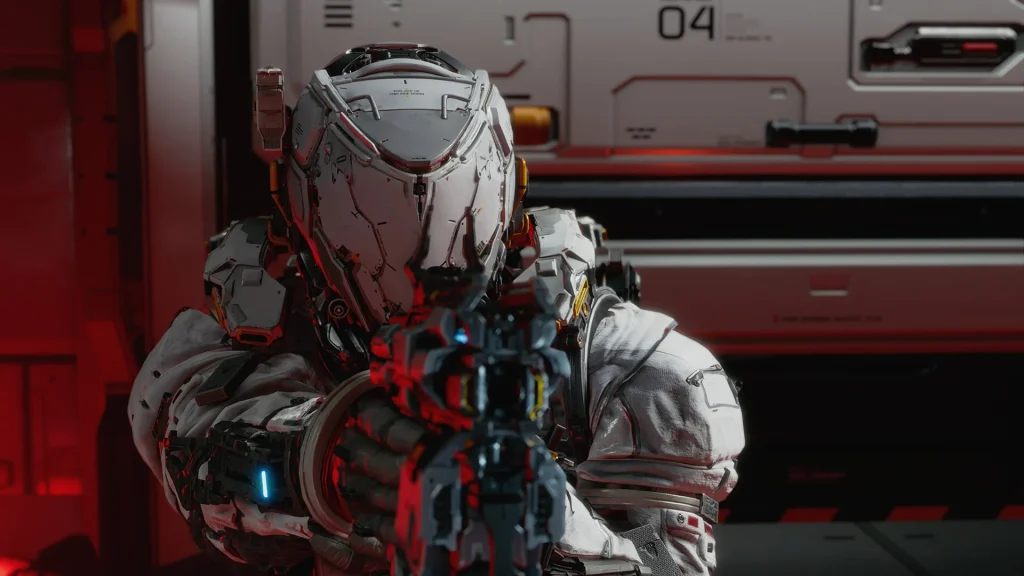
And the greatest risk, perhaps, to players dropping the game before intuition takes over is in Diana’s hacking system. Now, it’s easy to look at hacking and assume it’s a momentum breaking device. But, as I’ve already alluded, hacking is a core component of Pragmata’s combat loop, where you’re forced to engage with both halves of the system to succeed. Yet, despite transitions between hacking and shooting designed to be as freeflowing as possible, there’s still a chance it’ll split opinions.
Look – in honesty, Diana’s hacking does interrupt flow, at least if you’re comparing it to the pace of traditional third-person shooters. Pragmata does not allow you to endlessly run and gun; hacking is an unavoidable, extra layer. And, that’s kind of the point. See, these puzzles are solved in real-time, with both Hugh and Diana facing greater exposure the longer it takes you to navigate to the matrix’s shutdown command. You can move through coloured nodes to activate various bonus effects too, all while shifting Hugh’s position through your peripheral vision.
Many will thrive on this multi-tasking, yet it’s inevitable that others may find constant interruption to be exhausting over time, especially as the hacking puzzles escalate in complexity.
However, here’s the other thing: it’s hard to imagine Diana’s hacking system catching anyone off guard. The game’s marketing has been transparent about what it is and how it works. So, if anything, the real question isn’t what the system does, but how deeply can it evolve, if at all? And will players be willing to keep up, if so?
Orbiting the complex sci-fi gunplay are further questions, centring on Pragmata’s story which looks to be telling a more personal tale than first appeared. The relationship between Hugh and Diana is the nucleus, with potential for it to echo the parent-child dynamic seen in games like The Last Of Us. Identity, humanity, and artificial life are further thematic emblems shining under the surface, but at this stage it’s unclear how far the game will explore these topics. If it does, it could create another point of division, as not everyone comes to a action title looking for slow-burning character drama or philosophical introspection. You might want immediacy, spectacle, and dopamine-boosting explosions, and that’s fair. However, a surprisingly emotional core could be exactly what elevates Pragmata’s overall experience.
By this point, you’ve probably realised that Pragmata is experimental. What initially appears familiar is eroded by its dual-character structure, layered combat, the integration of hacking into every encounter, and the symbiotic relationship between Hugh and Diana which may blossom into a nuanced, father-daughter escape. These elements alone make the game a hard sell. See, there’s comfort in convention, and there are pre-conceived expectations which games need to satisfy in order to succeed financially.
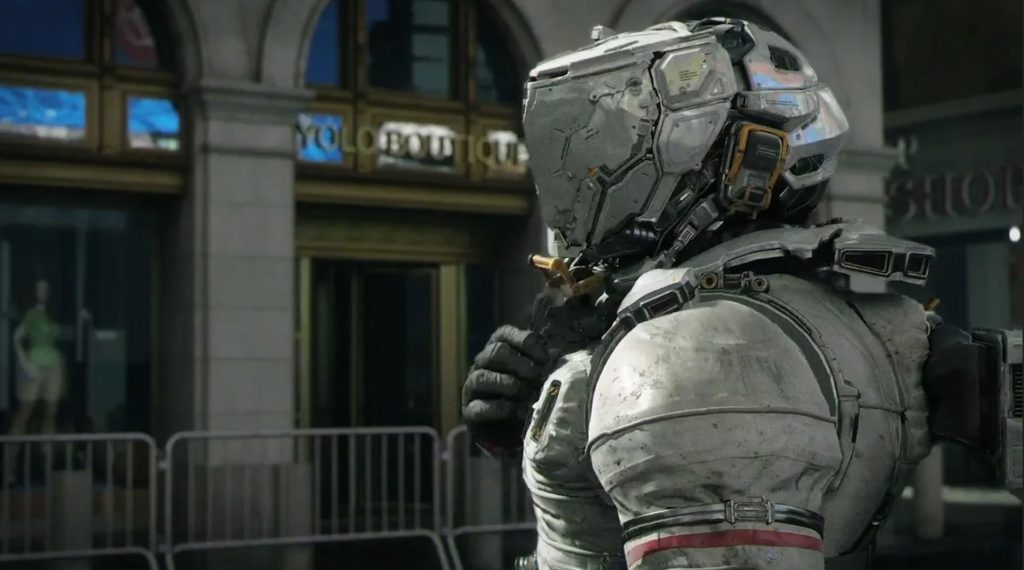
In recent years, disdain in proliferated sequels and fatigue in annual sports and shooting titles has grown. The consensus is that studios are becoming increasingly risk averse, where big budgets often yield well-trodden tropes simply reskinned and sold back to us. It’s a whole topic for another day, but positioning Pragmata inside the wider conversation frames it as an antidote to the repetitive experiences that increasingly dominate AAA spaces.
So then, maybe the divisive elements outlined in this feature are precisely what makes games like Pragmata so compelling. Its mental demands commit the game to something that isn’t easily reducible to genre shorthand. Pragmata could turn out to be the exact type of experience players have been craving. Something which takes risks to standout. Much of its promise might be the result of the genre’s golden touch in recent years, but if it lands it could pave the way for more risk-taking projects. Pragmata might not be for everyone; at least, not yet.
Note: The views expressed in this article are those of the author and do not necessarily represent the views of, and should not be attributed to, GamingBolt as an organization.