





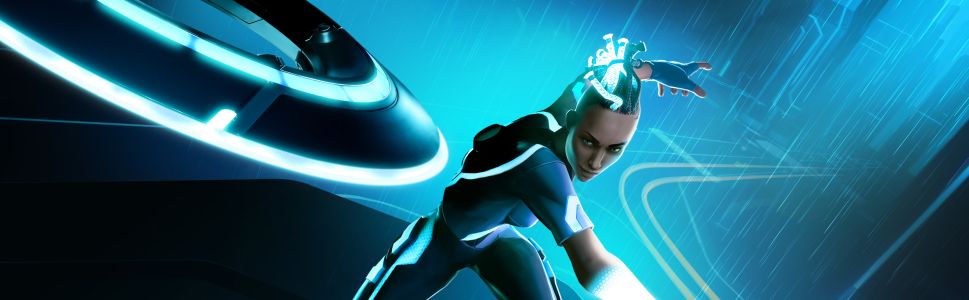
Ever get that feeling of deja vu? Those who play Bithell Games’ TRON: Catalyst may or may not remember its other title set in the same universe – TRON: Identity, a more visual novel-esque mystery. Catalyst certainly carries that same level of descriptive writing and slight decision-making in places but instead offers an isometric action title with a looping mechanic. But before you say, “Roguelite TRON?!”, either in dismay or with excitement, this a more narrative-focused affair, where the loops are more controlled and in service of driving the plot forward.
Which is fine, if not a little constraining at times. Just like Identity, there is a core mystery that its protagonist, Exo, needs to solve. It all starts when the courier program is delivering packages, ignoring the steadily increasing glow of their final delivery. Common sense eventually prevails as they toss it into the intersection, triggering an explosion that knocks them unconscious. Next thing you know, Exo is in the Core’s detention facility, being interrogated by the antagonistic Conn and charged with an attack they had no idea about. One trip to the Disc Wars arena without any combat expertise, and it’s back to the past, courtesy of the Glitch Catalyst.
"Combat in TRON: Catalyst is fairly serviceable – you have the hacking and slashing, a parry button, and the ability to dodge roll. Throw your Identity Disc at enemies or ricochet it off walls."
Somehow, the explosion granted Exo the ability to loop back to previous moments in the story and potentially change the outcome. It’s similar to time travel in that other programs don’t retain their memories, and as such, conversations are like deja vu, which isn’t particularly new in the visual novel space. Where TRON: Catalyst differs is in the data that Exo can carry around in their Identity Disc and the shortcuts unlocked through exploration. For example, you might need to speak to a program named Vega, who watches from the stands in the Arena but who isn’t present after your fight is over. The only way to access the area which grants access to the stands is by participating in the fight.
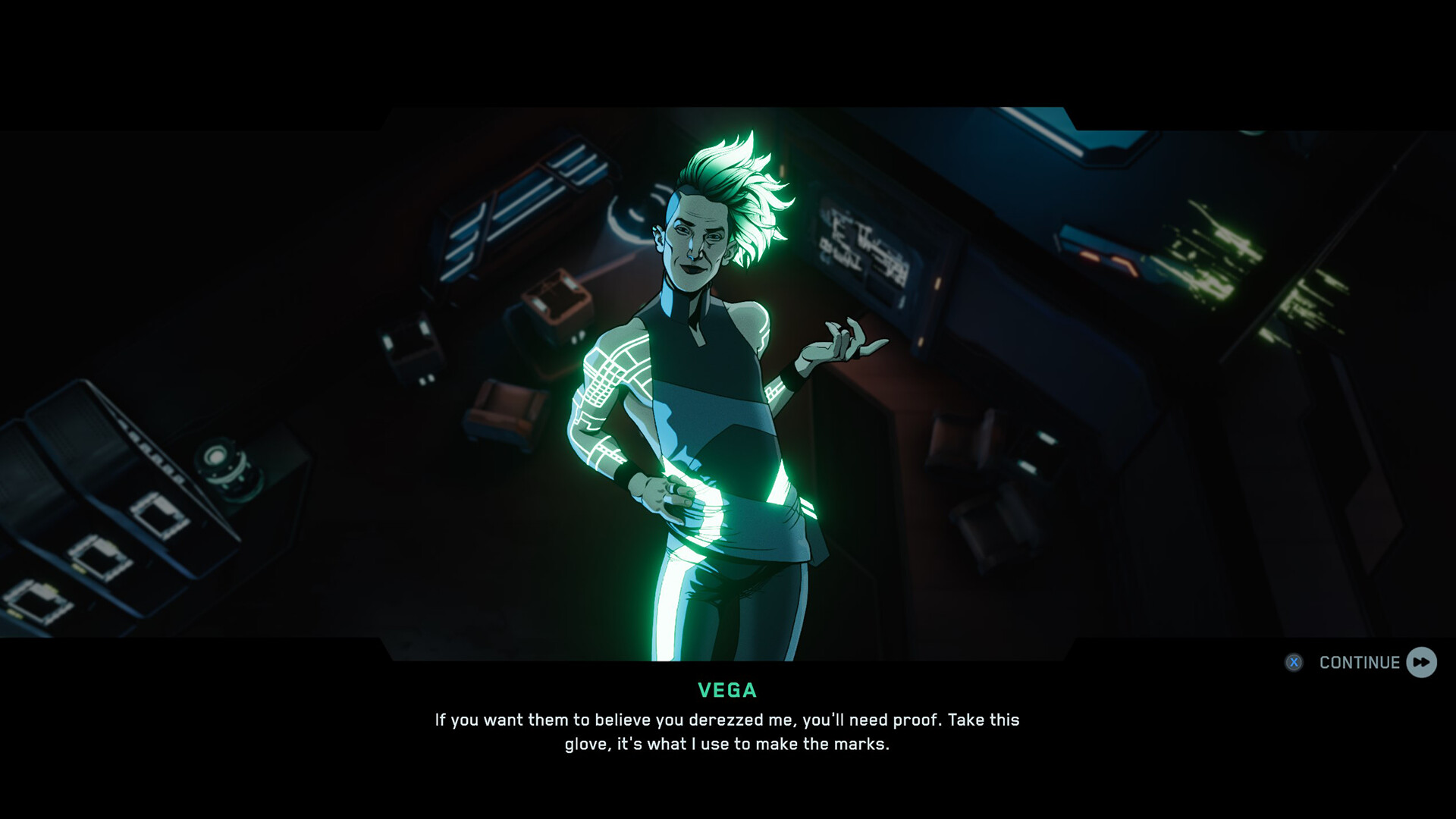
By finding a shortcut, you can loop back to the beginning and go directly to the stands to speak to Vega and try to find a solution to your predicament. Upon escaping and exploring the larger Arq Grid, other shortcuts will provide more post-loop opportunities. There is some slight confusion with the formula, at least at one point. To infiltrate the Core and obtain some access codes, Exo joins as a recruit but must first complete four tasks. One of those tasks involves taking a glove as proof to the soldiers, which won’t carry over if you loop. This is obviously in place to prevent you from picking fights with Core members, triggering a citywide alert where they attack on sight.
However, one task pretty much forces you to goad the Core into a fight, or else you can’t access a mechanic’s garage and steal her blueprints. Once the task is complete, however, you can loop back and complete those tasks as if nothing happened. What happened to that glove? Is it now magically with the Core member in charge of your tasks? Is it just the record of you giving the glove that they’re interested in and not the actual piece? It continues to baffle me, but my only other problem with the looping is how limiting it feels in where you can go back to.
Catalyst’s dialogue briskly moves the plot along, though some jargon may be lost on the non-TRON fans. I actually quite enjoyed the voice-acting all around, particularly for Conn and Vega. The former delivers on the “corrupt cop” act without going overboard, while the latter is a surprising mix of cunning and calculating with understated charisma. Exo didn’t particularly strike me as a compelling protagonist, especially when interacting with other programs in the Grid, but they’re solid enough. I was particularly impressed with some of the NPCs encountered in the world – they can have extensive dialogue trees and interactions that shine more light on their backstories, motivations, and feelings, even if their overall roles are fairly diminished.
It almost makes me wish that Bithell Games went with another visual novel rather than the isometric action game route. Combat in TRON: Catalyst is fairly serviceable – you have the hacking and slashing, a parry button, and the ability to dodge roll. Throw your Identity Disc at enemies or ricochet it off walls. With upgrades, you can bounce the Disc off multiple enemies with a single throw and even kick it back with a well-timed parry, providing an entertaining impromptu game of Pong if you’re far enough away. It’s even more hilarious when dealing with enemies who can’t move past a certain point, unintentional as it may be.
"As it stands, Catalyst may warrant playing if you’re a fan of the universe. Those seeking a more well-rounded experience or even a compelling time-looping mechanic may want to try the demo first before jumping in."
Unfortunately, melee attacks don’t feel as impactful as I would like, and once you’re in the middle of a combo, it’s almost impossible to cancel it for a parry. Some enemies also have very odd parry windows, which activate as soon as the attack begins and feel awkward to react to. It doesn’t make combat difficult by any means, but it made me wonder why I’m bothering to parry at all when a three-hit combo can capably stun smaller foes, and the dodge roll is great for avoiding damage. The game mixes things up with other types of enemies, but they’re not really enough to encourage a wider array of tactics. Combat quickly became tedious and repetitive as I wished for more punch and pizzazz to the encounters.
Some of the story objectives could also use some work. I’m fine with punching my way through Core soldiers to try and extract a data broker (less so when they tell me that they don’t need an extraction, thanks). But the whole deal about completing tasks to join the Core offers little more than backtracking through the Grid and engaging in tedious combat (for the most part). At least Exo has a Lightcycle to make things faster. You can even deploy Light Walls and run over enemies.
Beyond the voice acting and writing, TRON: Catalyst’s other strength is nailing the aesthetic of its world. The sleek lighting and reflective roads, especially during the rain, look great, even if the animations and character models aren’t super-impressive. The character portraits in conversations are 2D, and while they look fine on their own, TRON: Identity’s models look more vibrant and alive. As for the music, there was only one track that really stuck out while escaping from the Core during a citywide alert, mostly because it reminded me of Daft Punk’s Derezzed. Much of the rest didn’t resonate.
I liked many of the ideas that TRON: Catalyst had to offer, and even if it’s not the best, the story made me want to keep going if only to learn more about the Glitch and the world as a whole. However, the gameplay didn’t serve as the strongest motivator, whether it was the repetitive combat or many of the main story tasks. Bithell Games has delivered some pretty compelling sci-fi stories thus far (Subsurface Circular is well worth the look), and I can’t help but wonder if sticking to that formula would have been more beneficial. As it stands, Catalyst may warrant playing if you’re a fan of the universe. Those seeking a more well-rounded experience or even a compelling time-looping mechanic may want to try the demo first before jumping in.
This game was reviewed on PC.
Capture the look of TRON quite well. Solid voice-acting performances and dialogue. The looping mechanic is intriguing and somewhat different from similar titles.
Looping feels more constrictive than in other games. Combat can get repetitive, especially with the samey nature of encounters. Mission objectives feel bland and unexciting.