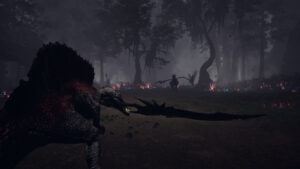






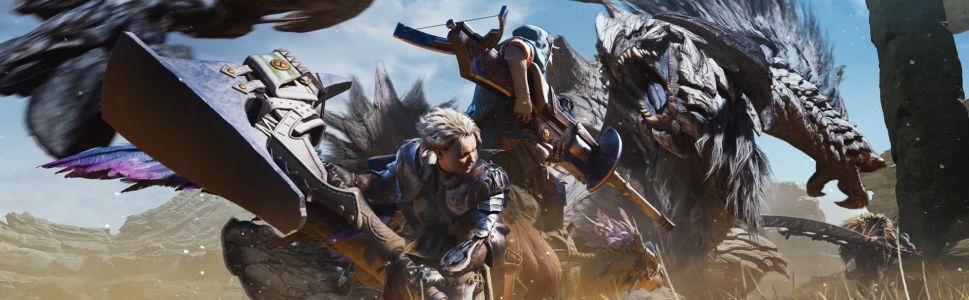
We’re officially past the halfway point for 2025, and even if there are several games yet to be released, some have already decided on their Game of the Year. And even if you haven’t, it’s a good time to reflect on some of the more notable titles thus far. Perhaps even remember efforts like Monster Hunter Wilds.
In hindsight, it should be memorable since the development team considers it a successor to Monster Hunter World, something that many fans have wanted for years. The first title in the series exclusive to current-gen platforms and also the most successful, selling over 10 million copies within the first month of launch. Even the Steam numbers don’t lie – almost 1.4 million peak concurrent players in its lifetime.
And yet, it isn’t remembered nearly as fondly as Monster Hunter World. I still think back to when players were going crazy, waiting for the next big Title Update (which ended up adding Behemoth from Final Fantasy). The latest Title Update dropped for Wilds and offered up some brand new threats, but you’d be forgiven for not noticing due to the “Overwhelmingly Negative” rating on Steam.
Granted, the overall rating of nearly 151,000 user reviews at this time of writing is “Mixed” with 55 percent giving the thumbs-up. However, only 12 percent of the recent reviews, currently numbering about 17,500, recommend the title. The reason? Awful performance, to start with.
Ever since the beta, PC players have had issues with stuttering and optimization. No, not many people have seen PS One era Rey Dau (which was a thing in the beta), but even after so-called improvements, they still struggled to hit a reliable frame rate, even after surpassing the system requirements. That’s not including the bugs and crashes, the latter persisting after Title Update 1 arrived on April 4th.
Initial impressions for Title Update 2 are that it somewhat improves performance by compiling shaders before launch and separating upscaling from Frame Generation. It also enables Frame Gen by default and reduces the amount of VRAM for texture streaming. The jury is still out – second-hand impressions indicate definite improvements, however minor. Others report a new wave of crashes. The developer, for its part, promises even more fixes in the coming months, but at this point, there’s seemingly no hope of the PC version ever exiting negative territory.
The console versions are better, though that isn’t saying much, considering the image quality and pop-in issues. Then again, none of this will really be surprising for some people, especially after last year’s Dragon’s Dogma 2. Even after numerous updates, it still has a “Mixed” rating on Steam, with some players still complaining about performance (unless you have a fairly strong set-up).
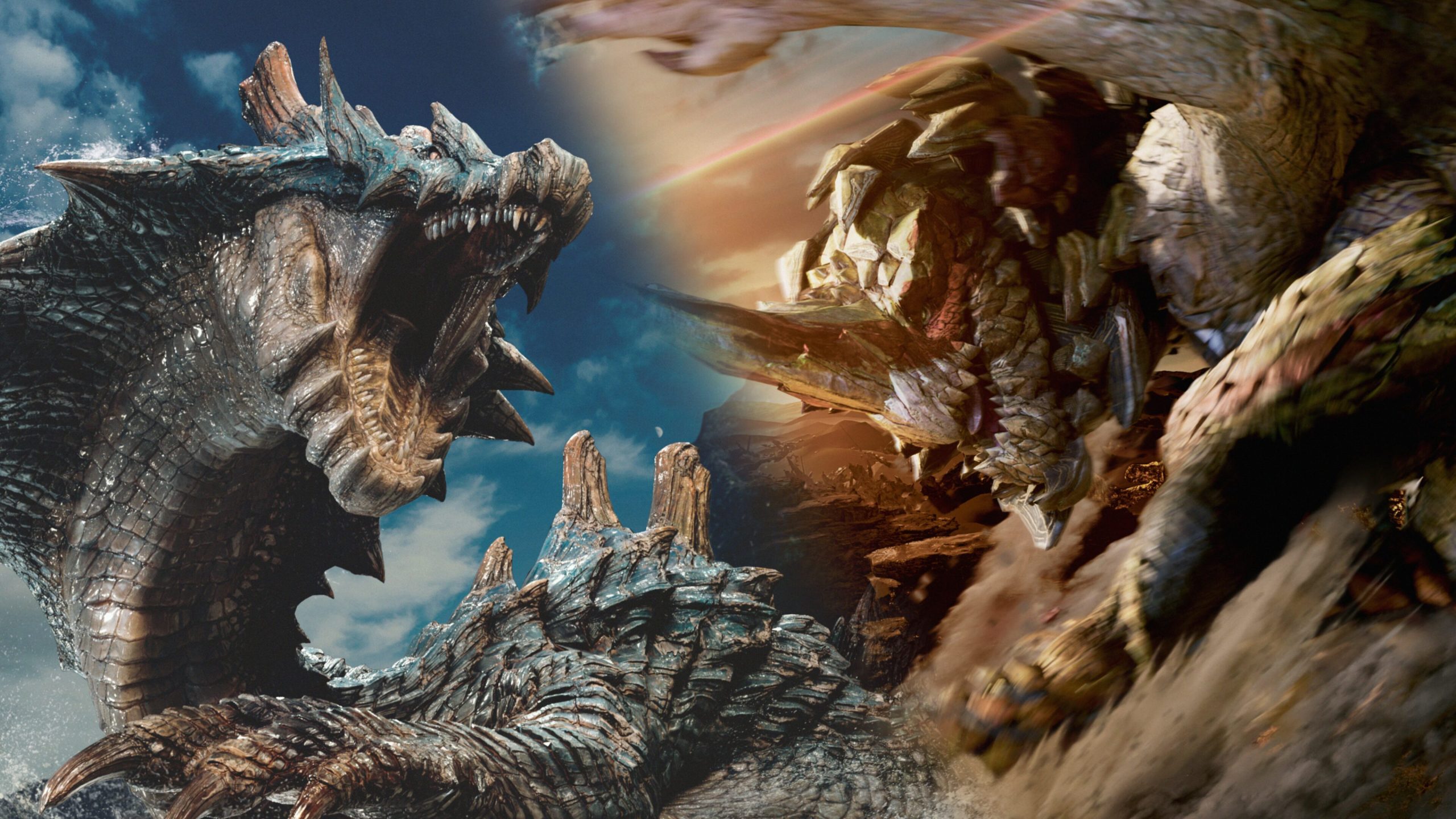
At this point, it’s a mercy that games like Resident Evil Requiem and Pragmata won’t take the open-world approach, especially since the developer absolutely can’t optimize RE Engine for larger seamless areas. However, that can’t be the only reason for less than 10 percent of PC players returning for Monster Hunter Wilds’ latest Title Update. Even Title Update 1, which featured one returning classic monster in Mizutsune, peaked at a whopping 555,797 concurrent players. Title Update 2 with the long-awaited return of Lagiacrus and Seregios? A measly 133,033 peak concurrent players at this time of writing.
Unfortunately, there are other issues plaguing Wilds, not the least of which is the nonexistent endgame. About three months after the launch of Monster Hunter World on consoles, Kulve Taroth arrived and introduced the first-ever Siege quest to the game. And it was amazing. Four teams of four players worked together to impede the Jagras queen, ripping off parts and finding the most optimal ways to deal damage in a fixed amount of time, delving further and further until finally breaking her horns and obtaining some great weapons.
Keep in mind that only one other monster had been added at this point, and World’s endgame faced similar scrutiny due to solely focusing on RNG decoration farming and material farming for augmenting weapons.
By comparison, Monster Hunter Wilds’ endgame involves fighting the same handful of 8-star monsters again and again to get lucky with Decorations. You’re not really struggling to grind out the best armor set nor to craft Talismans. The overall difficulty of the base game was also lower than previous titles, and the fact that there’s almost nothing to do after beating the story, much less any additional activities upon increasing High Rank.
The addition of 8-star versions for Arch Tempered versions of Rey Dau, Uth Duna, Nu Udra, Gore Magala and Jin Dahaad added a bit more challenge. However, they still couldn’t freshen up the otherwise barren endgame loop. Lagriacus and Seregios add new weapons and armor, and the former even offers a new way to play with underwater battles. Considering how insignificant swimming was when the game first launched, this is a massive improvement. Even their reward systems are unique! Their Tempered versions also aren’t a joke, offering some return of the difficulty that hardcore fans have wanted for months.
The problem now is that the game is all over the place when it comes to monster ratings. Long-time players probably won’t have much issue, but anyone who joins now – or who hasn’t played since launch – will probably be confused as to why a 5-star Lagriacus is handing them a beating when they effectively soloed 7-star Tempered monsters in a few minutes flat. That is, if they even bother to log on judging by the current player drop-off, but I digress.

It’s admirable that the developer wants to add more challenges and endgame systems, with a new quest difficulty offering unique rewards and new Talisman crafting to assign “various skills” and decoration slots coming in September. The fact that it wants Artian Weapons to remain viable is also nice. But how will all this balance out with the rest of the game’s progression systems, especially considering the current pecking order of monsters?
And yes, another new monster is on the way, and another will be added in Title Update 4 before the year is out. But I’m a little tired of each new mainline title offering a fresh slate and then requiring extensive post-launch support or an expansion to truly come into its own. It wouldn’t be such a big deal if the base experience is up to snuff.
Monster Hunter World, for all its faults (even on PC), was an excellent experience out of the gate. Monster Hunter Rise took months to add such basic features as an ending and some really challenging hunts, to say nothing of the post-launch free updates compared to World. But it still ended up as a better experience with none of the performance hang-ups plaguing Wilds.
Do the plummeting player numbers on Steam mean that it’s dead? Of course not. It’s the franchise’s fastest-selling game and its big breadwinner if the sheer amount of cosmetic purchases wasn’t enough indication. Perhaps Tsujimoto and crew have a big expansion planned that will completely invalidate all my concerns and make Wilds the premiere hunting experience that everyone expected at launch. But that there’s any doubt is something that gives pause, and even with the promise of better things to come, that does nothing to excuse the current state of the game.
Note: The views expressed in this article are those of the author and do not necessarily represent the views of, and should not be attributed to, GamingBolt as an organization.