





I ended up finding myself impressed and surprised with Splatoon Raiders, far more than I had expected going into it. I was a huge fan of the original Splatoon when it launched on the Wii U in 2015, but every subsequent entry began to disappoint me and lose my interest thanks to its extremely iterative nature, and doubling down on flaws and issues that felt less admissible when it was no longer your first attempt, but the second or third. By the time Raiders was announced, I was mostly sitting on the sidelines as far as the Splatoon franchise went – clearly these games are successful, but equally, they didn’t feel like they were for me.
Raiders, as I specified already, decidedly bucks that declining trend and pulls me back into the fold. The very first spin off the Splatoon franchise has ever gotten, it delivers two things that until now, have been unprecedented – a Splatoon title that is primarily single player; and, perhaps more importantly, the very first looter shooter Nintendo has ever made.
"There’s actually not that much variety in mission types and variety"
Because that’s what Splatoon Raiders is – a looter shooter. Rather than being based on the content distribution model of something like Destiny, however, it’s better to compare Raiders to Borderlands or Monster Hunter. This is a game that’s packed with a remarkable amount of content and systems, requiring neither persistent online connectivity, nor updates, to flesh out the structure and skeleton.
Like any loot game, Splatoon Raiders sees players pick out missions, and then run them to the end for loot drops; said loot drops can then augment and modify your build and abilities, which in turn allows you to take on higher leveled missions for better loot, and so on and so forth. It’s a structure that has worked in pretty much every loot game there ever has been, from Borderlands to The Division, and it serves Raiders well. The missions in question are extremely quick to run, requiring under ten minutes to complete in almost all cases, which lends them well to the repetition inherent to replaying older levels for better loot – also something that is a hallmark of loot games, mind you.
There’s actually not that much variety in mission types and variety – you either run through a linear course, clearing some mandatory objectives, and defeating all enemies you find on the way; or you are tasked with defeating a certain amount of enemies within a certain period of time, with enemies respawning endlessly until you do; there are missions that give you one primary objective, with a bunch of minor objectives scattered across the map, and let you decide how you want to progress; and then there are the smaller, more specific missions, such as ones where you can only use certain gear, or have to fight off only a specific kind of enemy, or have to complete some sort of platforming obstacle course.
You’d think the lack of variety would start to grate, particularly in a game that asks for so much repetition from the player to begin with. However, interestingly enough, that never quite happened with Raiders in my experience. At least part of this has to do with Splatoon’s immaculate game feel and mechanics. Spraying stages with colored ink, seamlessly transforming into your squid form to traverse and navigate, and defeating enemies in giant explosions of color all remains inherently satisfying and addictive on some deep, primal level, and keeps players on the loot treadmill in spite of the ostensible issues with repetition. These, combined with the general stage design — short and quick, with rapid pacing and straightforward objectives — means that the issue of the lack of variety and repetition never even occurred to me while actually playing the game. It was only when stopping to reflect on my time with Raiders that I realized that it does technically “falter” on this front.
"Every major mission in the game can be played multiplayer, with friends or with strangers."
Repetition is ultimately inherent to a loot game — one could even argue it is the entire point. Loot games that don’t force you to work towards your preferred or desired drops by repetition and grinding tend to receive harsh criticism from players who find they have nothing within the game left to do — as happened with Monster Hunter Wilds last year, or Destiny 2 when it first came out, before its expansions fixed it up. I don’t think anyone who is interested in the genre is going to find Raiders worse on this front than any other similar title. In fact, I’d go as far as to say that Splatoon is generally better about it than other titles in the genre are. The strength of the series’ core mechanics, paired with smart mission design, helps it retain an edge.
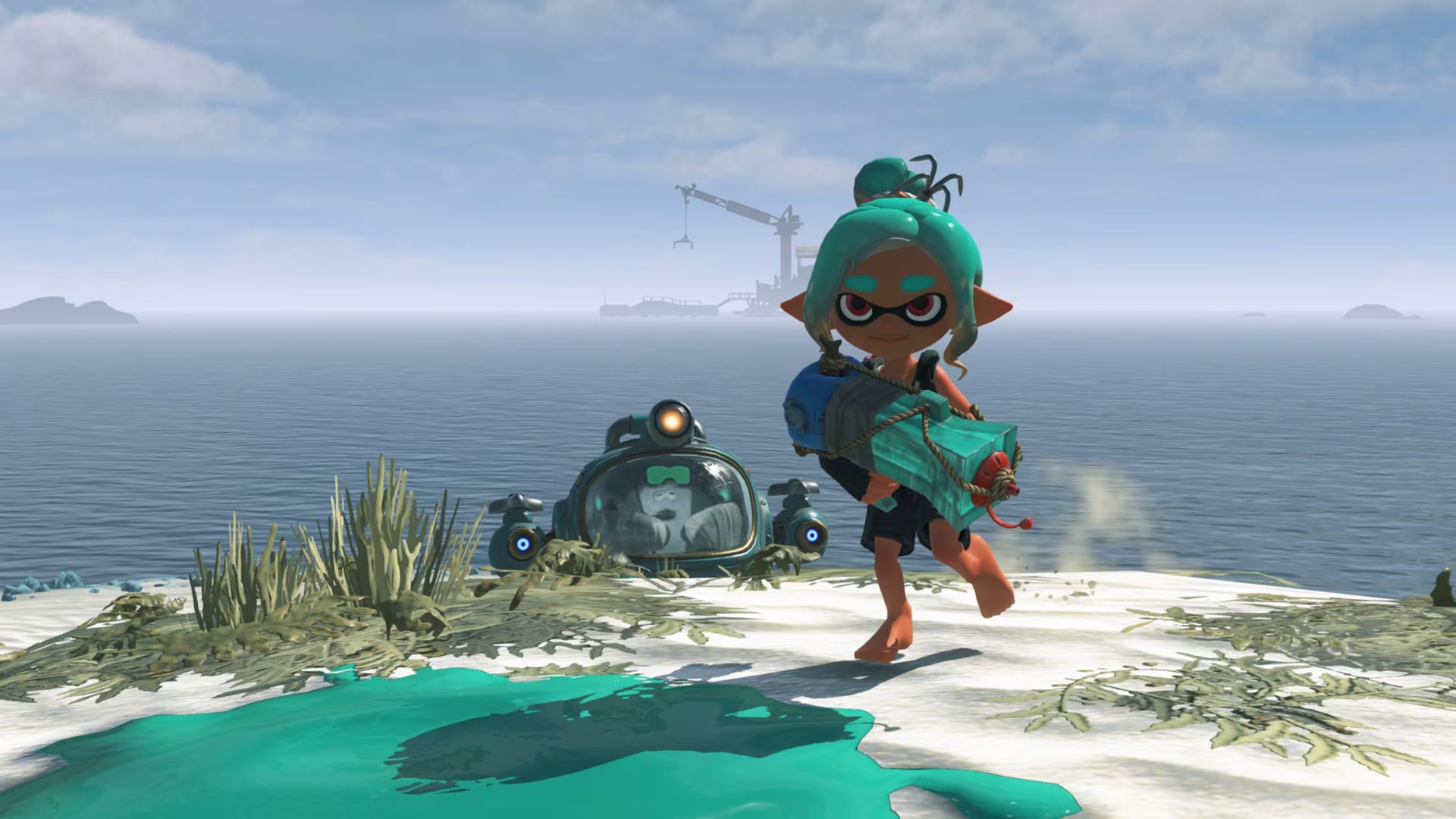
A key aspect of loot games, particularly in the modern era, is multiplayer and co-op. For all that the marketing of Splatoon Raiders has focused on the fact that it is the first single player game in the series, it is, in fact, fully multiplayer. Every major mission in the game can be played multiplayer, with friends or with strangers. And, in fact, Splatoon Raiders has a far more robust and functional suite of online multiplayer features than any of the mainline games have had.
For starters, and remarkably, I experienced no lag, no stuttering, no disconnections, and no instability in my entire time with the game at all, almost half of which was spent playing with others. In 2026, it can feel almost comical to call attention to this, but I would like to remind everyone that Nintendo, and the original Switch, were so deficient with online support and features that games with frequent lag, stutters, and disconnections were extremely common until just a few years ago. With Raiders, however, the game ran as smoothly in multiplayer as it does single player.
Beyond just the netcode, the actual suite of online features is also great; you can play with strangers, play with friends, have private parties, call on help from other players if you’re playing solo and struggling, help out other players who may be stuck; it’s all quick and straightforward, and it’s remarkably seamless. If multiple players are playing, then everyone gains progress for the levels being completed in their individual and respective games, even if the missions in question are ahead of however far they may have progressed in their own game. This, again, doesn’t seem like a big deal, but is such a contrast to how something like Monster Hunter handles synching players’ progress, that it merits being called out – especially since this is technically Nintendo’s first attempt at the genre to begin with.
"Like other games of this type, Raiders also really spreads its wings and comes into its own when it gets to the endgame."
The actual loot and grinding aspect of Raiders benefits from being part of the Splatoon IP. The mainline games’ madcap weapon variety, with different types (all of which play substantively differently), makes it over; to augment it further, Raiders also has you aiming for modifiers on your powers and abilities, weaving and mixing its various randomized drops in all sorts of ways to allow for a glorious litany of ways to customize your build to your play style.
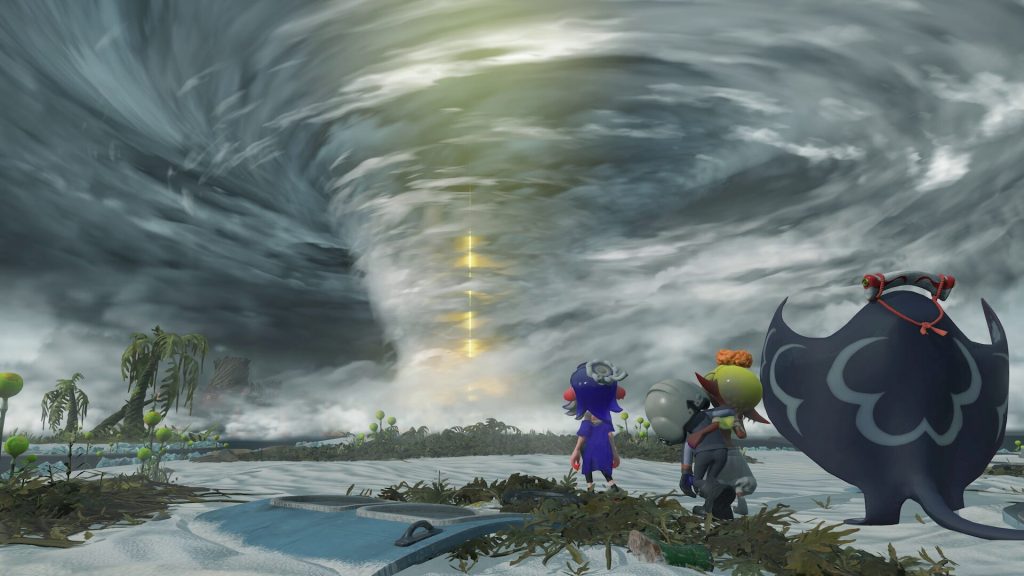
Like other games of this type, Raiders also really spreads its wings and comes into its own when it gets to the endgame. The post game content in Splatoon Raiders is pretty robust and deranged in its challenge and difficulty level, and running some of the end game stuff leads to some of the most hectic moments in any game that I can remember in recent memory.
Which, actually, brings me to what I found the most surprising aspect of Splatoon Raiders — it may be the most technically impressive game from Nintendo I have played in the Switch 2 (again. Yes, I realize I say this often, but also, we are early enough in the console’s life cycle right now that each new release shows us more about its capabilities).
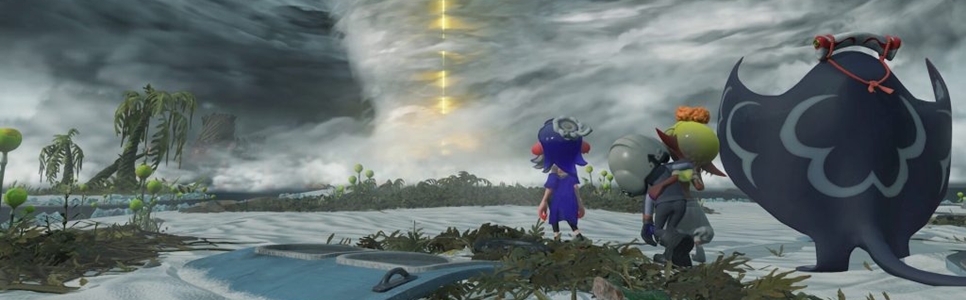
It’s amusing, because Splatoon Raiders apparently started development as an expansion for Splatoon 3, a game on the original Switch. However, this game, in the form that it is currently in, would probably melt that system if it tried to run on it. Splatoon Raiders frequently fills the screen with dozens of enemies, dozens of beams, explosions, waves, transparencies, and particle effects, dozens of bright splashes of color, multiple player characters, and through all this, it runs at a steady, locked 60 frames per second. There was not a single dropped frame in Raiders in the entire time I spent with it — and believe me, after a certain point, I was trying my best to push the game and catch any stutters or frame rate drops in the act.
I legitimately had very little expectations from or interest in Splatoon Raiders, with the last few entries in the franchise convincing me that it was no longer for me. What I ended up getting is definitely my favorite game in the franchise since the Wii U original over a decade ago, one of my favorite exclusives on the Switch 2, a system that is rapidly building an enviable library of quality exclusive content, and one of my favorite loot games ever, in a genre where, over several decades, I’ve experienced no end of fantastic games. For an unassuming spin off in one of Nintendo’s so called lesser franchises, that’s a pretty strong outing, all said and done.
This game was reviewed on Nintendo Switch 2.
Satisfying combat and movement, addictive loot progression, deep customization, short missions, excellent co-op, smooth online performance, lots of content and impressive locked-60-FPS presentation.
Repetitive mission structure, limited objective variety, substantial grinding and an endgame difficulty level that may alienate casual players.