





Marvel Tōkon: Fighting Souls reads like the perfect package: intuitive mechanics, awestriking visuals, and a pumping soundtrack, all wrapped up in Marvel tag-team flavour. Few fighting games away from the ‘Big Three’ generate the immediate excitement Tōkon: Fighting Souls has, but chuck in developer Arc System Works’ pedigree and the 4v4 brawler has the potential to be an all-timer. See, ArcSys is responsible for some of the best-received anime-infused fighting games of the last decade, with the studio now looking to deliver a genuine evolution of the fast-paced, three-on-three tag-fighter formula that the genre has sorely lacked in recent years. If Marvel Tōkon: Fighting Souls sticks the landing, it could become one of 2026’s biggest games, but this won’t be down to hype and reputation alone.
So, while appetite for crossover fighters still exists, and the superhero genre garners huge appeal, Fighting Souls’ reimagined heroes are designed to appeal to casual fighting game audiences and the more competitive FGC alike. It’s stylish, yet purportedly responsive, with easy to learn mechanics hiding depth to be unmasked through mastery. It captures the frenetic energy of classic crossover fighters, sure, but ArcSys is making sure to carve out a unique identity.
And, if anything, Sony Interactive Entertainment’s backing is a dream partnership for the studio beyond the obvious financial benefits. Whilst, yes, the Japanese giant brings marketing and production value befitting of the Marvel license, ArcSys is the sizzle on the steak. Guilty Gear -Strive-, Granblue Fantasy Versus: Rising, and Dragon Ball FighterZ showcase the studio’s reputation for expressive animation, visual flair, and 2D fighting expertise. In essence: this is far from a niche fighting game. It’s primed to be a blockbuster, in both budget and pedigree.
But, we did say the game is poised to succeed beyond its hype and reputation, but what exactly do we mean? Well, look – a 4v4 tag-team system isn’t a groundbreaking revolution, sure, but it’s a meaningful evolution with potential to become the standard for tag-team fighters which follow.
Unlike the tag-fighter genre’s now-traditional 3v3 structure, Fighting Souls revolves around a shared life bar, fundamentally changing the flow of every match. Rather than watching individual teammates disappear one by one – like the recently released Invincible VS, where assists and utility benefits are lost with them – your entire squad remains in play until your collective health is exhausted. This shift, if implemented correctly, should reduce the slippery slope effect common to tag fighters, where losing a single character can spiral into an almost unrecoverable disadvantage.
But there’s a system built around this foundation, too. Your team won’t begin battles at full strength; no, starting 2v2, you’ll unlock additional characters throughout the match by reaching Turning Points through skilful play. This expands your tactical options, your available health, and skill gauge, although an extra character arrives at the end of each round either way, ensuring the playing field remains somewhat level.
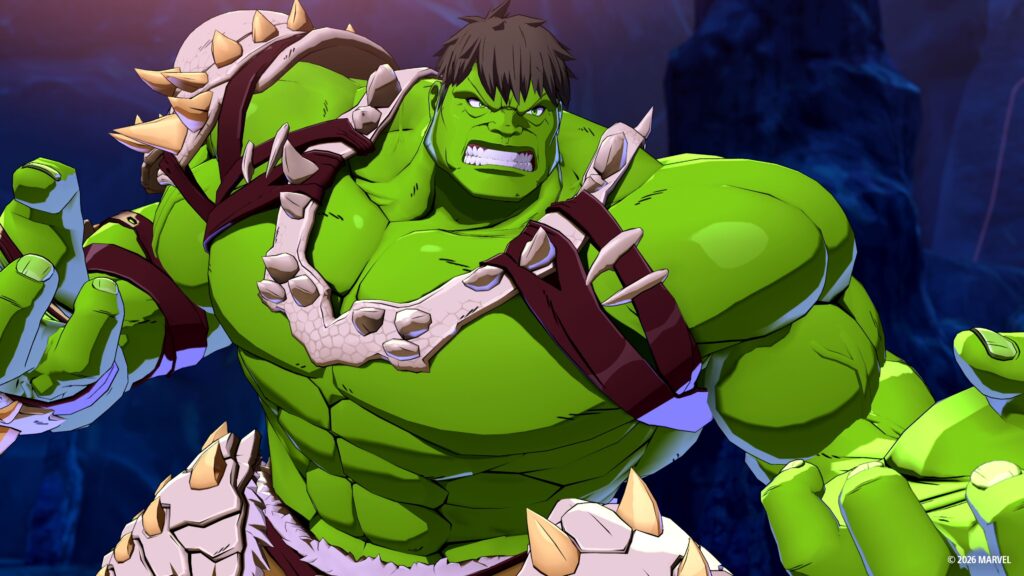
Elsewhere, Active Tag mechanics promise lengthy combo extensions, while chained Ultimate Skills create spectacular, screen-filling spectacles the likes of which Marvel fans will expect. More importantly, however, ArcSys appears to have found a way to refresh a formula that has remained unchanged for years. Instead of adding to the already crowded tag-team genre, Marvel Tōkon: Fighting Souls seems intent on rethinking how tag-team battles function beyond simply adding an extra teammate.
Another bridge that Marvel Tōkon: Fighting Souls hopes to cross is the divide between an established accessibility for newcomers with the mechanical depth that appeases competitive veterans. Plenty of modern fighters pledge to nail this dual design philosophy, and the just-released Avatar Legends: The Fighting Game aside, not many achieve it. They either overwhelm newcomers with intimidating combo chains or simplify mechanics to the point where seasoned players bounce. ArcSys, instead, appears determined to strike a convincing balance.
At the heart of Fighting Souls’ philosophy is a control scheme designed to remove the potential intimidation associated with other titles in the genre. Quarter circle motions, for instance, are relegated to optional, replaced with a Quick Skill button that executes special attacks with a simpler directional input. Likewise, you can chain together visually striking combos through chaining light, medium, and heavy attacks, while a dedicated dash button makes movement more immediate than relying on double tapping directional inputs. Ultimate Skills are only a button away, ensuring casual players can enjoy the cinematic spectacle Marvel is renowned for without spending hours in training modes. It’s a system the aforementioned Avatar Legends utilised to great extent, yet that title excels in making sure that foundational simplicity doesn’t come at the expense of mechanical depth – something Marvel Tōkon: Fighting Souls appears poised to replicate.
See, beneath the approachable controls is an intricate suite of mechanics built robustly for long-term mastery. Team orders, resource management, Active Tag extensions, Stylish Combos that reward diverse creativity over repeating the same manoeuvres, and the already mentioned evolving 4v4 structure each provide extra strategic layers for competitive players to chew on. Throw in rollback netcode, a comprehensive training mode, and a ranked ladder, and Fighting Souls is set to satisfy both ideals of the fighter-game-player’s mindset. All in all. ArcSys has been able to simplify execution while preserving tactical complexity, and with it the possibility that Marvel Tōkon will enjoy a long shelf life as a result.
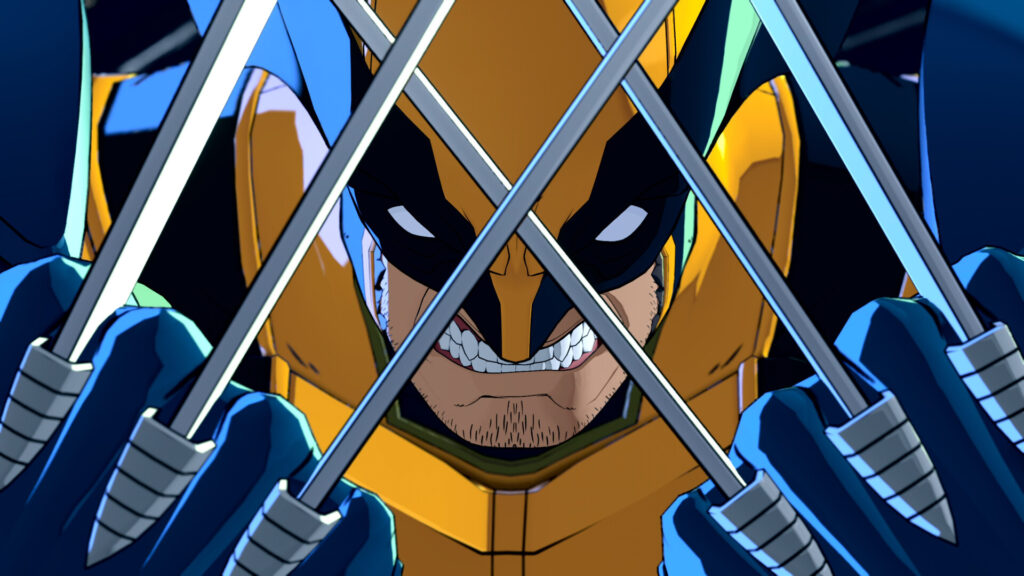
But look, of course, not everyone picks up a fighting game with ranked competition in mind. If you are a casual looking for non-competitive play then Marvel Tōkon: Fighting Souls’ Episode Mode looks right up your street. Penned by celebrated comic writer Kieron Gillen, Fighting Souls’ Episode Mode brings five distinct storylines, each following a different superhero team as they confront the looming threat of the as-yet unknown Champion.
And what’s more, expressively illustrated motion-comic sequences make the action appear as though it’s bursting straight off the page. Episode Mode, to sum up, looks like a stronger single player offering than most other fighting games.
Yet, despite its promise Marvel Tōkon: Fighting Souls isn’t without its potential pitfalls. The biggest concern surrounds its twenty-strong launch roster, with many fearing that a 4v4 fighter could place an overreliance on post-launch DLC. The worry has only been heightened by the omission of several notorious Marvel heroes – namely iconic X-Men figures such as Cyclops, whose absence has sparked discussion on how extensive Fighting Souls’ monetisation plans run.
There are gameplay concerns too. Slot-based assist attacks, for instance, risk homogenising your team’s make-up, whilst there are undeniable questions surrounding how ArcSys can balance a shared health system across a four-character team. Then there is the ominous cloud of Sony’s PSN issues, and while these are controversial they do feel like speedbumps that’ll be flattened pre-launch.
What these potential drawbacks indicate is that success is by no means guaranteed. Competitive players may well scrutinise the game’s mechanics, while everyone will likely question the limited launch roster. But, like we said at the outset, if Arc System Works can deliver on the title’s promise – and if fighting game newcomers can find their place amongst the competitively minded – then Marvel Tōkon: Fighting Souls has every chance to push the fighting genre to a new benchmark. It’s built on refining established ideas, yes, but there’s undeniable ambition to match Marvel’s gravitational pull.
Note: The views expressed in this article are those of the author and do not necessarily represent the views of, and should not be attributed to, GamingBolt as an organization.