






We’ve been keeping a close eye on The Blood of Dawnwalker after our own review of the game went up, looking to see what the rest of the gaming community has to say about Rebel Wolves’s debut title. A lot of valid concerns, and equally legit counterarguments, have emerged around one of the game’s flagship features, and it got us thinking about our own time in Vale Sangora.
It’s no secret that we think the open-world genre has begun churning out maps that increasingly expand in terms of their size while not necessarily doing the same for their scope. That throws off a game’s balance, giving players an often overwhelming number of quests, markers, collectibles, and a few repetitive activities that are ironic in that they’re meant to delay a sense of monotony that might creep in from everything else.
Those maps often keep you coming back for more by encouraging you to try seeing everything they have to offer before you either move on or perhaps dive into a new playthrough if the story or gameplay proves good enough to warrant it. But The Blood of Dawnwalker is here now, and it’s a credible effort to make a meaningful change to the situation. How does it manage that? The short answer is that it makes it impossible for you to see all of Vale Sangora in a single playthrough.
The long answer is a lot more fun, though, so strap in and join us as we take you across a land where there are things to do, and very little time to do them.
Roads Not Taken
The time mechanic, and the way it influences your approach to open world activities, is the secret sauce here. You’ve probably already guessed that, but it’s important to think about how it affects the moment-to-moment gameplay and makes even inaction a decision with consequences that you have to live with. Vale Sangora is deliberately designed to lock you out of one thing if you choose another, and you can’t see every possible outcome, quest, or unlock every ability in one go.
That might sound off-putting to a player who might not have the time to sink another thirty or so hours into the game, but we must also remember how the game’s narrative framing weaves in uncertainty and a moral weight to the things you choose to do and those you don’t. Indecision being baked into the design of a game based on the choices you make might sound unintuitive, but Dawnwalker makes that a bold gambit that clicks in many ways.
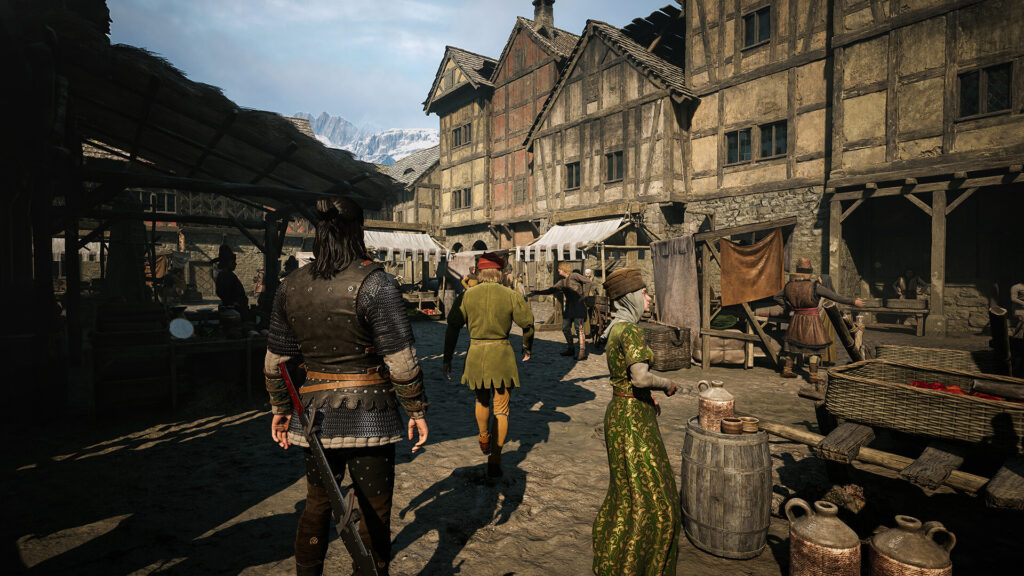
The 30-day time limit that Coen finds himself forced to navigate sounds like a chore on paper to some, and we must say that we see your point of view if you’re among those who are concerned. But having played with it for a fair bit, we think that the way it’s been presented paints a picture of a clock that’s constantly ticking away, lending a sense of urgency to moments that should be relaxing and rewarding for your curiosity.
Well, that’s not the case, and time only advances at moments where that shift makes sense and brings an impact to the world state. That means that exploration isn’t going to feel like you’re trying to speedrun a game you’re playing for the first time, although it is pretty easy to roll the credits if you put your mind to it. You’ve got all the time in the world to explore every corner of the Vale that Coen calls home. But that changes when it comes to actually engaging with everything it has to offer.
That’s immediately valuable, as it means that Dawnwalker only limits completionism and not curiosity. The former has become something of a tiresome presence in open worlds, with maps that seem designed to pander to it instead of making it a meaningful part of the experience. The former, however, has always been something that has remained one of the genre’s greatest strengths, and the reason we continue to take on those huge maps in the first place.
But how does having your quests and activities on a clock translate into a solid open world experience? That’s where Dawnwalker’s real magic comes to the fore.
What You Do Defines You More Than What You Say
We can’t help but think about The Witcher 3 when we think about a giant map with a lot to do. Those markers have been a talking point for a long time, and were even addressed in the game’s next-gen update too. But that game is very relevant here thanks to the incredible writing behind its side quests that made chasing down everything in sight a pleasure.
However, you can’t deny that crossing off every place of power, monster nest, or hidden chest felt like tedious homework you had to do to get to the good stuff. You took on quests without a care for the consequences of failure, because the game didn’t have too many fail conditions built in. Yes, quests could fail, but only because you advanced the story far enough to make their outcomes potentially redundant.
However, Dawnwalker is a game about trade-offs when you’re choosing a course of action. There’s always something you’re giving up in favor of something else, and the game makes you live with the consequences of those choices. It’s far more immersive than just dialogues that lock you into a specific series of events, feeling more organic and in line with the game’s RPG trappings.
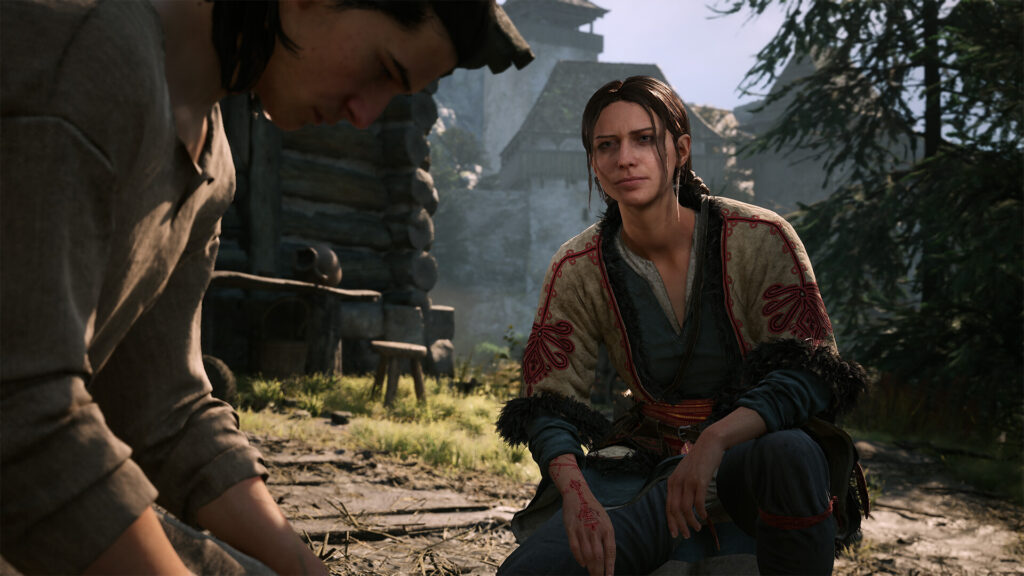
This is a game in which you’re not just choosing what Coen does, but actively shaping what he cares about as you try to guide him along on the mission to save his family. It makes for an interesting departure from picking between a few dialogue options to make choices happen before you even begin a conversation.
Do you try to investigate the reasons behind the incarceration of two men competing for your assistance, or simply feed on them and move on? Do you help that old lady or little girl, or continue on your search for better gear and potential leads to Brencis’s operations in the area?
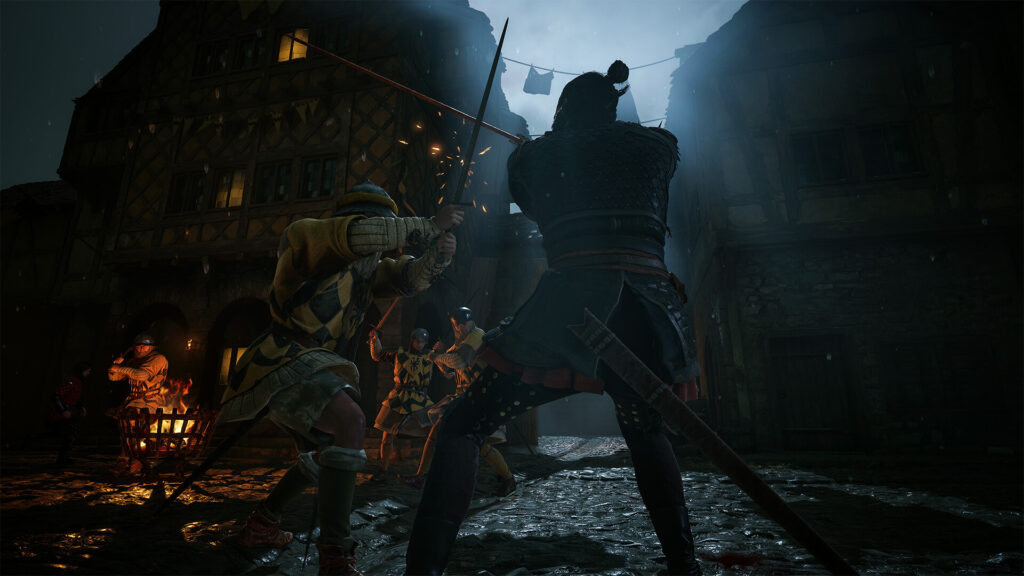
You’re in control of where, how, and why Coen spends his time on the things that he does, but you also face what happens from those choices alongside him. In a game about internal duality, that’s an interesting parallel that makes us a huge part of the experience, and how it manages to unfold under our guidance. You make as many problems as you solve in Vale Sangora, and you simply roll with whatever comes next. That’s a very refreshing departure from other open-world games in modern gaming for sure.
Of course, there’s another equally important piece to that puzzle.
The Freedom To Choose
No amount of choices and associated consequences would have been enough if the time mechanic limited your ability to actually see and discover opportunities to let it work its magic on your adventure. We spoke about how this one limits only completionism, attempting to remove an approach to its world that has become sort of ingrained in players’ habits over the years.
Aside from making any single playthrough distinct and interesting, there’s also the fact that this approach drastically improves on Dawnwalker’s replay value. New Game Plus isn’t just about repeating the same set of things with better gear and skill sets, but about deliberately trying to see a different side of the Vale than what you’ve currently managed.
A replay is organic, more so than a rather obligatory second run where you’re going through the motions just to enjoy the experience with a build or gear that you’ve put together. You explore different places, outcomes, and missions, and the potential to see the entire narrative in a whole new light makes a replay not just tempting, but legitimately viable as a way to get more value out of the game.
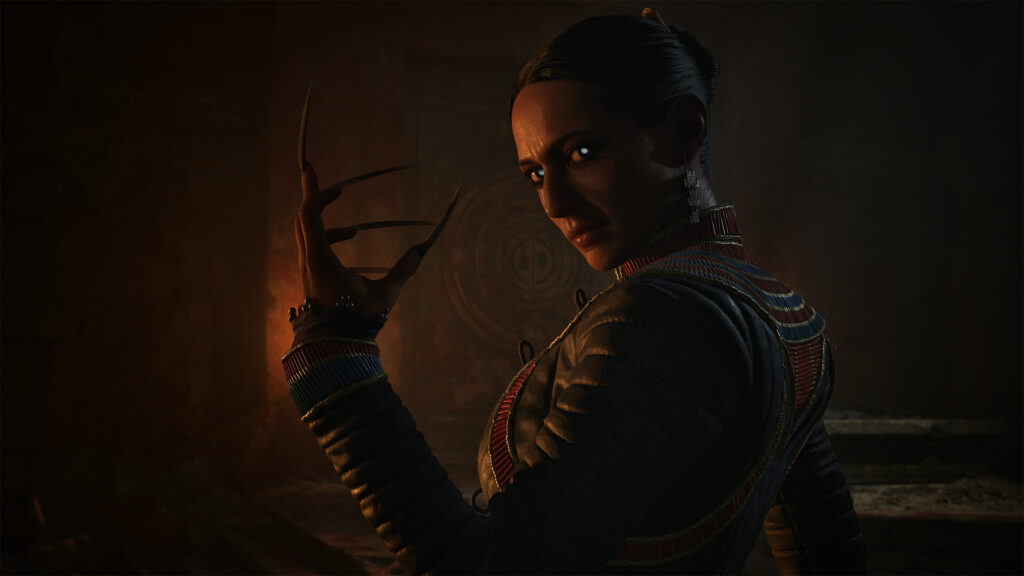
Dawnwalker has been bold enough to innovate, and smart enough to ensure that its ambitions have been realized through an almost clinical approach to its execution. It hasn’t made its world smaller or restricted the freedom its players have in it. Instead, it’s made it impossible to treat the many things you get to do as things to cross off on a checklist.
It has taught open worlds and RPGS that more content is never an answer. Nor is a 30-day timer on its own. But having reasons for players to choose between all that’s on offer is a smart way to take the genre forward, and a great way to weave in agency into an experience that allows it to be engaging and rewarding all at once. That isn’t something you see every day, and we dare say that it’s probably something we could see more of in the future, but we’re not sure if it can be pulled off as well as it has been in this one.
We can’t wait for you to experience it for yourself. The night awaits, and you’re going to want to sharpen your claws before you dive into this one.
Note: The views expressed in this article are those of the author and do not necessarily represent the views of, and should not be attributed to, GamingBolt as an organization.