






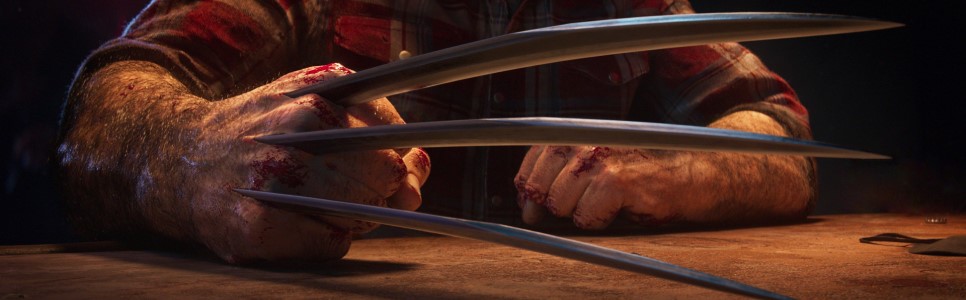
If you’ve joined Logan on any of his outings as Wolverine across the character’s extensive existence in popular culture, you know he’s a straight shooter who doesn’t mince his words and is more than happy to let his claws do the talking. He makes choices his allies may not necessarily agree with, carving a path to his goals with a moral compass that’s decidedly geared towards the ends over the means.
Is it so much of a surprise, then, that a game focused on the man has equally drawn the ire of some critics for specific failings that others have instead praised? Is Insomniac’s Marvel’s Wolverine a take on the character that translates his personality and style well enough to the video game format? Why does one critic see it as an average take on a beloved character that lacks any real soul while another calls it a game that truly brings Logan to life?
We happen to be firmly in the latter camp, but we can see where anyone belonging to the former is coming from, despite respectfully disagreeing with them. Of course, we think there are explanations for both sides of the argument, and that’s exactly what we’re doing with this one.
So, why has Wolverine been so divisive? And why did we give this divisive game a perfect score? Let’s begin cutting through the noise with our claws and explore a rather fascinating state of affairs.
An Above-Average Average
First of all, average review scores seem to hover around 78 to 80, which is an indicator of a game that has managed to entertain enough of its critics for it to count as a legitimate effort. According to some reviews, Wolverine might not blow your socks off but is still a perfectly respectable effort from a studio that knows how to handle its superheroes and has a proven track record of doing so.
So what’s wrong, you ask? Well, scores on the lower end of the spectrum, which stand at even 6/10 or lower, raise interesting questions about the experience that we think should not be ignored. Why is that? They’re indicative of a variety of factors, all of which matter to this particular examination of why Marvel’s Wolverine has managed to draw a line in the sand and place its critics and players squarely on either side of it. Are its claws really lacking the cutting edge it needs to win over players as easily as Peter Parker and Miles Morales did back when Insomniac was all about them webs?
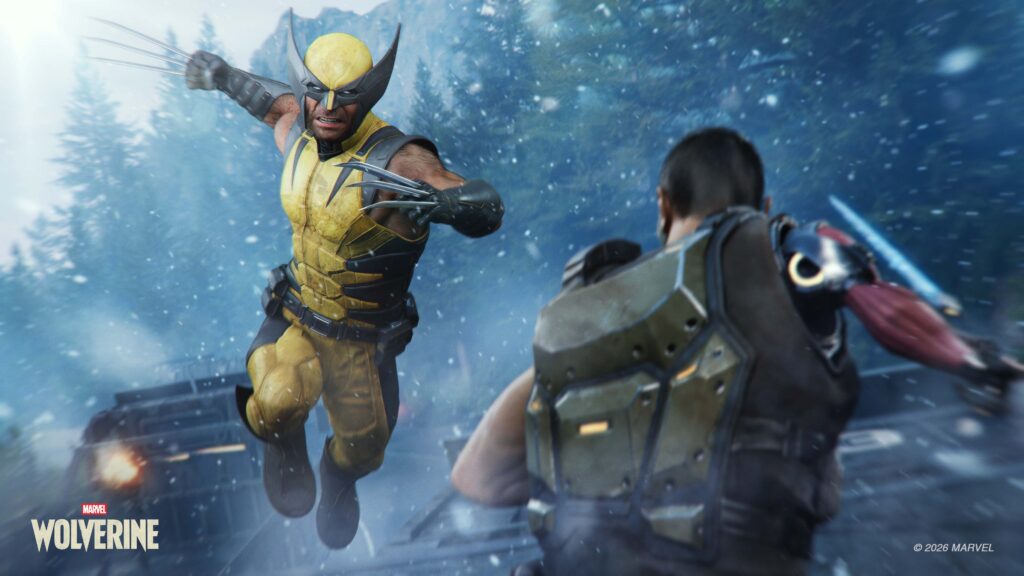
You have to consider that Spider-Man might be having an undue influence on how Logan’s adventure is being received. Heck, even Ratchet might have something to do with it, as both franchises bring titles that are entirely different beasts, yes, but are also such an important part of Insomniac’s portfolio thanks to their success. It’s almost unavoidable to have comparisons between those games and Wolverine, but the unfortunate consequence of those comparisons is a distortion of expectations around the new game that could make them, for lack of a better term, unreasonable.
We’re definitely of the opinion that a lower aggregate in comparison to Insomniac’s past titles isn’t automatically an indicator of lower quality on Wolverine, and that an almost 80% aggregate isn’t indicative of failure, or a game that’s mediocre. We understand that all of Insomniac’s three Spider-Man games have been rated at an 85-plus. However, the situation with Wolverine does point to a game that’s different, and one that has perhaps caught a few of its players off-guard.
So, What Are The Concerns?
It’s also worth looking at some of the criticism that tackles Marvel’s Wolverine on its own terms, a distinction that becomes particularly relevant a little later. Complaints about repetitive combat and limited enemy variety are certainly fair things to raise with potential buyers, especially across a 15-20 hour adventure. The latter, in particular, is something we also acknowledged in our review, since much of the regular opposition is ultimately made up of different Cyborgs and Sentinels. We simply didn’t find that limitation particularly damaging to the experience, largely because the encounters themselves remained dangerous and entertaining, while the game’s excellent boss roster helped provide considerably more variety.
Where we disagree more strongly is with the argument that Wolverine’s progression systems fail to add meaningful depth, or that its combat becomes repetitive simply because many encounters can initially appear to demand similar solutions. Our experience was almost the opposite. Between Techniques, Adaptations, Rage, environmental attacks, area-of-effect abilities, parries, lunges, and the different ways these mechanics interact, we found a surprising amount of flexibility within Logan’s deliberately focused moveset. The depth came less from constantly introducing entirely new powers and more from learning how to combine and exploit the tools already available.
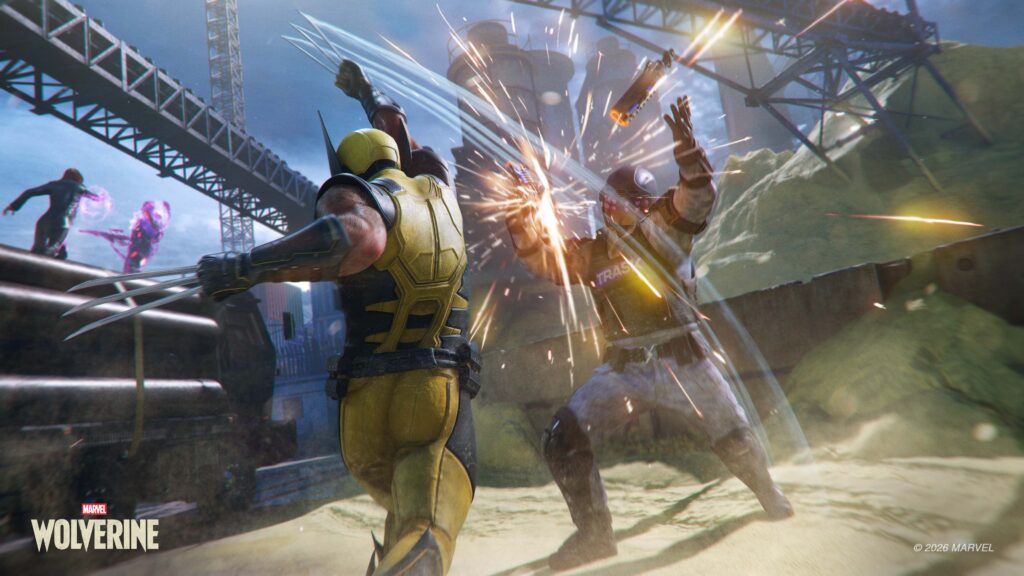
That doesn’t make complaints about repetition inherently invalid; different players are naturally going to reach different thresholds over a roughly 20-hour campaign. But there’s an important difference between identifying aspects of the combat that may eventually become familiar and arguing that the underlying systems lack depth altogether. Based on our time with the game, that latter criticism is much harder for us to agree with.
And that brings us to the other end of the spectrum, where there are complaints that Logan doesn’t bring Spider-Man’s agility to his battles, and that his adventure is far too curated to be enticing after the open world approach that seems to be quite favored among superhero titles. It’s here that we beg to differ as well, as we’d argue that these are unfair complaints that do not evaluate Wolverine as something entirely new from Insomniac.
Why is that? Well, we’ve spent a lot of time with both Logan and Peter over the years, and we can tell you that they’re very different people, with very different ideas of what makes a hero. Heck, you might even say that they have very different ideas of what a hero actually is to begin with. Why then are the two characters and their respective adventures being viewed through the same lens?
Different Men, Different Masks
While we understand the comparisons between two titles from the same studio, Logan and Spider-Man couldn’t be more different, and the variations are more than just cosmetic. Spider-Man’s powers make him supremely agile, capable of traversing vast distances very quickly, and give him a very pronounced sense of verticality in a fight, as he utilises his webs and strength to keep his enemies guessing.
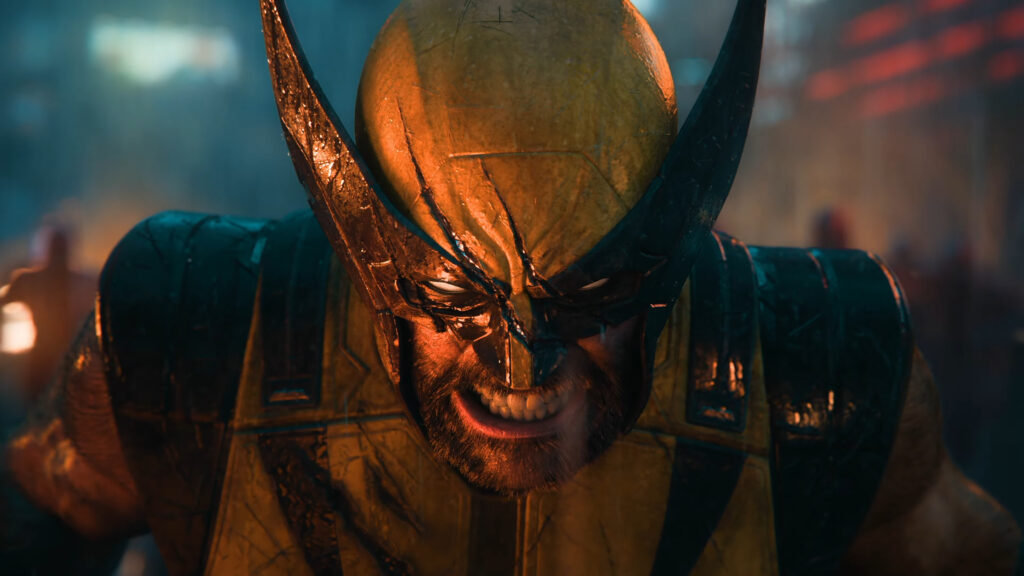
Logan, on the other hand, doesn’t need to do any of that. He’s a close-range fighter who relies on brute force and his own tankiness to power through encounters, being cunning about letting his adamantium skeleton take the worst of any beatings he gets while his claws ensure he gets to heal after a fight with more than enough time to spare before he fights again. That’s always been at the core of his utility in any combination of Marvel characters, and he’s been in a lot of such teams over his many years as a superhero.
As such, Marvel’s Wolverine being criticised for not having a massive open world is a tad puzzling to us. Would having Logan climb tall towers with nothing but his claws be a suitable alternative, with a few potentially spectacular leaps spanning kilometers between rooftops the only reward? Should the game have padded out its playtime by making him bound across vast distances between objectives instead of just getting us there and letting us loose?
There are fewer elaborate travel mechanics in Wolverine because they’re not important to the experience the game is trying to present, and it’s unfair to evaluate it on a conscious design choice that’s actually correct in its approach.
There’s also the criticism that Logan doesn’t have enough power variety compared to Spider-Man, which I don’t think makes much sense. The main draw of Wolverine’s combat is his claws; he simply doesn’t have the same range of abilities that Spider-Man does. More importantly, as we noted in our review and earlier in this article, the combat is already quite strong thanks to the way its techniques and adaptations are woven together, resulting in a fast, dynamic, and consistently engaging combat system.
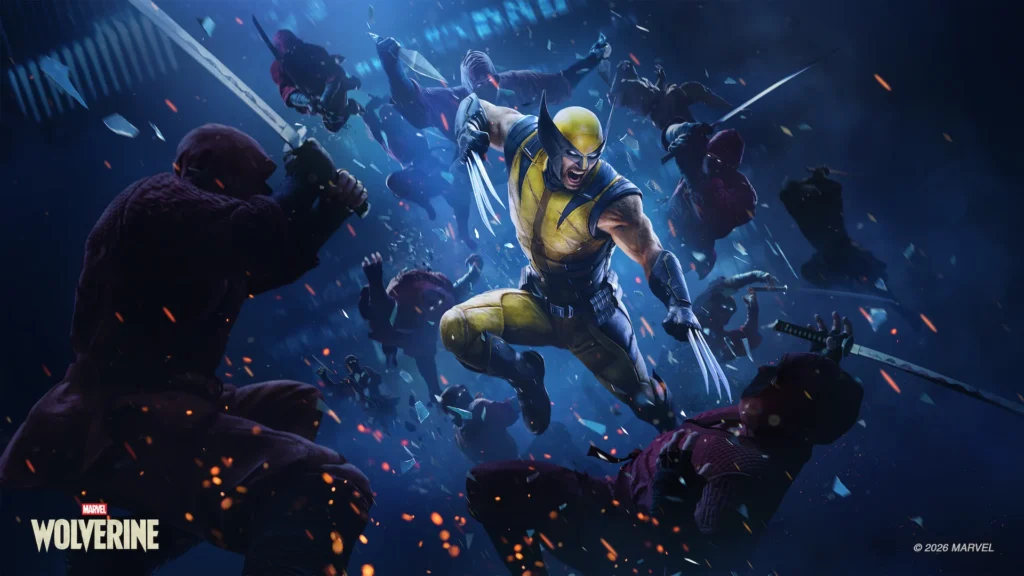
While we can certainly understand arguments in favor of giving Logan a wider range of moves in a game built around the spectacle of playing as Wolverine, his bag of tricks has always been relatively limited. The appeal isn’t necessarily in having dozens of wildly different abilities, but in how effectively and stylishly you use the tools he does have. That was something we felt throughout Wolverine: its combat is less about constantly unlocking new powers and more about mastering positioning, timing, aggression, and the different ways Logan’s existing moves can be combined.
Then there’s the entire controversy surrounding the scent trail, which has been held up as yet another example of developers assuming players need to be constantly guided, of the game excessively hand-holding them, and even of fundamentally poor game design. During our time with Wolverine, however, the scent trail simply wasn’t intrusive enough to warrant mentioning in our review. In terms of actual gameplay, it felt like a relatively minor issue.
Now, we get the criticism. Having such an obvious visual trail in what is already a fairly linear game can feel unnecessary, and at times it admittedly looks a little silly. But there’s also some important context here. As Insomniac Games’ Director of Community and Marketing explained, “The scent trail isn’t always on. It represents Logan’s canon mutant super senses and elite tracking ability.” It only appears when Logan is actively tracking a particular scent or sound, whether that’s a person, material, another clue, certain story moments, or a nearby collectible.
Could Insomniac add an option to disable the scent trail in a patch? Absolutely. Could the same be done for the large, glowing collectible indicators? Of course. And that’s ultimately our point: these are issues that could largely be addressed with a couple of simple toggles. Criticizing their presentation is perfectly reasonable, but treating them as evidence of some fundamental design failure feels more than a little exaggerated.
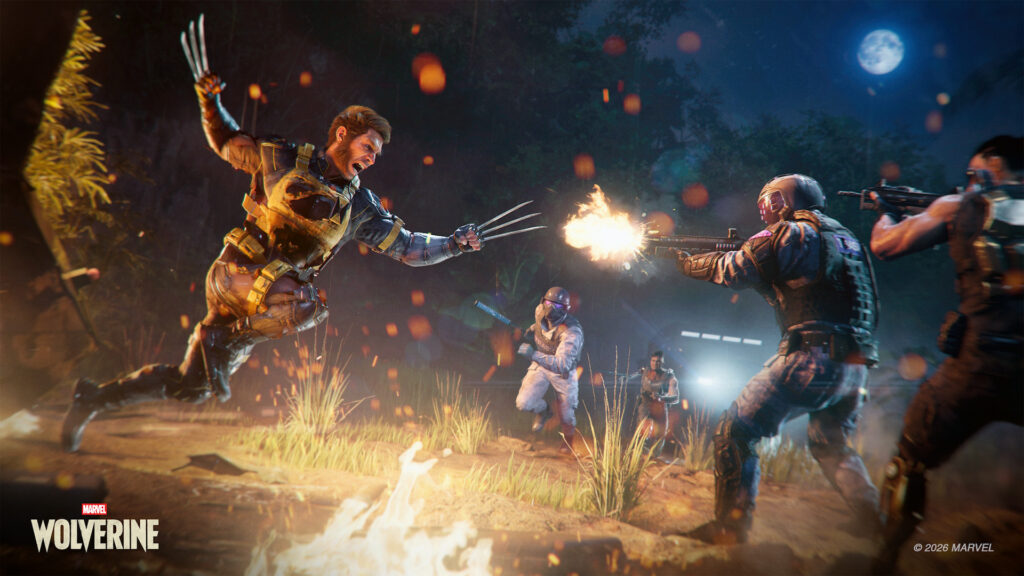
Should the game have tried to be something else to offset the risks of such criticisms? We don’t think so, as games like Wolverine used to be a lot more common back in the day. A focused, AAA experience with a 15-20 hour playtime often brought strong pacing, as studios knew they had a limited window to make their narratives land. Memorable set-pieces continue to make us smile fondly at the thought of them, while linear progression systems came with a kind of simplicity that modern games might not have. Especially the open-world ones.
And then there’s the entire discussion surrounding the idea that Wolverine portrays Logan as too much of a “nice guy.” Of course, the game does show him being cool, compassionate, and even genuinely kind when the narrative calls for it. But that’s hardly the entirety of his characterization. At other points, he is brutal, unapologetic, distrustful of authority, prone to explosive rage, and potentially dangerous even to the people around him.
That contrast has always been an important part of Wolverine as a character. He can be protective and compassionate without suddenly ceasing to be the violent, abrasive loner people associate with him. So reducing the game’s portrayal of Logan to simply “they made him too nice,” especially without considering the full story and the circumstances surrounding those moments, feels like another criticism that is being exaggerated.
A Matter of Perspective
The dichotomy surrounding Wolverine, in our opinion, largely comes down to whether it’s being judged as a game that stays true to its character, or as a video game expected to check every conventional box before earning a stamp of approval. Viewed through the former lens, it’s a focused experience whose linearity becomes one of its strengths, allowing it to maintain a pace that keeps the excitement and adrenaline flowing and, at its best, makes you feel every bit as feral as Logan himself.
Look at it the other way, though, and its very strengths become weaknesses, just as Logan’s softer side often leads him into situations where he’s forced to hold back on his own instincts and find a different approach. But like the man, this is a game that knows exactly what it wants to be. It wants to be the best at what it tries to do, and it turns out that it does that very well.
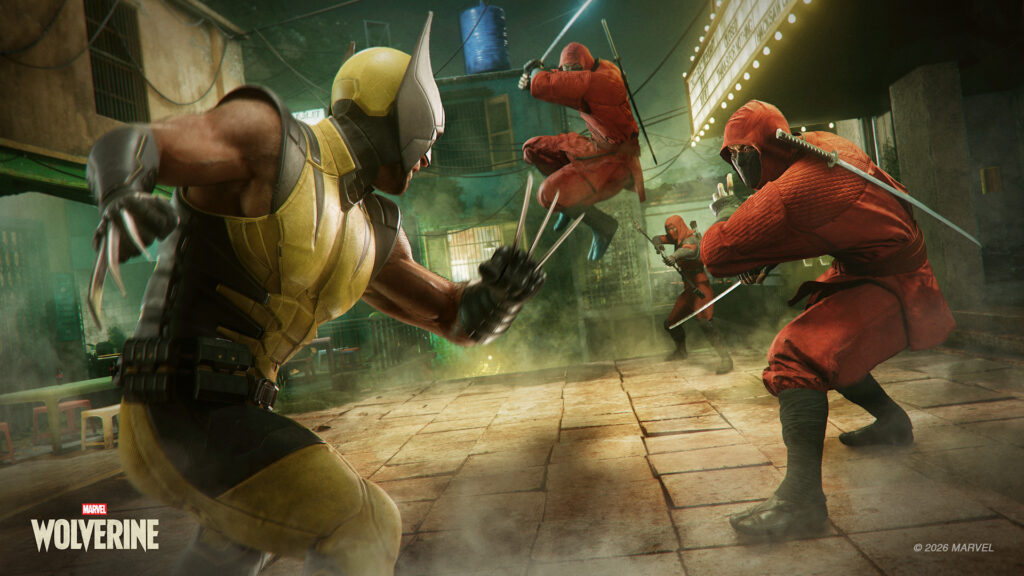
Look, you can disagree with any review, question its conclusions, or even hilariously accuse an outlet of being handed “bags of money,” but at the end of the day, a review is still an opinion, and opinions are inherently subjective. We loved Marvel’s Wolverine because it brought Logan’s violence, aggression, and ferocity to the forefront, while ensuring that both the story and the gameplay mechanics consistently supported that characterization in a way we haven’t really seen before. For us, that execution was strong enough to earn the game a perfect score.
It made Logan his own man instead of forcing him into a Spider–Man template that we believe would not have worked at all. We’d rather spend 20 incredible hours with an exhilarating action game than a hundred hours clearing out another map padded out with things to do.
Note: The views expressed in this article are those of the author and do not necessarily represent the views of, and should not be attributed to, GamingBolt as an organization.