






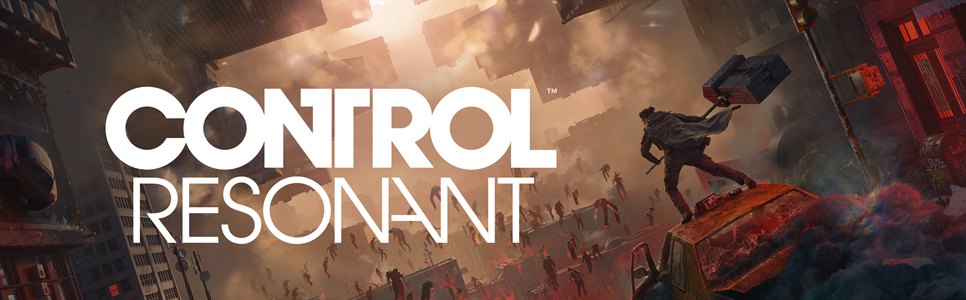
Control Resonant represents a substantial evolution in Remedy’s supernatural universe. Taking the fight to a warped Manhattan, with a paranatural arsenal that includes a shapeshifting weapon, Control’s sequel is changing almost every layer of the formula.
Here are 15 things you need to know before you buy.
Dylan Faden is the New Protagonist
Control’s protagonist and Director of the FBC Jesse Faden has mysteriously absconded for this sequel, and it’s up to her brother Dylan to find her. Stepping outside the amorphous concrete of the bureau’s Oldest House after years of incarceration, Dylan’s own paranatural powers have morphed Jesse’s parting gift – an Object of Power shaped like a spear, plunged inside his chest – into a physical weapon that’s bonded to his body. What follows are Dylan’s attempts to contain the cosmic anomalies that have spilled into Manhattan whilst also tracking Jesse down.
Dylan’s Weapon is The Aberrant
Put simply: The Aberrant is Control Resonant’s centre. Its characteristics move the sequel’s combat to close-quarters melee, while buildcrafting is expressed through the weapon’s forms – Dual Blades, Axe, Scythe, Whip, and Heavy Hammer. Whereas Jesse’s Service Weapon was a gun with changing designs, The Aberrant is a shapeshifting instrument tuned to five distinct combat identities, with move sets, attack speeds, range, power, crowd control potential, and more, governed by whatever form Dylan is wielding.
The Gap System is Combat’s Core Loop
Every enemy Dylan encounters has a Gap meter, which, essentially, is a stagger bar that depletes with every blow he lands. When the Gap breaks, enemies are left vulnerable to punishing attacks and lethal finishers. There’s an optimal technique to dishing out damage here; a rhythm dictated by The Aberrant’s forms. See, the low power, swift manoeuvrability of the weapon’s Dual Blades or Whip can overwhelm enemies and chip away at their stagger meter. Then, Dylan can switch to the Axe or Hammer to deal heavy punishment. It’s a familiar system in some ways, but the skill comes in recognising which form to use and when is best to switch.
Each Weapon Form Can Be Upgraded
Each of The Aberrant’s five forms has its own tailored upgrade tree, with improved power and efficiency, new moves, enhanced stagger damage, status effects, and exciting combo-extending potential all a part of their customisation paths. And, on the combo potential specifically, The Aberrant utilises three slots – Primary, Secondary, and Combo Ender – which you can assign forms into, allowing the weapon to seamlessly shapeshift mid-combo. But, if you decide you want to switch up your playstyle, respec’ing your upgrade points is possible.
Dylan’s Resonance Abilities Compliment The Aberrant
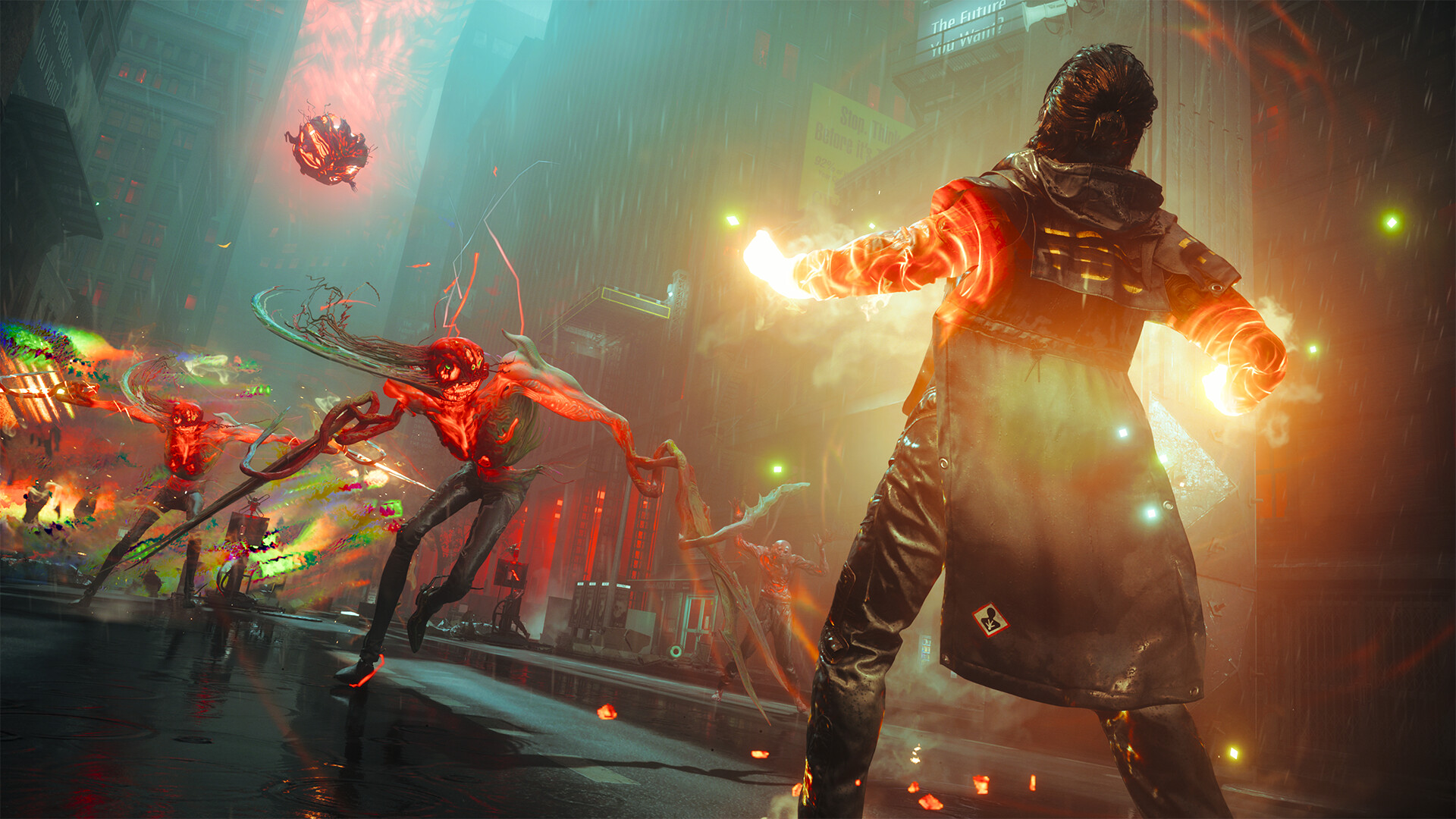
And while The Aberrant is Dylan’s primary weapon, it’s only half of his combat repertoire. His paranatural Resonance abilities provide a supernatural counterpoint to his melee attacks, powered by a resource generated through aggressive play. See, the more fights you throw Dylan into, the more Resonance he accumulates, which can then be spent executing high-impact supernatural abilities, summons, temporary subversions, projectiles, and more. Better still, you can equip two distinct loadouts of three abilities and swap between them at any time to best match the abilities to the situation. One for combat, the other for traversal perhaps?
Paranatural Movement is Just as Crucial
Dylan’s abilities aren’t exclusively tied to dismembering the Hiss. No, with Manhattan’s layout foregoing all known physics, traditional movement isn’t always an option, so Control Resonant equips Dylan with a hefty suite of movement and traversal skills. Reach, for instance, functions like a metaphysical grappling hook, allowing Dylan to catapult himself through impossible spaces, while Levitation and Air Dodging allow him to cross gaps, engage in aerial combat, and even juggle airborne targets.
Shift Can Flip the World Upside Down
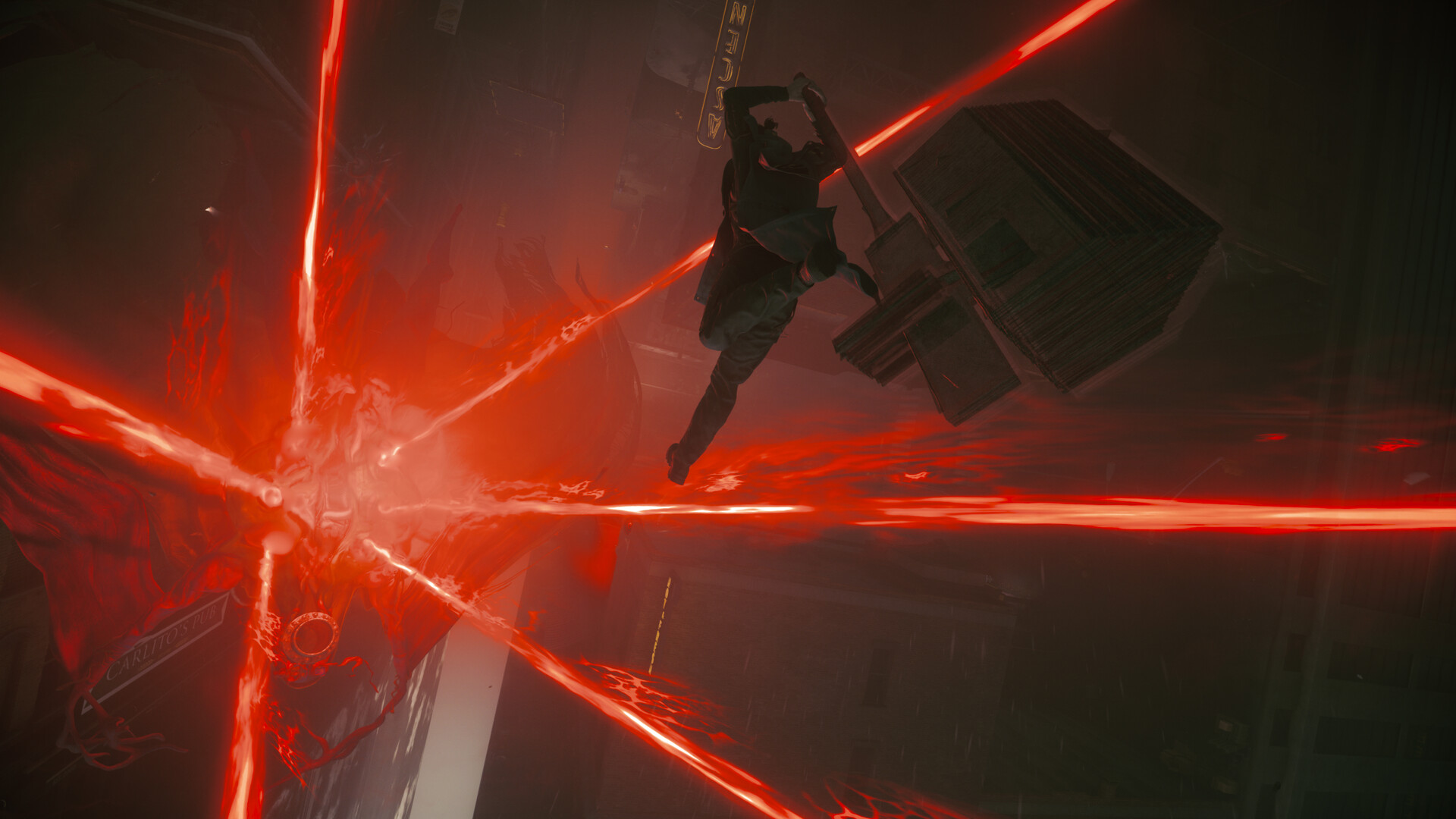
We’ve reserved one of Dylan’s paranatural abilities for its own entry, as Shift is set to be one of the game’s most memorable mechanics. Encapsulating Remedy’s commitment to messing with reality, Shift allows Dylan to physically re-orientate a distorted world. If a road is upside down, or an entire building is on its side, you can flip its centre of gravity to allow Dylan to continue as if it was a flat surface. This eye-catching ability suggests that instead of always pushing against a corrupted world, there will be times in Resonant when you’ll mould it’s corruption around you.
Talents and Artifacts Build Dylan’s Passive Progression
Whereas The Aberrant and Resonance abilities might provide the foundations for Dylan’s combat style, Talents are what joins those systems together. See, rather than providing incremental stat boosts, Talents bring synergy between both sides of Dylan’s arsenal – boosting his Dual Blades while a Resonance shield is active, for example. You can steer Dylan towards radically different archetypes, whether you want to extend his combos, maximise Resonance generation, or something else entirely. Elsewhere, Artefacts offer another layer of customisation, where crafted gear perks can bring passive status effects, temporary immunities, automatic retaliatory attacks, or something altogether more explosive.
New Game Plus is Designed as a Power Fantasy
Available at launch is New Game Plus, and it’s a mode built around replaying Resonant’s campaign as the ultimate power fantasy. Carried over is your Aberrant mastery and unlocked Resonance abilities, while collectibles are relocated to renew exploration incentives. The result is an experience that gives you the tools to tear through Manhattan with everything you earned on your first playthrough.
Manhattan is Remedy’s Biggest Playground Yet
Control’s Oldest House was unnaturally large, but its brutalist corridors and fluorescent offices could only offer so much variety. Resonant, instead, opens the doors to Manhattan, giving Remedy considerably more leeway to incorporate verticality, scale, and colossal structure. Furthermore, hidden secrets, lore drops, optional enemies, and bizarre diversions lie in the corrupted streets, meaning every corner on every block is worth poking around in.
Manhattan’s Difficulty Evolves as You Progress
Resonant’s Manhattan isn’t an open world, but an open-ended city cordoned into zones, and the difficulty of these areas evolves the more you clear. While each district’s story is curated, progression through each zone ties back to the broader narrative. It’s just that the further you venture, the more the city responds with greater challenges – enemies level up, more aggressive threats begin to spawn, and previously manageable encounters become elite skirmishes. It’s an intriguing pull-push – the city’s non-linearity pulling you in, then pushing you back as it grows tougher – moving Resonant away from traditional ARPG levelling.

Patterning Gives Every District Its Own Kaleidoscopic Nightmare
Behind Manhattan’s transformation is the Patterning, an algorithmic phenomenon that twists the city’s everyday street furniture into kaleidoscopic configurations. This effect is most obvious in the Resonants themselves; the enormous boss entities which occupy specific districts embody the most extreme vision of these distortions. Yet, rather than just being a visually dizzying spectacle to decode, each Resonant is designed around a specific challenge, forcing you to adapt to the particular nightmare that’s taken root in its corner of Manhattan.
Resonant is Designed to be Welcoming
Despite the sequel’s deep systems and demanding melee combat, Remedy has ensured that Resonant is not an impenetrable game. Multiple difficulty options give every type of player control over how punishing their experience should be, while generous dodge timing makes evasive manoeuvres approachable to action-game newcomers. Even the ability to respec Dylan’s build means you’re free to experiment without fear of committing. And, even if you’re coming to Resonant having never played Control, Remedy insists that the sequel has been created to stand on its own.
Conversations Don’t Interrupt the Action
Whereas Control often pulled Jesse out of the action for a conversation, Resonant looks to build dialogue seamlessly into Dylan’s movements through the world. Admittedly, this system sounds relatively minor compared to the sequel’s more obvious combat and progression overhauls, but it should help the game maintain the momentum encouraged by the renewed emphasis on traversal and movement.
Release Date, Platforms, Price, and PC Requirements
Control Resonant is set for launch on September 24th, with PlayStation 5, Xbox Series X|S, and PC via Steam and the Epic Games Store the confirmed platforms. Pricewise, the Standard Edition is retailing for $59.99, while a Digital Deluxe Edition is available for $69.99. To play the game on PC you’ll need a minimum Intel i5-8500 or AMD equivalent processor, a GeForce GTX 1070 or Radeon RX 5600 GPU, 16GB RAM, and 100GB storage.