





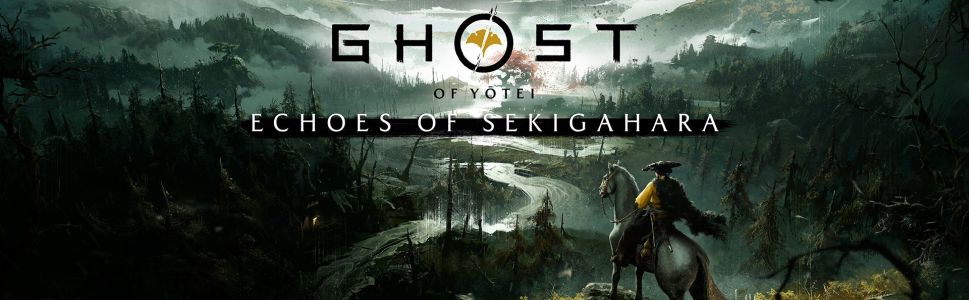
Decades pass, and the debate over whether an expansion should aim to innovate and, well, expand on the base experience or offer more of the same continues with Ghost of Yōtei’s Echoes of Sekigahara. Anyone who played Iki Island, Ghost of Tsushima’s paid expansion, probably knows not to expect anything revolutionary. But even if that’s the case, Sucker Punch Productions should deliver an experience that best represents the high points of the base game. A compelling narrative, characters that are flawed yet endearing, gorgeous landscapes where you want the wind to guide your path while engaging in momentary distractions – you get the idea.
So while Echoes keeps things a little too familiar in gameplay and exploration – barring a few new mechanics here and there – it’s absolutely worth checking out for the story. And that’s before delving into the admittedly uneven Most Wanted mode, which is free for all players.
Depending on how far you’ve progressed through the base game (spoilers: It needs to be more than a few hours), you’ll receive information about a new bounty. Venture to the specified inn to speak to good ol’ Kojiro, and he’ll reveal the target’s name – Nagato the Handsome. This strikes a chord with Atsu because, three years prior, they fought in the legendary Battle of Sekigahara. It’s left her with some bad memories, which is saying something, and Nagato is rather unsubtly to blame.
"While I would have preferred spending more time on their meeting in the past – rather than a quick narration that explains the same – the expansion’s story is very well delivered with a significant amount of emotional weight."
Nevertheless, off she goes to the new Ashoro Foothills, especially when she hears that a new faction, The Vipers, put the hit out on him. A brief run-in with the fiends aside – which culminates in an impromptu rescue operation – and Atsu is running alongside Nagato once more, seeking out a heavy detachment of gold for Lord Saito’s war effort.
But the biggest hook is experiencing the past, from times when the two were on far better terms to the Battle of Sekigahara itself. The emotional core of the story revolves around someone bettering themselves despite the mistakes they’ve made – something which resonates all the more with Atsu at this point in the story. So while a healthy chunk is focused on Nagato and his own struggles through the years, there is a correlation that thankfully doesn’t leave the onryo as little more than a participant in someone else’s tale.
Even if some of the set-up – and even the finale – is predictable, Echoes of Sekigahara still delivers a well-paced and endearing story. It doesn’t overstay its welcome, offers a look at a relatively different side of Atsu, and introduces a fairly compelling character whose arc is more involving than any of her Wolf Pack. All of this over a handful of hours, and that doesn’t include participating in any other activities.
While I would have preferred spending more time on their meeting in the past – rather than a quick narration that explains the same – the expansion’s story is very well delivered with a significant amount of emotional weight. I do wish it took place after the base game, though – you’ll hear plenty about trying to stop Saito’s war effort, which can feel jarring given how things played out.
So what else awaits in Ashoro Foothills? The clues system remains, and while it’s not quite as extensive in scope, it’s nice to see Echoes stick to the same discovery and world-building. You’ll find a woman by a stream who desperately asks for protection, and learn more about how the Vipers have imposed their will on the residents after a fairly straightforward nighttime battle. At another point, Ugetsu crops up – thanks in no small part to the wolf that’s always accompanying Atsu – which leads to a series of rituals to banish a cruel mercenary.
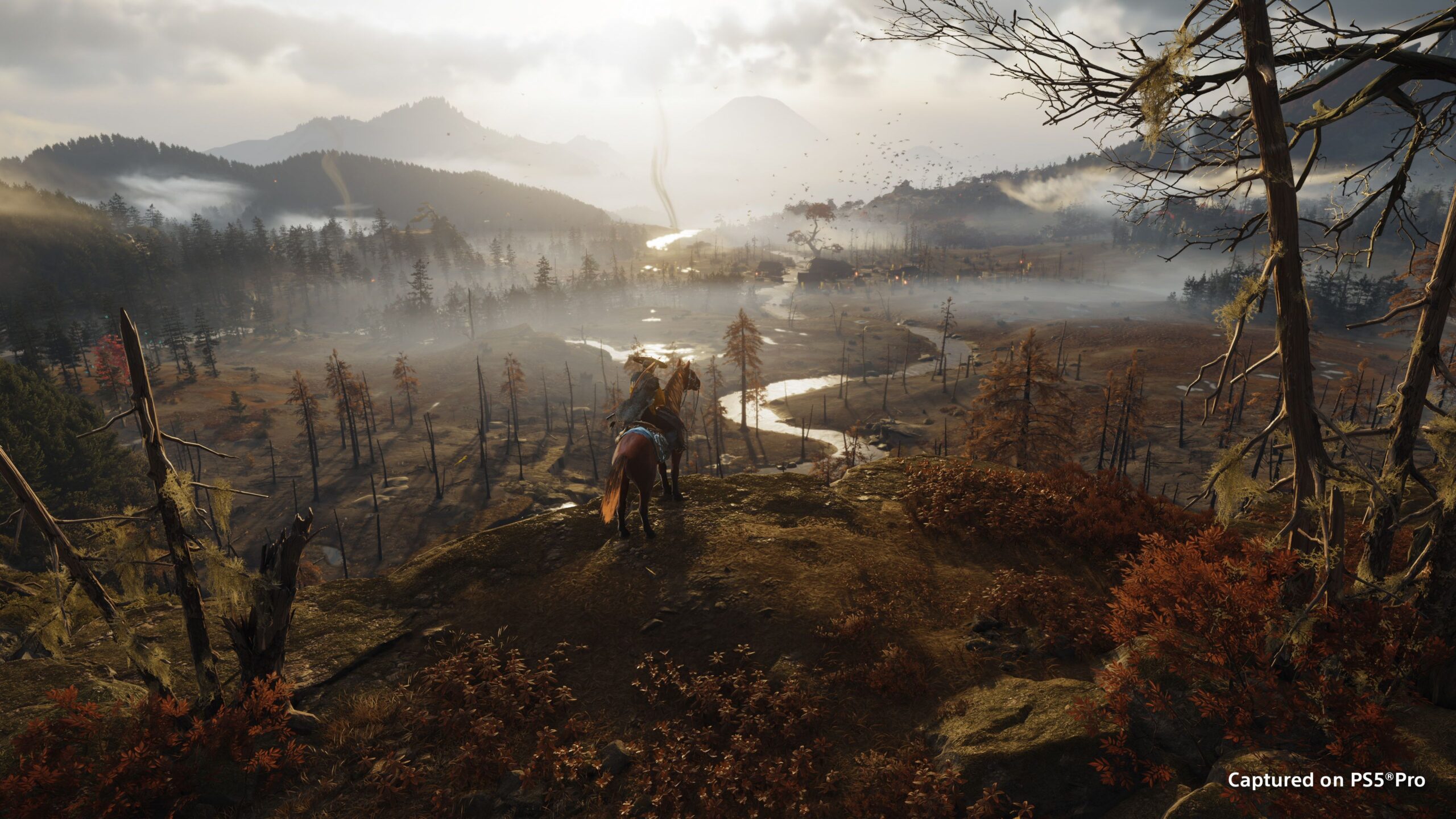
"The sights are still as gorgeous as ever, and Sucker Punch’s presentation remains impeccable, even if some of the transitions – like watching an NPC run after a cutscene as you regain direct control – can look a bit awkward."
But it all works, and slots in the new Heavy Weapons quite well, especially when confronting one of the heavier hitters among the Vipers who’s been trying to train his men by fighting bears. While it’s far from a new weapon type, it does build on the ability to pick up and throw weapons…except in this case, you’re smacking enemies with unblockable attacks several times before the heavy weapon breaks. Skills can increase the durability and even add a unique attack, though there isn’t too much difference between their types. The other new mechanic, which can make some fights more challenging, is arrows that remain stuck in Atsu until she pulls them out.
Since they prevent Spirit usage, it’s vital to remove them to heal. But the process can take a hot second, rendering her vulnerable to attacks. While dodging is an option – creating this tense back-and-forth where you seek out the best chance to pull the arrow out – there’s also a fun new ability that lets you catch arrows and send them back.
Otherwise, even after completing the game and having a fairly meaty health bar, enemies in Ashoro can hit very hard, that too on Medium difficulty. So if you ever felt that the late base game didn’t really push you to use most of your Ghost Tools, Echoes should help reinstill some of that danger. Don’t worry, though – the sights are still as gorgeous as ever, and Sucker Punch’s presentation remains impeccable, even if some of the transitions – like watching an NPC run after a cutscene as you regain direct control – can look a bit awkward.
As for Most Wanted, it delivers something that I’ve always wanted, ever since The Last of Us Part 2 Remastered introduced No Return: A rogue-lite single-player mode. Choose a character – whether it’s Atsu, Oyuki and Nagato or my main main Jin Sakai from Tsushima – and then select a bounty, with subsequent targets scaling in difficulty (and run length). Defeat waves of enemies and select upgrades. Every two waves or so, you’ll face a mini-boss and eventually confront a member of the Yōtei Six.
Upgrades only persist within that run, such as nailing an enemy with the dual swords’ Focus Strike enough times to detonate a bomb or using the Typhoon Kick with the Yari and triggering a wolf to attack an opponent. Each character has their own signature skills which can be upgraded further, whether it’s Atsu summoning wolves to instantly take down enemies or activating Onryo’s Howl to momentarily terrify them.
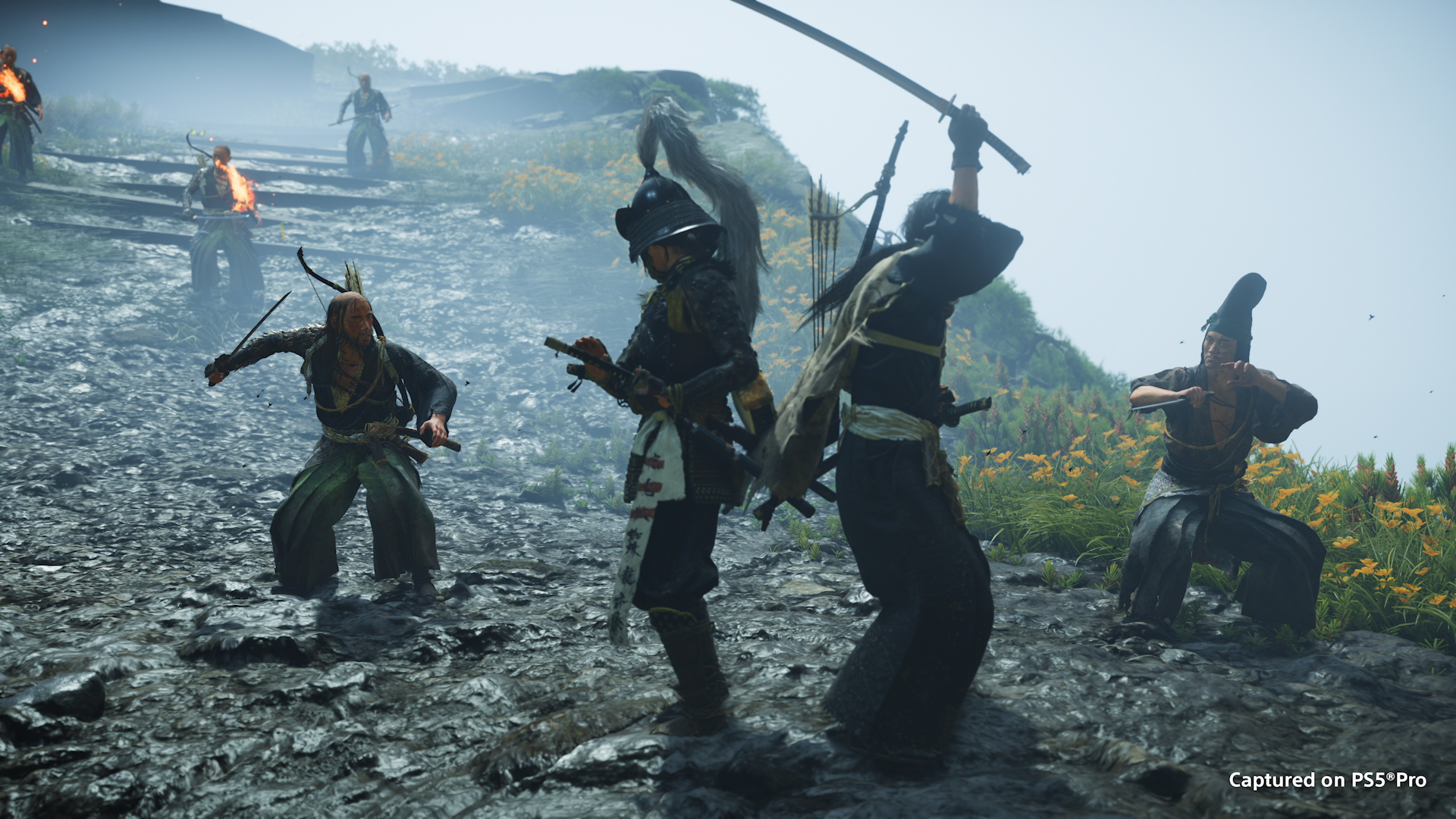
"For all the familiarity on offer, there are enough intriguing tales to go around, even if you have to wonder where the franchise could go from here."
There are a pretty significant amount of upgrades, whether it’s increasing damage for each weapon type, unlocking new Charms (which also have challenges to upgrade them), or unlocking base skills and health boosts to improve your run chances. While there is a decent amount of variety between the different targets, especially when it comes to enemies, the biggest appeal of a rogue-lite – finding the right build – isn’t nearly as satisfying.
That’s because of the weapon alignment system, where it’s often more beneficial to counter an enemy’s weapon type than build on a specific choice. So while having the kusarigama with a chance to poison enemies on hit sounds cool, it’s much more practical to lean on the weapons without upgrades. In that sense, you’re better off expanding on available options. And if you can’t? Well, killing three enemies to gain 0.5 Spirit doesn’t exactly feel like the best upgrade.
It doesn’t heavily affect the mode’s appeal, but at best, it’s some quick single-player action for those who have already completed all the trials and tribulations of Legends. Combined with Echoes of Sekigahara, this is a pretty fitting deal for anyone who wants to return to Yōtei and get lost in its stunning world. For all the familiarity on offer, there are enough intriguing tales to go around, even if you have to wonder where the franchise could go from here.
This game was reviewed on PlayStation 5.
Though small, Ashoro Foothills is brimming with interesting, new stories and points of interest. Still one of the best-looking games this generation with phenomenal presentation. Nagato is an interesting addition and his story with Atsu is well worth experiencing. Heavy weapons offer a decent, if not extensively complex, wrinkle in combat. Most Wanted is fun and offers good replay value.
Could have used a bit more time in the past. Some presentation elements still look a bit iffy, especially when transitioning from cutscenes to gameplay. Not a whole lot of other gameplay additions or changes. Weapon alignment system goes against many of the rogue-lite elements of Most Wanted, causing some awkwardness.