



So you’re playing a difficult game, and the inevitable happened – you died. Again. It’s not surprising because some titles are built that way, but the words “You died” really get to me. Over the years, many have invented their own interpretations. Dark Souls as an analogy for overcoming one’s depression? “You tried,” some would say, and that’s completely valid. For others, however, the defeat stings all the more because you know what happened. “You suck,” “You should probably play something else,” the list goes on, even if that’s not the intention. Because the words ultimately don’t matter as much as what they reflect: Failure.
Which makes Phantom Blade Zero, S-Game’s action RPG out October 29th for PS5 and PC, so intriguing. It’s not a Souls-like – the developer has admitted as such multiple times. There’s no stamina, though you have Sha-Chi, which determines the rate of heavy and special attacks and can leave you defenseless if depleted. Enemies wander the world and often attack on sight, showing no mercy even if it’s 4v1, but they won’t respawn when defeated. You’ll collect materials to upgrade weapons, but up to a point, you can retrieve what you’ve invested at no additional cost. Bells where you can rest, recover, and fast travel dot the world at a fairly generous pace.
But that doesn’t mean it isn’t a challenging game. Even on the so-called “default” difficulty, Pathbreaker, bosses take no prisoners. I still remember my first encounter with Jagged Steel, the Frenzied Brute, and his bleed attacks. It was the first of many lessons – how status weapons worked, parrying blue attacks, Phantomstepping red attacks. In a way, my combat prowess matched Soul’s – acceptable but clearly not at his best. Something would have to change for the journey ahead.
And then, after several more fights, was The Hunt. You’ll probably remember him from the opening on the runaway horse cart in the mountains, and with everything I’d learned so far, he’s a relative pushover. That is, until his own flesh starts to tear apart and two additional arms emerge. Suddenly, he’s unleashing a hail of attacks, scythes raining down from afar and even a tornado that follows you wherever. The word “Dead” appears, and already, I’m dreading what’s to come next: Repeating the first phase, trying my best not to make any mistakes and then surviving long enough to “learn” the second phase. Less of an intense battle; I was preparing for an exam with way too many wrong answers. Or so I thought.
Because Phantom Blade Zero actually started me off at the second phase of the fight. No having to go through the first while taking minimal damage. No rewatching the transformation animation. Much like all the enemies that remained dead, it acknowledged what already happened and simply continued as normal.
Now, this isn’t the first game to implement what you might consider a “checkpoint” system for boss fights. Ragnarok infamously included an accessibility option for its first three difficulties that created a checkpoint when a boss’s health reached 50 percent. Even though it was an option, it garnered criticism for watering down the intensity of the toughest encounters.
But that’s not exactly what’s happening here. Instead, Phantom Blade Zero is presenting the first phase as a sort of test. The real fight begins in the second phase, and based on everything I’ve dealt with so far, those are often the more challenging of the two. The main course to the first phase’s appetiser. In a way, like difficulty options, it could be viewed as a way to make the combat more accessible.
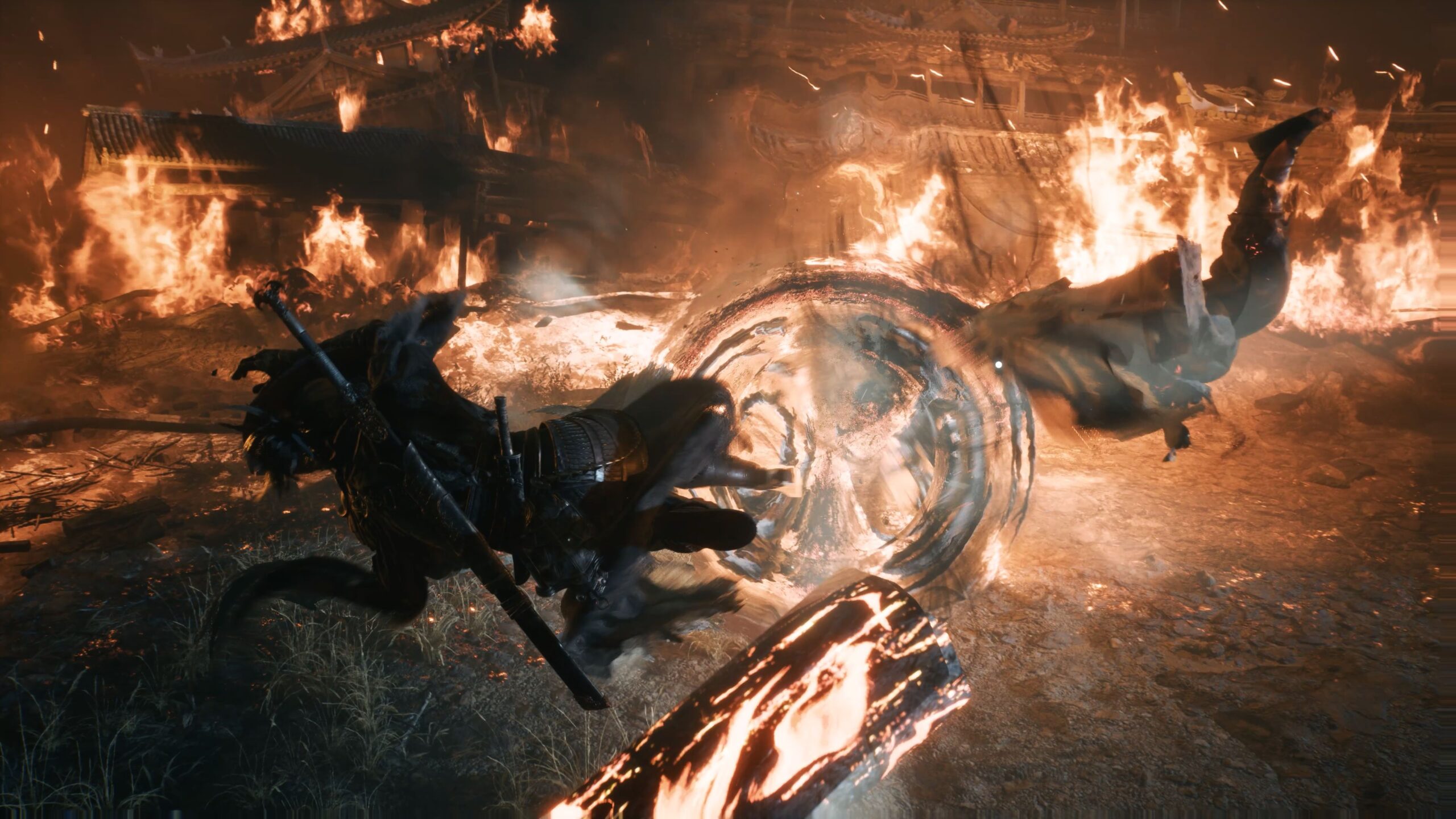
However, I believe there’s a deeper philosophy behind this. Simply repeating the first phase of a boss fight would be a waste of not just your time but the game’s. Director Qiwei “Soulframe” Liang spoke to 4Gamer about how everything in the game is meant to be “valuable.” Not just in limited resources, or how each weapon feels unique, but also in the content.
“I don’t want players to experience the same content over and over. Another reason is to focus on advancing the story and on this world itself,” said Liang. But that doesn’t mean de-emphasizing combat – in fact, he considers new enemies to be one of the “biggest surprises,” something to excite players. While acknowledging how other games revive them for the sake of farming or earning “something,” he expressed “considerable confidence in the volume and quality of this work. That’s why we always want players to experience something new.”
I felt that at almost every step of my playthrough because bosses often had something new to teach, or at the very least, encouraged trying different tactics. The Seven-Star Formation’s second phase is a pain? Maybe some summons would help. A boss throws out projectiles that must be reflected? Better equip that Bronze Sword that doesn’t let you parry, but reduces Sha-Chi consumption on blocking, then build into that.
It’s not purely weapon-based either. When you first encounter Mo Yuan, played by Donnie Yen, he absolutely drills the fundamentals into you. No dealing damage until you’ve broken through his Sha-Chi, and the only way to do that is with perfect parries and Phantomsteps, especially his blue and red attacks. Accomplish that, and you’ll still need enough damage to seal the deal; otherwise it’s going to be a long fight. No second phase here – one straight shot where skill is your best bet.
Oh, and that’s just your first fight against him. In the second, he starts using black-flash attacks – the same type until now that drained all your Sha-Chi. It’s here that you learn the best way to counteract them: Weapon-swapping. So elementary yet revelatory, adding another dimension to the mechanic.

In a way, these fights feel like the hyperbolic time chamber from Dragon Ball Z, right down to taking place in a separate realm. When you emerge, some fights may feel easier, but even if it comes down to learning patterns and how to properly deal with a boss’s attacks, you’re better equipped to deal with everything they throw at you.
Except the guy with the fire sword. Man alive, equip the accessory that reduces fire damage and stay humble.
Viewed in the full context of Phantom Blade Zero’s ultimate challenge, 66 Days Mode, it makes sense why the checkpointing is like this and why enemies don’t respawn. I also believe it recontextualizes all those times when Soul worries about whether he has the time to spare. Since it’s Hellwalker difficulty, enemies adapt to your attacks and change their patterns accordingly; death thus becomes a much bigger deal. In a sense, everything before this has felt like training, and it’s time to put it all to the test if you truly crave a challenge. If that sounds too punishing, Hellwalker still offers the same boss difficulty with no death penalties.
At the end of the day, that this isn’t a Souls-like is what makes seeing the word “Dead” feel less painful. Naturally, it would mean more in 66 Days Mode, but on other difficulties, it’s a constant forward momentum towards something new. As imposing as a new boss may seem at first, it’s just another stumble on the road to mastery, each phase a test for what’s to come next.
Note: The views expressed in this article are those of the author and do not necessarily represent the views of, and should not be attributed to, GamingBolt as an organization.