





Tomorrow is a mountain built with the rocks of today,” is a solid motivational quote, and like many, I could have never possibly guessed that it was from Assassin’s Creed Shadows. Granted, that also led me down a small rabbit hole – there’s some connection with – “Even the tallest mountain started as a pebble,” but that’s not the point. The point is that, for everything everyone said about the open-world action-RPG, it’s looking plenty different in several areas (and painfully familiar) in others thanks to numerous updates.
And it’s curious because shortly after its first anniversary, Vantage Studios (which is now in charge of the franchise) announced that it’s effectively in its final phase of support. I’m not quite sure how we went from “Shadows is overperforming” to “on to the next one”, but time marches on for the franchise. Until then, is Assassin’s Creed Shadows worth playing in 2026, whether you’re a returning player or brand new? The answer is yes, though it depends on what you’re after, and it probably shouldn’t be the story.
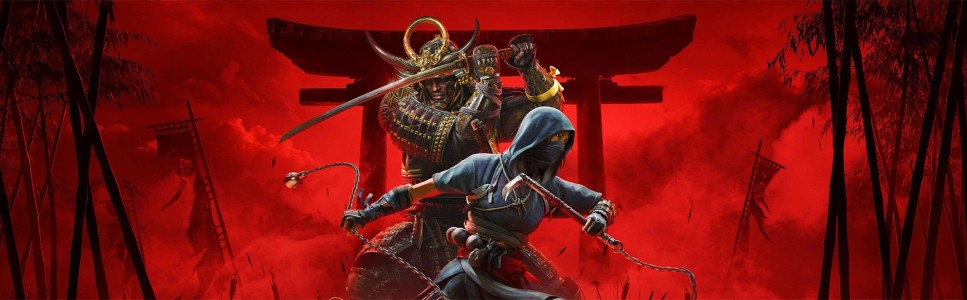
For starters, it certainly starts well. The late Sengoku era in Japan, Oda Nobunaga reigning supreme, the usual. Call it self-interest or curiosity, but taking on Diogo, who becomes Yasuke, seemingly aids his war efforts, as he takes the fight to the Iga Province. This is obviously where we meet and play as Naoe, but her story isn’t about going one-on-one with Nobunaga. Instead, one thing leads to another, and it’s revenge time, as is Assassin’s Creed tradition.
I’m skipping over quite a bit to avoid spoilers, because the opening is one of the better parts of Shadows. Of course, as you’ve probably guessed, the journey leads to Yasuke, and they agree to work together. Of course, there’s more, but despite the intrigue – the varying circumstances of Naoe and Yasuke, as they try to find common ground in a just cause – it’s not exactly the strongest narrative in the franchise.
Not to say it’s the worst either – just don’t expect too much. Instead, it’s the verticality, parkour and new stealth mechanics that truly make Shadows feel like an evolution of the Assassin’s Creed formula, all unraveling in a world that’s felt nearly as mystical as it did impossible for the franchise.
And what a world it has to offer. For being the first mainline title to venture to Japan, it captures the setting beautifully, from feudal castles and lush countryside to smaller details, like individual fruit scattering if you bump into a vendor, or katanas realistically slicing through wood. While there is some of that Ubisoft-style checklist that some will loathe, it’s easy to simply hop on horseback and explore the world, taking in its sights and sounds, discovering new things along the way, all on your own.
Some of this may involve pursuing clues to members of the Shinbakufu; others are side quests that can either contextualise the world or present unique tales. You could just as easily find a Kofun Tomb with unique puzzles as engage in Kuji-kiri. Maybe you’ll encounter different masters to learn new skills or infiltrate one of the dozens of massive castles to tackle bosses for sick Legendary loot. The fact that the latter are historically accurate and accommodate stealthy and aggressive approaches, while feeling unique from each other, is a major highlight.
That’s before factoring in the seasons, which can alter your approach in some cases. For instance, Winter may create snowstorms that help obscure movement, making it especially easier to sneak around at night. It pushes you to find other opportunities, observing your surroundings and leveraging Naoe’s mobility. You could bumrush through as Yasuke, which feels like a waste given everything else, but outside of certain story missions, he’s completely optional for most of the game.
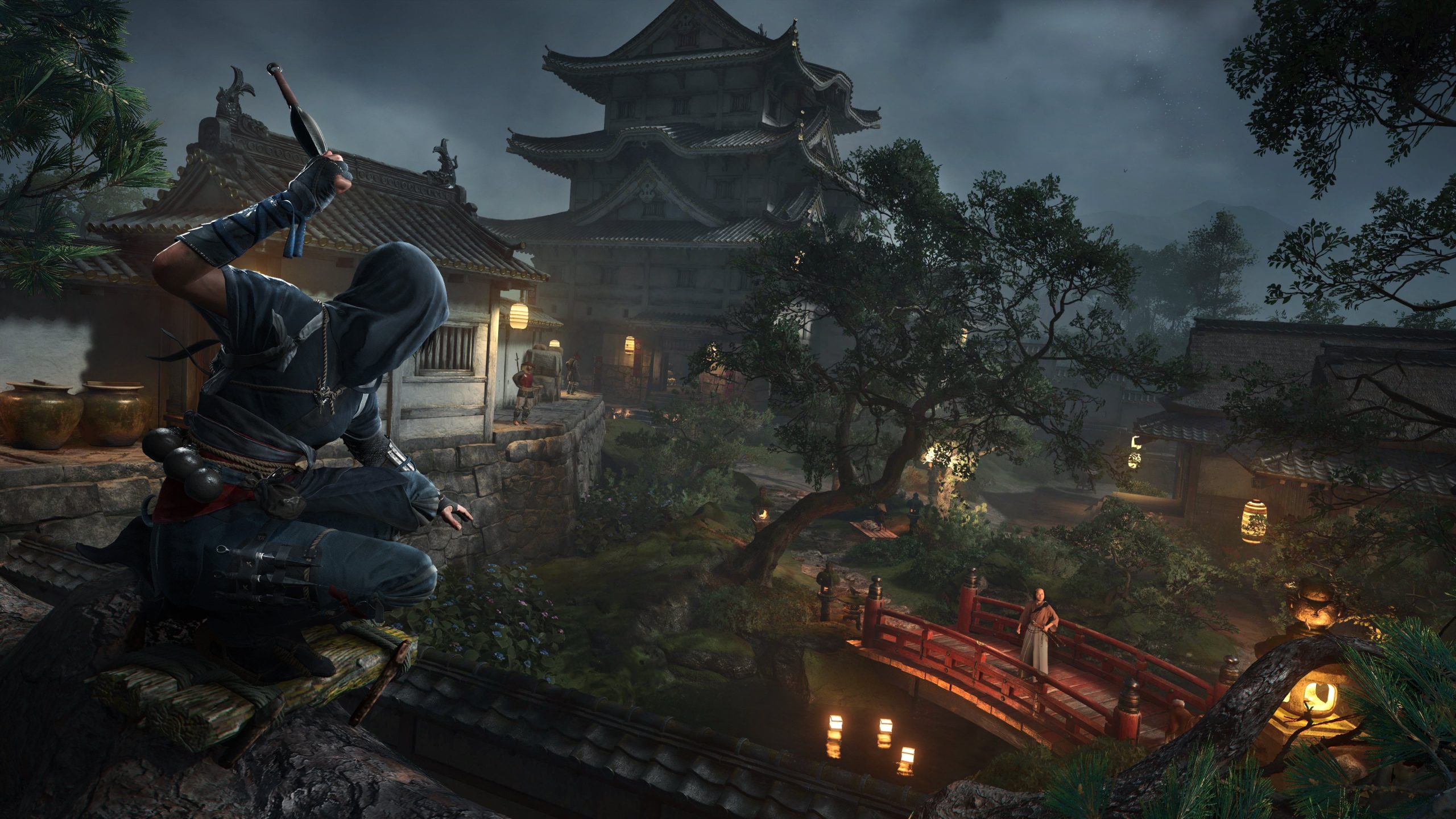
Breaking up your investigations with different activities helps make them feel less disjointed, especially since they’re not as seamlessly connected as, say, the hunt for the Yotei Six in Ghost of Yotei. However, the development team did take care to add on to the game in other ways. Besides new quests such as The Works of Luis Frois and A Critical Encounter, the latter unlocking a new ally, the alert system goes beyond the reaches of castles. Previously, tripping an alarm only meant that enemies within the castle would try to hunt you down. But with this change, causing mayhem in the open world can earn a Wanted status that extends to the entire province, which isn’t exactly ideal for an assassin’s lifestyle. The fact that you’re pursued by bloodthirsty Guardians also doesn’t help.
Then you have Corrupted Castles, essentially turning any previously cleared castles into challenging new locations with tougher, more aggressive enemies. Such is their difficulty that they only become available at level 30, and that too after already clearing three Castles. Five Castles are randomly assigned the “Corrupted” status, so you can either clear them out normally and familiarize yourself with the layout or throw caution to the wind and tackle the tougher versions first-hand.
But once again, the world’s a stage, and having a character that can navigate it with movement synonymous with the franchise’s greatest hits is essential. Fortunately, controlling Naoe is a joyous experience. What the plot lacks in truly delivering a compelling character arc for her, it makes up for it with her movement, which forms a symbiotic relationship with her stealth capabilities (by themselves offering brand new mechanics never before seen in previous offerings).
After all, it’s only fitting that a ninja should be able to hang on the ceiling, deftly avoiding any patrolling guards, or go prone and crawl through the grass (and maybe roll out to stab any unsuspecting fools. She can also swim underwater and lie in wait (thanks to a handy breathing device) for a target to show up. While being the fastest assassin yet is nothing to sneeze at, she’s also easily the most agile. When dodging near ledges, she’ll actually perform a side flip. Dodge backwards off the same spot, and she’ll backflip, which can be used to transition into a quick assassination. Wall-ejects, sprinting over obstacles and through windows – she’ll even perform a flip after exiting from a grapple. It may sound like hyperbole, but once you actually get a handle on her moves, combining with kunai, smoke bombs, and shurikens, a whole new world of killer parkour opens up.
So naturally, the development team made the obvious leap and further improved on her traversal abilities. It all started with the new Vertical Jump, making it easier for both characters to grab ledges and awnings. Some quiet improvements to ejects followed afterwards, which were gaining height compared to before (and favored foot landings more), not to mention sprint no longer breaking with Parkour Up and Parkour Down. But it all led to what would be known as Advanced Parkour. Obviously, Manual Jump was the most notable addition (both for the game-changing mobility and the “Mario already did it 35 years ago” jokes).
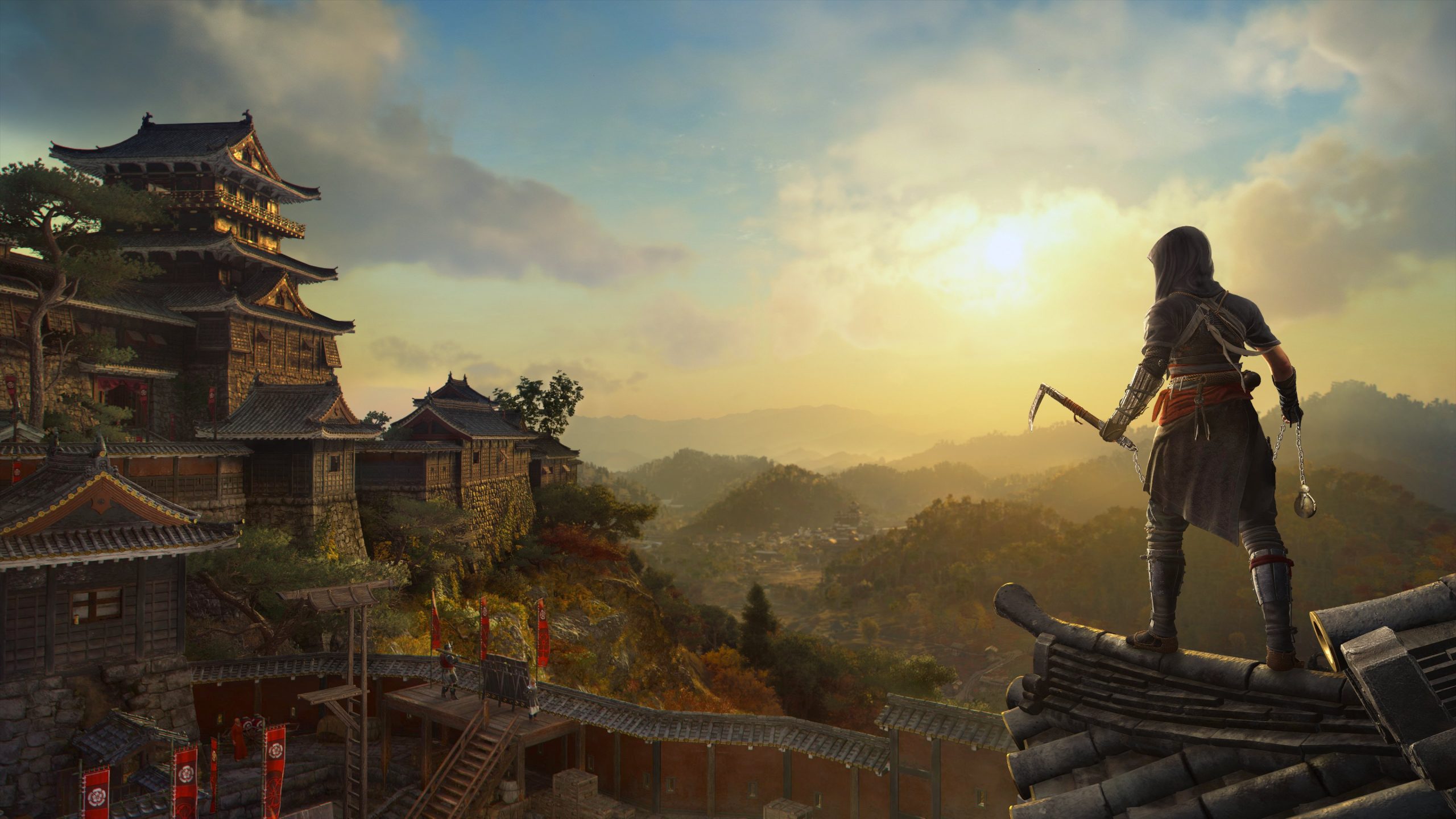
However, the tried and true Parkour Up and Parkour Down functions combine with ejects for greater control, allowing you to side eject up or down, grab vertical ledges from non-standing objects – a much-needed change that makes overall pathing smoother – and the ability to catch ledges. So you could dive off a building, seemingly to your death, but save yourself in the nick of time by suddenly grabbing a ledge before hitting the ground. It’s pretty great, feeding into both assassin and ninja fantasies like few other contemporary titles.
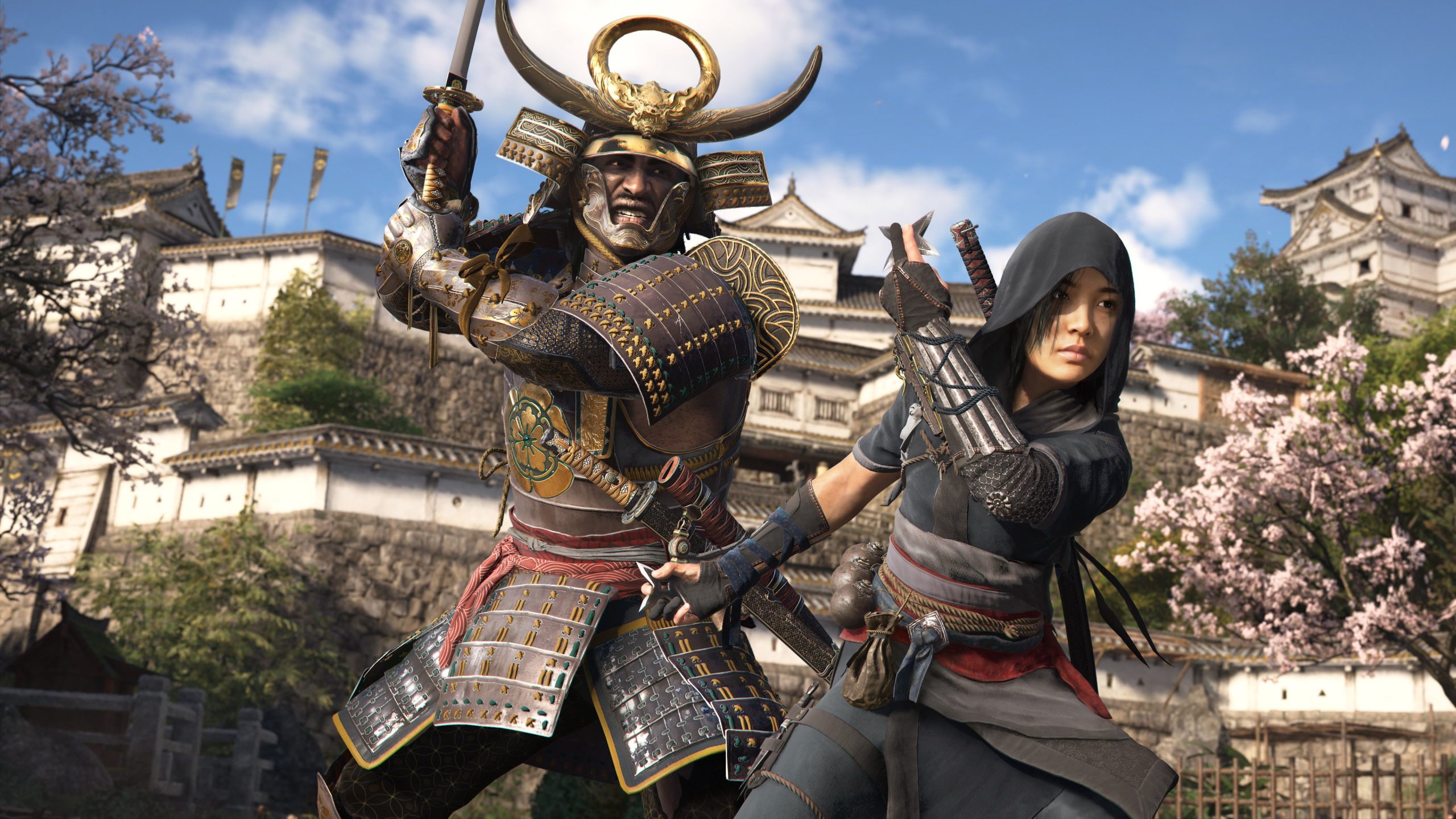
The other half of the equation is combat, and if Naoe is an exercise in leveraging the realistically detailed weather and lighting to wreak havoc like a shadowy onryo, then Yasuke is the destructive element. Tearing through enemy front lines, blocking and parrying attacks, delivering death from afar with a flint rifle and smashing foes through doors with a kanabo or naginata – it’s an exercise in tearing loose. Does it feel somewhat mindless compared to Naoe’s gameplay? Well, yes, so it’s a good thing that Shadows doesn’t force you to play as Yasuke for the majority of the game.
It also doesn’t hurt that the combat itself is pretty solid. While Yasuke places a heavier emphasis on tanking hits, parrying and countering with katana blows, Naoe is meant to be more elusive, putting up a fight against a handful of enemies but never really meaning to face an entire battalion. Of course, both characters can charge up light and heavy attacks to deal posture damage, breaking through an enemy’s block or simply piling on the hurt.
A lot of focus was placed at launch on Yasuke being more about combat and Naoe leaning more into stealth (which is still the case), but the development team went the extra mile to expand on their other options. For example, the former no longer yells out when assassinating an enemy and is now capable of quieter executions. Meanwhile, the latter gets a giga dropkick from hell that can send foes flying. Another major component of the combat is recruiting allies to join the League, which forms a separate base-building mechanic. On top of separate quests and stories, they’ll hop in during combat to help out, each possessing unique abilities and passives (depending on how much you’ve upgraded the Dojo).
For instance, Yaya can push back enemies with her attacks, but if you have level 1 of the Dojo, then she’ll knock down a foe upon joining in. On the other hand, Oni-Yuri opts for a different kind of crowd control, using a sleep dart to put enemies to bed. Alternatively, her first passive can create a lethal poison cloud. Overall, a pretty nice twist that makes your League feel more involved in the action instead of acting as NPCs at your base.
Aside from that, Naoe received a new weapon type – the Bo – which, despite being part of the Claws of Awaji DLC, can be obtained without owning it courtesy of a quest. It’s distinct in that, unlike other weapons, it has three stances – High, Medium and Low – which influence the kind of posture attacks you can use. Besides a separate skill tree, it’s also just plain fun to use.
Besides these improvements, post-launch updates added character bios to the Codex, making it that much easier to follow along with all the characters you’ve met. Nightmare difficulty introduced the toughest challenges in the game, from enemies dealing much more damage to perfect parries now being required to deflect hits. Even stealth is much trickier, since Naoe’s footsteps are audible even while she’s crouched.
New Game+ also made its way, complete with new Legendary weapons with unique perks. Aside from this, players could now level up to 80 and increase their Knowledge Rank to 0, further enabling a wider range of skills and builds. The Hideout would receive more upgraded levels, including the ability to advance the time of day for those keen on skipping nighttime raids.
The level cap would increase again to 100, and Scouts, a vital clue-gathering system, could now reveal Viewpoints and Safehouses. You can even unfog the entire province if you find all the Viewpoints within it. If that wasn’t enough, the hardcore min-maxers can further enhance gear, with Epic items upgrading into Mythics and Legendaries becoming Artifacts. Best of all? A detailed stats sheet. Finally, you can see exactly how much damage various tools and assassinations deal alongside Legendary perks and more.
All of the above is in addition to tons of other bug fixes and improvements, including PC players no longer having to deal with 30 FPS cutscenes and receiving an Ultra Low Spec mode. It’s not all sunshine and rainbows though, especially when it comes to the collaborations. The Dead by Daylight collab was fine – a decent distraction – but Attack on Titan felt like little more than simplistic, cobbled-together gameplay that existed for no other reason than to shill paid cosmetics. At least the Balatro items were free and even offered some fun benefits (combo enders having a 20 percent chance to inflict a random Affliction).
But overall, it’s honestly hard to believe that Assassin’s Creed Shadows has only been out for a year and some change. While I wouldn’t go as far as to consider it the best of the action RPG titles in the series – because each has something notable to offer – it’s definitely a strong addition and well worth playing, especially if you enjoy the parkour and stealth elements. And while it could very well fade away into history when Assassin’s Creed Black Flag Resynced or Codename Hexe roll around, but even when it seemed like it was ordained to perish, Naoe and Yasuke proved, just like their brethren throughout history, that an Assassin takes orders from no one.