






It’s impressive how Call of Duty’s multiplayer offerings remain consistently inconsistent. Every year, the same complaints about matchmaking, console aim assist, map design, ping, and whatnot emerge. But millions still line up to play, to the point where some will grind nonstop in the opening days. Even more impressive is how quickly those numbers can drop after a few short weeks before everyone seemingly moves on, waiting to see what the next entry has to offer.
Granted, the past few years have seen terrible to above-average campaigns with these offerings. But Call of Duty: Modern Warfare 4 (2026) is different because it’s genuinely enjoyable. As I noted in my impressions, Modern Warfare 4 (2026) really stepped up for the finale, delivering some great character work, strong mission design (even with some hiccups here and there), and excellent presentation…you know, for a Call of Duty campaign. So clearly, multiplayer, consisting of DMZ and PvP, can only follow suit. Right?
I’ll start with the former first and get the positives out of the way. Following the campaign, Hajin City is pretty much a no-man’s-land. So why are North Korean soldiers patrolling the zone? As it turns out, a weapons stockpile is hidden underground, and they want to find it before everyone else. Further complicating things are rogue operators. They’re far better equipped, which naturally translates to hurting a lot more than your average trooper.
Your job, potentially two weeks from retirement, is to infiltrate the zone and find the weapons before everyone else. But since this is an “off the books” mission, a standard Forward Operating Base and some starting weaponry are provided. The rest will have to be made up as you go, which is where the extraction gameplay loop comes in. Everything from the zone can be valuable in one way or another, whether it’s resources to upgrade the FOB and craft items, or even valuables to sell for money.
And despite the initially overwhelming UI and that annoying drop-down menu with its long list of tasks, I’ll admit: I like how it’s all presented. From the prologue with its infiltration and escape sections, teaching you the different elements of DMZ gameplay, to the adjoining story missions that require assailing locations and completing unique objectives, there is a solid if limited narrative backbone. It’s not really one that stands up to the campaign, but it adds a bit more weight to what you’re trying to accomplish in the zone, alongside some structured missions.
Of course, you don’t need to (and probably shouldn’t) attempt these story missions right away. Instead, Dynamic Operations and Free Roam can familiarize you with the city while you gather resources. The former is more high-stakes since it awards a pretty healthy chunk of XP and cash, but either way, you shouldn’t expect any ARC Raiders-style matchmaking with plenty of “Don’t shoot!” to go around. My first expedition ended within minutes as a better-armed and armored player gunned me down. Another arguably ended even quicker when an entire squad rolled up in a sedan.
It’s frustrating, sure, but it’s a testament to Modern Warfare 4 (2026)’s DMZ that I kept going back in. Part of that is Hajin City’s inherent difficulty and tension. For instance, eliminating enemies brings reinforcements to your location or rogue operators to intervene. You can also hunt Lieutenants with their own unique mechanics (including one that possessed what I can only describe as Shadow Clone Jutsu before taking down our entire squad). In keeping with the risk vs. reward element of it all, you can sacrifice some of your max health to get back up from a downed state, effectively fighting at a disadvantage unless you happen to pack a med-kit that repairs the damage.
Of course, the map is laden with plenty of other objectives, from supply drops to scaling radio towers to locate said Lieutenants. I hate to use the cliché about how even failing will still net some progress for your FOB – but it is true, as long as you’re opening containers, taking down threats, and getting active within the zone, even if you couldn’t bring back any loot to show for it. Free Loadouts mitigate some of that risk, and the rate at which you’ll progress and unlock new recipes for crafting armor, consumables and other equipment isn’t too shabby.
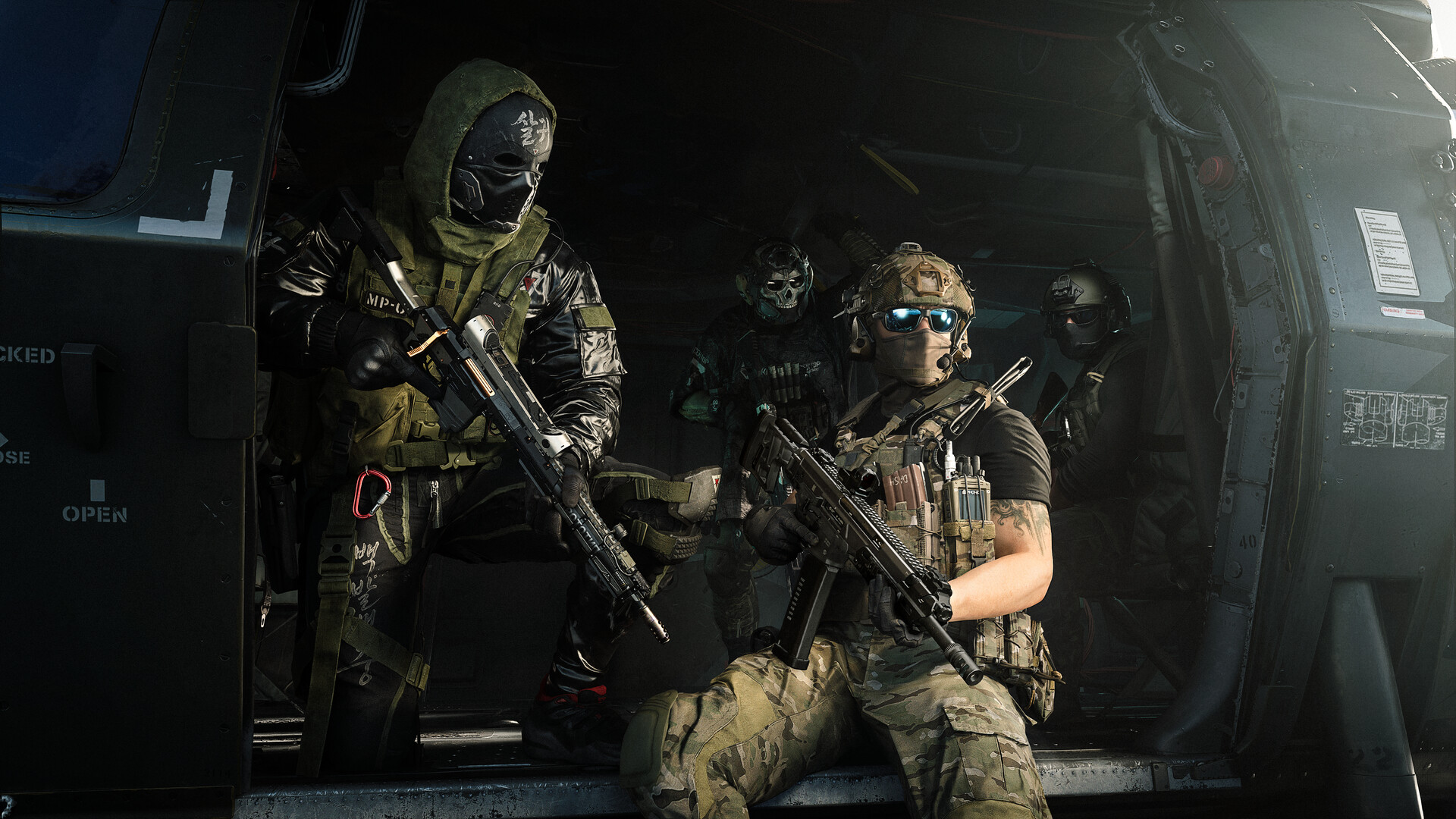
Flip-of-a-coin matchmaking that determines whether you emerge with a decent amount of XP or get immediately bodied by other players while carrying a high-value loadout aside, my biggest grievance with DMZ is how it handles Operator progression. You can deploy three, and when one fails to extract, they’re considered MIA, so you can pay some credits to bring them (and whatever valuable loot they had) back.
The problem is that as they level up and unlock new passives, the cost increases, and after a string of losses, rescuing them gets costly. Of course, you could dismiss them and free up a slot, which feels even worse. Even if the key is keeping one slot open for an Operator who does scav runs for money, it’s still no guarantee of success.
Regardless, DMZ is mostly a win for the PvEvP extraction shooter crowd, even if it could have used a PvE-only mode for longevity’s sake. Which thus brings us to the less positive multiplayer offering: PvP.
Remember those earlier complaints about matchmaking and ping? Well, they’re still an issue here, as Modern Warfare 4 (2026)’s special version of skill-based matchmaking is in play, which means getting thrown into matches which feel less like uphill battles against impossible modes and more like a game of whose shots register first. Sometimes I’ll get the drop on an enemy only to be instantly melted; other times, they’ll do the same, and yet, somehow I survive.
The inconsistencies in shots remain as bewildering as the times when I died behind a wall (the low time to kill doesn’t help either). Business as usual in any Call of Duty game with PvP released in the last however many years, but that doesn’t make it any less annoying. And if you hate matches where other players slide around on repeat like their knees are made of grease, then PvP will get on your nerves.

Map design can also be very hit or miss. Transit 213 offers some fun free-for-all chaos at times, but terrible spawns turn it into a crude adaptation of Live, Die, Repeat. Rooftops is slightly better, though it really underscores the pointlessness of flanking given the general speed. I actually liked the concept behind Reactor U92 – a centralized room which can turn into a huge kill space, and exteriors with long sightlines and plenty of cover. Nautical is something I hope never appears again.
Kill Block is perhaps the most intriguing addition, creating maps from modules in random configurations…and it’s locked to Gunfight. Which is fine if you’re a fan of Gunfight. Less so if you don’t enjoy having one life per round. At least there’s a 10v10 option, so I have more people to share the blame. Overall, PvP’s gunplay feels crisp, and there is some fun to be had, but many of the same issues with the franchise’s multiplayer continue rearing their ugly head.
So to summarize Call of Duty: Modern Warfare 4 (2026)’s: Very good campaign, pretty good DMZ mode, hang-ups and all, and so-so PvP. Which is a hell of a lot better than Black Ops 7. Even if each multiplayer offering is best recommended to specific audiences, with DMZ far more appealing than PvP based on quality and features alone, the overall package is a strong step-up from previous years.