





With the release of Control Resonant, Remedy Entertainment has managed to once more prove that it can tackle a large variety of gameplay styles across its various projects. Developers from the studio were kind enough to answer some of our biggest questions about the title across subjects like its melee combat and the lessons learned from the studio’s previous projects.
Control Resonant marks Remedy’s first proper attempt at a melee-focused action game. Were there any particular games, combat systems, or other influences that the team studied while developing its combat, especially given your emphasis on movement and fighting groups of enemies rather than one-on-one, parry-focused encounters?
Sergey Mohov – lead gameplay designer: When we started prototyping, the first thing we realized was that Dylan’s movement abilities were already genuinely fun to use. It would have been a real shame not to take full advantage of that mobility in combat. But that led us straight into a fundamental problem: there aren’t many melee games where character movement actually matters. Usually, melee encounters are fairly static—you walk into an arena, lock onto a target, and enemies basically queue up to attack you one at a time. Verticality and positioning rarely play a major role. Because of that lack of reference points, we essentially had to build our core combat loop from scratch.
The other major constraint was the camera. In most games with a highly mobile player character, the camera is either locked or heavily automated. But we needed the player to retain full manual free-aim to target ranged abilities, just like in the first Control.
Since there wasn’t a single clear blueprint, we ended up pulling mechanics apart from a pretty wide variety of games. We looked at Ninja Gaiden and NieR: Automata for overall flow, and Star Wars: The Force Unleashed 2 for how it juggles rapid melee strikes with physics powers. Furi was an interesting reference for seamlessly blending ranged pressure with tight melee dodging, and Hades helped with crowd management. But structurally, our biggest influence was probably Doom Eternal—specifically the way it forces you to constantly read the arena and reposition instead of just holding your ground
Alan Wake 2 was Remedy’s previous major Northlight project and pushed the studio in several new directions. What were some of the biggest lessons from its development that carried over into Control Resonant?
Mika Vehkala, Chief Technology Officer: Alan Wake 2 was a major push in world scale for us as a studio, for the engine and for the world building tools around it. We moved gameplay systems to an ECS framework and graphics to GPU-driven rendering. But we also started to hit hard limits in extending our tools, so we chose to fully redefine world editing.
Control Resonant is the first Remedy game built in what we call NWED, our new in-house world editor, running on the high-performance engine base built for Alan Wake 2. NWED replaces the World Editor we first built for Alan Wake around 2005. We built it on three ideas. First, the game is the view: the editor looks just like the game, and developers can jump in and out of play with little delay. Second, composability: NWED builds on OpenUSD, so teams can make the world from small pieces and combine them into huge districts. Third, NWED runs inside extensible tools plugin framework called OmniTool which we have grown since Quantum Break.

With NWED, developers edit whole districts of about half a million entities each, almost three times the entity count of an Alan Wake 2 level. Custom modular building generators and a flexible prefab system on top of OpenUSD made the cityscapes possible. On the runtime side, the engine now loads and unloads districts during gameplay. This took a lot of optimization work, on top of the work to handle more entities per district. The result is a seamless world of about two million entities. Beyond scale, we sped up iteration on gameplay features through scripting and polished workflows across the board.
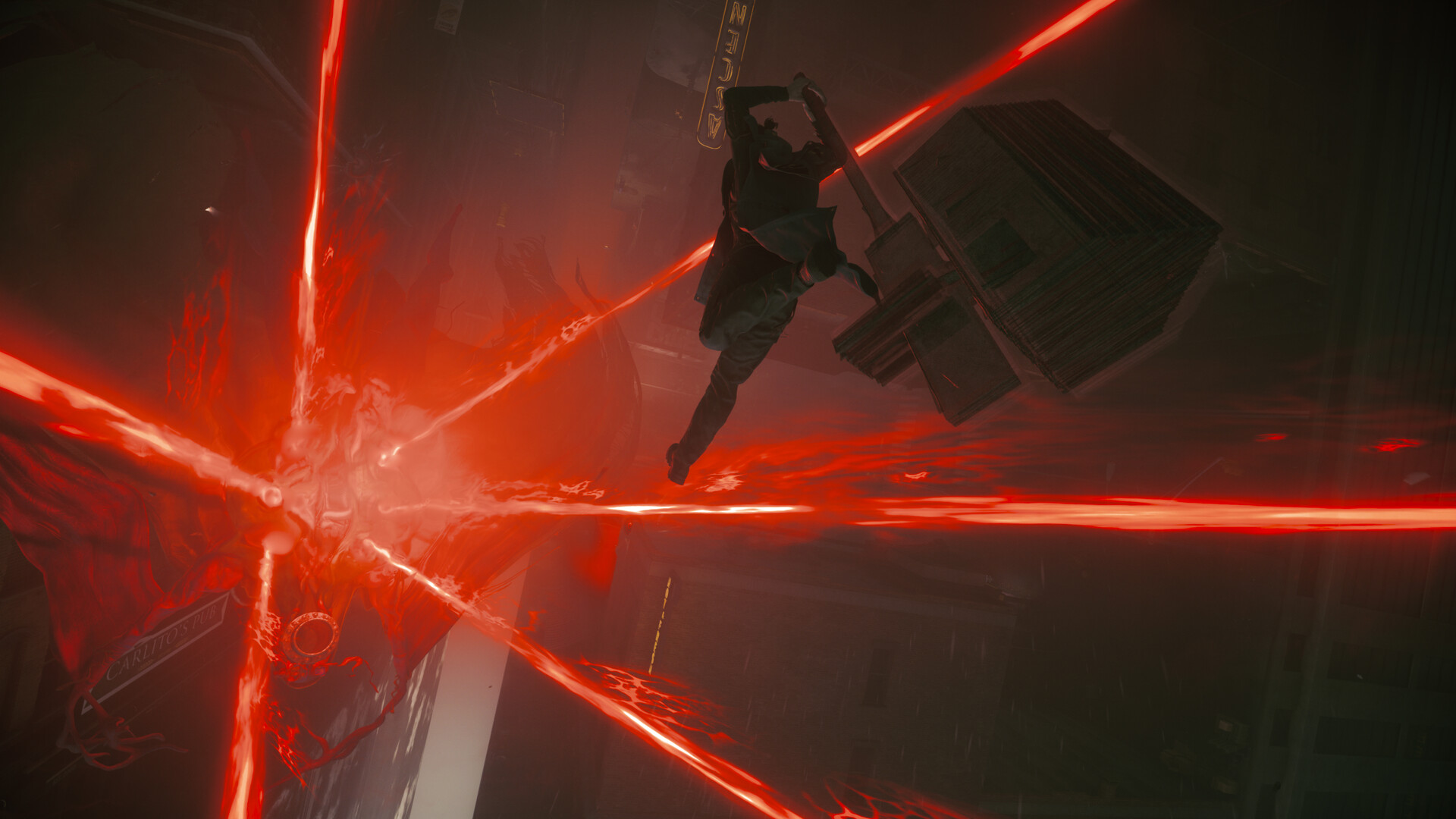
Gravity Anomalies let Dylan walk and fight on walls and ceilings, so many systems had to change. Because we own our tech stack, we could build custom solutions fast. In the editor, artists and designers can align the camera to a wall or ceiling and edit the world from the right angle. Our animation systems align Dylan’s feet to any surface, from ceilings to lumpy, mouldy walls, and motion matching handles movement on any plane. Combat demands fast response, so we changed how we author motion matching to make Dylan react to input at once and in a way players can see. For AI, we moved from Gameware Navigation to Mercuna and added navigation and combat on any surface.
Sound got the same care. A new audio propagation system places each sound source in the space as the player hears it, and a new acoustics system detects the size of the room around any sound source. Together they keep the acoustics right as levels change and shift. The story is also more dynamic and choice-driven than in any Remedy game before. To support it, we built the Narrative Editor, a graph-based tool where writers and narrative designers craft branching stories and quests.
On rendering, we wanted to push further toward dynamic, natural lighting. Alan Wake 2 already supported high-end path tracing and ReSTIR-based shadows, but it defined each light as an infinitely small point. In Control Resonant, every light has a real area. Because we take the actual shape of each light source into account, you see the natural mix of sharp and soft lighting found in real life.
We also wanted real-time lighting on high-end PCs to match offline lighting bakes. Global illumination is light bouncing off surfaces, so multi-bounce path tracing gives the same result as baked global illumination when both get the same lights and surfaces. Control Resonant now supports real-time path tracing with lights that match offline bakes. For players, this means lighting that reacts to the action, with accuracy that bakes cannot realistically reach.
The first Control confined players largely to the Oldest House, whereas Control Resonant dramatically expands the scale of the setting with its different areas of Manhattan. What was the biggest challenge in making that transition while still ensuring the world retained the dense, handcrafted feel of Control rather than becoming a conventional open world?
Elmeri Raitanen – Art Director: Whether it’s in books, movies of video games, Manhattan has been the backdrop for multiple stories during the past few decades.
We knew that if our story also takes place in this iconic and archetypal city, we’ll need to find ways to make it our own. The biggest challenge was to find techniques and a narrative to make our paranatural Manhattan feel unique, ownable, and instantly recognizable.
“Luckily for us”, when the lockdown of the Oldest House fails at the beginning of the story, all the Altered Items and paranatural threats flood the streets of Manhattan, leaving us ample tools to explore techniques that make our version of the city feel distinct and different.
We also take great pride in our world-building and design. Instead of going bigger and more open for the sake of it, we wanted to retain a hand-crafted and artisanal feel to it. For example, all documents, notes and graffiti are done physically by hand and then digitized. We strongly believe it’s the sum of these small things that end up making the difference in how the world feels, regardless of whether you particularly pay attention to it while playing or not.
We’ve learned that different parts of Manhattan gradually become accessible through Dylan’s abilities, access permissions, and even the trust he earns from other characters. How reactive is the world beyond that? Can player choices or completed World Quests meaningfully change locations, characters, encounters, or the state of individual zones?
Mikael Kasurinen – Game Director: Yes, for instance, when you complete World Feats or Encounters, the same location which was previously dangerous is now being patrolled or investigated by FBC personnel.
Characters who are featured in quests can appear later in a FBC base.
The NPCs in the world react to wider story events, changing what and how they talk about things depending on the latest developments.
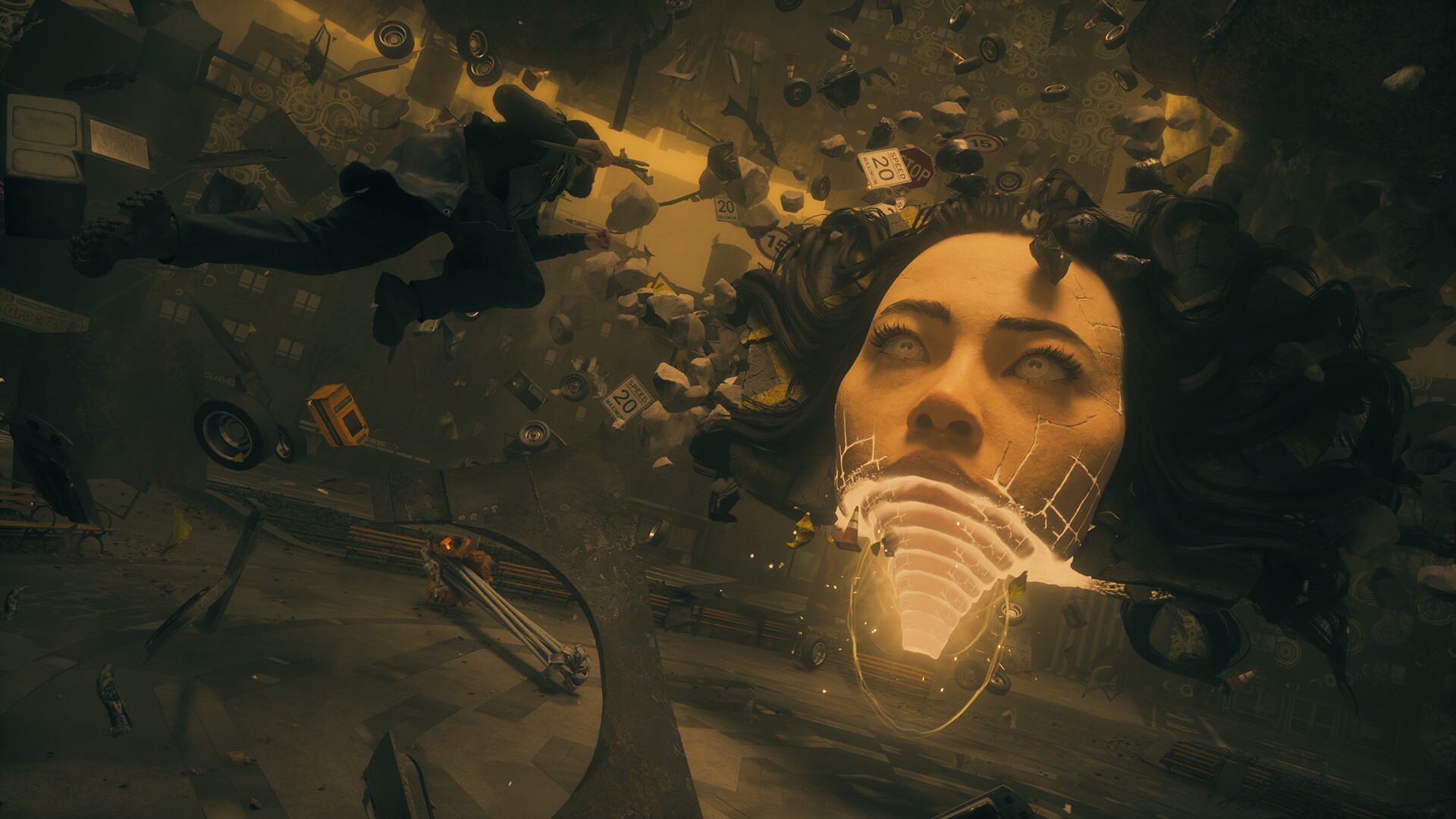
Control Resonant places considerably greater emphasis on melee combat while also introducing enemies that can fight from walls, ceilings, and areas affected by altered gravity. How did you approach combat readability when Dylan can potentially be dealing with threats coming from several different directions at once?
Mikael Kasurinen – Game Director: Taking advantage and navigating the environments is a crucial part of the combat sandbox. We wanted encounters to have verticality and depth, and we built the game with that in mind. Altered Gravity just expands that philosophy even further.
We knew from early on that the fast pace and the number of enemies can make the experience chaotic, so we spent a lot of time making sure there is clarity and readability in the environments, UI and enemies’ actions. With that approach, it was easier to widen that experience to Altered Gravity surfaces as well.
Jesse’s Service Weapon was one of the defining elements of the original Control, whereas Dylan now has the Aberrant. With Jesse still playing an important role in the story, is there a possibility that we will see the Service Weapon again in Control Resonant?
Mikael Kasurinen – Game Director: We focus on Dylan in Resonant in the same way as we focused on Jesse in the previous game. So, he’s the only character you get to play here.
Control Resonant is being designed so newcomers can understand its story without having played Control or Alan Wake 2. At the same time, it exists within the larger Remedy Connected Universe. How far does Resonant push that shared universe forward for players who are already familiar with those games?
Mikael Kasurinen – Game Director: It was important to me that we didn’t spread thin when telling an ambitious story of Dylan’s past, and his arc of change; while at the same time providing interesting and relevant World Quests as well. That meant that we minimized the amount of connective tissue to the rest of the Remedy universe, so it would not dilute or distract from the core themes.
Sometimes it also made more sense to create something new that was needed by the story, like Zoe as a character instead of for instance having Ahti again. Just to have the right fit and reflection point for Dylan.
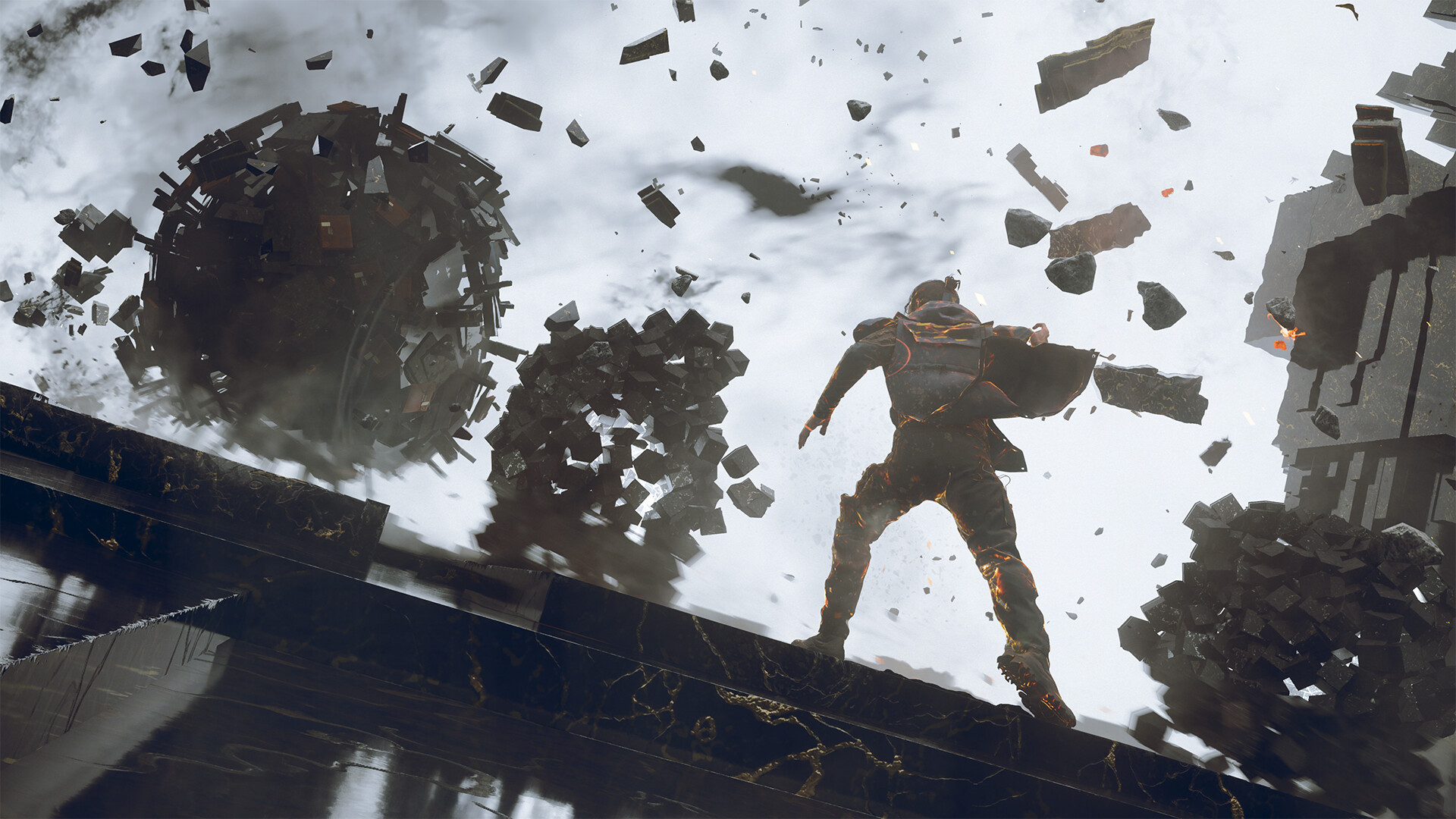
The original Control was one of the earliest major showcases for real-time ray tracing, and Control Resonant has now been confirmed to support path tracing on PC. What aspects of the rendering pipeline are path traced, and how much further were you able to push lighting, reflections, shadows, and global illumination compared to the original game and Alan Wake 2?
Tatu Aalto – Graphics Technology Director: Good question! Path tracing is a bit vague description of the underlying techniques we implement on top of support for shooting rays towards surfaces in the game. With path tracing in Alan Wake 2 and Control Resonant we refer to indirect multibounce diffuse and specular lighting. In original Control, we exposed indirect diffuse and specular lighting as two separate user options, which were combined to single path tracing option on Alan Wake 2. In addition to simply combining the existing options, we switched to better performing heuristics to select if diffuse or specular light is more important for a specific material and added the support for light to bounce off from multiple surfaces.
As global illumination essentially is light bouncing from surfaces, path tracing with multiple bounces ultimately provides the same global illumination as you’d get with baked global illumination lighting if you feed same lights and surfaces into these systems. Unlike previously, with Control Resonant we now support real time path tracing with lights that match offline global illumination bakes. For players this means lighting that reacts to action and has accuracy that cannot be realistically achieved with bakes.
In our setup, shadows are separate from path tracing, and leverage from the same matching lighting setup between bakes and in-game. In contrast to ray traced shadows we had in original Control, our ReSTIR implementation introduced in Alan Wake 2 is superior in cases where you have interaction between many lights. From Alan Wake 2, the biggest upgrade on shadows is the support for lights that have an actual area. By taking account the actual shape of light sources, you observe natural mix of sharp and smooth lighting detail seen everywhere in real life also.